
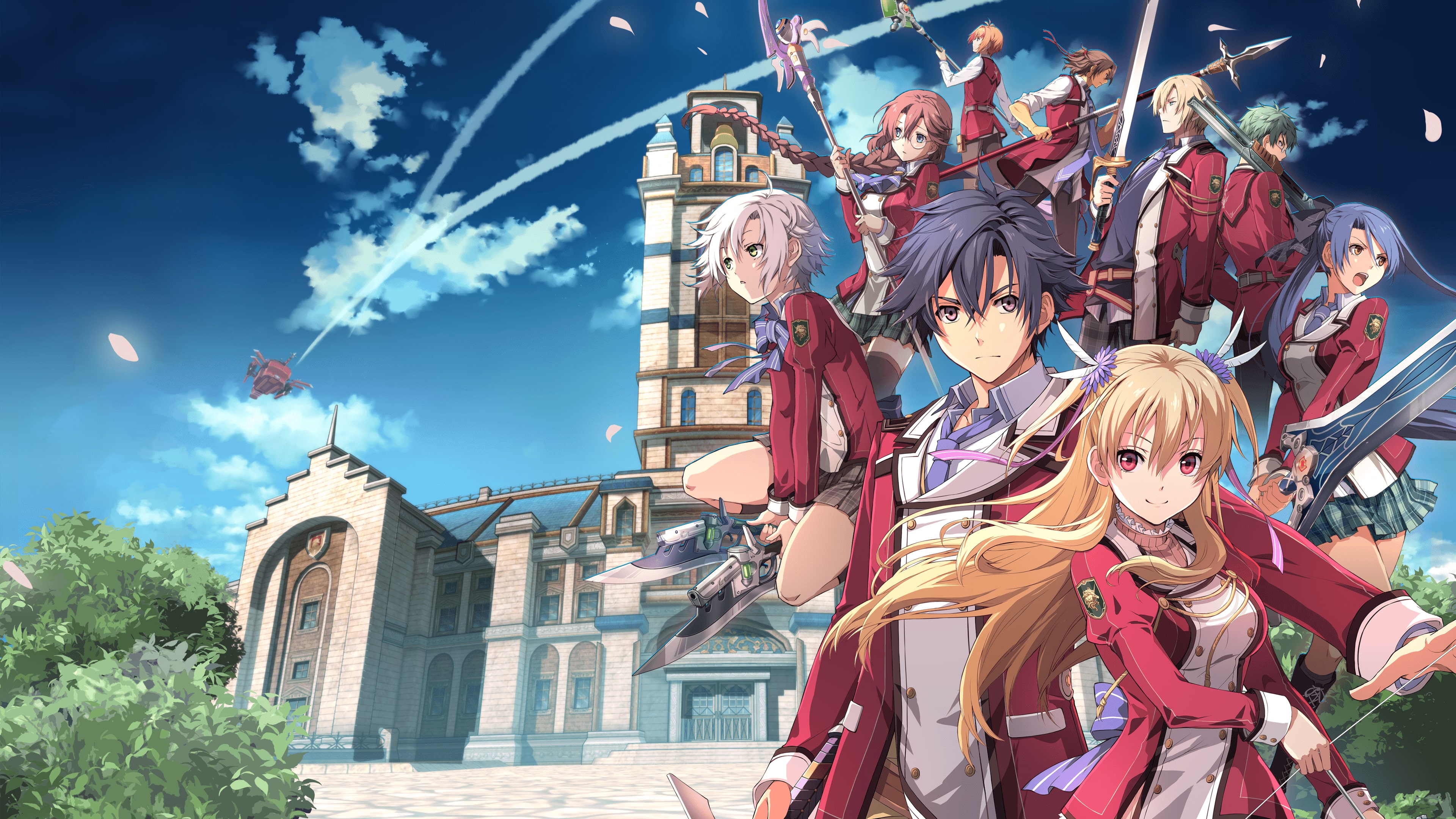
About The Legend of Heroes: Trails of Cold Steel
At Thors Military Academy, Rean Schwarzer joins Class VII, a new group whose members come from different ranks and backgrounds. As lessons give way to field studies across the Erebonian Empire, the students encounter the social conflict shaping their country. Turn-based battles, customizable ARCUS orbal technology and growing bonds connect their school year to the political unrest around them.
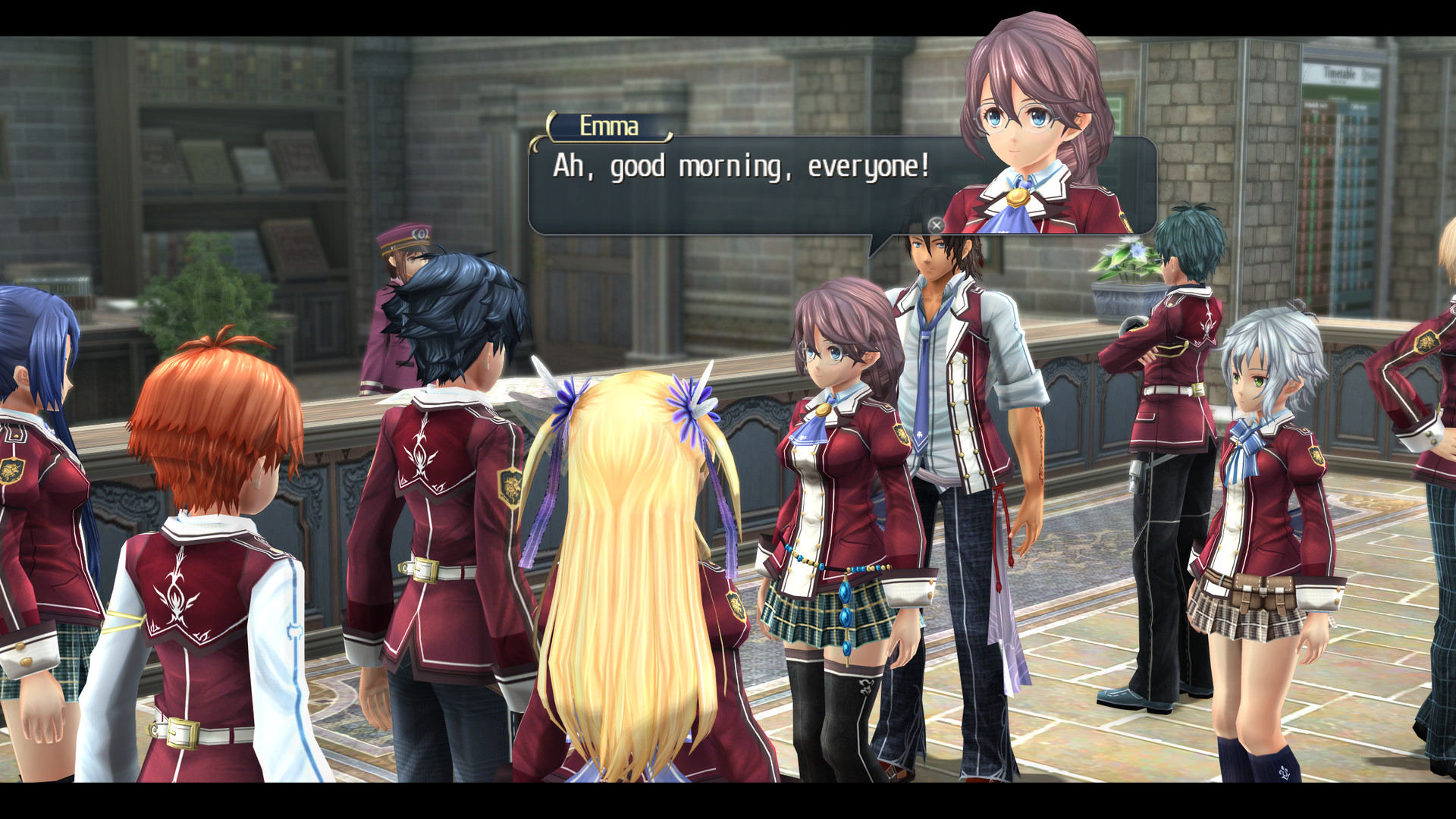
The Legend of Heroes: Trails of Cold Steel begins at Thors Military Academy in the Erebonian Empire, where Rean Schwarzer joins Class VII, a class formed across the social divisions that shape the country. Its nine students include nobles, commoners and an exchange student from Nord. The school’s unusual grouping places different inherited expectations in one room: the Nobles and Reformists contest the Empire’s political direction, while students confront those divisions through classmates and their families. Rean’s first year follows the group as lessons, field assignments and national events widen their view of Erebonia. The academy is both a military institution and a place where the students study liberal subjects, build friendships and discover that their country cannot be understood from its capital alone. The story’s scale grows from this close perspective: a class learning to work together becomes a lens on a society changing around it. Its distinctive crimson uniform contrasts with the standard green worn by commoners and white worn by nobles, making the academy’s status divisions visible even in the classroom. The nine were selected for ability, and the group is the first in Thors’s history where rank is set aside in favor of skill. Rean’s classmates include Alisa, whose family leads a major industrial corporation, and Gaius, a student from Nord.
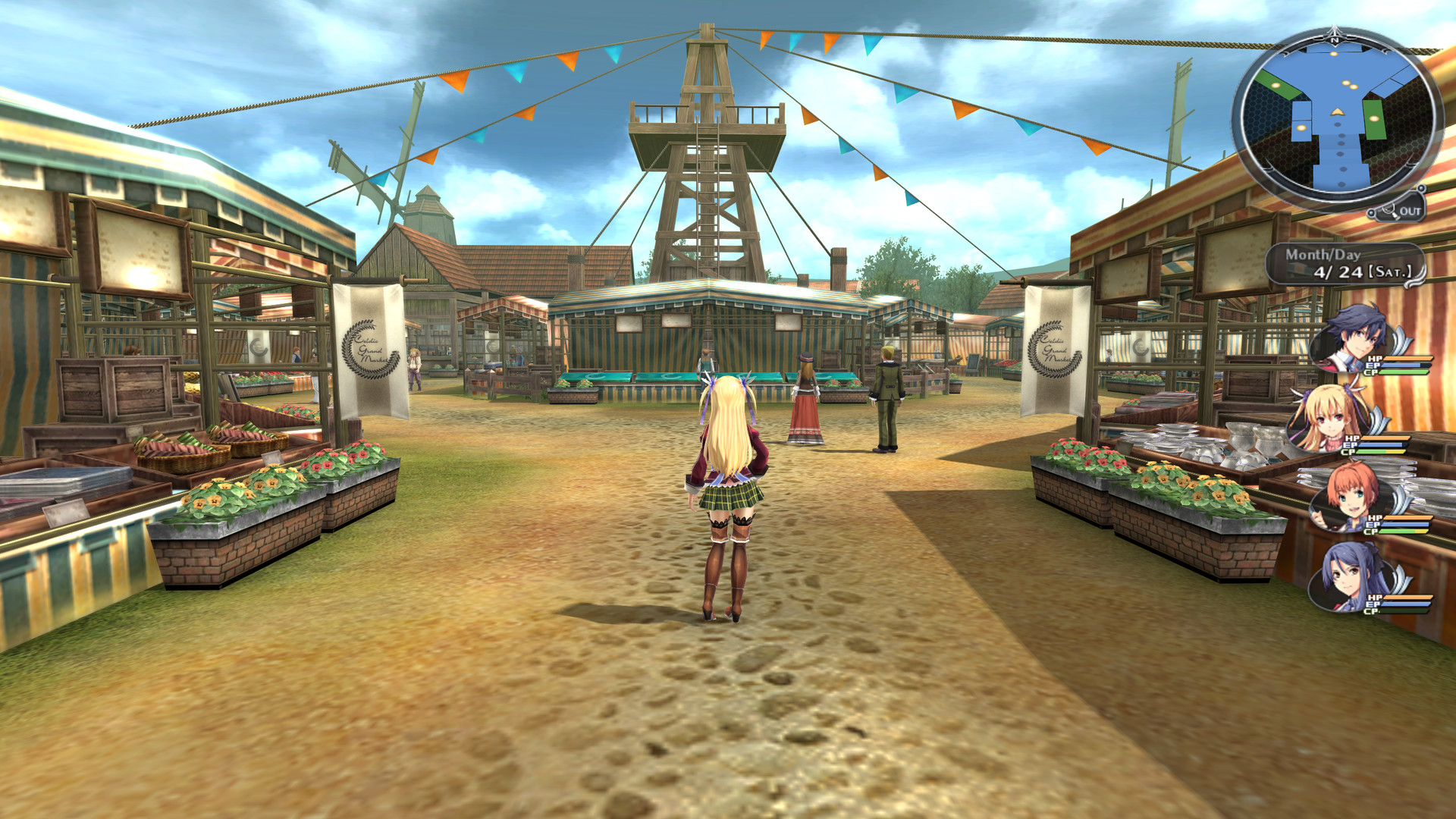
Field studies take Class VII out of Trista in teams, with assignments that bring the students into contact with local work and local concerns. Celdic is a rural market town: its Grand Market sits at the heart of the visit, and the nearby Lunaria Nature Park gives the group a very different landscape to explore. Bareahard, Jusis’s hometown, is more formal and aristocratic. Its waterways connect parts of the city, including routes toward the Albarea mansion, and give the group a way to move beyond its streets. The trip to the Nord Highlands changes the scale again. After a long rail journey to Gaius’s homeland, the students continue on horseback across open country. Later, the industrial city of Roer brings them into the orbit of the Reinford Group and its headquarters. Each stop has its own shape and purpose: market stalls, urban waterways, highland trails and factory city streets show different sides of Erebonia. The field studies are assignments rather than free-roaming travel, but their varied routes let Class VII encounter the Empire through the people and places it visits.
Thors has its own rhythm between those journeys. Class VII lives in the academy dormitory, studies for midterms and shares a schedule that includes military training alongside liberal subjects. Academic competition can spill into rivalry with other classes, giving the school a social hierarchy to navigate as well as lessons to complete. The calendar also makes room for swimming lessons and preparations for the academy festival. Class VII chooses a live musical performance as its contribution, a collective project that puts the students on stage together instead of sending them out on assignment. In Heimdallr, the capital’s Summer Festival gives another trip a different atmosphere: the class’s duties play out amid a public celebration. These school events and city gatherings change the pace without losing the focus on the group. Conversations in the dormitory, at class or during travel give the students space to talk through what they have seen and what they are learning about one another.
Combat is turn-based, with party members acting in a visible turn order. Each character has personal crafts and access to orbal arts, while ARCUS units let players customize abilities through a streamlined version of the series’ Orbment system. That flexibility means a character’s usual strengths do not have to dictate every choice: ARCUS setups can give party members different arts and support options. Combat Links pair allies, whose bonds can produce support in battle, including healing and guarding. When an enemy is unbalanced, the game briefly offers a timed prompt to choose a special link move. It turns an opening into a decision about whether to call on a partner, adding a quick tactical beat to the menu-driven exchanges. On the Windows version, Turbo Mode can speed up battles, scenes and movement through the field. During the timed link prompt it pauses automatically, so the choice remains available even while the surrounding action is accelerated. Each weapon has an attack type such as slash, thrust, shot or strike, and enemies can be more vulnerable to particular types. Matching a student’s attack to an enemy’s weakness raises the chance of leaving it unbalanced. That opening is when a linked partner can follow up; successful follow-ups build Brave Points, which can be spent on larger linked attacks. Positioning the right students together thus matters beyond their individual damage. Crafts are character-specific techniques paid for with CP, which accumulates as combatants attack or take damage. They can strike an area, inflict a status effect or support allies, while more powerful S-Crafts consume a larger reserve and can be used at a critical moment. The class’s different weapons and crafts give its members distinct ways to create, exploit or recover from a turn in battle.
Character growth follows both the battles and the relationships formed at Thors. Experience develops the party through the main journey, while changing the ARCUS setup lets players adapt the abilities available to each student. Bonding events give Rean a chance to spend time with individual classmates and learn more about their concerns beyond the assignment at hand. Since the field-study groups change, classmates who share a trip and its challenges also change; the bonding scenes offer a more focused counterpart to those group experiences. Building links can earn new battle abilities, so choosing whom to spend time with can shape the party as well as its conversations. The system suits a story about a class whose members arrive with different family ties, ambitions and assumptions. Rean’s relationships develop alongside the class’s work, and the game lets the player direct some of that attention toward particular allies. ARCUS customization has a more concrete cost and reward than a simple ability list. Sepith gathered through combat and treasure opens orbment slots; fitting a quartz into an available slot can raise a statistic or grant an art directly. Earlier Trails games derived arts from combined elemental values, but the first Cold Steel places abilities on the quartz itself. A student fitted for healing or elemental attacks can therefore serve a different role from one prepared for physical crafts, and a new quartz may be useful even before that character gains another level. The choice is made between encounters, then tested against enemies whose attack vulnerabilities and turn order can call for a different setup.
Academy interiors and cast portraits keep the character-focused story present between field assignments, while larger scenes bring the class into the Empire’s public life. This is the first Trails of Cold Steel, following Class VII through its initial year at Thors before later games continue the Erebonian story. It appeared on PlayStation 3, PlayStation Vita, PlayStation 4 and Windows PC. The PC release has 50 percent more English voice-over lines than the console version, and offers Japanese voice audio, an adjustable field of view, aspect ratios wider than 16:9 and 30 or 60 frame limits. Those options shape how the same school-year story looks and moves on Windows.
- Developer
- Nihon Falcom
- Genre
- Turn-based role-playing game