
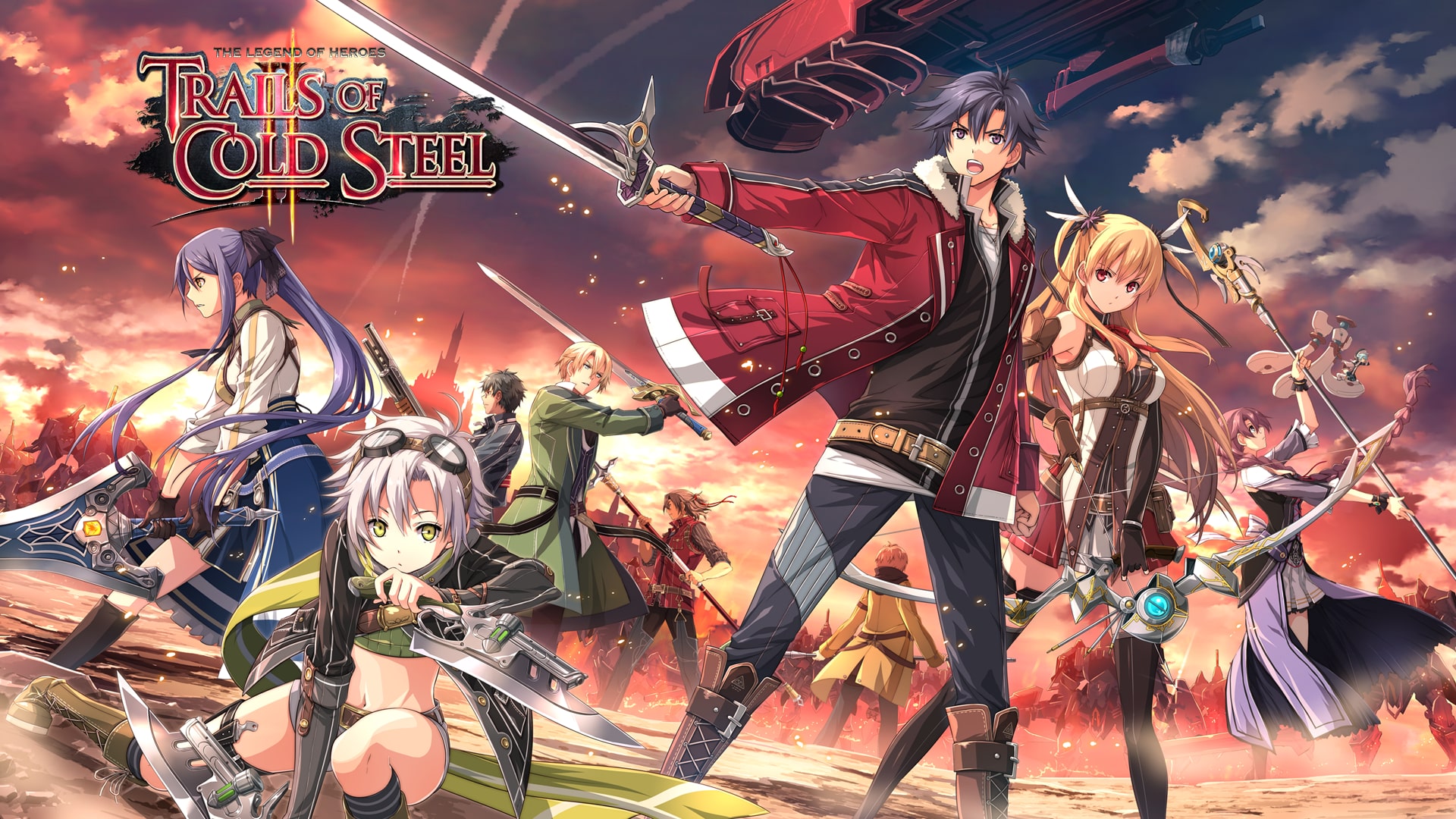
About The Legend of Heroes: Trails of Cold Steel II
One month after the events of Trails of Cold Steel, civil war spreads across the Erebonian Empire. Rean Schwarzer searches for his scattered Class VII friends while travelling with the Divine Knight Valimar. The sequel carries forward the first game’s characters and relationships, then expands its turn-based battles, travel and optional activities.
The Legend of Heroes: Trails of Cold Steel II begins in the aftermath of a national upheaval. One month after the decisive events of Trails of Cold Steel, the Noble Alliance and the Imperial Army are fighting across Erebonia. Rean Schwarzer has escaped Trista with Celine and Valimar, but the rest of Class VII stayed behind to give him that chance. Rean wakes near his hometown without knowing what happened to his classmates. His immediate goals become finding them and understanding how the conflict has changed the country. The story is a direct continuation, not a separate entry with a new cast: it depends on the relationships, rivalries and political tensions established at Thors Military Academy. The game includes a recap of the previous story, and clear data from the first title can affect conversations and provide bonuses, but the emotional stakes are rooted in those earlier events.
Erebonia is both a setting for political conflict and a network of communities altered by it. The Empire’s provinces, cities and roads are divided between forces loyal to the aristocratic Four Great Houses and the Imperial Army. As Rean revisits familiar places and reaches new parts of the country, the war is visible in local circumstances: who controls a town, what residents fear, and which ordinary routines have been interrupted. Class VII’s members come from different regions and social backgrounds, so reuniting them also restores the group’s varied perspectives on the Empire. Rean’s companions include trained fighters, students with technical interests and people whose families connect them to the political struggle. The journey gradually expands from a search for friends into a wider effort to move through a country at war, while conversations with allies and residents fill in the consequences beyond the battlefield. The changing control of familiar districts also gives returning locations a different narrative function: their streets are still recognizable, but military presence and uncertainty alter what people discuss and what the party can safely do. The cast’s connections to both noble and commoner communities make the division more than a map boundary; it places personal loyalties inside the national dispute. Rean’s role as a Class VII member brings these viewpoints together without making the conflict a simple contest between two uniform groups.
Travel changes the sequel’s rhythm from the academy schedule of the first game. Rean moves between towns, roads and story locations, and the Courageous, a personal airship, later becomes a base for selecting destinations across Erebonia. The ship is also a social hub: finding Thors students and bringing them aboard adds services or functions, with some recruits requiring particular quests or other conditions. Those people turn the vessel into a practical center for the expedition. Becky can open an exchange shop where items are traded or rare goods purchased; Munk enables applications to a radio prize drawing; and recruiting Paula can make a horse available on the Empire’s roads. On land, horseback travel returns, and Angelica’s customizable orbal bike provides another way to move across the map. Field attacks let Rean engage enemies before the turn-based encounter begins, linking navigation and combat initiation.
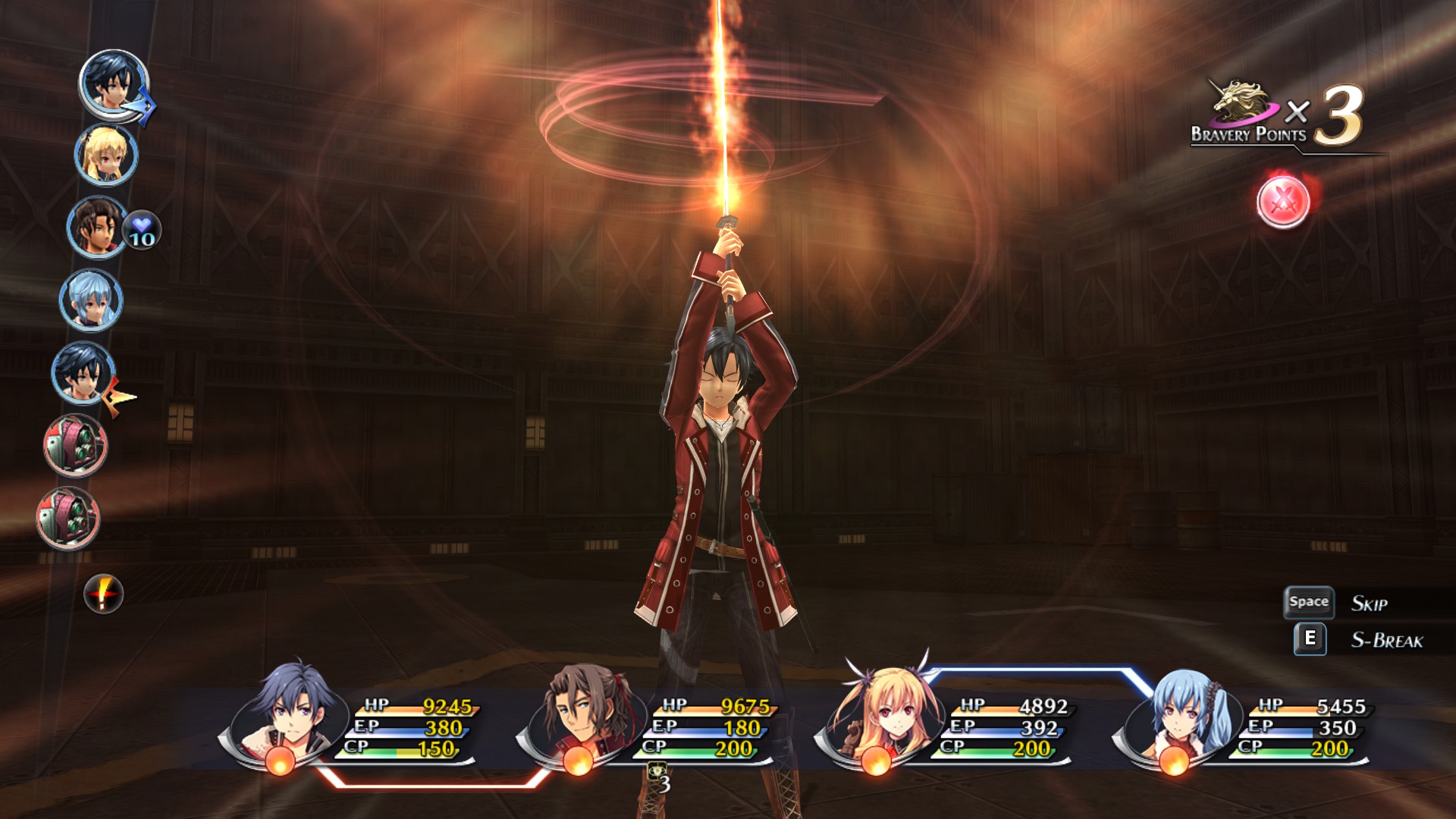
Most battles use the series’ turn-based order system: party members and enemies act according to a visible sequence, and the chosen action can affect both damage and future position in that sequence. Characters use ordinary attacks, special Crafts and Arts produced through their ARCUS tactical orbments. Quartz fitted into orbment slots shapes the Arts and other effects available to each character, so loadout decisions influence whether someone is better suited to damage, support or particular elemental techniques. The Combat Link system pairs allies; stronger bonds unlock more useful follow-up effects, including linked attacks, guarding and healing. Overdrive adds a powerful timing option: linked characters can act consecutively for up to three turns, letting the player capitalize on a vulnerable enemy or stabilize a dangerous exchange. Combat therefore connects party composition, equipment, relationships and turn order instead of treating each action as an isolated command. Because actions occupy positions in the turn order, an attack that delays a foe, exploits a weakness or interrupts a planned move can matter as much as raw damage. Arts consume EP, while Crafts use CP, so the party balances different resources as it chooses between physical techniques and orbment magic. Quartz also means that two characters with similar weapons can serve different purposes once their orbments are configured. Combat Links give the player a reason to consider interpersonal progression when assigning partners: a familiar ally can provide follow-up support that changes how the next turn unfolds.
The sequel gives Rean access to encounters that use Valimar, the Ashen Knight, and these play by different rules from regular party battles. In Knight battles, the player controls the Divine Knight against large mechanized opponents. The target’s stance and exposed points matter, and attacks against different body areas can produce different results; support from another character can provide an EX Art with effects such as damage, healing or a status condition. Valimar also becomes available in some ordinary encounters after Rean learns the appropriate special Craft, so the Knight is not limited to its dedicated battle format. Other additions broaden conventional combat. Overdrive works through Combat Links, while Lost Arts are exceptionally strong Arts attached through compatible Quartz and restricted in use during a fight. Optional powerful enemies can reward a Lost Art Quartz, giving exploration and combat progression a direct connection.
Optional activities give the journey space for character conversations and smaller tasks amid the military crisis. Bonding events let Rean spend time with selected allies; the relationships matter to the group’s personal stories and feed back into the benefits of Combat Links. Side quests send the party to help people or investigate local problems, and the game’s person notes gather further information as story events unfold, quests are completed and particular people are spoken with. Some details depend on specific events, so ordinary conversations can add context that the main plot does not stop to explain. Minigames provide another change of pace, while the ship’s growing roster unlocks additional conveniences and collection activities. The chapter structure still contains periods for optional business, though the school timetable and classroom routine of the predecessor no longer define daily progression. This leaves exploration and relationship-building tied more closely to Rean’s route through the war-torn Empire. Recruited students make optional exploration concrete because their location and recruitment conditions can lead to a new function aboard the airship. The person-note system rewards attention to the people encountered along the route, while quests offer additional context about local needs during the civil war. These layers encourage revisiting the map’s human details between major story developments; travel is not solely a sequence of combat arenas, because the places reached contain conversations, requests and characters who can join the travelling group.
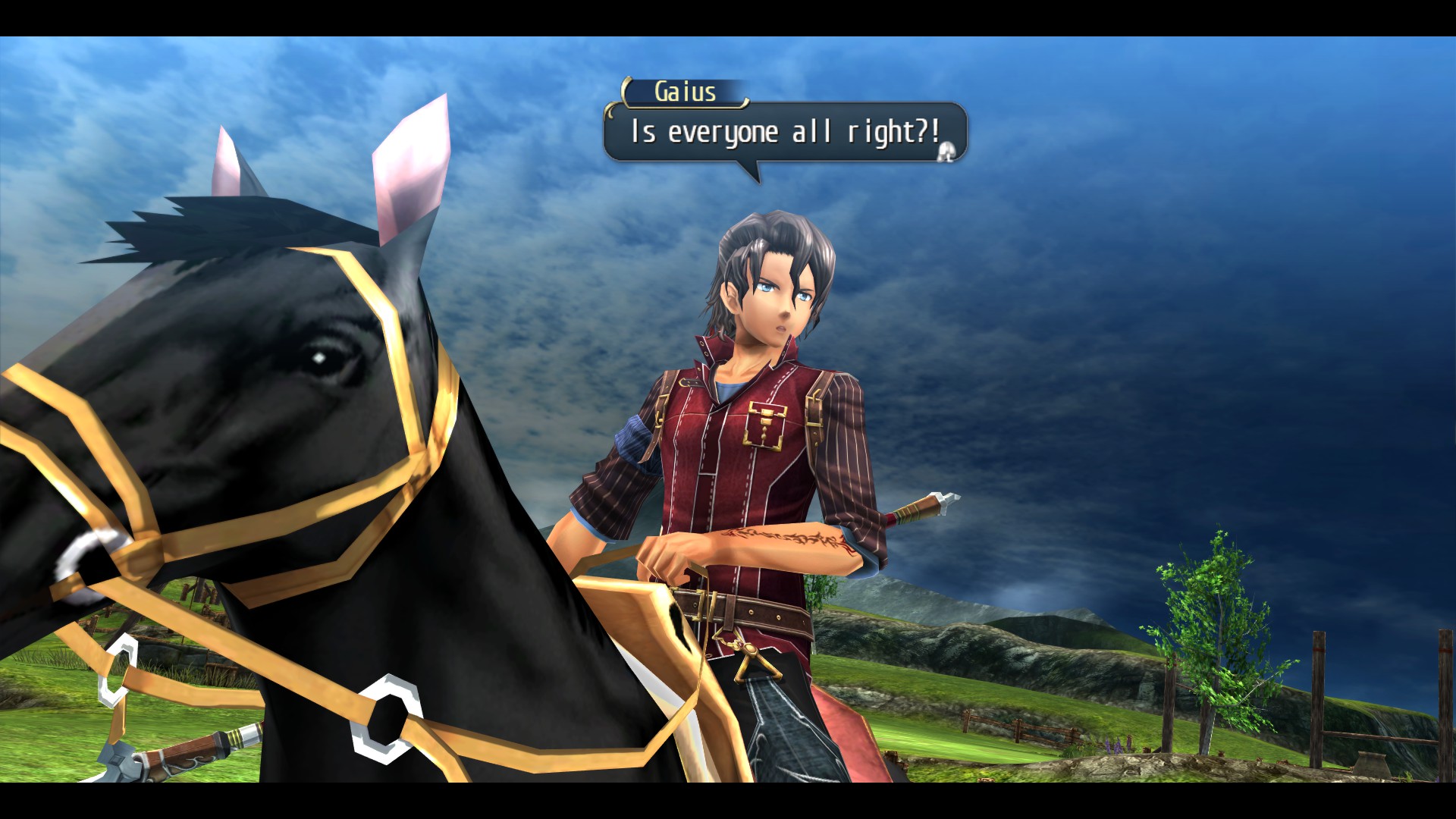
Nihon Falcom developed Trails of Cold Steel II, with XSEED Games and Marvelous USA publishing the PC release. That edition offers English and Japanese text and voice options, ultrawide display support, a turbo mode and an instant-resume feature. It also includes additional English voice lines compared with the earlier console release. The game's presentation combines illustrated character portraits and animated dialogue scenes with three-dimensional towns, roads, interiors, dungeons and large-scale Knight encounters. Players who carry clear data from the first Trails of Cold Steel receive bonuses and relationship-aware conversations; newcomers can use the included recap to understand the preceding events, although this remains a direct continuation of Class VII's story. From Rean's first attempt to find his classmates to the growth of the Courageous as a travelling base, the sequel shifts the focus from the academy's scheduled lessons to movement across a divided Empire. Ordinary battles, Valimar encounters, recruitment and personal conversations all grow out of that change in circumstances.
- Developer
- Nihon Falcom
- Genre
- Turn-based RPG