
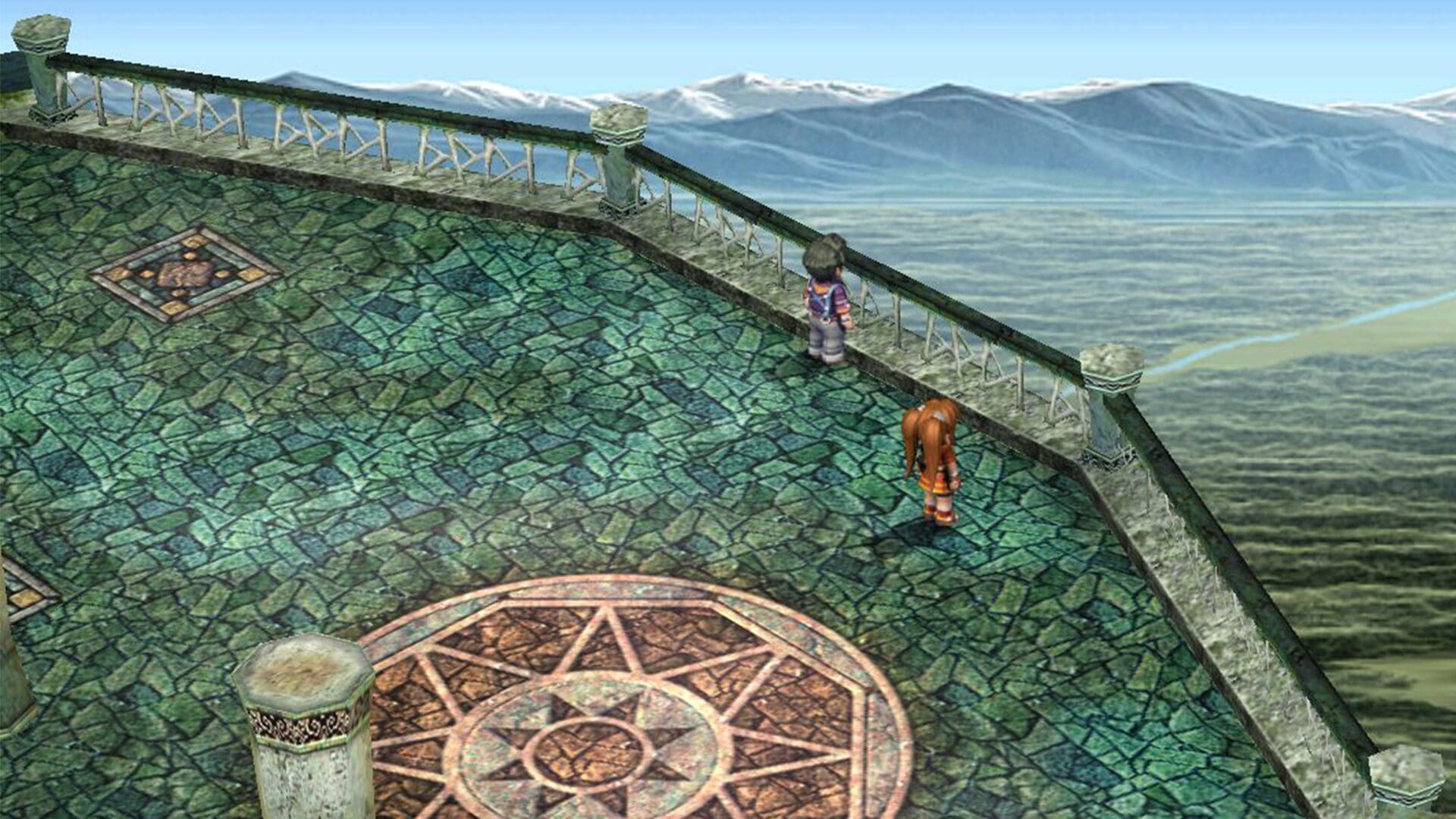
About The Legend of Heroes: Trails in the Sky
In the peaceful Liberl Kingdom, aspiring bracers Estelle and Joshua Bright begin their guild training in Rolent. When their father Cassius disappears during a journey by airship, the pair travel between towns, taking on requests and meeting people whose problems connect to a larger threat. Their route combines turn-based battles, quartz-based orbment customization and a growing view of Liberl’s communities.
The Legend of Heroes: Trails in the Sky follows Estelle Bright and Joshua, the boy her father adopted and raised alongside her, as they begin training with the Bracer Guild. The story opens in Rolent, a quiet town in the Kingdom of Liberl, where their father Cassius is an experienced bracer. After he leaves on an airship and goes missing, the two set out to continue their training and search for answers. Their work takes them beyond the familiar streets of home, through a kingdom where airships and other devices run on orbal energy. The pair are junior members of a civilian organization that accepts requests from people who need help. That simple premise gives the adventure a local starting point: Estelle and Joshua meet residents, learn what each community needs, and gradually encounter a larger threat to Liberl. The game is the first chapter of a continuing story, centered on the siblings’ early travels and the relationships they form along the way. It leaves the wider consequences for the next chapter rather than treating this journey as the complete arc of their lives.
The Bracer Guild gives the journey its day-to-day structure. Its branches receive requests from citizens, ranging from finding lost property and helping with local errands to escort work and dealing with dangerous monsters. Estelle and Joshua begin as trainees, so completing assignments is part of their professional development as well as a way to help people. A notice board at a branch lists available work, while the Bracer notebook records accepted requests and important events. Some jobs have deadlines, which makes it useful to check the board and notebook as the pair arrive in a town. The tasks bring the protagonists into contact with shopkeepers, travellers, officials and families whose concerns are specific to their surroundings. They also provide a reason to revisit places and speak with residents as circumstances change. The guild operates separately from the kingdom’s government, giving the pair a role based on public service rather than military authority. Their responsibilities expand as they make progress, but the basic loop remains legible: reach a settlement, learn what needs doing, travel to the relevant place, and report back to the local branch.
Liberl is presented through linked towns, roads, fields, caves and other routes that the party crosses on foot. Each settlement has shops and a guild branch, with local paths leading to nearby landmarks, wilderness and monster encounters. Travel between towns gives the story room to shift its surroundings and introduce new residents, while returning to a branch anchors the next set of jobs. The landscape is not one uninterrupted open field: movement follows connected maps and routes, and progress through the kingdom is organized around the story’s chapters and the destinations they establish. Airships form part of the setting’s transport network and help define how distant places relate to one another, while the protagonists’ own field travel happens along roads and trails. Towns contain inns, restaurants and market stalls as well as civic locations, so visits are also an opportunity to replenish supplies, gather local information and learn recipes. As the pair move outward from Rolent, a familiar pattern of guild requests and travel is colored by the changing architecture, people and concerns of each stop.
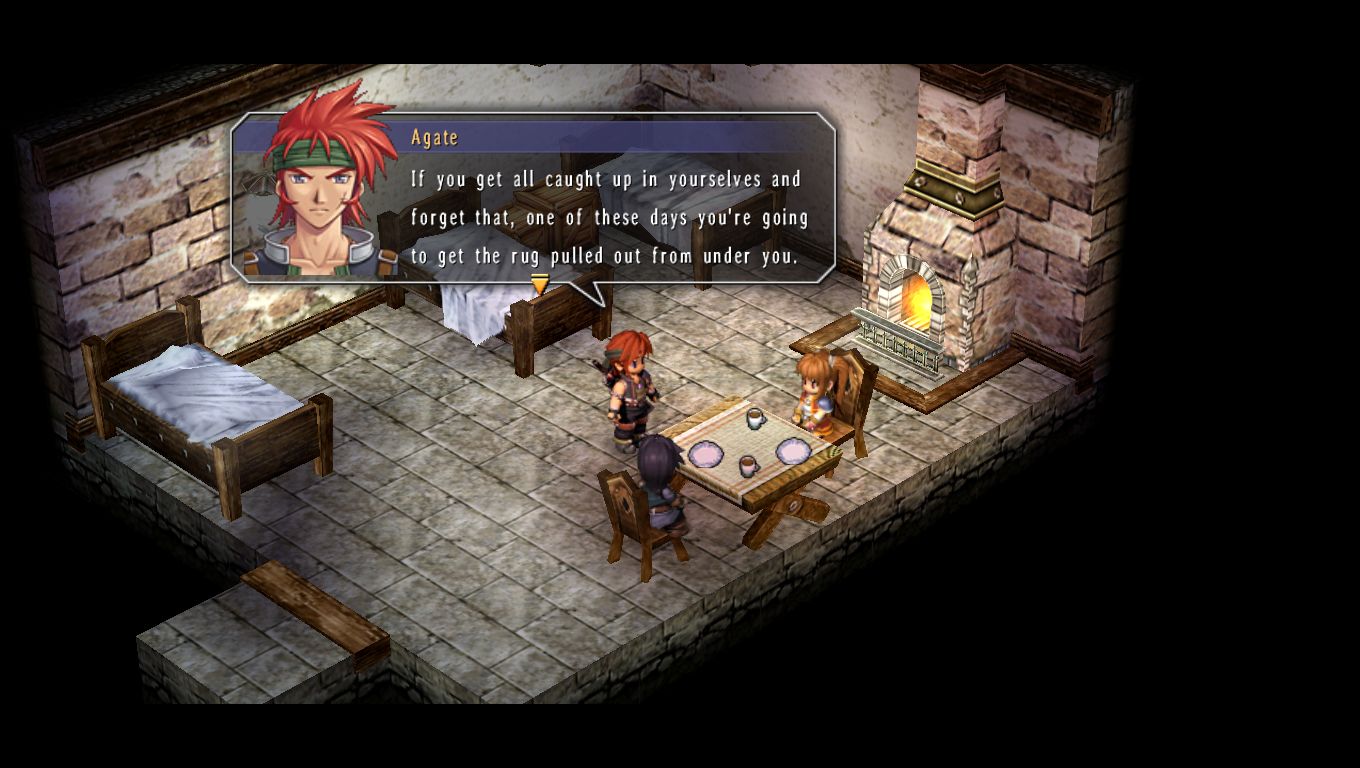
The setting’s orbal technology is both a feature of everyday life and the basis for a major part of combat customization. Orbments are devices that use energy from septium crystals; quartz fitted into them can improve a character’s statistics, add effects or make arts available. The system ties the party’s magical options to the equipment each character carries instead of to a single shared spell list. Orbment layouts differ between characters, and some slots are limited to particular elements. Choosing quartz therefore involves balancing direct benefits, such as more health or attack power, with the elemental combinations that unlock arts. Arts consume energy points and can target an enemy’s elemental weakness, while physical skills and support abilities come from a character’s own crafts. New quartz and equipment give the player ways to adjust the group as it grows, but individual layouts mean that every character cannot be configured identically. Menus for equipment and orbments sit alongside the fiction’s workshops and charging stations, making the party’s preparations part of Liberl’s technology-driven world.
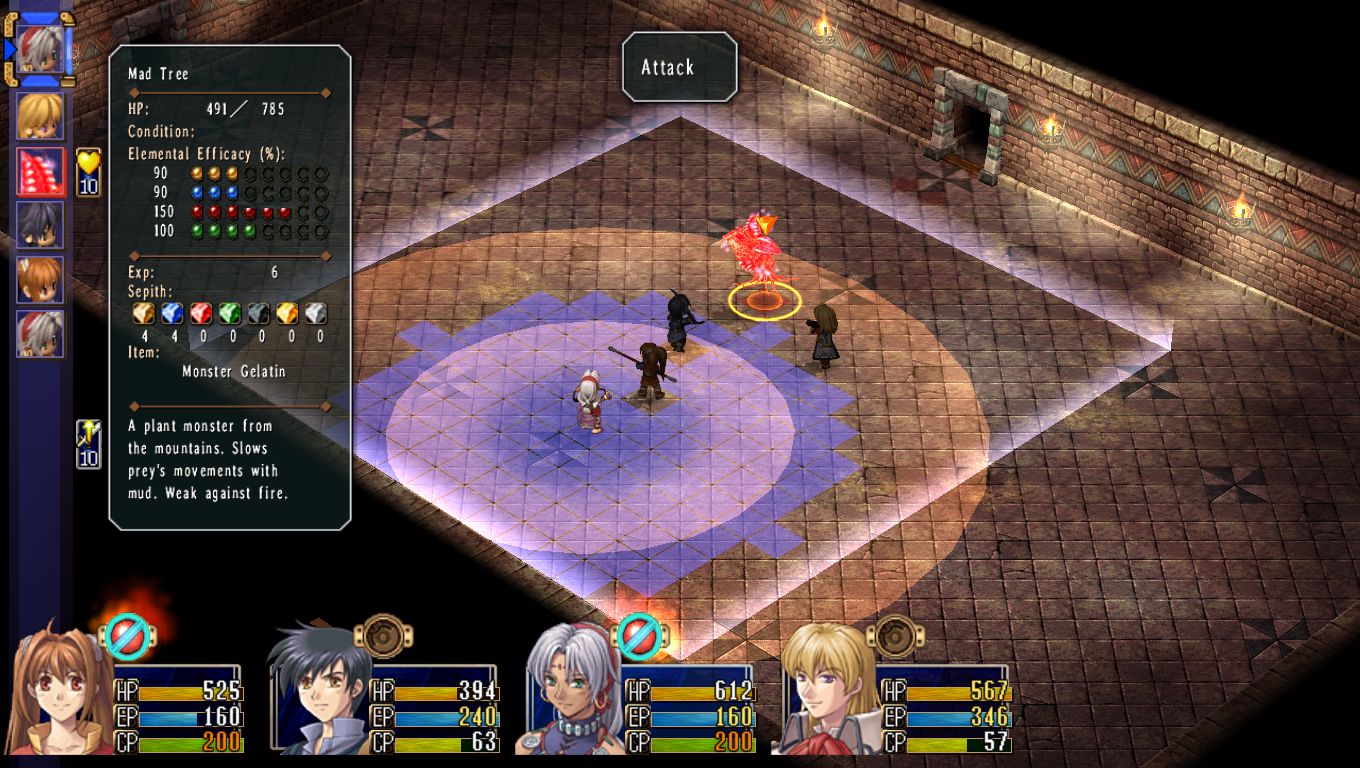
Battles take place on a bounded field and use a turn order shown along the screen. Position matters because characters and enemies can move before using attacks, arts or crafts, and area effects can reach more than one target. The turn bar can also assign bonuses, including healing or a guaranteed critical hit, to a particular action; those benefits can go to either side. Watching upcoming turns helps the player decide whether to spend an action quickly, move into range or interrupt an advantageous enemy turn. Basic attacks and damage build craft points, which fund character-specific crafts for damage, recovery or support. At a high enough reserve, a character can use an S-Craft, a stronger technique that spends those points; the related S-Break command lets it cut into the turn order. These systems make timing and party roles part of the same tactical picture. Quartz-based arts offer another way to exploit elemental weaknesses, while weapons and accessories complement a character’s abilities. The player can assemble a party of up to four from the available cast, so the active group’s range of attacks and support options changes as companions join or leave the journey.
Character growth comes from several connected sources. Winning battles awards experience and raises levels, which improve basic abilities, while shops and treasure supply new weapons, armour and accessories. Quartz can shift a character’s strengths or grant additional arts, so revisiting an orbment setup is useful when the party gains new options or faces a different kind of enemy. The guild’s request system adds a separate measure of advancement: completed jobs contribute to the junior bracers’ standing and give them more chances to assist the kingdom’s residents. Cooking provides another practical layer. The pair can learn recipes by trying dishes in restaurants and stalls, then prepare food from ingredients; some meals restore the party, while portable food can be used during battle. Equipment, arts, crafts, food and party composition all contribute to readiness, but they answer different needs. A new weapon raises direct damage, quartz can broaden tactical choices, and a support craft may help the group recover or control a fight. The game’s progression is therefore distributed across exploration, guild work, shops and battle rather than confined to level increases.
The presentation pairs detailed character portraits and illustrated story scenes with compact, angled environments and small character sprites. Town maps, roads and interiors communicate where the party is and how each destination connects, while dialogue and conversations with residents carry much of the characterization. The world’s technical vocabulary recurs in ordinary places: airships move people, shops sell practical goods and orbment equipment appears in battle preparation. This gives the setting a grounded rhythm in which a conversation or short errand can sit beside a broader mystery. The English PC version listed on Steam is the original game’s Windows edition, released in 2014, and XSEED also identifies a PlayStation Portable release. The later full remake, Trails in the Sky 1st Chapter, is a separate game. The original Windows edition retains its angled environments, turn-based battles and quartz-driven orbments. The chapter’s scale stays with Estelle and Joshua as they learn what bracer work entails and travel through Liberl one request at a time.
- Developer
- Nihon Falcom
- Genre
- Role-playing game with turn-based tactical combat