
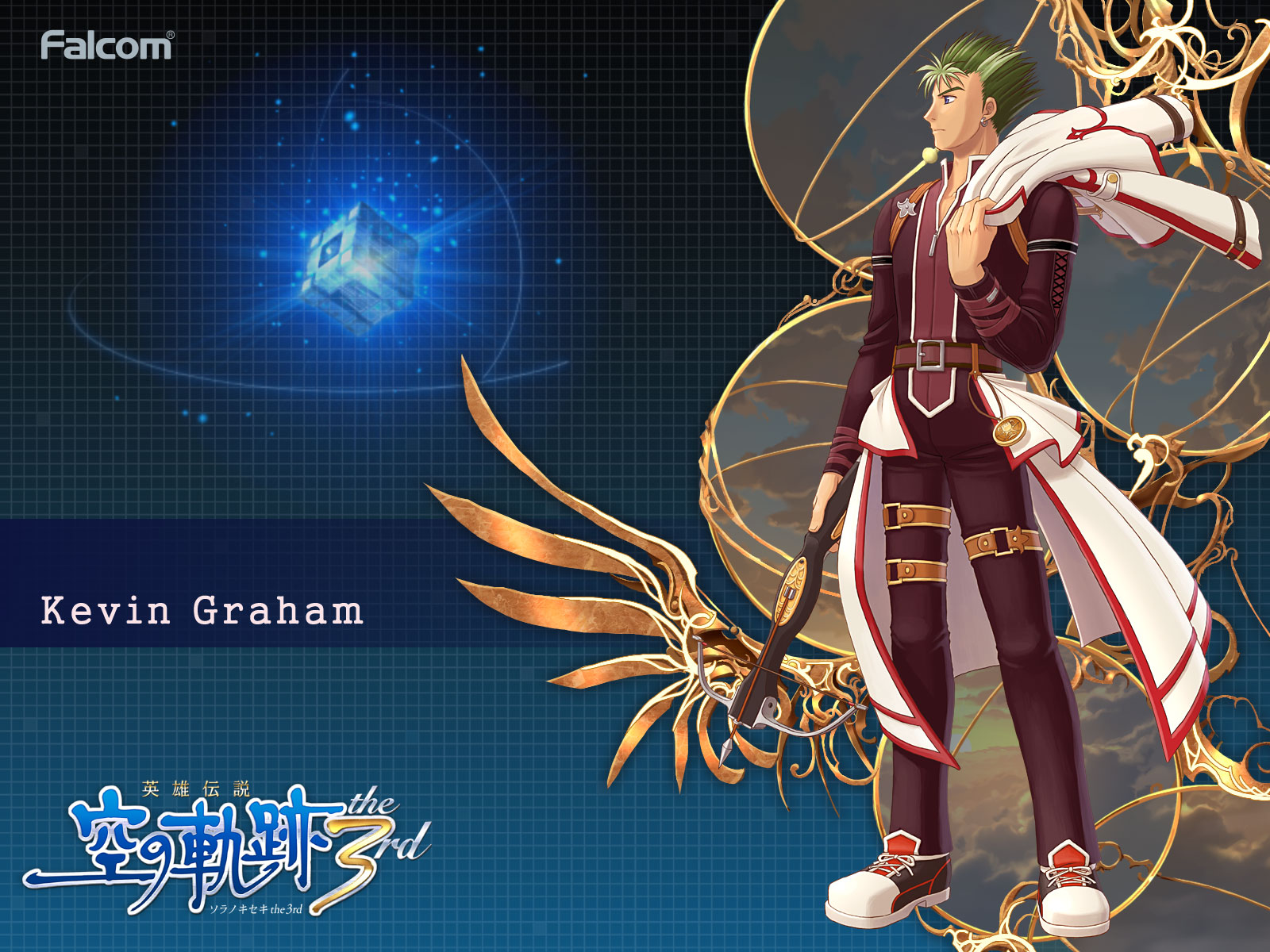
About The Legend of Heroes: Trails in the Sky the 3rd
Six months after Trails in the Sky SC, Father Kevin Graham and his childhood friend Ries Argent investigate an artifact for the Septian Church and become trapped in Phantasma. Explore its connected planes, gather familiar companions, face tactical battles, tune orbments with quartz, and open doors to optional character stories and diversions.
Set six months after Trails in the Sky SC, this third Sky game shifts the lead role from Estelle and Joshua to Father Kevin Graham. A routine assignment for the Septian Church sends Kevin to retrieve an artifact beneath Grancel Cathedral. His partner is Ries Argent, a novice Gralsritter and a childhood friend whose direct manner contrasts with Kevin’s easygoing humour. Their mission takes an unexpected turn when the artifact draws them into Phantasma, a strange realm governed by rules unlike those of Liberl. The premise gives the game a tighter central pair and a different shape from the earlier journeys across the kingdom. Kevin’s past becomes part of the story, while returning characters and their experiences remain present through the companions who arrive in Phantasma. The setup assumes familiarity with the preceding two games: the cast, the Church and the aftermath of SC all carry meaning from earlier events. It is a continuation of the Sky trilogy’s world, but its main plot follows Kevin and Ries through a contained, unfamiliar setting rather than sending Estelle and Joshua on another broad tour of Liberl.
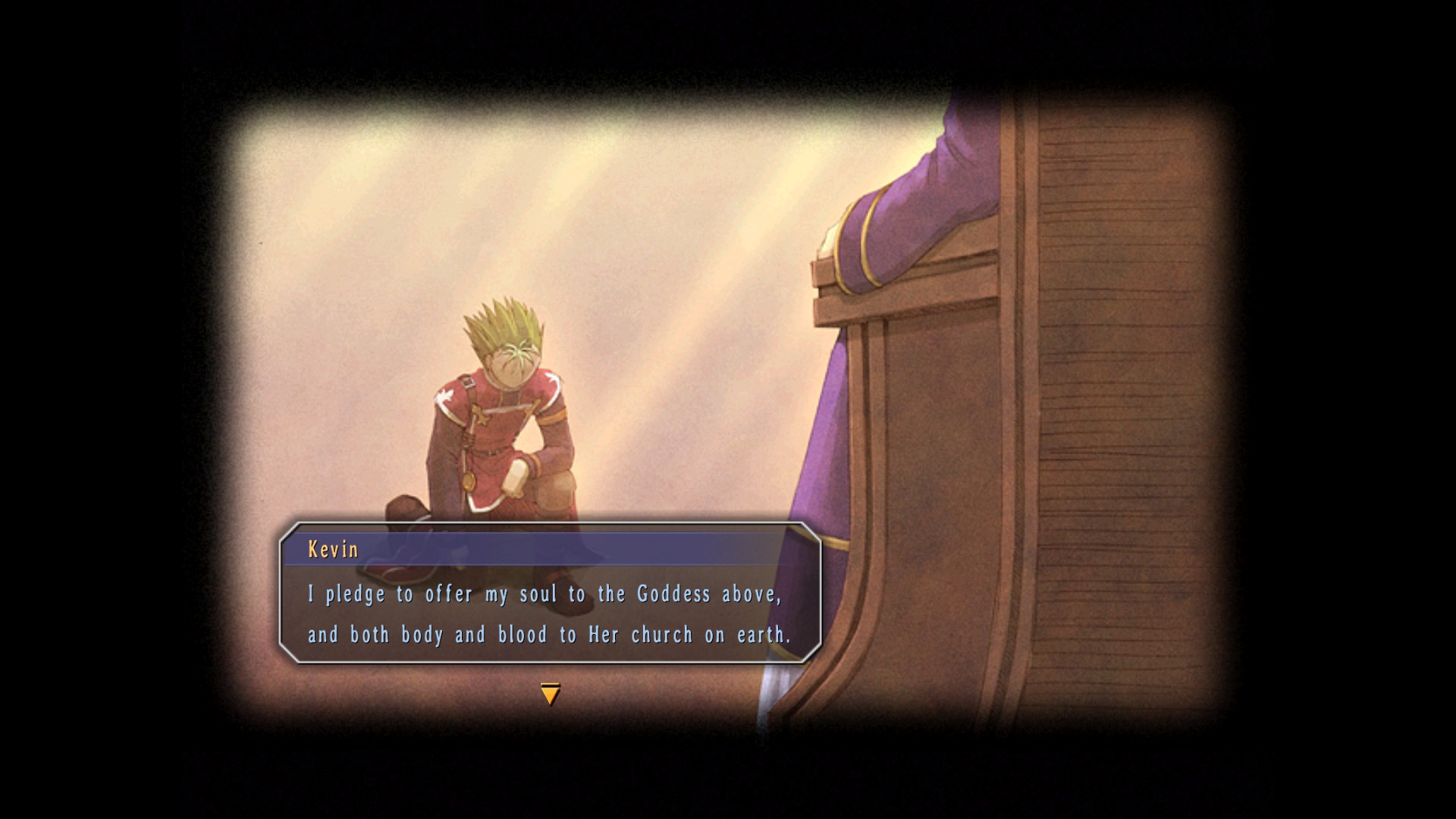
Kevin is both a priest and a member of the Gralsritter, the Septian Church’s order that investigates and recovers dangerous artifacts. His cheerful public manner is an important part of how he meets people, but the game gradually places more weight on the history beneath that persona. Ries is assigned as his squire and is not simply an escort: she is a central partner in the expedition, with her own familiarity with Kevin and her own place in the Church. Their conversations give the main journey a recurring point of view even as the party grows. Phantasma brings together people from the previous adventures, allowing Kevin and Ries to work alongside figures who once occupied different parts of the Sky story. The game therefore has two linked strands of attention: the immediate effort to understand the realm and find a route through it, and the personal histories that give the returning cast their context. The focus on Kevin also makes this installment useful as a bridge between the Liberl story and later parts of the wider Trails setting, though its emotional and narrative groundwork is most legible after FC and SC.
Phantasma is explored as a sequence of connected planes that open as the journey advances. The route is more dungeon-focused than the town-to-town travel of the earlier Sky games: each area offers passages to map, enemies to handle and new routes or checkpoints to reach. Some environments echo places associated with the earlier adventures, while others belong to the realm itself. Sealing Stones encountered along the way bring additional characters into the party, expanding the available roster and changing which combinations can be taken into the next stretch. Checkpoints provide places to recover and manage equipment, and previously visited points and doors can be revisited through fast travel. The Hermit’s Garden serves as a home base for organizing the party, buying supplies and preparing food. These conveniences matter because exploration regularly feeds back into party management; the player can pause between dangerous sections to adjust equipment or formation rather than treating every plane as a one-way corridor. Some sections temporarily limit direct travel, so reaching a new checkpoint still shapes the route forward.
Doors are the game’s most distinctive way of making its side stories part of exploration. Marked with Sun, Moon or Star symbols, they lead to separate episodes, challenges or diversions rather than ordinary rooms. Many ask for a particular character or a stated condition before opening; the person who fits a clue may need to be in the current party, while another door may depend on progress or a small task. Inside, a scene can show what a familiar character has been doing since SC, fill in earlier context, or stage an encounter that changes the pace of the dungeon. Some doors include self-contained minigames. Their content is optional, but opening them can also bring useful items and money for the main party. The doors let the game alternate between Kevin’s central route and short, focused views of the ensemble, without requiring every story to unfold during the same chapter. Because many scenes draw on relationships and events established earlier, they work best as additions to the first two games rather than introductions to the cast.
The party’s Orbments and quartz provide the main layer of character construction. Each character equips quartz in a personal Orbment, balancing direct bonuses to attributes with access to Arts, the setting’s name for spells powered by energy. Quartz carry elemental values, and the character’s Orbment lines affect which combinations and Arts become available. Quartz choices go beyond stronger equipment. One stone can improve a statistic, contribute toward a particular Arts threshold, or do both, while the layout differs between characters. A setup that gives a caster a broader collection of elemental attacks will not necessarily suit a close-range fighter who benefits more from physical strength or speed. Quartz and equipment can be changed as new options arrive, so preparation involves revisiting the menu when the roster changes or a difficult encounter exposes a weakness. The system is familiar to players of FC and SC, but the larger cast makes its trade-offs more visible: characters can fill different roles, and the available quartz must be distributed across more people than in earlier stages of the trilogy.
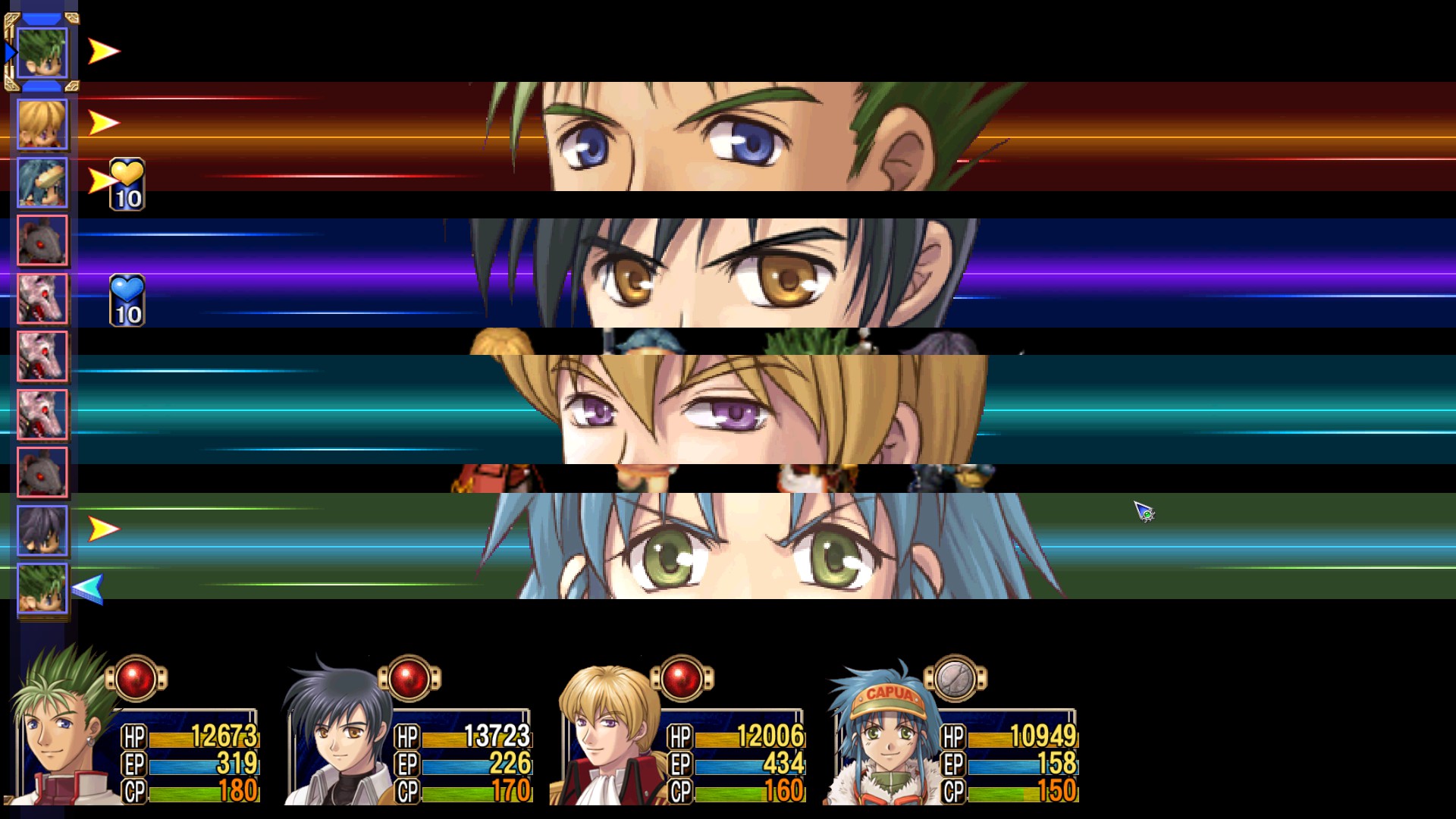
Battles use the series’ turn-based tactical field. Each turn presents choices such as a standard attack, a Craft, an Art, an item or movement to a better position. Area attacks make spacing relevant: a character can move away from a marked danger zone, while a well-placed attack may catch more than one enemy. Arts consume EP and can damage, heal or support the party; Crafts use character-specific abilities, and S-Crafts provide powerful special moves when enough CP has accumulated. Positioning and turn order sit alongside party composition and quartz selection, so an encounter can call for a different answer from simply choosing the highest damage option. The game brings back familiar companions and adds playable characters to the trilogy’s broadest roster, with a support position providing passive help to the active group. Chapter requirements can temporarily shape who is available, while later progression makes the wider roster relevant to party planning. Boss encounters and new kinds of creatures punctuate exploration, and difficulty can be selected at the start. The result keeps the underlying combat language of the previous games while asking the player to prepare for a more concentrated run of dungeons and battles.
Progress is tied to pushing into newly accessible sections of Phantasma, finding Sealing Stones, and deciding when to return to doors that have become available. The main route supplies the next story developments and encounters; optional doors add character episodes, activities and resources that can help with equipment or quartz. Checkpoints and the Hermit’s Garden make those decisions practical by giving the party places to regroup, shop and rearrange its members. Presentation stays within the visual language of the original PC-era Sky games, with compact character artwork, illustrated environments and battle effects; the score includes new music for the journey through Phantasma. The English Windows PC release followed the original Japanese edition and arrived in 2017 from Nihon Falcom, XSEED Games and Marvelous USA. Falcom also made later versions, including Evolution, whose platform changes are separate from the original PC presentation. The story is designed as the final entry in the original Sky trilogy, and its cast-focused episodes complement rather than replace the main journey with Kevin and Ries.
- Developer
- Nihon Falcom.
- Genre
- Single-player story-focused turn-based tactical RPG; Steam categorizes it as an RPG and its official Falcom Windows record calls the original a story RPG.