
About The Legend of Heroes: Trails in the Sky SC
The Legend of Heroes: Trails in the Sky SC continues Estelle Bright’s journey across the kingdom of Liberl after Joshua disappears. As she searches for him, the Bracer Guild sends her to investigate the Society of Ouroboros. Travel, local requests and turn-based battles connect this character-driven sequel to the events of the first chapter.
Trails in the Sky SC begins soon after the events of Trails in the Sky, with Estelle Bright facing Joshua’s sudden departure and the unanswered questions surrounding his past. Her search gives the sequel a personal centre, but it also draws her into a wider threat: the Society of Ouroboros, a secretive group whose involvement in Liberl’s recent crisis has become visible. Estelle is a young bracer, part of an independent guild that helps people regardless of government affiliation. As the guild assigns work connected to Ouroboros, the story moves between the bond at the heart of Estelle’s journey and the political and historical forces affecting the kingdom. This is a direct continuation, bringing back familiar characters and places while expanding the conflict established in the first chapter. Its opening situation therefore depends on the prior adventure: the disappearance, the relationship and the newly exposed organization all carry forward rather than being introduced as unrelated mysteries. The stakes widen from a personal search to questions about the safety and future of the whole kingdom.
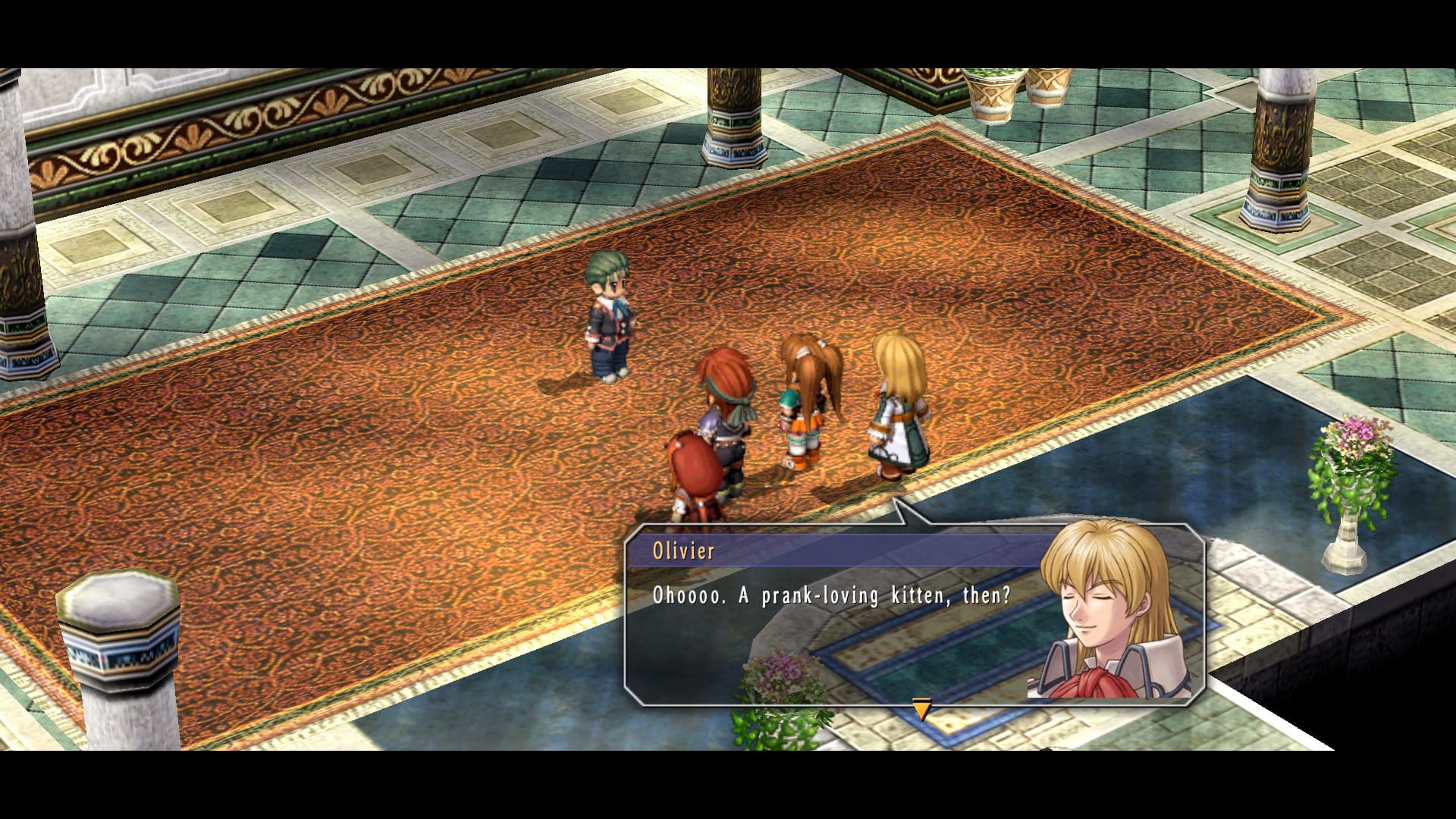
Liberl is explored as a connected country rather than as a single uninterrupted wilderness. Estelle travels between towns, roads and other familiar or newly encountered locations, revisiting parts of the setting in circumstances changed by the story. Towns provide guild branches, shops, lodging and people with requests; routes between them lead to monsters, treasure chests and points of interest. The field view also makes enemies visible before combat begins, so approaching or coming into contact with them starts an encounter. This rhythm of travel, local activity and story progression gives the larger conspiracy room to unfold alongside everyday life. The setting’s detail comes partly through its population: conversations can add context to a place and its residents, and the cast of non-player characters has its own changing concerns as events develop. Revisiting a location can place an ongoing story against an ordinary town routine, while new areas extend the kingdom’s geography. The player alternates between following the main objective and taking time to inspect the people and routes around it.
Bracer work supplies a practical reason to investigate those places and speak with their residents. Requests are posted through the guild and can involve finding a person or item, dealing with a dangerous monster, following clues, or helping with a local problem. Completing a job and reporting back brings money and items, while optional work gives the player additional reasons to explore beyond the main route. Some tasks ask for closer observation, such as following a scavenger hunt’s clues, and others lead to hidden opponents. The guild structure keeps Estelle’s service role in view even when the central plot grows more urgent: she pursues Joshua while responding to people who need help along the way. Shops, books and conversations add further detail about Liberl, its customs and the individuals encountered during travel. Fishing and other small diversions provide breaks from quests and battles. The board-and-report cycle also gives side work a clear endpoint: accepting a request is only the start, and returning to the guild records its completion and provides the stated reward. Such jobs can make a journey through an already visited area serve more than one purpose.
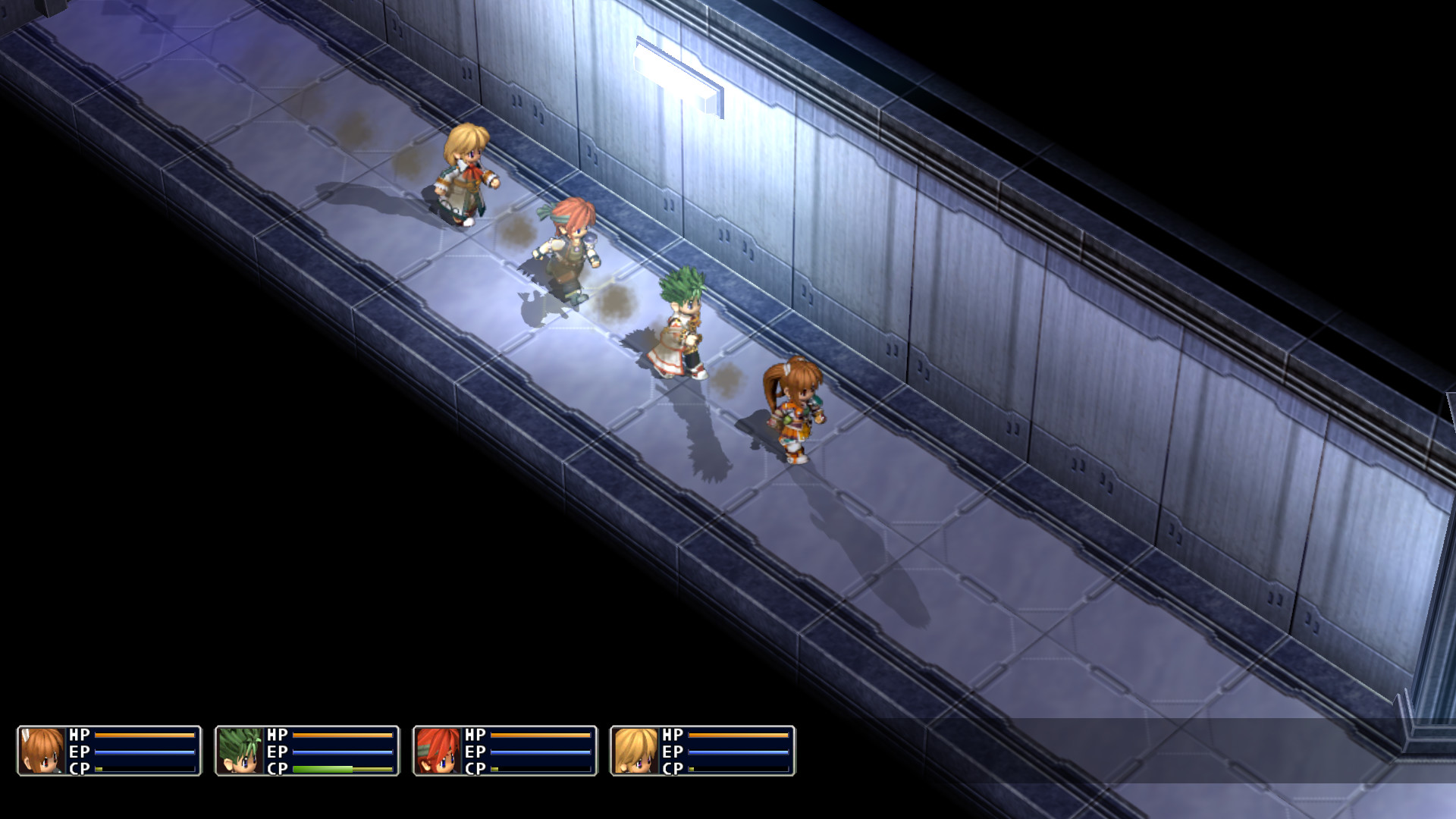
The relationships among Estelle, Joshua and the returning cast carry the sequel’s continuity. Estelle’s search concerns someone she grew up with and cares about, while the circumstances of his disappearance make her reconsider what she understands about his history. Other companions from the earlier adventure return at different points, and new characters join the wider group as the journey advances. Ouroboros gives the unfolding events a common opposition, but the story also connects its members and schemes to people Estelle already knows. The result is a narrative that builds through conversations, character-specific scenes and encounters across Liberl rather than relying only on a sequence of battles. The game keeps the broader mysteries in motion while allowing its party members’ motivations and pasts to become part of the present journey. The first chapter’s conclusion is treated as context for what follows, so returning companions arrive with established relationships and shared history. New meetings then change who is travelling with Estelle and broaden the group’s perspective on the conflict. The focus here remains on that setup and structure, without revealing late-story turns.
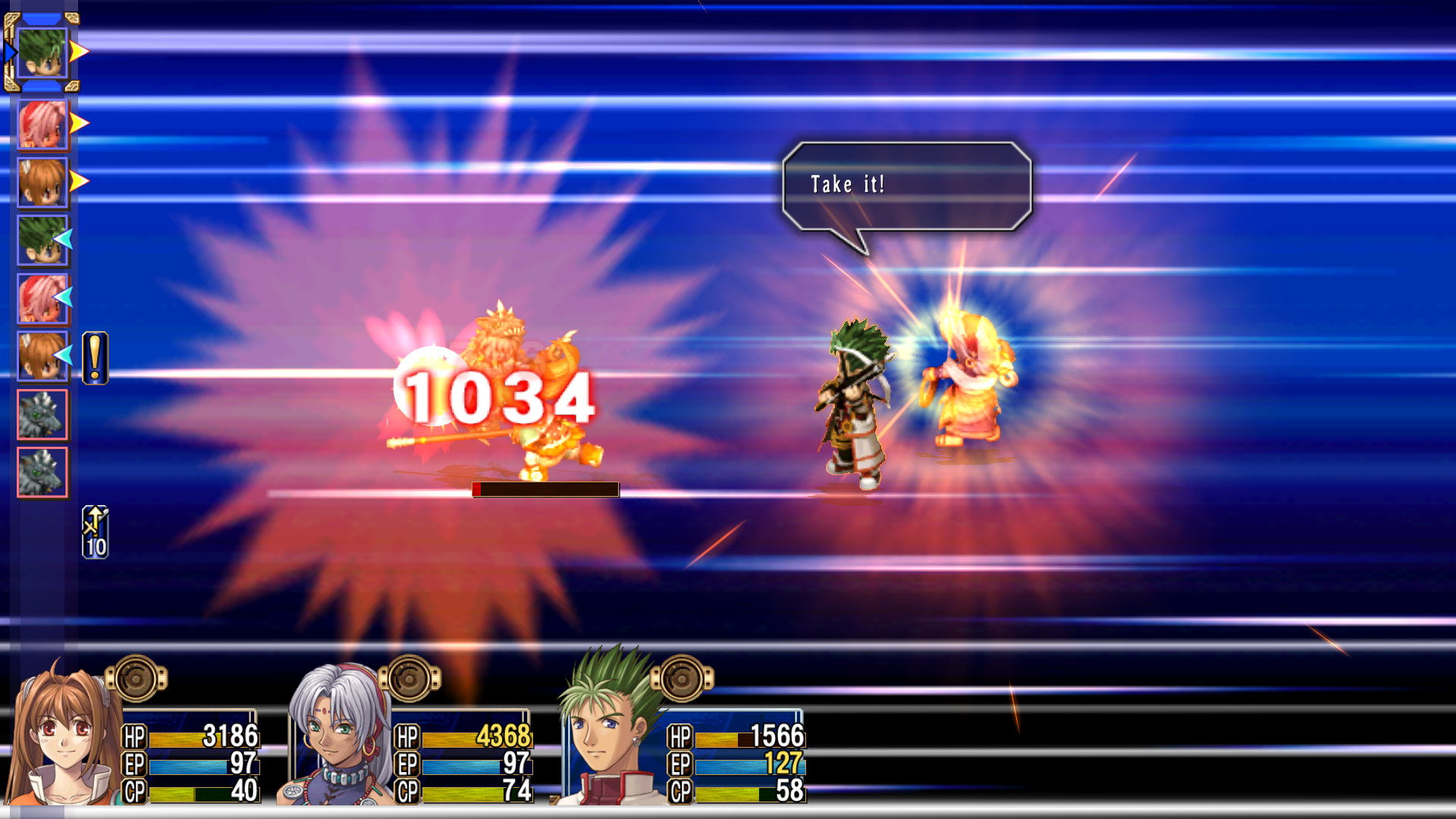
Combat uses a turn-based system played out across a small tactical field. Up to four active party members can move around the battle area, and position affects which attacks can reach a target or cover nearby enemies. On each turn, a character can use a regular attack, move, use an item, escape, activate a craft or cast an art. Crafts are character-specific abilities powered by CP, which builds through actions in battle and taking damage. At higher CP, characters can use stronger S-Crafts; these powerful actions can interrupt the normal turn sequence. The cast also has combination crafts that let several members attack together. Arts are the system’s spell-like abilities, with effects shaped by the quartz equipped in a character’s orbment. These choices make each encounter a mix of positioning, turn timing and resource use, rather than simply selecting a target and repeating a basic attack. The party changes over the story, and a larger group of playable characters means the available skills and roles shift as companions join or leave. Regular enemies are encountered on field routes, while the game also includes more demanding fights tied to quests and the main story. Learning the command options and preparing quartz before a difficult encounter both matter to the tactical loop.
Orbments connect character setup to both magic and statistics. Each character carries a battle orbment with slots for quartz, which can grant stat changes and make arts available. Quartz is made from elemental septium, gathered through battles and found during exploration, then exchanged or processed through orbment services. Its elemental values and combinations determine which arts a character can use, so changing the arrangement can shift someone toward healing, attack magic or other support. SC begins with seven open slots for each character, while stronger quartz may require slot upgrades that consume septium. New orbments in this chapter do not accept quartz carried over from the first game, so the sequel asks players to build their configurations anew. Equipment and character growth add further ways to prepare: experience raises levels and unlocks character-specific crafts, while new gear and quartz help respond to the enemies and challenges ahead. Septium is useful both for shaping this equipment system and for enabling its improvements, so spending it has a planning dimension. A setup can be adjusted as different quartz become available, balancing immediate statistical boosts against access to particular arts. This complements fixed character identities: quartz changes what a party member can do without erasing the distinct crafts that person learns.
The original PC sequel was released in 2015 by Nihon Falcom, XSEED Games and Marvelous USA. It follows the PlayStation Portable edition, while the later Trails in the Sky 2nd Chapter remake is a separate title with its own presentation. The presentation retains a detailed, sprite-based look, with character animation on field maps and in battles, illustrated dialogue scenes and animated sequences. Sound Team jdk’s music accompanies locations and story moments, including material that recalls the first chapter as Estelle returns to familiar places. Forty-four Sound Team jdk tracks accompany the adventure, placing familiar musical ideas beside new scenes as Estelle crosses Liberl again. Dialogue and character portraits carry much of the narrative between exploration and combat, with animated scenes marking selected events. These elements support a story-led adventure whose main activities remain travelling through Liberl, taking bracer requests, configuring orbments and fighting turn-based encounters.
- Developer
- Nihon Falcom
- Genre
- Single-player, turn-based role-playing game; the Steam listing categorizes it as an RPG.