
About The Legend of Heroes: Trails beyond the Horizon
As Zemuria prepares for humanity’s first space launch, spriggan Van Arkride, Rean Schwarzer, and Father Kevin Graham are drawn into a high-tech training exercise run by Marduk. Their separate routes converge on mysteries surrounding Calvard, the continent, and the forces gathered around this momentous technological leap.
Calvard’s planned leap into space is the event around which Trails beyond the Horizon builds its central mystery. The Republic announces Project Startaker, a national effort to send humanity beyond its familiar world, while the high-tech security company Marduk invites Van Arkride and his associates to take part in a training exercise. The invitation brings Van together with Rean Schwarzer, the Ashen Chevalier from the Erebonian Empire, and Father Kevin Graham of the Septian Church. Each arrives from a different place in Zemuria and carries relationships and responsibilities that reach beyond Calvard. The exercise becomes a point where those separate concerns meet the questions raised by the space program. The game’s setup asks how a society that has advanced so quickly can approach the edge of its known world, and what the continent’s history has to do with that progress. Its opening premise therefore connects a concrete public project with a much older mystery about Zemuria itself, without reducing the story to a single investigation or one character’s local problem.
The setting widens from Van’s work in the Republic to a continent-wide story told through three protagonists. Van remains a spriggan, a fixer whose work can take him across the boundary between lawful requests and matters that formal authorities cannot or will not handle. Rean’s presence brings the perspective of Erebonia and people connected to his earlier life, while Kevin’s position within the Septian Church gives his route a different institutional context. Their reasons for involvement are distinct, so following them allows the narrative to cover events and relationships that one character could not plausibly encounter alone. This structure is useful to understand before entering the story: it is a continuation of Van’s Calvard arc and also a convergence point for figures from other Trails arcs. The stakes named in the setup extend beyond one republic to Zemuria as a whole, but the publicly described premise keeps the underlying answers concealed. The game introduces those questions through the characters’ separate routes rather than announcing a complete account of the world’s secrets at the outset.
Calvard’s identity comes through its mixture of people, institutions, and rapidly changing technology. The Republic has been framed across the arc as a place shaped by immigration and by contrasts between communities, from dense urban districts to towns and regions with different local character. In this entry, that national setting is placed beside the international implications of Project Startaker. The contrast matters: the immediate activity is a modern technological undertaking, while the story’s questions reach back to the foundations of Zemuria and the way its technology has developed. Orbments are part of that foundation, linking everyday life and the series’ larger mysteries; the story turns attention to how the world’s systems work and how they could have progressed so quickly. Van’s accumulated contacts in government and among groups operating outside it also become relevant to the unfolding event. That combination gives the setting more than a backdrop role: public ambition, private networks, and the continent’s shared history all shape why the launch matters to people with very different loyalties.
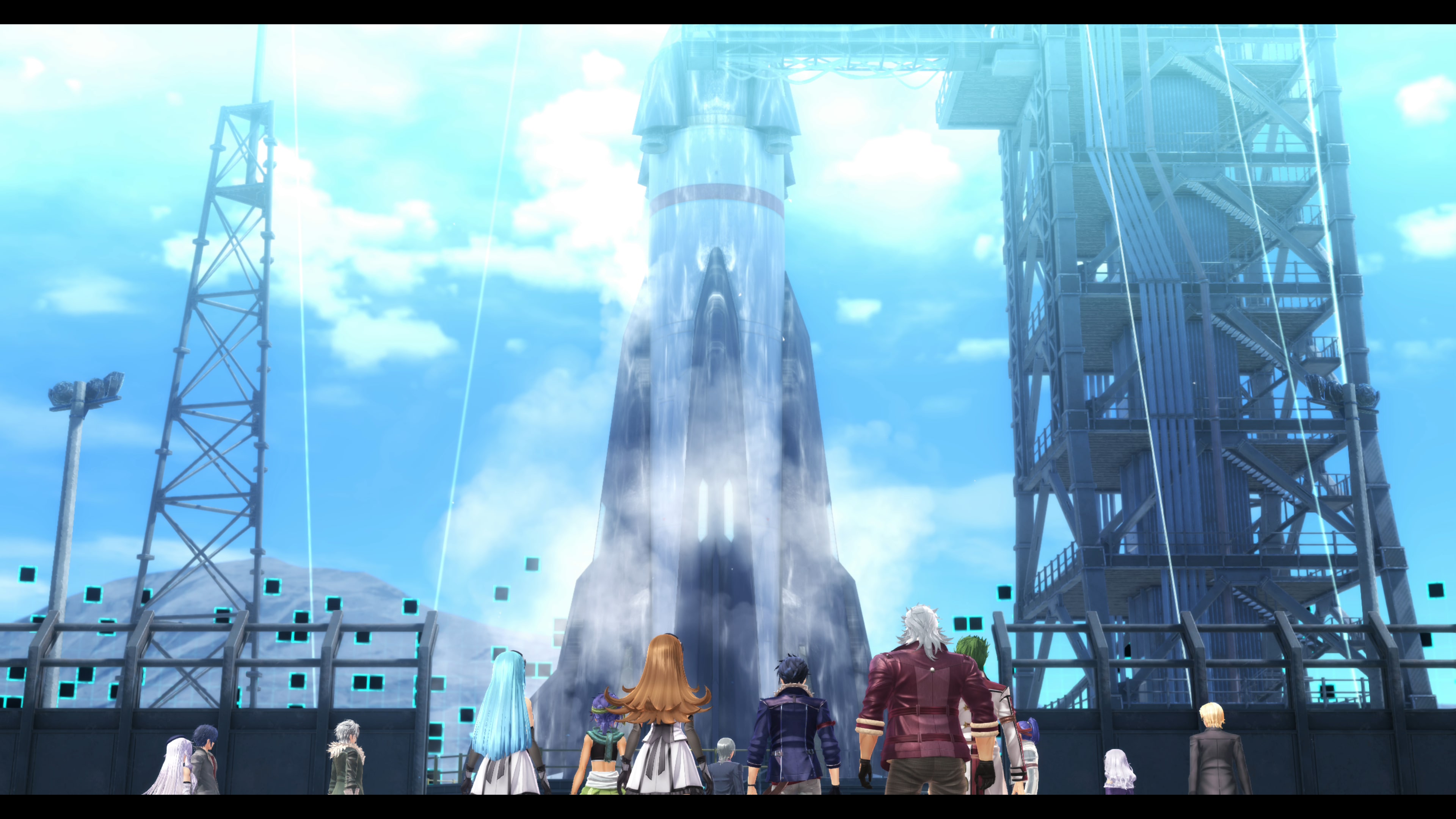
Progress through the main adventure combines travel through detailed locations, conversations, and requests with the larger story routes. Travel across Calvard and meetings with allies sit beside optional requests, which have a visible place in the chapter structure. Completing quests contributes SP; at chapter ends, a report records progress, and accumulated SP affects rank and score and can lead to additional rewards such as accessories. This makes side requests part of the game’s progression economy as well as a way to encounter local concerns and add context to the world. New chapters or locations also bring updated stock to shops and vendors. The map marks shops with new inventory, so checking it can reveal where weapons, protective equipment, food, or drinks have become available. Equipment helps characters handle stronger enemies, while consumables can restore health outside or during combat and may conserve EP that would otherwise be spent on healing arts. Exploration thus feeds into both narrative context and preparation rather than functioning only as movement between story scenes.
Encounters use two connected battle modes. Field Battles are real-time action sequences in which a character can strike repeatedly, move around an enemy, and evade incoming attacks; building pressure can stun an opponent and open a transition into Command Battle. The publisher describes changing from the action mode to the turn-based mode, where the player chooses attacks and skills with more deliberate timing. The transition lets routine enemies be approached directly while retaining the tactical system for encounters where targeting, area effects, and turn order require more planning. Field combat also rewards reading enemy movement: a well-timed dodge can trigger a Cross Charge, a counterattack that adds damage, while a stun can create the opening for the transition to turn-based commands. Some enemies resist flinching, so continuous attacks are not always enough to interrupt them. These mechanics connect movement and offense: positioning, dodging, and recognizing an opening affect how safely an encounter can be brought under control before committing to the command interface.
Command Battles focus on selecting actions and shaping the party’s position and turn sequence. Command mode shifts the focus from real-time spacing and evasion to choosing turn-based actions and planning the party’s use of abilities. Quartz is not merely a set of flat bonuses: elemental values and placement across an Orbment’s lines can combine to unlock Shard Abilities, so changing the arrangement can alter what a character contributes. Shard Commands add a party-wide layer, activated with S-Boosts to grant benefits during battle; characters and holo cores have different commands, giving party composition a tactical consequence. Z.O.C. briefly slows enemies and creates a window for multiple actions while increasing attack and stun damage. Awakening temporarily enhances particular characters, including Van when he assumes his Grendel form. These tools operate in both Field and Command Battles, giving players ways to convert a moment of advantage into damage or control. In command encounters, spacing also matters: wide attacks can punish clustered allies, but separating everyone too far can make follow-up attacks and shared bonuses harder to use. Quartz rarity and elemental value also affect which abilities become available, and stacking Quartz can reveal stronger passive effects. This gives equipment changes a second purpose beyond raising statistics: a setup can be adjusted to support a preferred combat role or to meet a useful ability threshold. Golden Eye is a field utility unlocked by placing the required Mind Quartz on the Extra Line; it reveals treasure chests while exploring. This illustrates how an Orbment configuration can influence what the party notices outside battle as well as what it can do during an encounter.
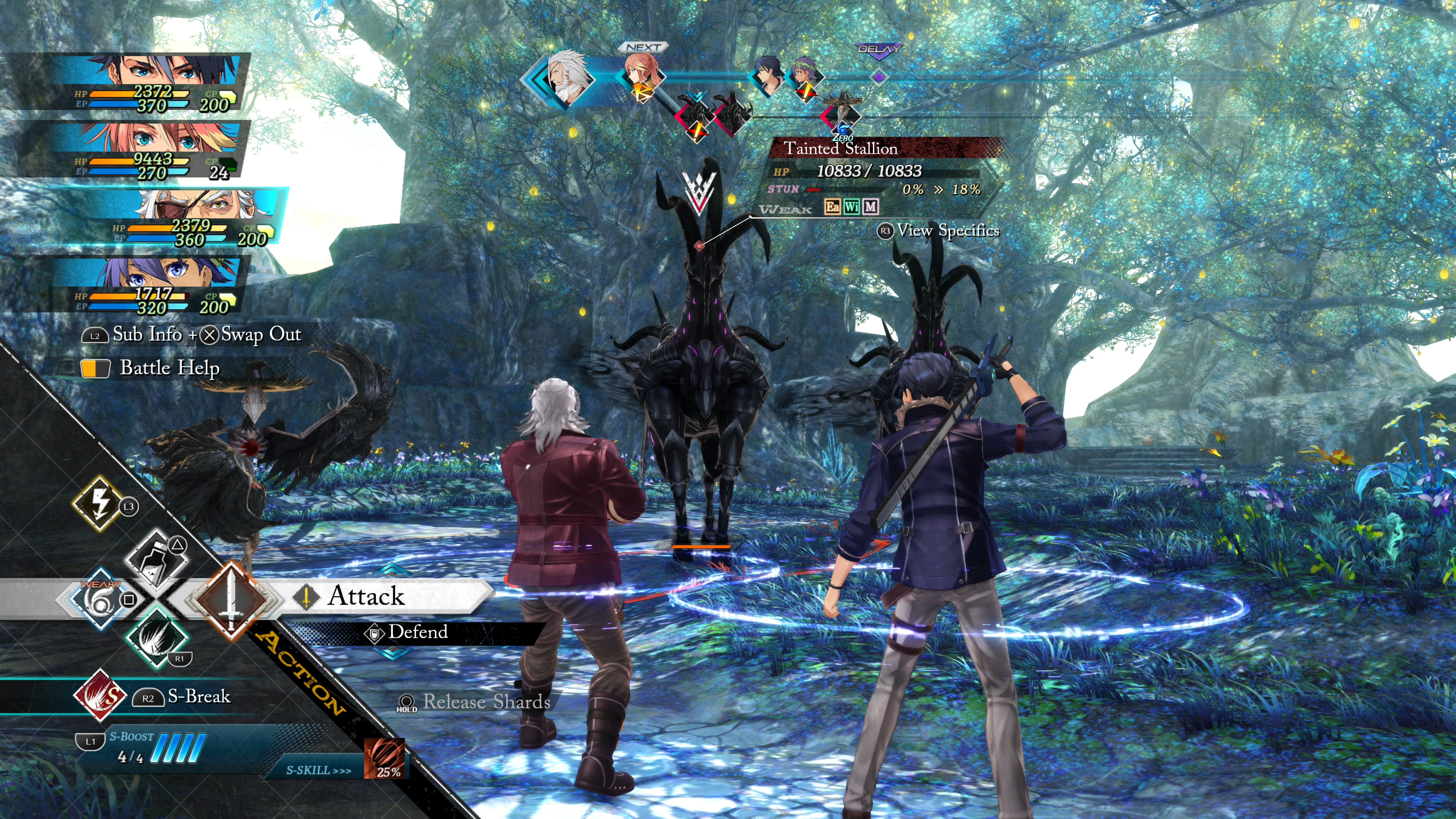
The Grim Garten gives the broader cast a separate dungeon framework connected to the conflict with Ouroboros. Marduk’s virtual Märchen Garten has been hijacked and transformed into a darker space, drawing Van, Rean, Kevin and their allies together despite their separate story routes. As the main adventure advances, further floors open with monsters and treasure to confront. The Garten is not only a sequence of battles: its progress can reveal more about Ouroboros and Zemuria, and optional areas contain monsters, treasure, equipment, and character backstories. Assembling a team from allies gathered across Calvard and beyond is part of its identity. Some of the dungeon’s later content is optional, and additional floors open as the main story advances; rewards earned there can support the main campaign. This makes the Garten a parallel space for party construction, combat, and background material, distinct from the three protagonists’ routes through the central story.
- Developer
- Nihon Falcom
- Genre
- Role-playing game