
About The Last of Us Part I
In a United States fractured by a fungal outbreak, smuggler Joel is tasked with escorting fourteen-year-old Ellie beyond a military quarantine zone. The Last of Us Part I rebuilds the original single-player story for modern hardware and includes Left Behind, a prequel chapter centred on Ellie and her friend Riley.
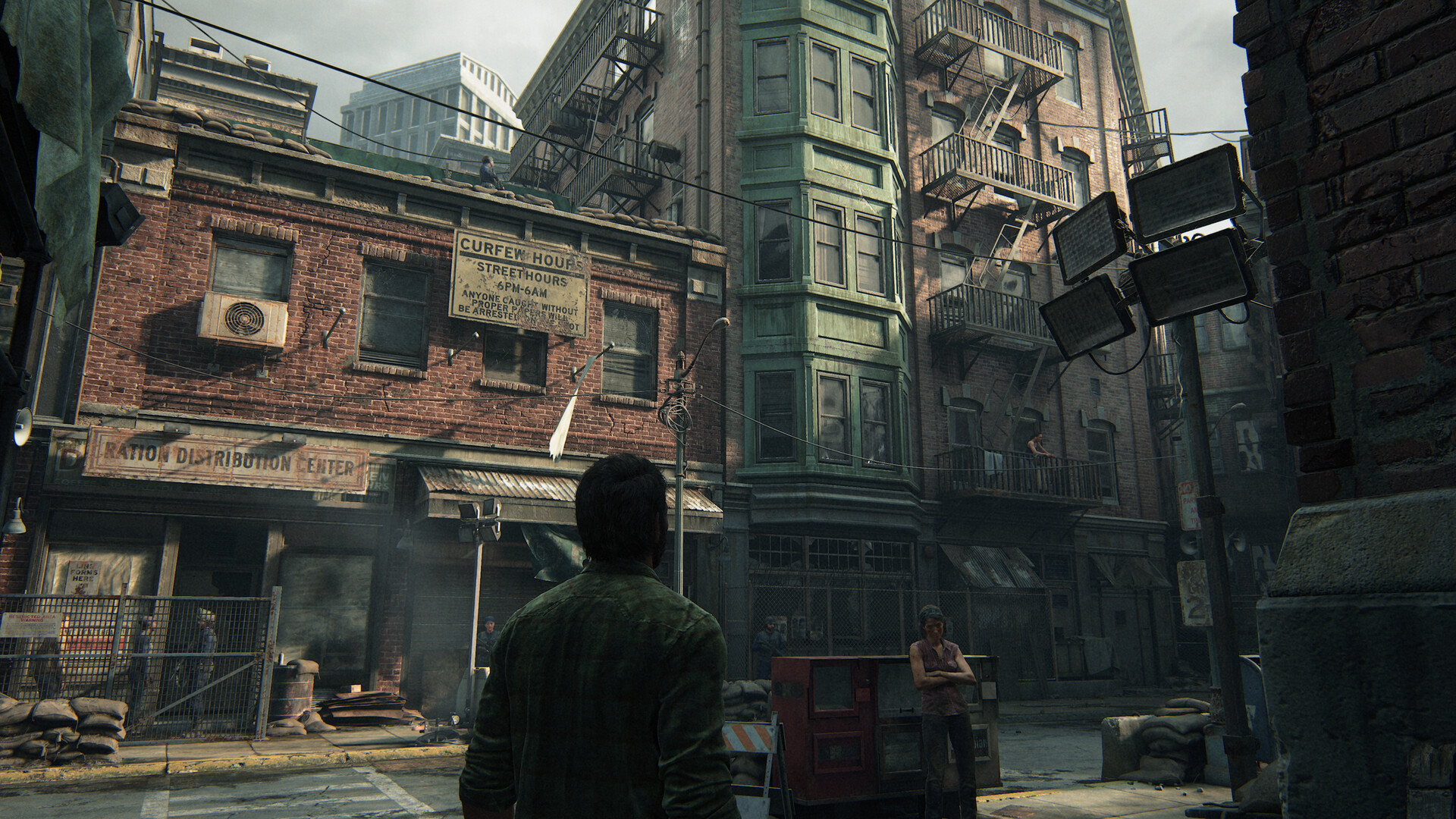
The Last of Us Part I follows Joel and Ellie through a post-pandemic United States where cordoned settlements, abandoned infrastructure and overgrown streets sit beside the continuing danger of the infected. Joel begins as a smuggler operating in a military-controlled Boston quarantine zone; a job involving Ellie turns into a journey across the country. The pair pass through communities and contested territory shaped by different survivor groups, including the Fireflies, a resistance movement opposing military rule. Their route is told as a single-player, character-led action adventure, with quiet travel and conversations giving way to searches, ambushes and fights. This edition is a ground-up remake of the 2013 original, with rebuilt presentation, modernized gameplay and accessibility features. Its principal story remains the first game’s journey; it is not The Last of Us Part II, whose story follows later events and a different central perspective.
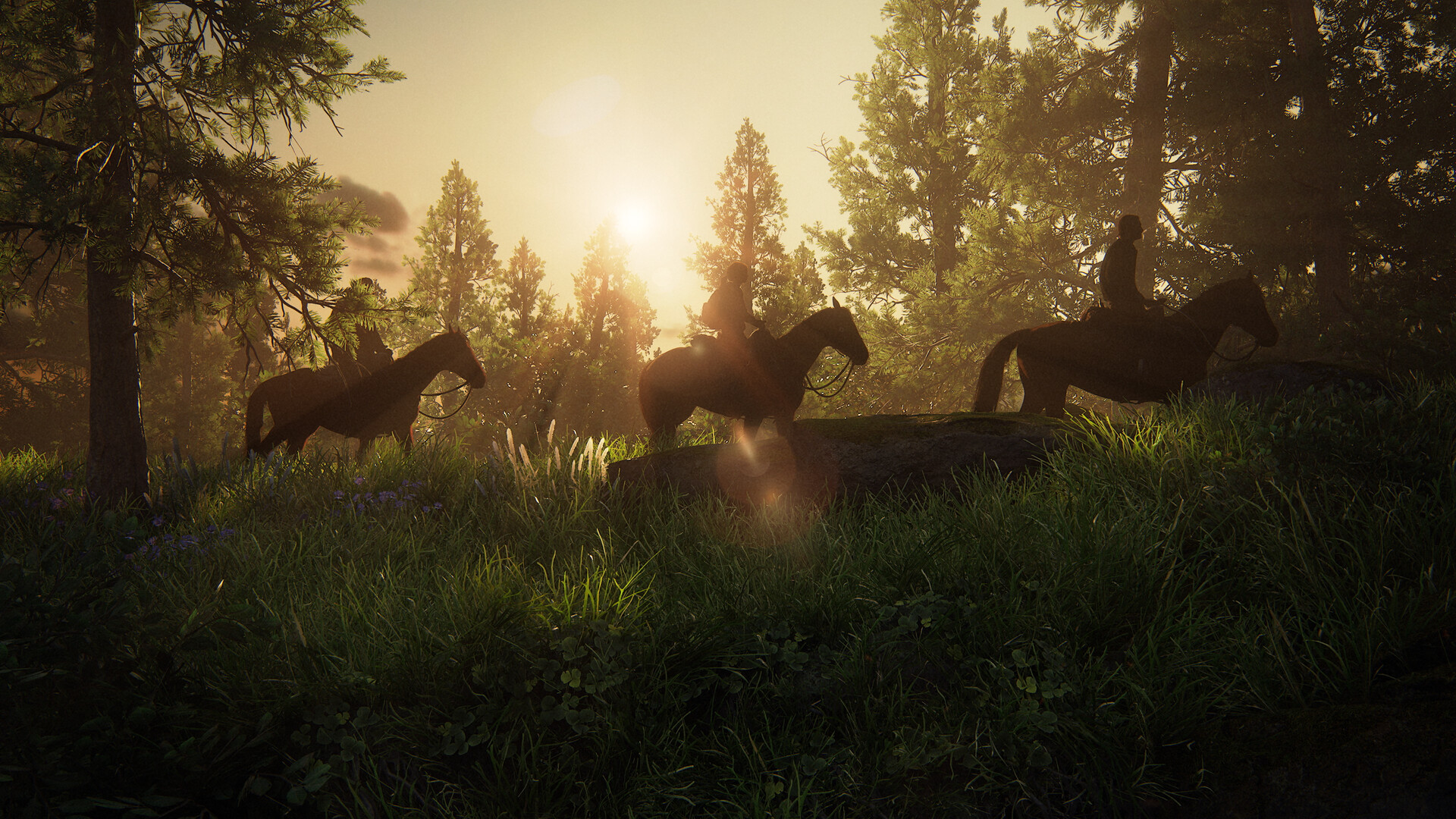
Travel is arranged as a sequence of connected environments rather than an open-world map. Joel and Ellie move through ruined buildings, streets, forests and other spaces where supplies and clues are tucked away from the main route. Looking around can uncover materials, ammunition and notes that add context to the places they cross, while obstacles such as blocked paths turn movement into small environmental problems to solve. Ellie accompanies Joel through much of the main story, reacting to the surroundings and the people they encounter; the changing relationship between the two is carried through both dialogue and the practical rhythm of protecting one another. The journey also introduces other survivors whose immediate needs and loyalties complicate the pair’s passage. The focus stays on reaching the next safe point, understanding the local threat and deciding how to get through it with the resources at hand.
Encounters ask the player to read enemies and sound as well as aim. Joel can crouch and move quietly, use cover, or run when a stealth approach breaks down; faster movement makes more noise, and Clickers can detect nearby sounds even when he is crouched. Human opponents and infected behave differently, so a clear view of the room helps determine whether to slip past, distract a group or fight. Listen Mode can help reveal nearby threats, but it does not make close movement entirely safe. Weapons include firearms and improvised melee tools, while thrown objects can draw attention away from a route. Ammunition is limited enough that a loud fight can consume supplies useful later. Part I keeps this tense, resource-conscious rhythm while rebuilding the original single-player journey with updated controls and presentation.
Scavenging feeds a compact crafting system that can matter during an encounter. Rags and alcohol can be combined into a health kit or a Molotov, so the same supplies serve recovery or attack; blades and binding make a shiv or can reinforce a melee weapon. Other recipes use materials such as explosives and sugar. Ingredients are found in small amounts, and each recipe competes for the items it needs, making the crafting menu a set of immediate tradeoffs rather than a simple upgrade list. A nail bomb can affect a group, a smoke bomb can create a chance to move without detection, and a shiv can open certain locked doors that hide supplies. Crafting takes time in the field, so making an item during a fight means accepting a pause while enemies remain a threat. The player has to decide what the next encounter calls for and what useful option to leave unmade.
Workbenches provide a separate form of equipment progression. Joel spends collected parts on weapon upgrades, with the available changes depending on the weapon and the tools he has found. The upgrades alter practical properties such as handling or capacity, rather than creating a branching character class. Supplements are used for skills such as improved health or faster actions, and training manuals can strengthen the effect of certain abilities. Because parts and supplements are gathered while travelling, the player cannot simply buy every improvement as soon as it appears; choosing what fits the next stretch of the journey gives exploration a direct connection to combat preparation. The game continues to advance through its story chapters, introducing new places and threats rather than offering a repeatable loot grind. Accessibility options also let players tailor aspects of the experience, and the PS5 edition uses DualSense effects and 3D audio with compatible equipment.
Left Behind gives Ellie and Riley a playable chapter of their own, set before the main journey and focused on the time they spend together. Its quieter mall scenes include small interactive diversions: Ellie can compete with Riley in a brick-throwing contest, try an arcade cabinet and take part in a water-gun game that turns into hide-and-seek. Those playful activities make room for the pair’s friendship within a world otherwise defined by danger. Its combat sequences place Ellie in hazardous spaces where human survivors and infected can occupy the same area. Bricks and bottles can lure infected toward the humans, allowing the two hostile groups to fight while Ellie uses the opening to get through. This changes how she can manage a crowded encounter without adding a separate progression system. Left Behind is included with Part I’s single-player story; Factions, the multiplayer mode from the original release, is not included.
- Developer
- Naughty Dog
- Genre
- Single-player third-person action-adventure with survival-horror elements