
About The Last Faith
The Last Faith follows Eryk through a gothic world of ruined settlements, ancient religions and supernatural threats. Seeking salvation from a condition that erodes his mind and conscience, he explores connected regions, fights with weapons, firearms and spells, and uncovers skills that open new routes.
Eryk awakens in a ravaged world without a clear memory of his immediate past. His mind and conscience are deteriorating, and the search for salvation draws him into a cursed journey through places shaped by old religions and divinities. Snow-covered mountains, moonlit castles and damaged settlements form a connected gothic landscape rather than isolated stages. Encounters with characters and discoveries gradually add context, while the narrative stays close to Eryk’s affliction and his attempt to understand what is happening. Exploration has a purpose: moving deeper into unfamiliar territory is part of his search for an answer, and also the means of reaching new confrontations. The world presents human ruins and supernatural threats, with the player learning about its past through the journey.
Movement and combat occupy the same side-view spaces. Eryk runs, jumps, evades and attacks while navigating passages, platforms and enemy placements, so progress involves reading terrain as well as threats. The world is nonlinear: a blocked passage or unreachable area can remain as a landmark until a newly acquired skill, item or weapon changes what Eryk can do. Returning with expanded abilities may reveal routes previously closed. This connects combat rewards to navigation. A new tool may make Eryk stronger in a fight, but it can also alter how he crosses the map and which branches become accessible. The player alternates between advancing into unknown areas, testing routes and revisiting places whose obstacles now seem manageable. The journey grows through geographic discovery and collected skills.
Fights ask players to choose among different attack ranges and resource costs. Melee weapons provide direct close-range damage, firearms let Eryk engage farther away, and arcane spells add another form of attack. The game offers a substantial arsenal rather than one fixed weapon, and its weapons and spells can be developed as the adventure continues. Dodging helps avoid attacks and reposition for a counterstrike; careful timing matters because enemies and bosses punish an exposed approach. When an opponent is vulnerable, Eryk can perform a custom execution, turning an opening into a decisive finishing move. Each encounter becomes an exchange of observation and response: identify an attack, select a safe opening, and decide whether to stay close or use a ranged option. Equipment shapes combat choices.
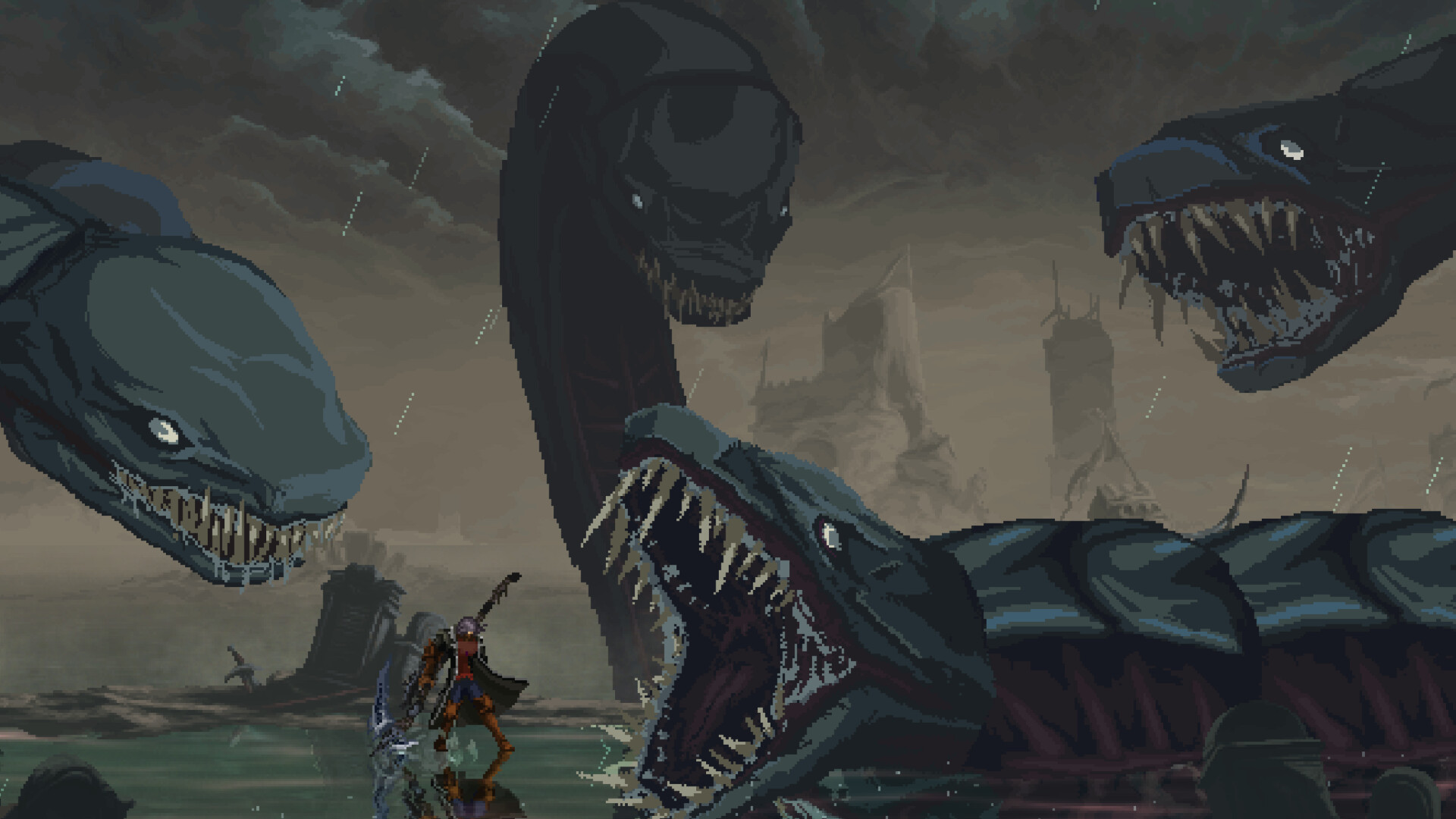
Character development combines equipment and abilities with an attribute-based role-playing layer. Eryk collects items and skills that improve his combat options, while weapons and spells support different approaches to the same enemy. The game includes familiar attributes such as Dexterity and Vitality alongside Fate and Instinct; the detailed effects of the latter are not explained consistently in the sources checked, so they are not assigned invented functions here. Improvements make the character more capable, but the arsenal asks the player to choose what fits their preferred range and pace. Because the world stays interconnected, development is not only about damage or survival. Unlocking a movement skill or finding a useful item can convert a previously impassable barrier into a route forward. Progress affects both fights and geography.
Rest points structure the journey into recoverable attempts. Gothic altars act as save, teleportation and restoration points, linking them to the larger return-and-explore loop. When Eryk falls to a major boss and reawakens at the last point he passed, a small supply of Healing Injections appears nearby, providing immediate recovery resources for another attempt. That arrangement lets the player return to an encounter without requiring a separate farming circuit for every injection. Between attempts, the player can reconsider weapon reach, spell use or approach timing, then return with a clearer sense of the opponent’s patterns. Save points also help connect distant parts of the map as routes open. Progress combines safe stopping places with incremental learning.
Bosses and hostile creatures test how well the player combines the game’s systems. A large health bar does not remove the need to watch spacing: a short-range weapon, firearm and spell create different opportunities, and a poorly timed attack can leave Eryk exposed. Learning an opponent’s patterns and exploiting openings matters alongside equipment choice. Outside combat, exploration can reveal vendors, hidden paths, useful items and upgrades, so searching a side corridor may change the next confrontation. The campaign moves between tracing connections through the world, acquiring tools, meeting inhabitants and confronting stronger enemies. Each new ability can make the map feel larger in retrospect, because the same journey gains branches that were inaccessible earlier. Players shift between preparation and movement.
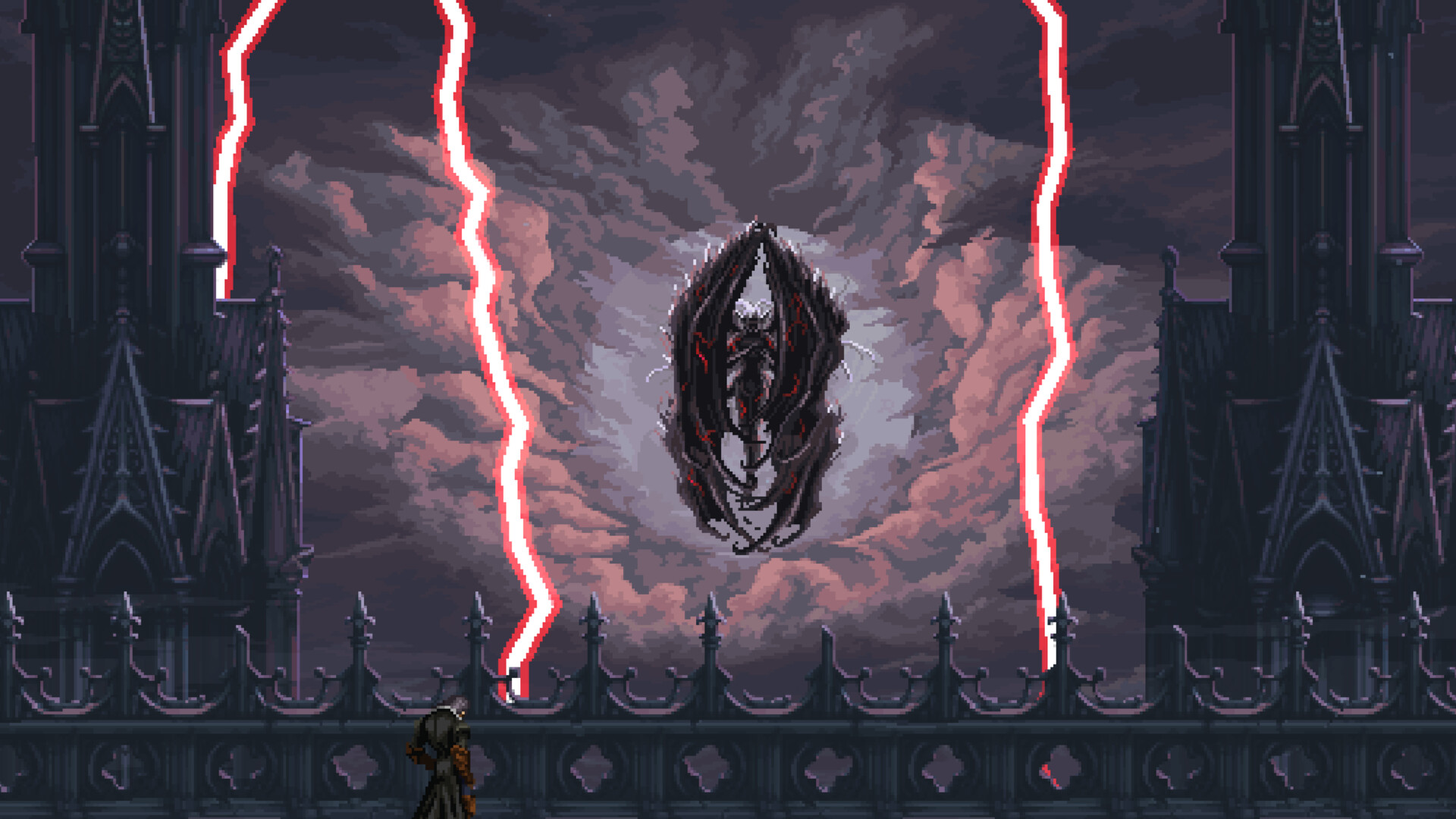
The worldbuilding comes from the contrast between Eryk’s immediate objective and the larger religious and supernatural forces around him. Pixel-art castles, mountains and settlements form a damaged landscape, while discoveries and character encounters supply context. The player does not simply move between boss arenas: routes between them are where items, abilities and connections can be found. The story leaves room for mystery as Eryk pursues relief from his condition, and action systems give that pursuit practical shape. Combat clears obstacles, exploration exposes new parts of the world, and progression equips Eryk to face threats that stopped him earlier. The current Steam listing mentions free Awakened Ancients content alongside the base game.
- Developer
- Kumi Souls Games
- Genre
- 2D action-adventure; metroidvania and soulslike elements