
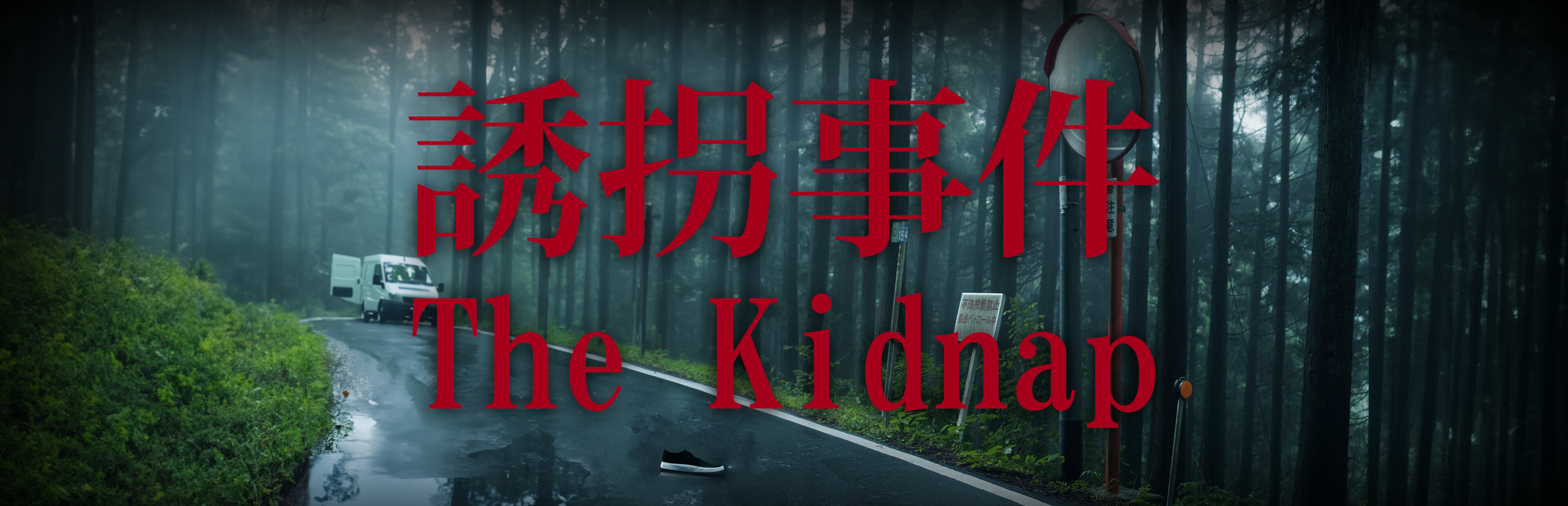
About The Kidnap
The Kidnap follows an elementary-school boy through classes, a troubled home and the route between them as a kidnapping threat takes shape. Chilla's Art's 2023 first-person horror game places a child at the centre of a story about absence, neglect and adults he cannot easily judge. Familiar school and neighbourhood spaces gradually lose their sense of safety.
The Kidnap begins with a point of view that changes the scale of an ordinary day. Its protagonist is an elementary-school boy, moving between school and a family home while troubling things happen around him. A classroom full of desks is a place where he is expected to sit, listen and continue the day's routine. An adult speaking to him has to be looked up at. The same buildings and roads that might feel unremarkable to a grown-up can seem more exposed to a child who depends on other people to decide where he is allowed to go. Chilla's Art puts that dependence to work in a story about a kidnapping incident. The title names an event, but the immediate tension reaches further than the fear of a stranger. The boy's home life is unsettled, and the people who ought to provide certainty are absent or difficult to rely on. An older sister and a mother are part of that family situation. Their absence matters before the player has enough information to explain every reason behind it.
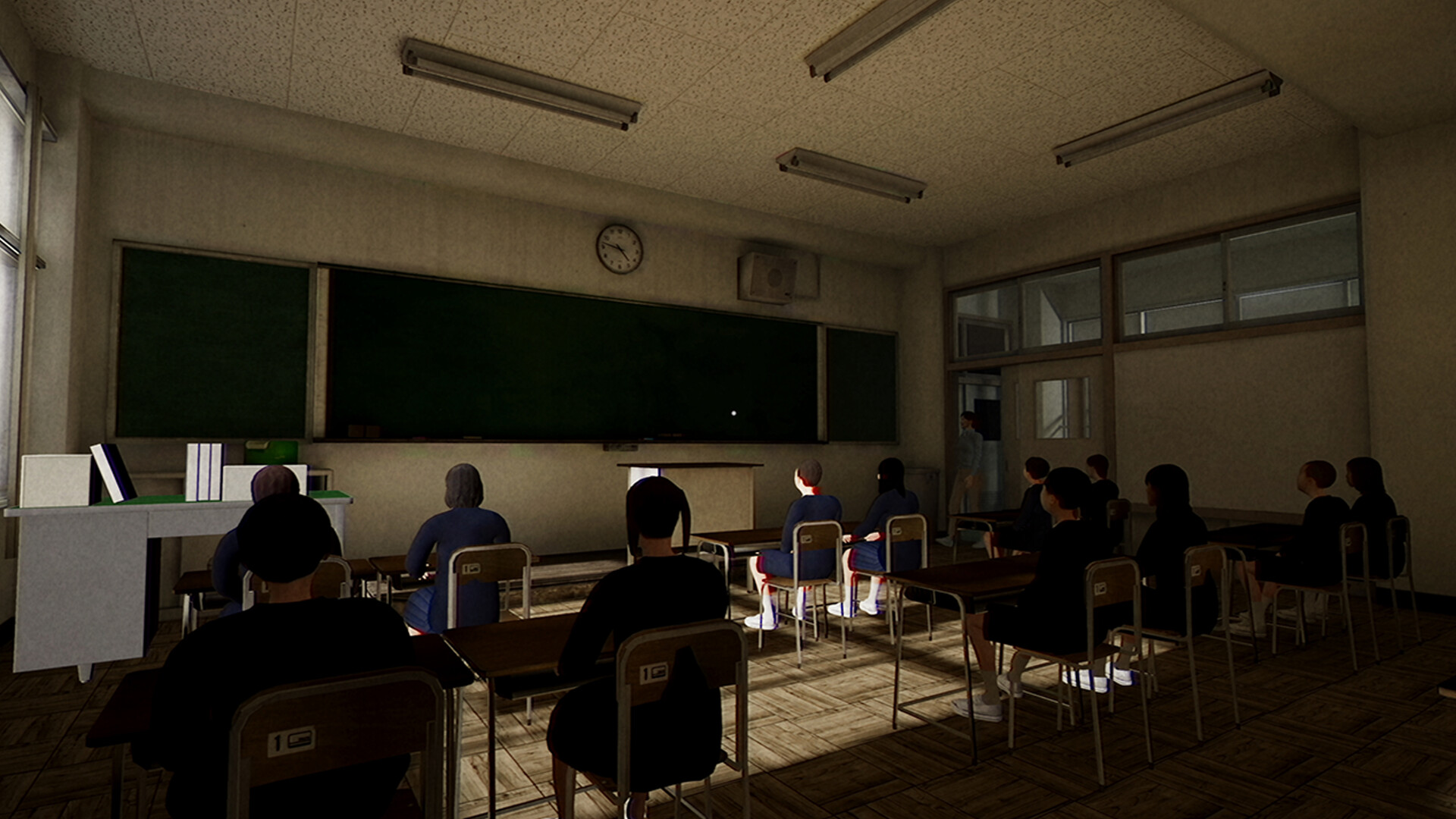
School gives the boy a structure that home no longer supplies in the same way. Classes, classmates and the end of the day carry on even while he is worried about what waits outside. Other children can repeat rumours without knowing what they mean for the person hearing them. A teacher may ask a question from a position of authority, but a child still has to decide how much to say and whether the adult can help. The gap between what the player suspects and what the boy can easily communicate becomes part of the story's pressure. This is not an investigation conducted by a detective with access to records, suspects and a police office. It is a school day seen by someone who cannot simply stop being a pupil because his family is in trouble. The classroom screenshot captures the ordinariness of that setting: desks, a blackboard, other students and a person at the door. Those details establish a social world that the boy must keep navigating while the possibility of danger grows.
The way home is another recurring part of the game's geography. A school route is normally learned through repetition, giving a child a sense of where the next turn and familiar building should be. Here, hearing about a threat makes that knowledge less comforting. Reaching the family house is not the same as reaching a secure place, while remaining outside can mean passing through spaces where the boy has little protection. The nearby park and neighbourhood add ordinary places for children to gather, making a threatening presence stand out without requiring a ruined mansion or abandoned hospital. The game's horror has room to arise from somebody watching a familiar route. A player can understand where the boy is going while still being uncertain about who has noticed him and what will happen when he gets there. This small, practical map of school, road, park and home matters more than an enormous explorable world. The story takes an everyday journey and gradually changes the expectations attached to its stops.
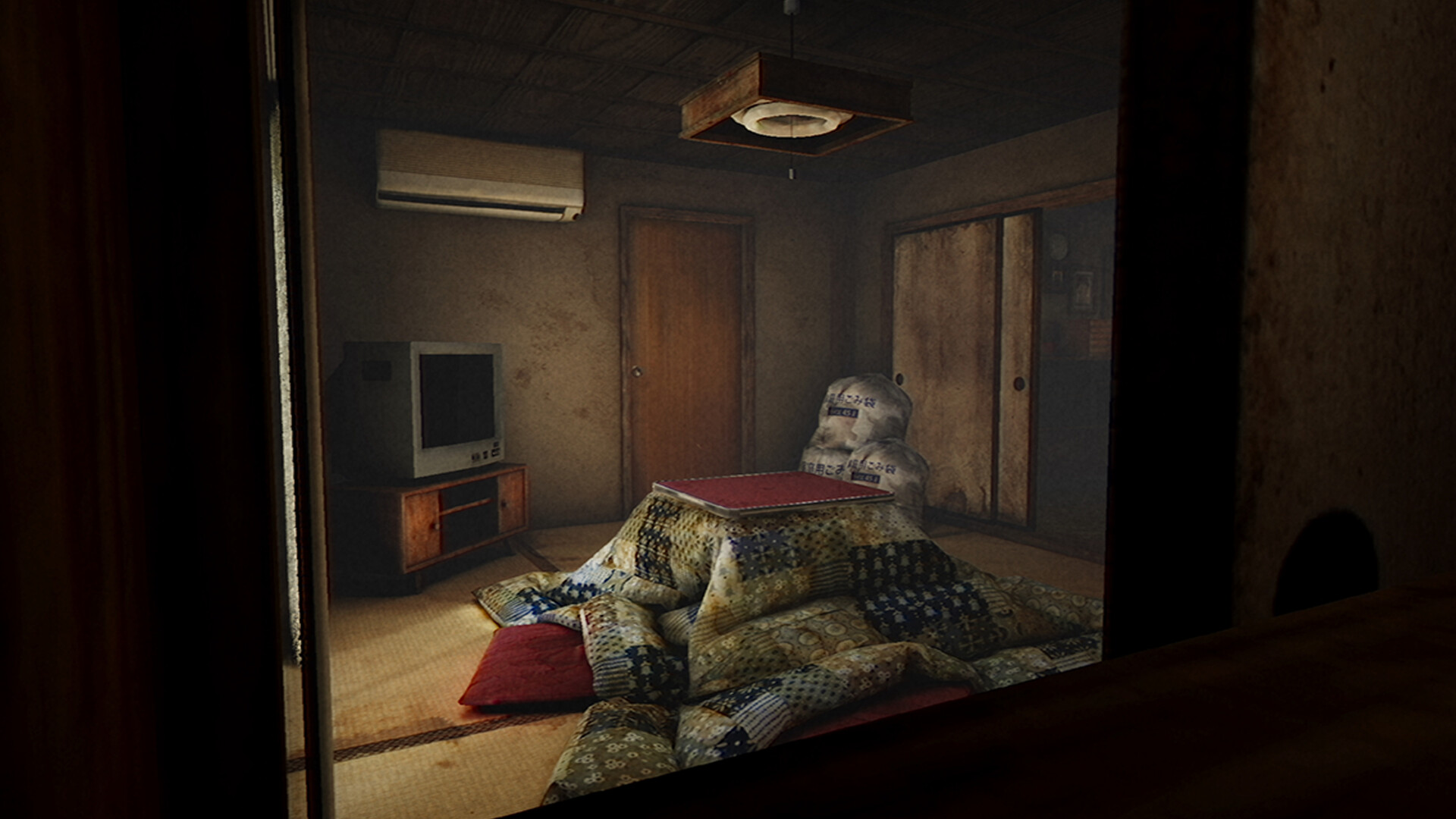
Inside the home, the focus shifts from being visible to strangers to living with a shortage of dependable care. The child is not merely waiting for the next dramatic encounter; he has to occupy rooms that reflect the family's difficult situation. A quiet domestic scene can communicate as much as a warning from another character. The official content notice includes child neglect alongside violence and gore, which makes the family circumstances part of the game's subject rather than incidental background. An absent mother and missing sister leave the boy to make sense of ordinary routines without clear reassurance. This does not mean that every adult he meets has one obvious role or that the story's mystery can be solved from its first scenes. The uncertainty is precisely what makes the child perspective useful. The player can see signs of trouble, but the boy is still being asked to live through another school day and return to a home whose silence needs explaining. The game lets that pressure accumulate before the kidnapping threat is fully understood.
The Kidnap is told in first person, so desks, doors, corridors and people are encountered at the height of its young protagonist. The difference from an adult point of view is immediate in conversations: looking toward a teacher or another grown-up can mean looking upward. That physical adjustment makes authority visible without a speech explaining it. Exploration and simple interactions link the story's scenes, while chapters provide automatic saving as the events move forward. The official presentation emphasises psychological horror and a VHS-style image treatment, with CRT trails, bleeding colours, noise and jitter. Those visual effects give the school and household spaces a worn, uncertain edge, but the underlying geography remains familiar. A player looking for a large combat system or an equipment progression tree should expect a different kind of game. Its central actions are being present in these places, following the next part of the day and noticing when behaviour or atmosphere stops fitting what the boy expects.
Chilla's Art often begins with a plain task or routine, and this release takes the routine of childhood particularly seriously. A class may have to be finished before a boy can leave; a route home must still be walked; an adult may speak with confidence while giving him little certainty. The ordinary actions do not make the threat less grave. They establish what would be disrupted if he vanished, and they show how a neglected child can be exposed even before an overt attack occurs. Rumours heard at school can make the after-class journey harder, while the atmosphere at home can make staying inside feel no easier. The game connects those fears rather than placing the kidnapping incident in isolation from the family story. It also resists an easy division between public safety and private safety. School is populated, but its adults do not see everything. Home is private, but privacy does not guarantee care. The player moves between these imperfect spaces with the limited authority of a child.
Released for PC in 2023, The Kidnap is a directed Chilla's Art horror story with a smaller setting than its title might suggest. The player is not asked to manage a search operation across a city or collect an enormous catalogue of evidence. Its schoolboy perspective, domestic setting and short routes through the neighbourhood carry the larger questions: who is absent, who is paying attention, and which adult can be trusted when a child needs help? An overview can make those questions clear without naming the person behind the kidnapping or laying out the final scenes. Its distinctive feature is the way a child has to continue with the ordinary obligations of the day while a serious threat sits just outside them. The classroom, park and home all have different rules about who belongs there and who is responsible for the boy. As those rules begin to fail, familiar places become harder to read. The result is horror grounded in the fragile protection that a child ought to have, and in the distance between what adults assume is safe and what the boy actually experiences.
- Developer
- Chilla's Art
- Genre
- First-person Japanese psychological horror