
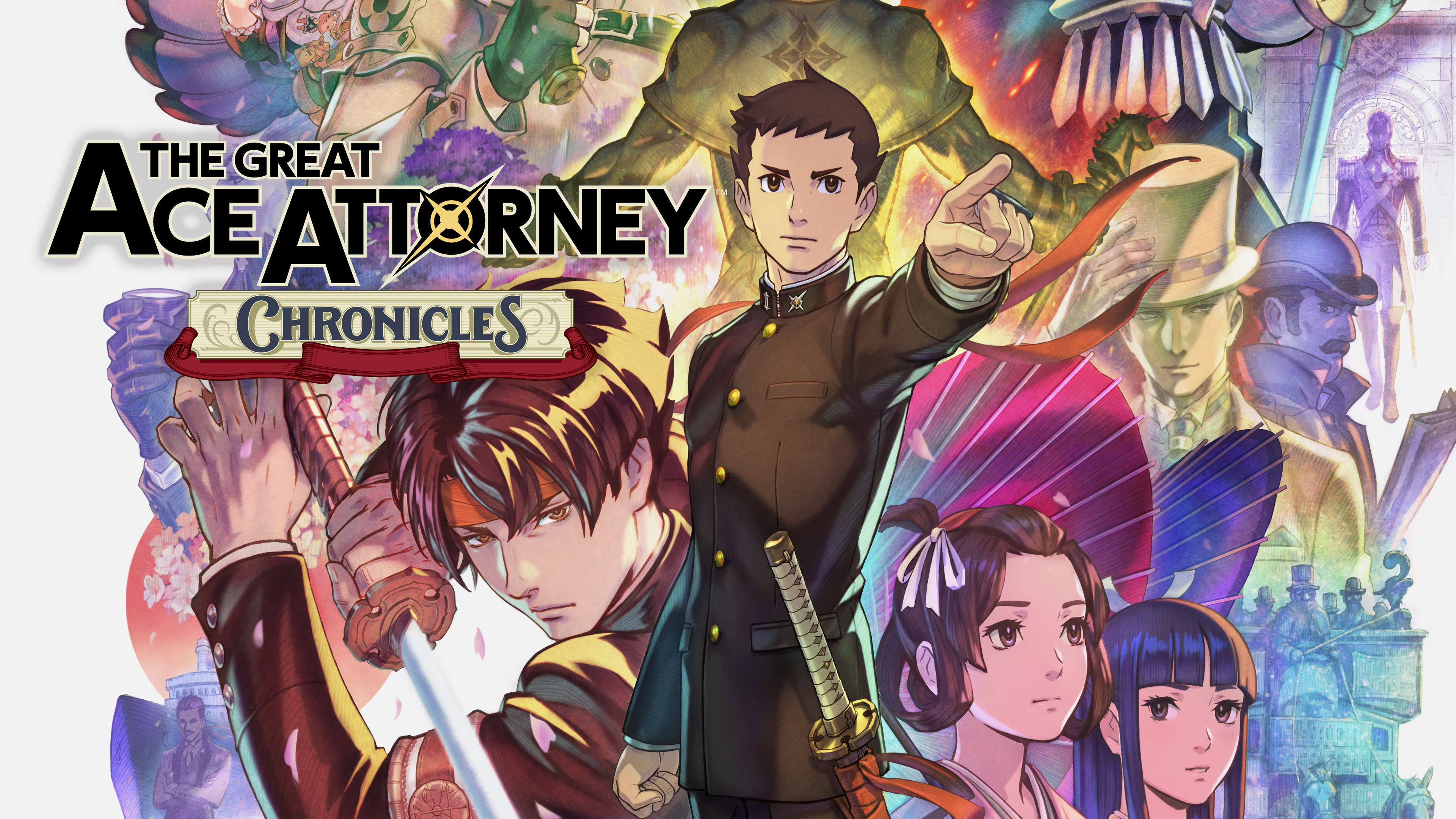
About The Great Ace Attorney Chronicles
The Great Ace Attorney Chronicles follows rookie defense lawyer Ryunosuke Naruhodo from Meiji-era Japan to Victorian London, where investigations and courtroom battles draw him into a wider criminal mystery. This collection includes The Great Ace Attorney: Adventures and The Great Ace Attorney 2: Resolve, with ten cases and a returning cast.
Ryunosuke Naruhodo begins as a Japanese university student and an inexperienced defense lawyer, then travels from Meiji-era Japan to London as his work brings him into criminal trials. The setting places the story at the turn of the twentieth century, when Ryunosuke and his companions encounter a British legal system new to them. His judicial assistant Susato Mikotoba helps him investigate and understand how proceedings work, while the cases connect local crimes to a broader mystery. In London, the Old Bailey becomes a recurring courtroom, and city streets and interiors provide settings for investigations. The story draws on contrasts between Japanese and British characters, customs and assumptions as the cast crosses between the two countries. Ryunosuke's friend Kazuma Asogi is part of the journey early on, while later cases introduce Soseki Natsume, a Japanese author living in London, and Gina Lestrade, a pickpocket who becomes entangled in investigations. The two games collected here follow one continuing arc, so people and questions introduced in one installment can matter in the next. The period setting is part of the legal and social context, not just scenery: a Japanese novice has to learn how English proceedings operate while asking British witnesses to explain their words and actions. That perspective ties the travel between countries to the protagonist as counsel.
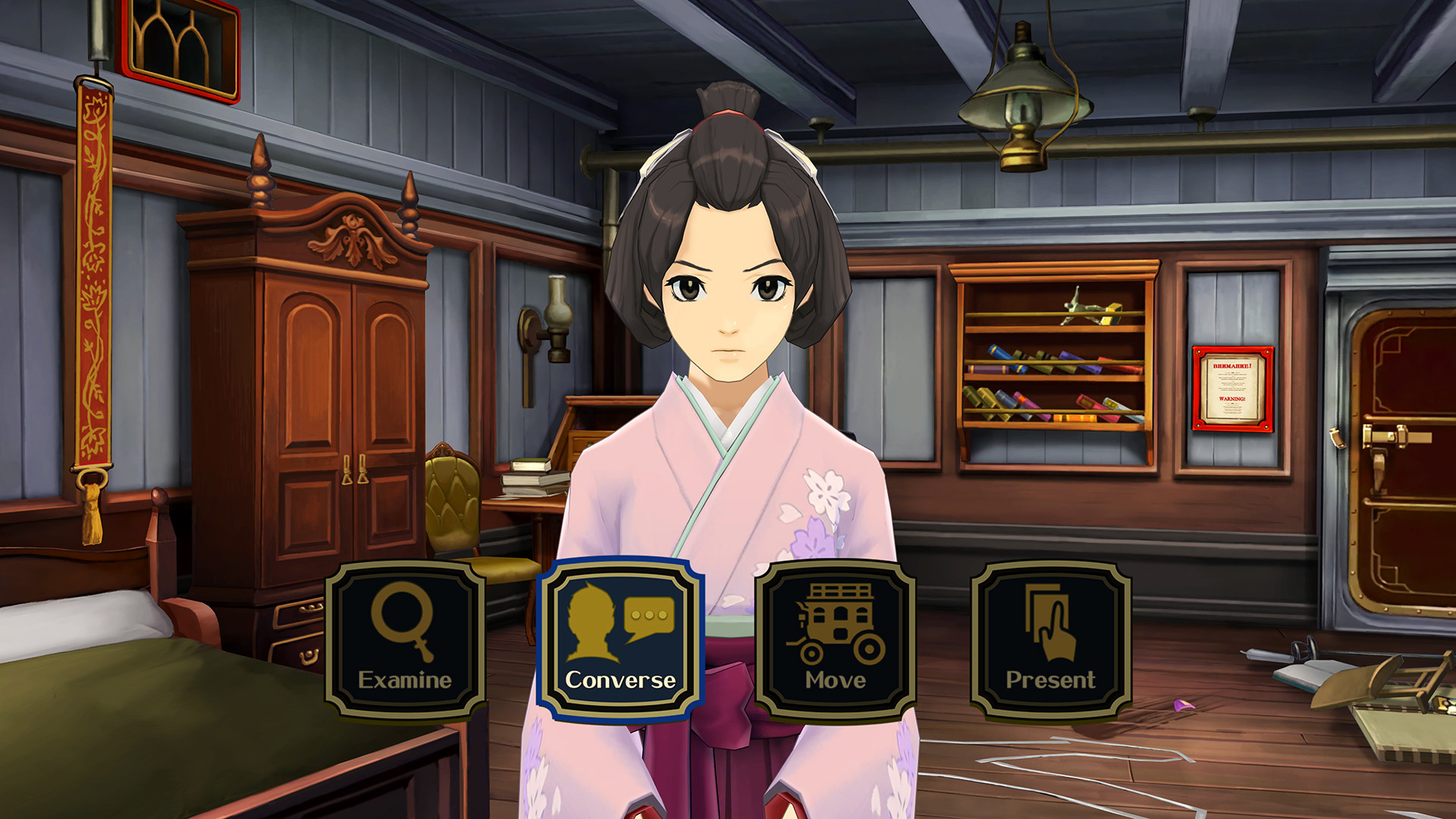
Each case moves between investigation scenes and courtroom proceedings, with dialogue and examination serving as the main way to make progress. During an investigation, Ryunosuke can speak with people connected to the case, ask what they saw, and inspect places for evidence or details that may change the meaning of a statement. The player gathers information before deciding which clue matters and how it fits the account of the crime. Locations are illustrated scenes with characters and objects to examine, and some deductions ask the player to look at a space from different angles. That scrutiny may reveal information a first glance misses or let a later claim be tested against the surroundings. Conversations can open further questions, so a person's explanation becomes part of the evidence trail rather than background alone. The investigation phase builds a record of statements, objects and circumstances that can be brought into court. This is a sequence of case-linked locations, not a large map to explore freely; careful observation and dialogue uncover what is needed for the next step. Statements and physical clues have to be read together. A witness may describe an event from one position, while an examined object or another view of the scene supplies a detail that changes what the account can mean. Revisiting the record is useful because a clue gathered before trial can answer a question that only becomes clear after testimony begins.
Herlock Sholmes adds an investigation sequence called the Dance of Deduction. The celebrated detective observes a person or scene and offers a confident explanation, but one part of his reasoning may not match what the player can see. Ryunosuke works through the deduction with him by examining the scene from alternate viewpoints and identifying details that challenge the detective's conclusion. Correcting those gaps turns Sholmes's observations into a more reliable account of what happened. The mechanic uses evidence-focused thinking but places it in a staged exchange between detective and partner. Sholmes supplies the initial theory; Ryunosuke connects a visible clue to the point where the logic goes astray. Their collaboration is joined by Iris Wilson, a young doctor, author and inventor who lives with Sholmes and contributes her knowledge to the group. Susato's role is different: she is Ryunosuke's judicial assistant, supporting his investigations and his understanding of the British courtroom. These deduction scenes develop relationships among the partners while moving a case toward its next question. The player is not asked to replace the detective theory with an unrelated guess. The sequence turns on locating the faulty step in his chain of reasoning and using the scene itself to correct it. This makes observation an active part of the partnership: the detective proposes an interpretation, and Ryunosuke tests whether its details fit what is actually present.
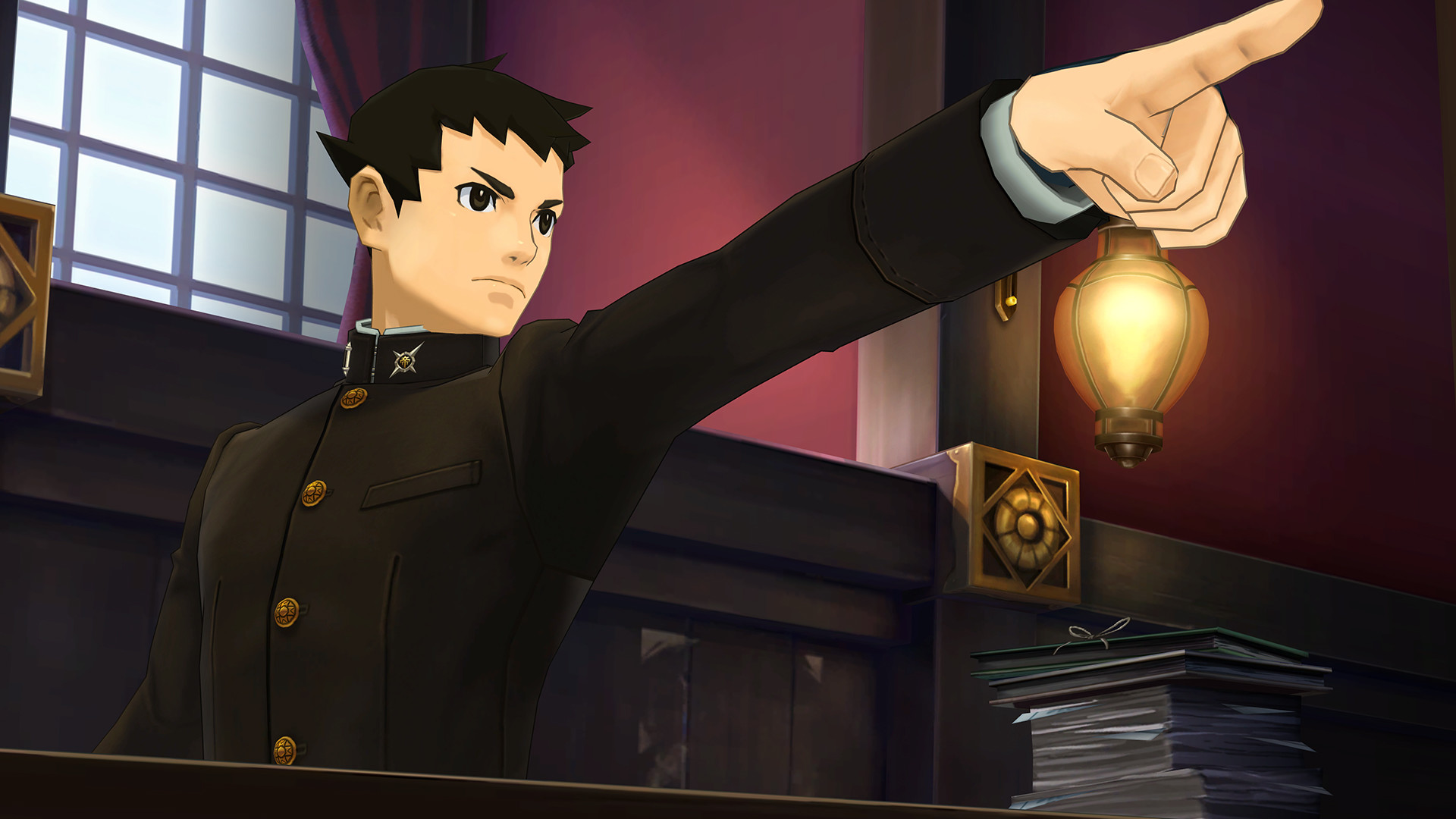
In court, Ryunosuke listens to witness testimony, presses speakers for more information and presents evidence when a statement conflicts with established facts. The task is to find where an account breaks down, then choose the clue that demonstrates the contradiction. Proceedings can put several witnesses on the stand at once. A reaction from one witness to another person's testimony may expose a new line of questioning, giving the player a reason to turn attention from the original speaker. Information gathering is therefore not always a single uninterrupted account: other people in court can respond and create openings. Ryunosuke faces prosecutor Barok van Zieks at the Old Bailey, where the jury also has a direct role in the trial. Courtroom scenes retain the series pattern of claims, questions and evidence, while additional witnesses and jurors make the argument depend on more than a one-to-one exchange. Information gathered in the field becomes useful when matched to a precise claim or inconsistency. Cross-examination is a process of narrowing the issue, not simply replaying a witness statement. Pressing can expose an omitted detail or prompt a response from another person, while the evidence record gives Ryunosuke a way to test the new claim. The player follows that exchange until a mismatch becomes clear enough to challenge in court.
When the jury reaches a guilty verdict, Ryunosuke can request a Summation Examination. The jurors explain the reasons for their positions, and the player compares their statements to identify two views that conflict. Ryunosuke can point out the disagreement and question the jurors, trying to shift their judgment back toward the defense. This is an additional courtroom stage rather than a replacement for cross-examination: the focus moves from witness testimony to the jury's reasoning about the case. It gives the player another place to connect established facts with the way people interpret them. The story uses this British jury procedure alongside pressing witnesses and presenting evidence, so the Old Bailey verdict can change as the defense exposes flaws in the reasoning behind it. Across the two included games, this mechanic sits beside the Dance of Deduction, giving investigation and trial distinct sequences built around examining another character's reasoning. The jurors different positions make the reasoning behind a verdict visible to the defense. Rather than treating the jury as a background counter, the sequence asks Ryunosuke to listen to their explanations and find a contradiction between them. That argument then feeds back into the trial: showing why the accusation does not account for the evidence.
The collection contains The Great Ace Attorney: Adventures and its sequel, The Great Ace Attorney 2: Resolve, with five murder-mystery episodes in each game. The cases form a longer narrative, so the two installments are presented together as one Chronicles package. Players can follow dialogue and solve investigations and trials themselves, or turn on optional Story Mode to have the game select items, solve puzzles and identify inconsistencies; the mode can be switched off again. Standard text auto-advance is also available. The presentation combines three-dimensional character animation with illustrated settings, expressive courtroom performances and animated story scenes. The package includes a gallery of illustrations, music, voice clips and anime scenes, plus separate mini-episodes and additional videos. English and Japanese voice options are available, with English interface text and subtitles on the Steam listing. The game is a single-player adventure on Steam; Capcom also released the collection for PlayStation 4 and Nintendo Switch. These details describe the full two-game collection and its included features. Optional assistance changes how much reasoning the player performs, while leaving the story and case order intact. It can help with a difficult investigation or courtroom passage and can be turned off when the player wants to make deductions unaided. The extras include eight Escapades outside the main case sequence, two Special Trial videos, and three alternate costumes for the second game. The gallery carries art-director and music-director commentary as well as story animation and voice clips.
- Developer
- CAPCOM Co., Ltd.
- Genre
- Adventure