
About The Forgotten City
The Forgotten City is a first-person mystery adventure set in an underground Roman settlement near the end of the empire. After travelling two thousand years into the past, the player investigates a community bound by the Golden Rule: one person's sin can destroy everyone. Conversations, exploration, moral choices and a repeating day shape the search for answers.
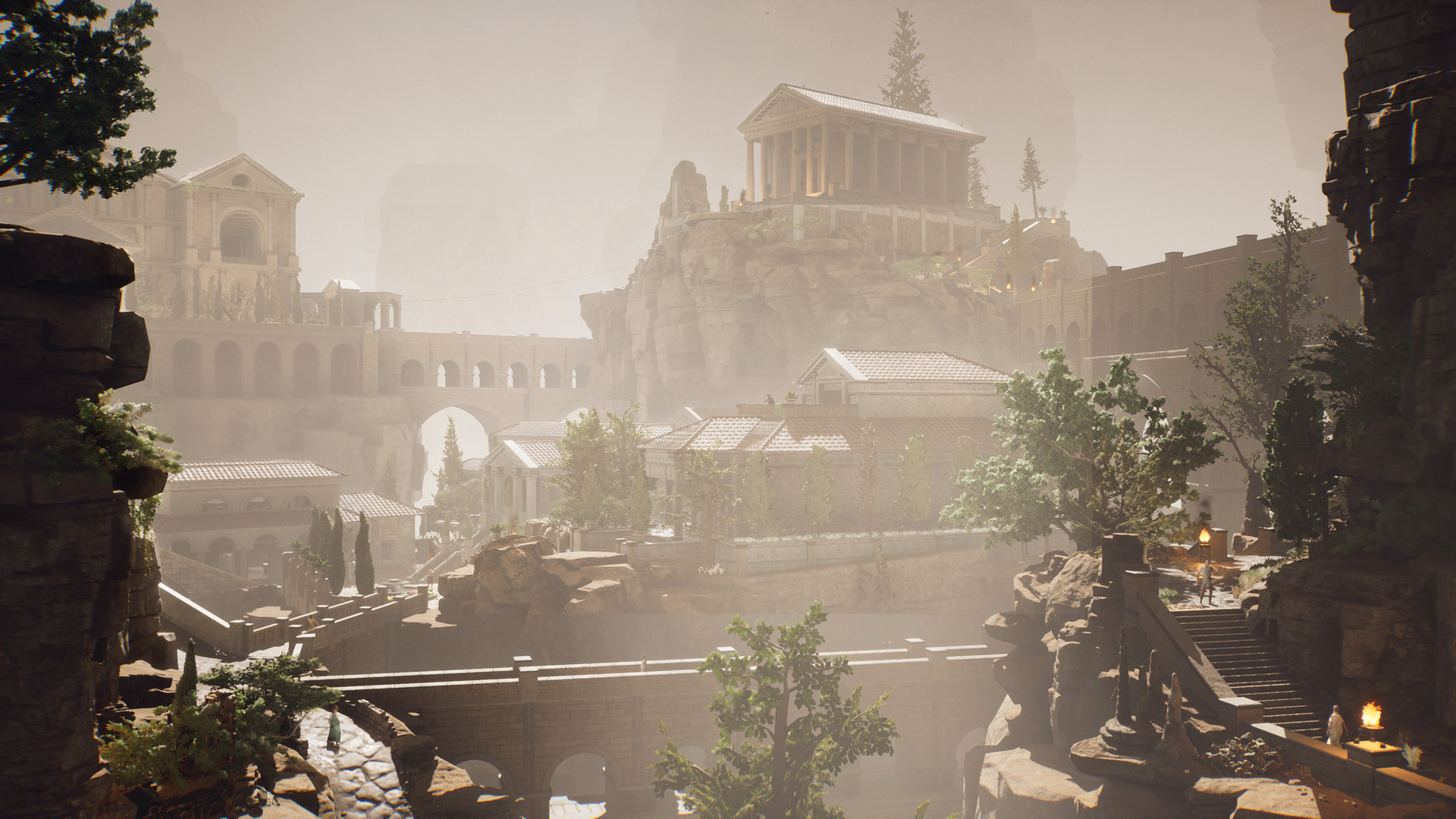
The standalone The Forgotten City begins in the present, where an encounter with ancient ruins leads the player through a portal into a Roman settlement from roughly two thousand years earlier. Its stone streets, public spaces, homes and shrines form a compact place to explore on foot, with elevated routes and ziplines helping connect parts of the city. The inhabitants include soldiers, merchants, a magistrate, a priestess and residents whose origins and social positions shape their concerns. The player chooses a character background at the beginning, then arrives as an outsider trying to understand why this community exists and what happened to the ruins seen in the present.
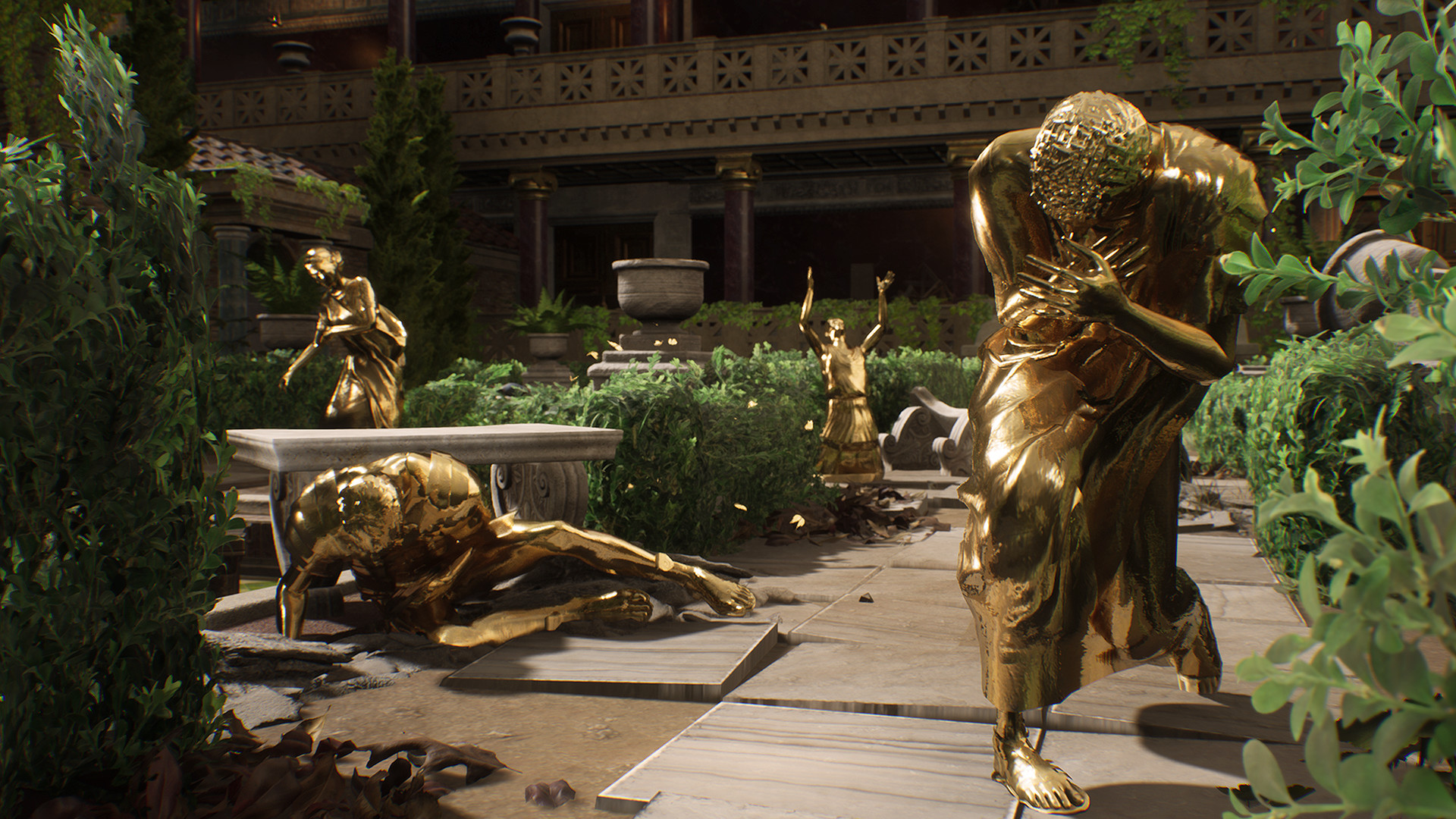
The settlement is governed by the Golden Rule, a law with a terrifying collective consequence: when a resident commits a sin, the community is destroyed and its people become golden statues. The player is subject to the same rule. Stealing, violence and other actions can bring on the catastrophe, so ordinary adventure-game habits become investigative decisions with consequences. Conversations introduce competing interpretations of what counts as wrongdoing, and the threat makes the city’s politics personal: a choice that seems small to the player can affect everyone. The mystery is built around learning the rule’s boundaries, identifying tensions among the residents and determining how the disaster can be prevented.
Most progress comes from speaking with people and following what they reveal. Dialogue offers questions about a character, the city, the Golden Rule and their current troubles; new information can open additional lines of inquiry or give the player a way to revisit an earlier conversation with a different approach. Sentius, the magistrate, gives the newcomer a reason to investigate who may break the law. Galerius is a familiar guide at the start of a cycle, while Equitia, Lucretia, Ulpius, Iulia and other residents each occupy their own place in the community. Their concerns and relationships are interconnected, so helping one person or learning a detail from one conversation may supply a lead elsewhere.
The investigation also takes the player through homes and public areas to examine surroundings, find useful objects and verify claims. Permission to look into the city’s problems does not mean every resident welcomes intrusion, and physical evidence can matter when asking someone to accept an explanation. Quest threads can overlap: the person who knows something about one dispute may be involved in another, while an event or obstruction can change who is available to speak with. The city can be explored in different orders, and the journal and objective guidance help track active leads. Some steps still depend on connecting evidence or asking a useful follow-up rather than simply following a marker. The player can also inspect written clues and objects in the environment, turning a discovery into a question to put to a resident.
When the Golden Rule is broken, the day resets and the player returns to the portal with memories intact. This makes repetition the main structure of the adventure: information gathered in one cycle can be used to question residents differently, reach a place sooner, or change the order in which problems are handled. Physical items can also carry across resets, so a key or other object collected earlier may remain available on the next attempt. The inhabitants generally do not remember the previous cycle, which means the player’s knowledge becomes the continuity between runs. Shortcuts through familiar dialogue and the option to delegate certain previously understood tasks to Galerius reduce repeated steps.
The loop is a tool for testing ideas as well as recovering from failure. A player can pursue a lead, observe how the day develops, and return to try another response or intervene earlier with what they have learned. The city’s destruction can be triggered by the player’s actions or by events among its residents, so the goal is not simply to avoid every risk and wait. The player may use conversation, persuasion, bribery, intimidation, force or the reset itself to address a problem; each method can reveal a different part of the situation. A small number of first-person action and tense sequences add physical encounters, while the larger progression remains centred on exploration, dialogue and deduction. A bow and other tools appear in some situations, but combat remains one possible approach rather than the central problem-solving system.
Choices shape both individual relationships and the wider mystery. Residents can be helped with personal problems, and information or assistance gained in one thread may make another task possible. The Golden Rule also invites debate: the people living under it disagree about its meaning and fairness, while the player must decide how to act with incomplete knowledge. The game’s ancient Roman setting brings these questions into conversations about law, civic life, religion and philosophy. Rather than treating every loop as a clean restart, the structure lets the player carry forward practical knowledge and objects, gradually assembling a clearer account of the city and the choices available within it.
- Developer
- Modern Storyteller
- Genre
- First-person narrative mystery adventure with exploration, dialogue and time-loop systems