
About The Forest
After a passenger jet crashes on a forested peninsula, a lone survivor searches for his missing son while trying to stay alive. Gather food and materials, craft tools, and use the Survival Guide to build shelters, traps, and defenses. Explore the surface and underground caves as clues connect the wilderness to the people living there.
The Forest begins with a passenger jet crash on a wooded peninsula. Eric LeBlanc survives, but his son Timmy is taken by a stranger soon after the impact. The immediate problem is practical: find food, water, tools and somewhere to shelter before night. The wider search gives those tasks direction, sending Eric through a landscape that includes beaches, dense woods, abandoned camps and cave entrances. The crash site is a starting point rather than a safe hub. Luggage and scattered supplies can be searched for useful objects, while the trees and stones around the wreck become the first materials for crafting and construction. The story is told through places, objects and discoveries rather than a sequence of constant instructions, so survival and investigation unfold together.
The peninsula supports an open-ended daily routine. Eric can cut trees for logs, pick up sticks and rocks, scavenge food, and use collected items to make basic tools. Hunger, thirst, fatigue, temperature and health shape how long an outing can continue and what preparations matter. A shelter can provide a place to rest and save; fires provide warmth and a way to cook. Food can be gathered from the environment or obtained by hunting, while storage and drying structures help preserve supplies. These systems are linked: building a camp uses materials that might otherwise go toward weapons, and spending time collecting them can leave less daylight for exploring or returning to safety. The game leaves the order of these choices to the player.
The Survival Guide is both a construction catalogue and an in-world reference. Its building sections let the player choose a structure, place a blueprint in the environment and then supply the listed resources. A small shelter and a fire establish basic needs, while larger structures can become a camp with storage, defensive walls, traps and utility buildings. Custom construction allows walls and other elements to be arranged around the shape of a chosen site. Trees are not just scenery: cutting them provides building material and visibly changes the area. That freedom also means a project can consume many logs and sticks, so a blueprint becomes a concrete plan for gathering rather than an instant upgrade. The result is a base shaped by the surrounding terrain and the resources available nearby.
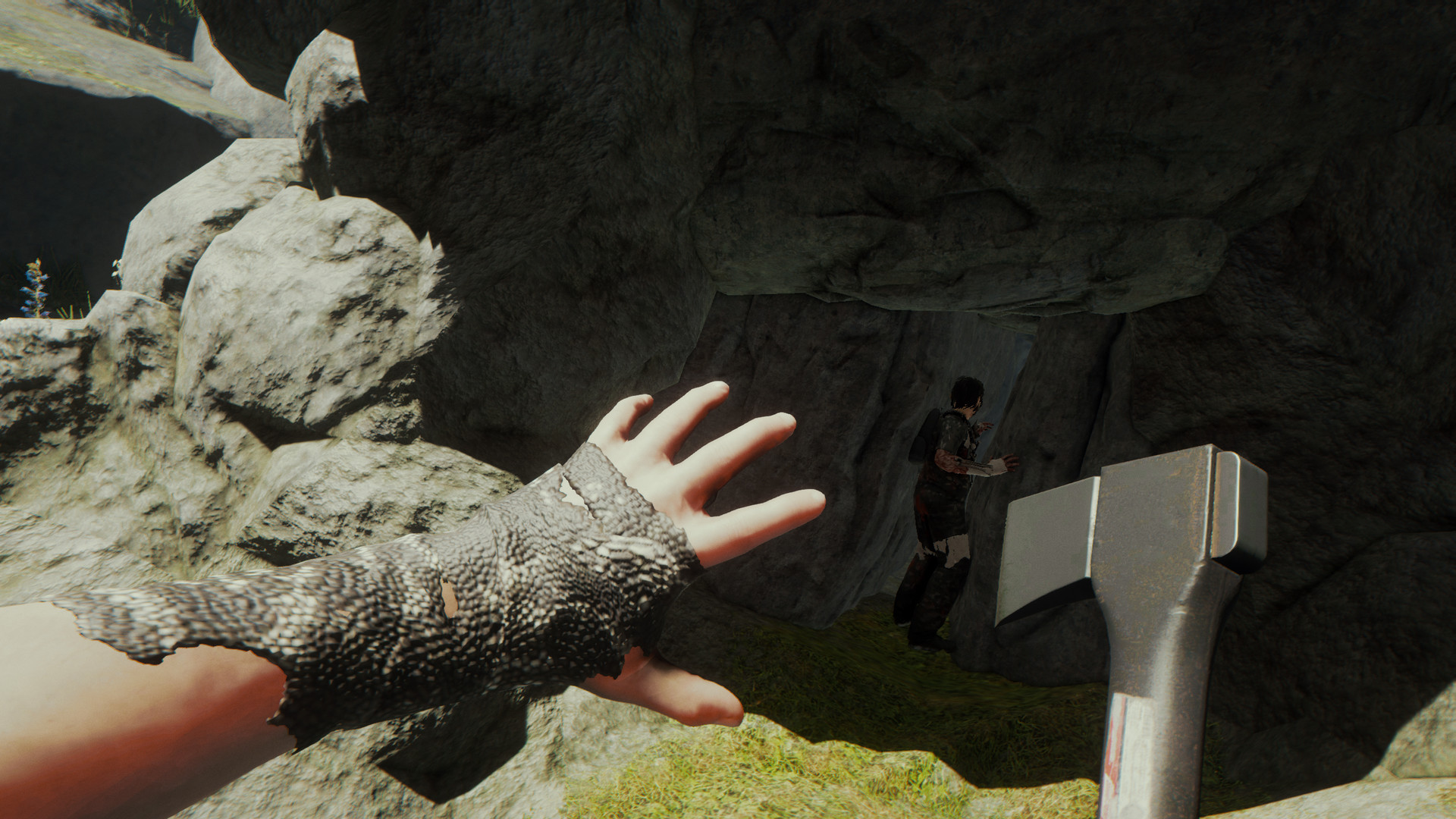
Crafting uses materials carried in the inventory. Combining suitable components on the crafting mat produces weapons, tools and survival items, while the Survival Guide handles larger structures. A stick, rock and rope can form a basic crafted axe; cloth can be paired with alcohol to make a Molotov. Other combinations support bows, arrows, repairs and upgraded weapons. Finding materials in luggage, camps, caves or the forest can expand what the player is able to make. Equipment serves several purposes: an axe helps gather wood, a weapon can keep an enemy at distance, and tools can support a trip into darker areas. The inventory is therefore part of expedition planning, with limited supplies and the choice between carrying immediate necessities or components for a later task.
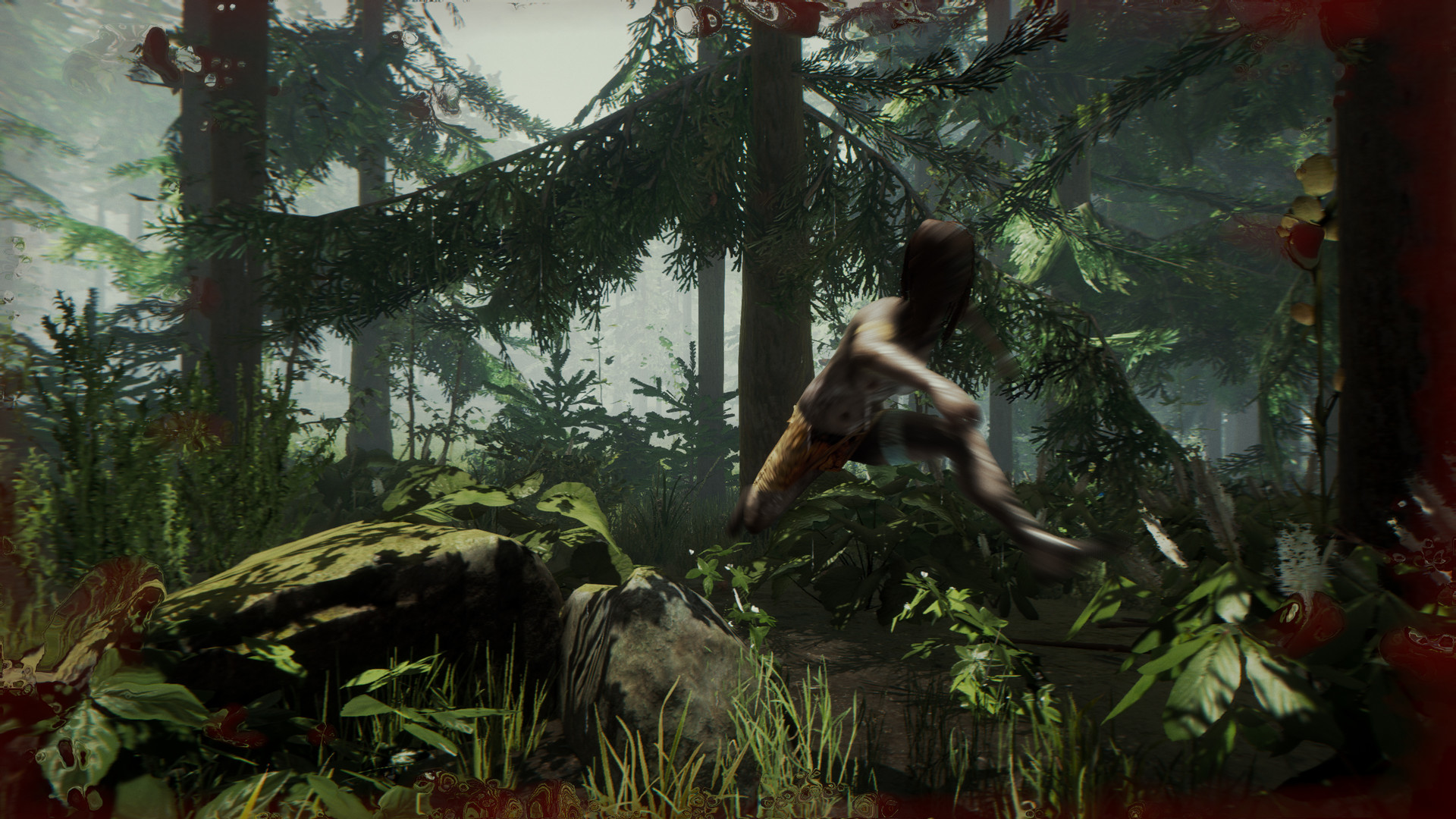
Human-like cannibal groups and larger mutant creatures make the peninsula dangerous, but encounters are not limited to direct combat. The player can use crude weapons, build traps and defensive structures, or try to avoid being seen. The Steam description characterizes the cannibal society as having beliefs, families and morals, which gives encounters a social dimension as well as a survival threat. Activity can bring danger toward a camp, making visibility, noise and defenses relevant to where and how a base is built. At night, lower visibility and the possibility of attack change familiar routes and make a lit, defensible shelter more valuable. Deciding when to leave a camp and when to fortify it becomes part of the same resource problem as food and building materials.
Caves extend the island below its forest floor, joining passages with underground lakes and spaces that cannot be surveyed from the surface. Entering one changes the rhythm of exploration: a player may need light, weapons and enough supplies to continue, while uneven passages and limited sight make it harder to judge what lies ahead. Caves also contain objects and story clues that cannot be found simply by building a larger surface camp. The surface and underground areas therefore serve different purposes. A camp can support repeated trips, but discoveries below ground add new context to the search for Timmy and to the peninsula's history. Returning with better equipment or more knowledge can make a previously uncertain route more manageable.
Progress is deliberately less linear than a mission list. Notes, objects, landmarks and cave discoveries provide leads, while the player decides how much time to spend on construction, hunting or following them. A larger base can organize supplies and help withstand attacks, but it does not answer the central questions by itself. Conversely, pushing deeper into the island can reveal information while leaving less time for maintaining shelter and food. Co-operative play lets other players share exploration and construction, while the underlying systems still revolve around gathering, crafting and managing threats. The Forest combines the personal search for a missing child with an ongoing need to read the landscape, prepare for each trip and decide what risk is acceptable before moving farther from camp.
- Developer
- Endnight Games Ltd
- Genre
- First-person open-world survival horror