
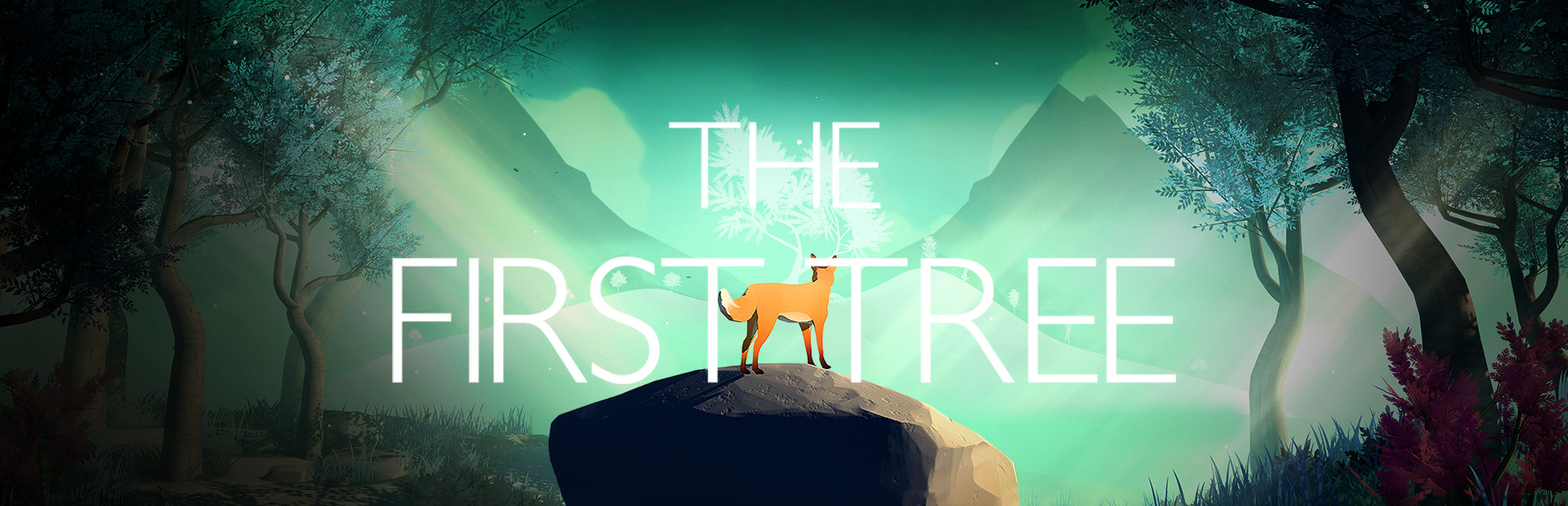
About The First Tree
The First Tree is a third-person exploration adventure following a fox searching for her missing family and a man reflecting on his relationship with his father. Across changing wilderness landscapes, movement, optional discoveries and buried keepsakes connect the fox’s journey with memories from the man’s life.
The First Tree places two narratives beside one another. In the playable strand, a mother fox wakes in a snowy wilderness and sets out to find her missing cubs. Alongside that search, a man speaks to his partner about his youth, his estrangement from his father and the loss that has brought those memories forward. The fox’s route is therefore both a physical journey through a dreamlike landscape and a structure for the man’s recollections. The game does not ask the player to switch between human characters: control stays with the fox while the man’s account continues through voice-over. Details from his life appear within the places she crosses, so the two stories gradually acquire points of contact. The premise gives a small set of actions a narrative purpose: moving through the wilderness leads toward the cubs, while stopping to investigate objects reveals more of the absent human story. The title’s destination frames the journey in terms of beginnings and endings.
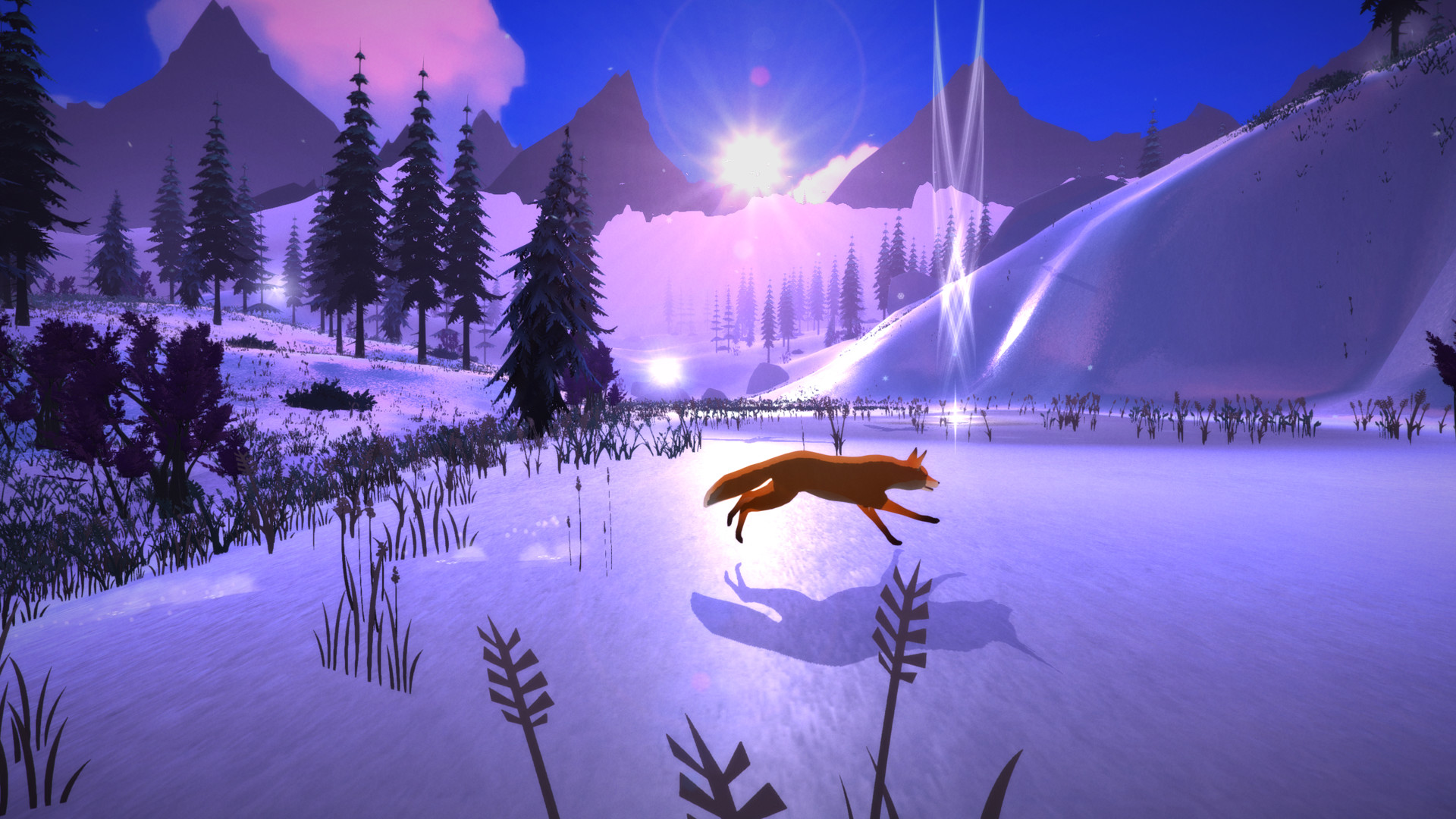
The route moves through distinct natural settings rather than a single town or inhabited world. Snow-covered slopes establish the opening, then the journey continues through open grasslands, forests, broad fields, waterfalls and night-sky environments. These spaces are arranged as navigable areas with visible landmarks and scattered discoveries. The landscape can feel open, but the experience is organized around forward movement through successive chapters and the search for particular points of interaction. There is no human settlement to manage and no combat loop; the fox travels, jumps, explores and investigates. The environments carry much of the atmosphere: lighting shifts from pale, filtered forest colors to deep blues at night, and the soundtrack changes with the unfolding story. The world’s natural scale also gives the player room to look around for the next route or a distant point of interest. Some objects are set away from the clearest path, while others are placed near small environmental obstacles. This makes observation part of navigation. The spaces are not built around survival meters or hunting systems, and the game does not present a broad simulation of fox behavior. Its wilderness is a story setting designed for movement, discovery and the meeting of the two narrative threads.
Movement is built from a compact third-person set of actions: the fox can walk, run and jump, including a double jump. Rocky ledges and gaps turn those actions into short platforming sequences, with routes often asking the player to judge distance and find a climbable way across uneven ground. The jumping is also used to reach optional glowing stars placed along the landscape, including some that sit above or beyond the most direct route. Butterflies can provide a boost during certain leaps, adding a small environmental assist rather than a separate ability system. These moments give the fox’s journey variation without changing its basic control vocabulary. There is no weapon handling, enemy encounter or combat progression to interrupt travel. Instead, the main physical challenge comes from positioning the fox, navigating slopes and choosing when to leave the obvious trail for a collectible or a higher vantage. Camera orientation and the layout of the terrain help the player read a space, while distant points of light can draw attention toward possible discoveries. The game’s movement therefore supports a gentle form of traversal: a path is crossed through running and jumping, and the player’s attention shifts between the route ahead and the objects that may make a detour worthwhile.
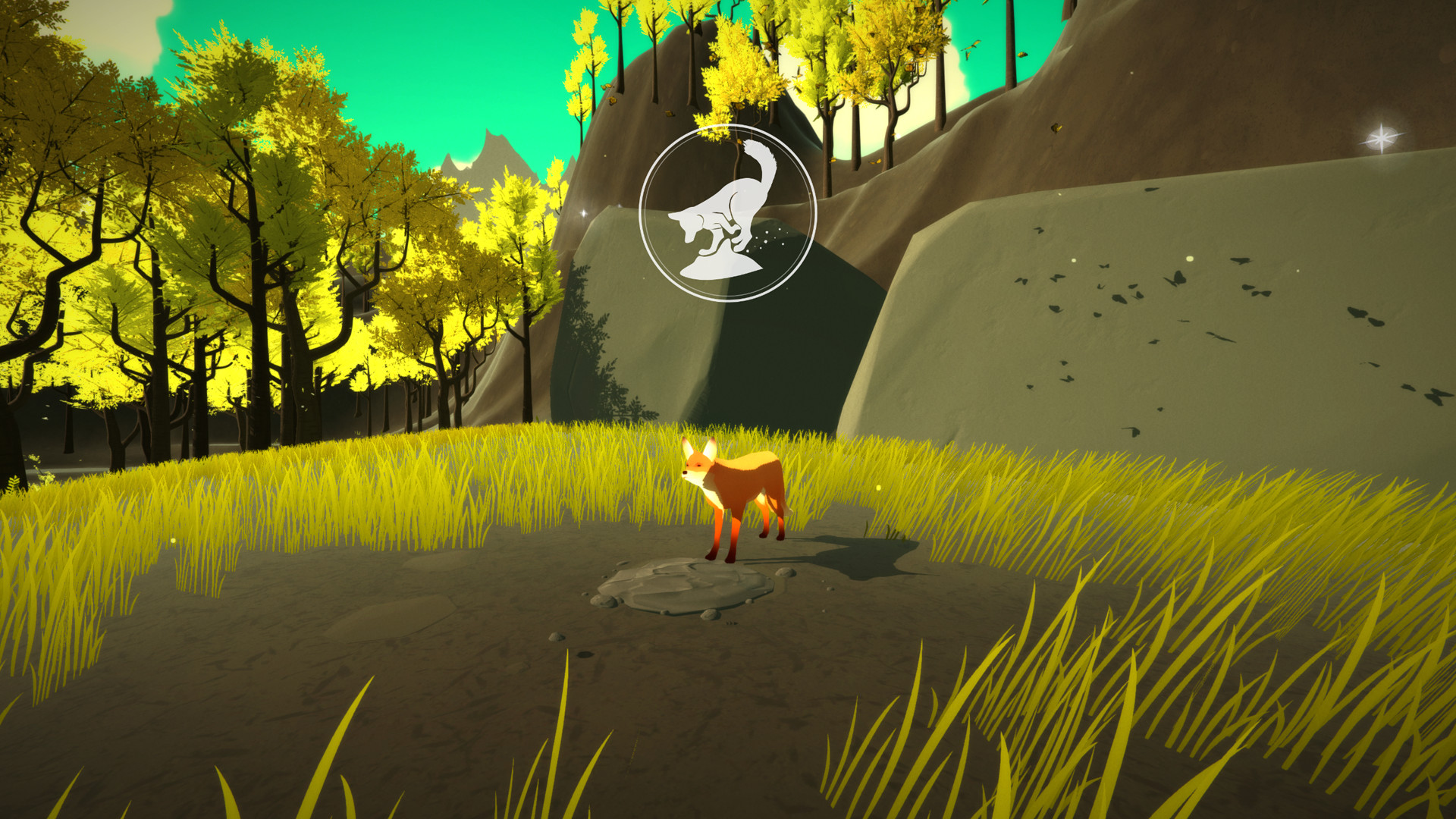
Searching the environment links exploration to the human story. The man’s memories are represented by objects from his life that the fox can uncover, often at marked mounds of dirt. Digging up a keepsake reveals a fragment of the past and advances the accompanying spoken narrative. A discarded toy or a group of letters is more than scenery because finding it changes what the player knows about the man and his family history. The next story moment is therefore tied to movement through the landscape: the player locates a place, approaches it and interacts, then listens as another part of the recollection becomes available. This structure lets environmental details stand in for a conventional sequence of dialogue scenes. The fox does not collect a crafting supply or currency from these discoveries; their function is narrative. The game also places other small interactions and light puzzle elements in some areas, though they remain secondary to exploration and the story objects. The combination encourages a slower scan of each space: a player can follow the main route or look across the terrain for a glowing marker, a buried mound or an item set beside a landmark. The human memories gradually become legible through these separate finds rather than through a single exposition dump.
The environments also contain secrets and hidden objects beyond the keepsakes that carry the man’s memories. These smaller discoveries work as environmental vignettes: details tucked into a landscape reward looking away from the most direct route and give the world moments that are not all required to follow the central account. The fox can uncover fragments of the human story in more than one way, and a player may miss a voice-over while still gathering enough pieces to understand how the characters reached their present circumstances. This makes exploration tolerant of an imperfect sweep through each area. The game does not require a complete catalogue of every hidden detail before the next part of the journey becomes available. Instead, the optional finds invite a player to slow down, search around a landmark or inspect a corner that the main path would let them pass. Their role differs from the keepsakes tied directly to the narrator’s memoir and from the star-shaped collectibles: these secrets add brief environmental moments and extra texture to the surreal world. The result is a route that can be followed at different levels of attention, with the main story remaining legible even when some of its optional discoveries are left unseen.
Sound and voice give the two narratives a continuous thread. The man’s account remains audible while the fox crosses the landscape, and the spoken fragments associated with uncovered keepsakes add details to his personal history. Voice acting carries the reflective human strand, while music shifts the attention toward the fox’s solitary travel through the natural world. The Steam release credits music by Message to Bears, Lowercase Noises and Josh Kramer, giving the soundtrack several distinct contributors rather than one continuous narrator-led voice. English audio is accompanied by subtitles in multiple supported languages, while localized text is available across additional language options. The result does not depend on dialogue choices or a conversation system: the player listens while moving, then interacts with selected objects when a story fragment is attached to the environment. This audio structure lets the fox’s movement continue during narration and keeps the human perspective present without interrupting control. Music and voice therefore serve different purposes. The narration carries recollection and family context; the soundtrack shapes the quieter stretches of travel between those moments. Together, they support the game’s two-strand construction while leaving the player free to look for the next place to go.
The destination gives the wilderness journey a scale beyond the fox’s immediate search. The First Tree is presented as a place at the source of life, and the route toward it brings together the animal story and the man’s reflections on family, loss and his past. That mythic destination does not turn the game into a world-spanning quest with factions, equipment or a combat finale; the emphasis stays on moving through natural spaces and following the emotional thread that connects them. The tree’s significance is suggested by the way the journey frames beginnings and death, while the fox’s practical goal remains finding her missing family. These ideas sit alongside one another rather than replacing the immediate stakes of the search. As the player travels, the landscape gives the abstract subject matter a physical direction: there is somewhere the fox is trying to reach, and the human memories provide another reason that journey matters. The game’s closing movement gathers those strands around the title’s image without requiring the player to master a new progression system. Its world detail is therefore also narrative structure: a distant natural landmark becomes the point toward which the fox’s path and the man’s account gradually converge.
- Developer
- David Wehle
- Genre
- Third-person exploration adventure