
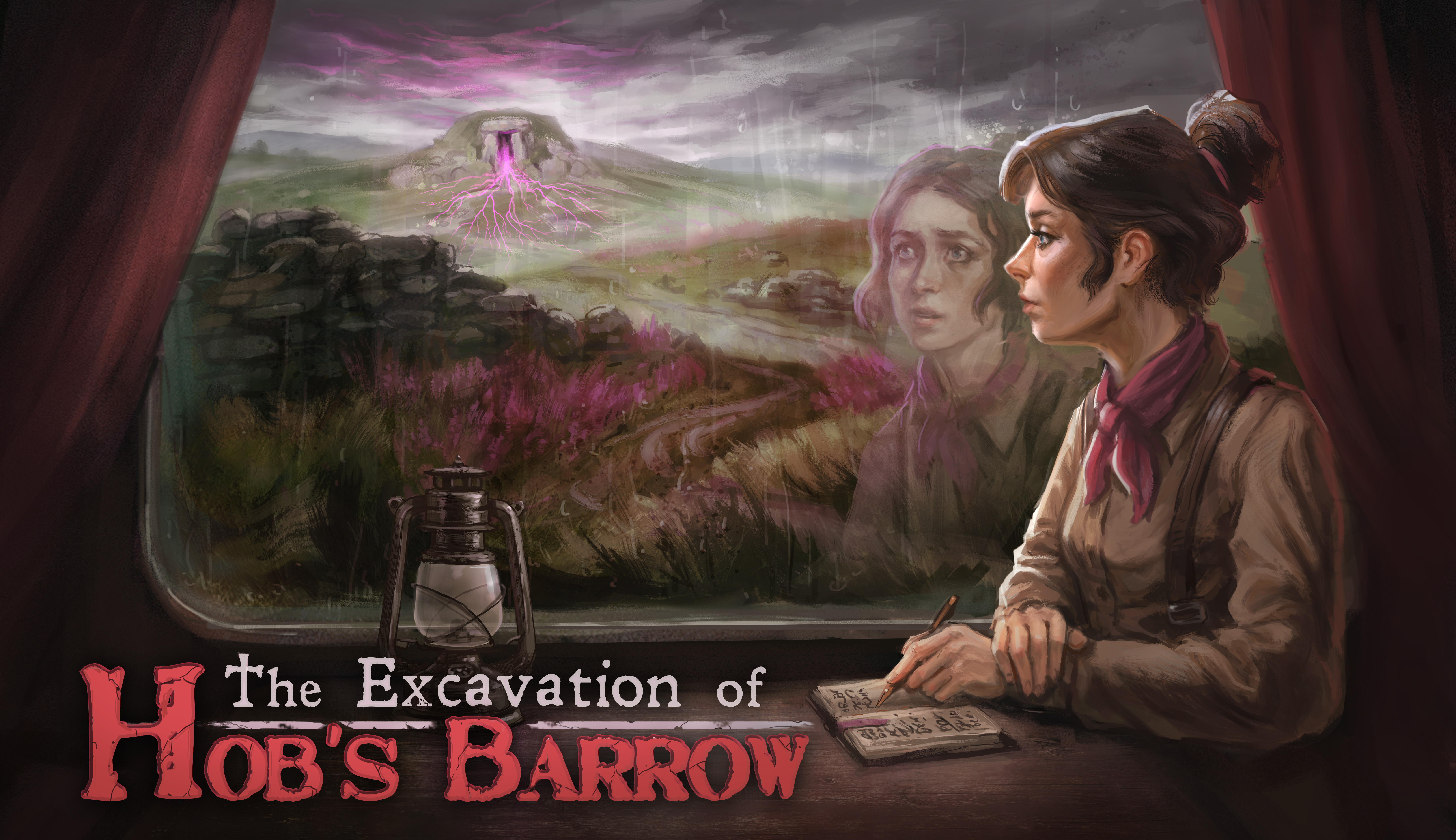
About The Excavation of Hob's Barrow
Antiquarian Thomasina Bateman travels to the remote Yorkshire village of Bewlay to document Hob’s Barrow for her book on England’s burial mounds. With her correspondent missing and locals reluctant to help, she investigates through conversations, close observation and traditional point-and-click puzzles as folklore, dreams and the landscape unsettle her rational account of the excavation.
The Excavation of Hob’s Barrow is a folk-horror point-and-click adventure set in Victorian rural England. Its protagonist, Thomasina Bateman, is an antiquarian who studies burial mounds and records what she finds for a book. A letter draws her to Bewlay, an isolated village surrounded by woods and open moorland, where she expects to meet the person who invited her to investigate Hob’s Barrow. He is absent when she arrives, and her assistant fails to arrive. The landowner controlling access to the mound refuses permission, while the villagers regard Thomasina as an outsider whose profession, independence and trousers challenge local expectations. Her work therefore begins as both an archaeological inquiry and a social one: she must establish who sent the letter, learn what the community knows about the barrow and find a way to reach the site. The game’s mystery develops gradually from these ordinary obstacles. Thomasina approaches them as a trained observer committed to evidence, but strange dreams and uneasy encounters complicate the distinction between a local legend and what she can verify for herself.
Bewlay is a compact settlement set within a landscape that feels much larger and harder to escape. Its railway connection is disrupted, and the game keeps Thomasina among the village, nearby farms, woodland, church grounds and moors as she tries to advance her research. Developer Shaun Aitcheson has described the setting as a place where the surrounding land should feel like a character in its own right, with the sense that something lies beneath the soil. That idea is expressed through repeated contrasts: familiar routines and increasingly disquieting incidents, domestic interiors and exposed countryside, Thomasina’s measured questions and the evasiveness or superstition of some people she meets. The story draws on English folklore without turning Bewlay into a collection of detached legends; local beliefs matter because they shape what residents will discuss, what access they grant and how they interpret the mound. Thomasina’s insistence on rational explanation gives conversations a second purpose: they reveal both useful information and the limits of her assumptions. The narrative’s strangeness grows out of the same investigation that brought her to the village, so the excavation remains the practical goal while the meaning of the evidence becomes less certain.
Play follows the conventions of a two-dimensional point-and-click adventure. The player directs Thomasina through illustrated scenes, examines people and objects, selects dialogue topics, collects useful items and applies objects to parts of the environment or to other characters. On the classic mouse interface, the left button moves Thomasina or performs actions such as speaking, taking and using; the right button asks for a description. An inventory sits along the upper part of the screen, and items can be selected and used on targets, including being combined when a puzzle calls for it. Progress depends on noticing details and remembering what people have said, rather than on combat or reflex challenges. A conversation can establish a lead, reveal a need or change how a character responds; an item found elsewhere may then satisfy that need or open another line of inquiry. This makes the player’s investigation a chain of observation, questioning and practical problem-solving. The game also uses close views and animated scenes to interrupt the static screen layout at selected moments, giving discoveries and exchanges a more staged presentation while keeping the main activity rooted in examining a scene and deciding what to try next.
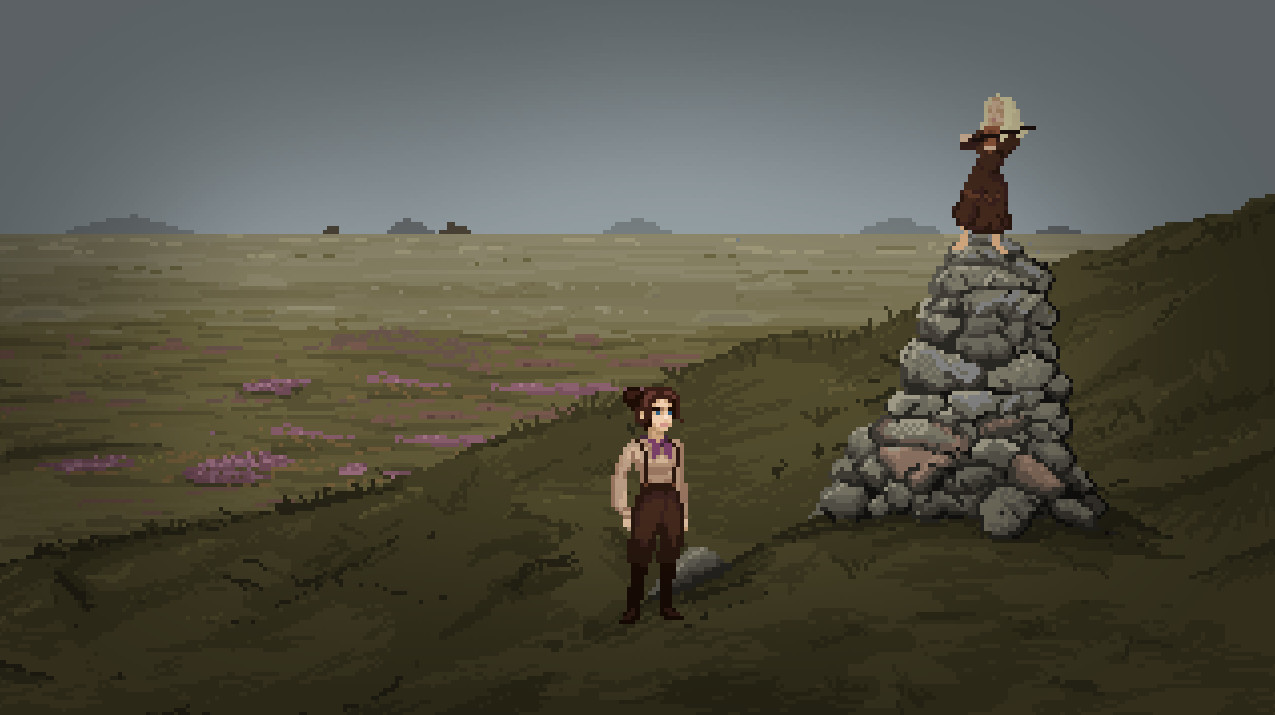
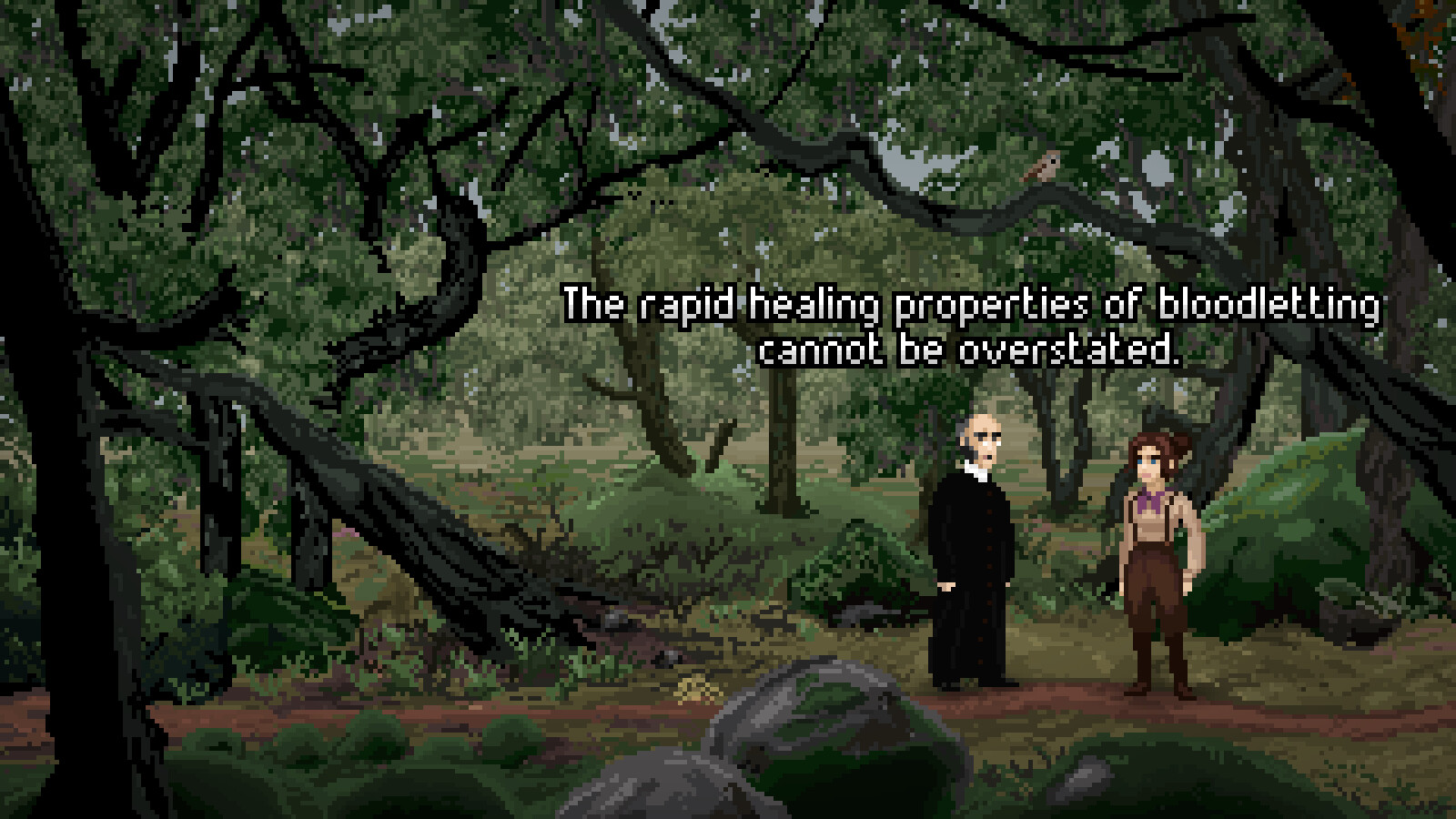
Much of the village investigation is built around its residents and their separate concerns. She encounters wary villagers, a sickly vicar and landowners, each with their own motives; named figures encountered in Bewlay include Father Roache and Mildred Walker. Thomasina cannot treat every conversation as a simple request for archaeological facts. She has to listen for what someone is willing to share, notice when a practical problem stands between her and an answer, and decide which object or piece of information might help. Some puzzles consequently involve item exchanges and small errands that connect people across different parts of the settlement. Objects do not always solve the problem where they are found: a clue or possession may become useful only after a conversation supplies its context, and progress can depend on carrying that information to another person. Other puzzles ask the player to interpret written clues, compare observations or use an object in a context suggested by earlier dialogue. A task list helps retain the immediate goals as these threads accumulate. The structure ties puzzle-solving to the community: assistance is often conditional on trust, access or a favour, and completing one task can reveal a person or resource relevant to another. The result is a gradual widening of the investigation, from trying to locate Thomasina’s correspondent and secure permission to understanding why the villagers’ accounts of the barrow carry such weight.
Exploration is scene-based rather than free-roaming. The player selects exits and points of interest in each hand-painted, pixel-art environment, returning to familiar locations as new dialogue, objects or information make them relevant again. Thomasina walks between scenes, and a map-based fast-travel option becomes available as the journey develops, reducing repeated travel across the connected village and countryside. It changes how the player moves between places, but does not replace the need to inspect scenes or decide which person and location can advance a current task. The journal and running list of objectives provide separate kinds of support: recorded information can be consulted while reasoning through clues, while the task list preserves the next practical questions. These tools make the adventure’s progression legible without changing its central loop of exploration, dialogue and item use. The puzzles begin with the material and social circumstances of the village—finding tools, obtaining access and interpreting what residents tell Thomasina—and later give more weight to the archaeological site itself. The shift links the everyday errands to the excavation rather than treating the barrow as an unrelated puzzle room; preparation and the information gathered in Bewlay establish the context for investigating it.
The game’s presentation supports a slow-building period mystery. Its pixel-art scenes depict the village, woodland and moorland in muted countryside colours, while character portraits and close-up animations make faces and expressions a prominent part of conversations. The soundtrack is an original score by The Machine. The Demon., and English dialogue is fully voiced; the Steam store lists English interface, audio and subtitles. Music, voice performances, written dialogue and sudden changes in framing all contribute to the way a routine exchange can become unsettling without relying on continuous action. The contrast between Thomasina’s composed manner and the villagers’ guarded or idiosyncratic responses also gives conversations much of their character. The title was developed by Cloak and Dagger Games and published by Wadjet Eye Games. The Steam product is the full single-player adventure, rather than a separate demo; the developer’s site also confirms releases for PC, Mac and Linux through Steam and GOG, and a Nintendo Switch release. Steam lists an art book and soundtrack as separate additional products. Platform descriptions here concern the full adventure and its language listing, rather than a particular console port’s control layout. The game’s central progression remains a self-contained investigation of Bewlay and Hob’s Barrow across those editions, presented through exploration, dialogue and puzzles rather than an action or combat system.
- Developer
- Cloak and Dagger Games
- Genre
- Single-player folk-horror point-and-click adventure