
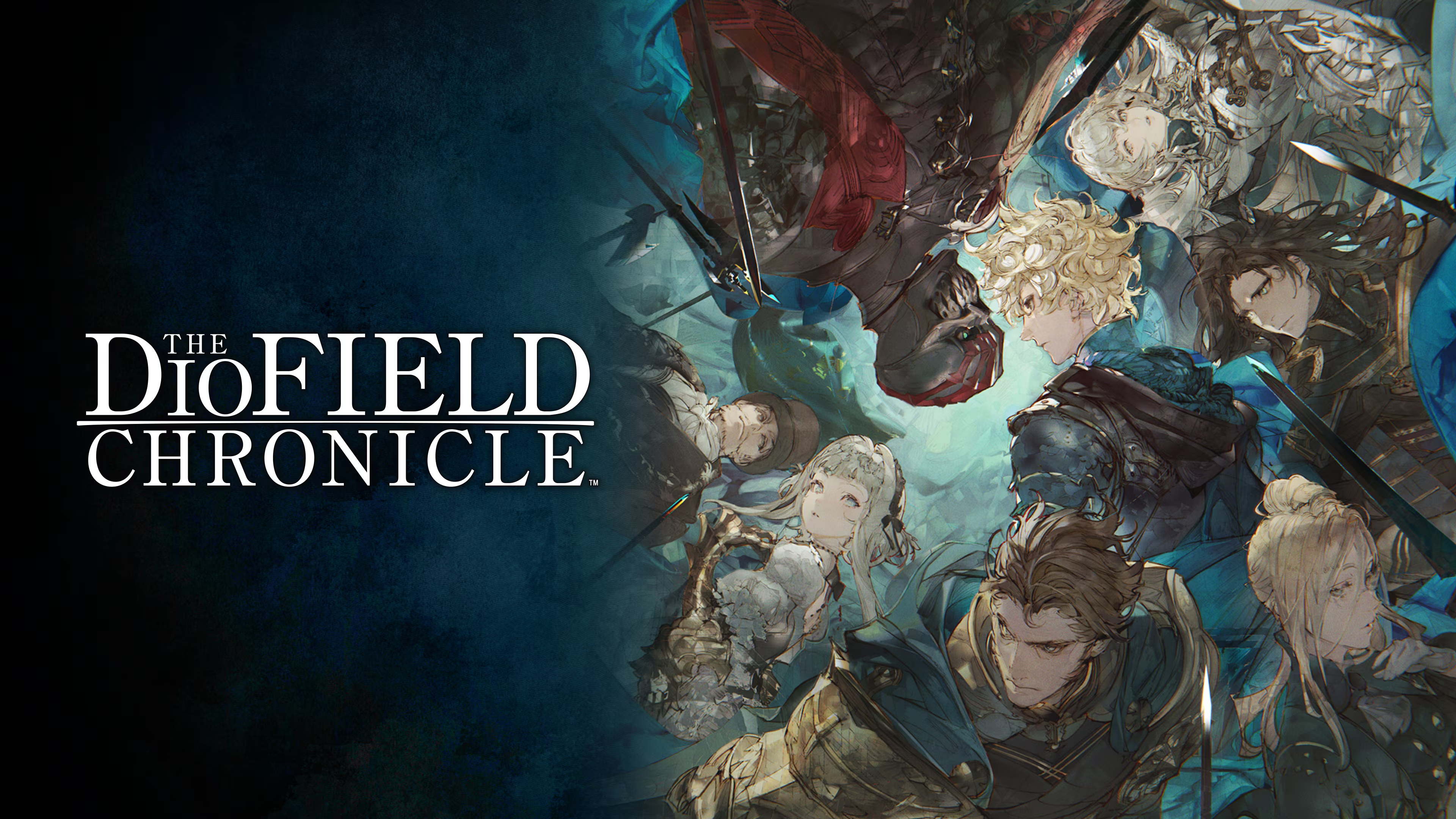
About The DioField Chronicle
On the island of DioField, mercenaries known as the Blue Foxes are drawn into a conflict shaped by rival powers, the resource jade and the fortunes of the kingdom of Alletain. The DioField Chronicle combines a narrated war story with real-time tactical missions, where a small squad moves, attacks and uses class and weapon skills under direct command.
The DioField Chronicle follows the Blue Foxes, a mercenary company whose rise becomes entangled with a struggle for control of the island kingdom of Alletain. Beyond the island, the continent of Rowetale is being torn by war: the expanding empire of Schoevia has pushed neighbouring states into a coalition, while those powers compete for the jade needed by modern sorcery. DioField’s deposits make the island strategically valuable, bringing a conflict that had seemed distant to Alletain’s shores. The setting mixes medieval court politics and military orders with magical technology and fantasy creatures. Rather than treating the war as a backdrop to unrelated adventures, the story tracks how political pressure, the kingdom’s succession and the mercenaries’ work become parts of the same chronicle. Its central question is what the Blue Foxes will come to represent as their actions are remembered: protection and hope, or a darker legacy.
The company’s four leaders have different relationships to Alletain and to the work of war. Andrias Rhondarson is a calculating strategist who once served as bodyguard to Prince Levantia Shaytham; his familiarity with ancient sorcery and covert schemes gives him a place both in the field and in the planning behind it. Fredret Lester, Andrias’s childhood companion, is a direct, physically powerful cavalryman whose concern for the kingdom gives his loyalty a public dimension. Iscarion Colchester is an archer and former knight who left the order and became a wandering free knight, retaining sympathy for people in need. Waltaquin Redditch, born to an aristocratic family, is an accomplished mage with formidable command of ancient magic. The group’s contrasting backgrounds place battlefield decisions alongside questions of class, service and rule. They are not simply interchangeable soldiers: their different roles shape both the team’s composition and the political story unfolding around the Blue Foxes.
The campaign is organised around military assignments and returns to the Blue Foxes’ headquarters, rather than continuous travel across a freely explorable landscape. Missions send the company to different parts of DioField and put a specific force or situation in front of the player; between them, the base provides space to speak with characters, handle quests and prepare the next operation. This rhythm gives the war story room to move between engagements and the company’s changing circumstances. The island’s richly detailed locations appear as compact, diorama-like battlefields, viewed from an elevated angle that makes positions and routes legible. Moving a unit across these spaces is itself part of the tactical problem: a squad can approach hostile troops from a different direction, reach an objective, or reposition before an enemy attack lands. Exploration is therefore tied to mission maps and the practical work of commanding a unit, not to uncovering a large seamless world.
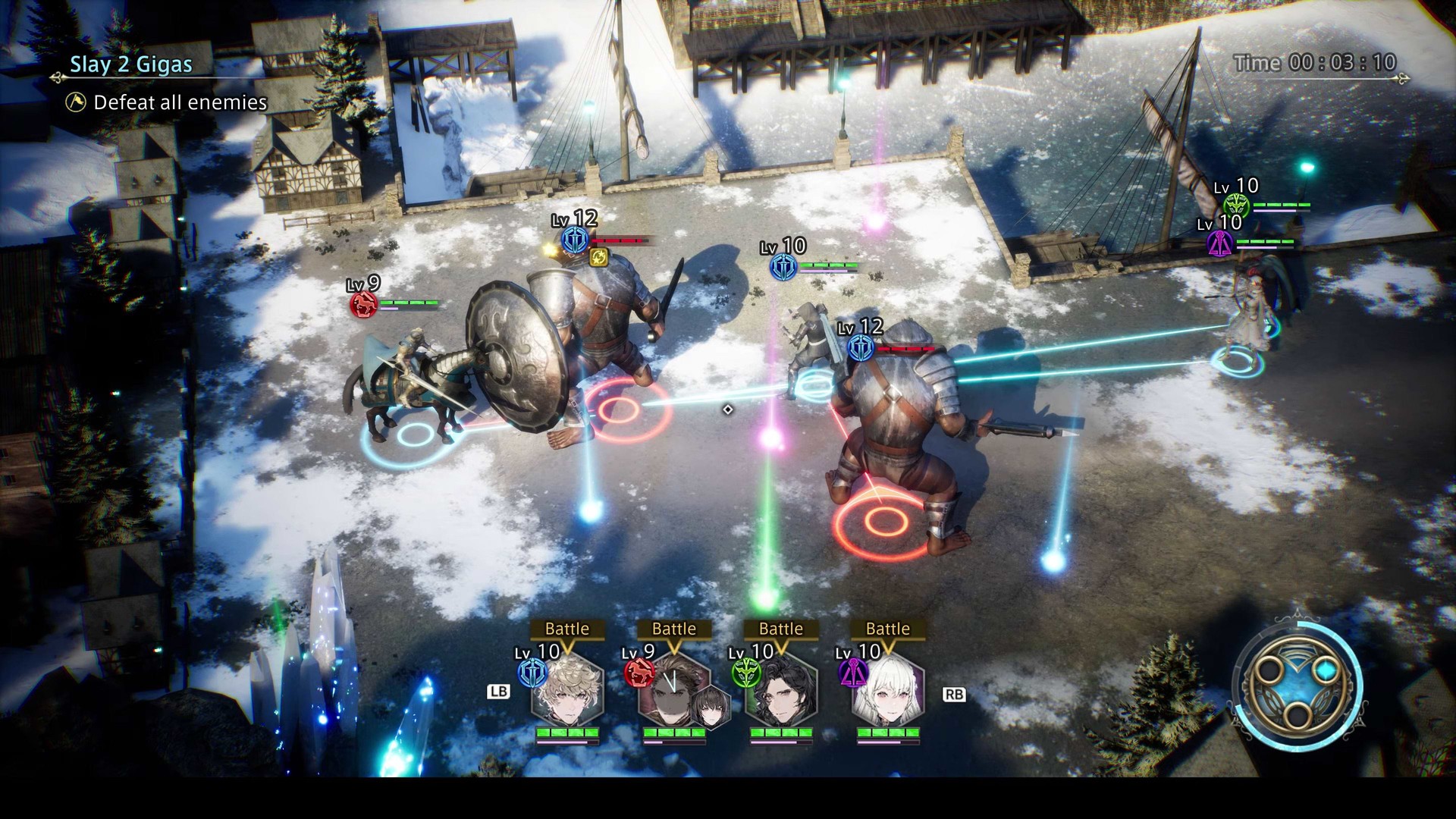
Combat uses the game’s Real-Time Tactical Battle system. Soldiers move and fight continuously, so the player watches enemy movement and the state of the squad while issuing orders. The controllable force consists of four deployed characters; selecting one or more units and directing their movement determines where the group meets the opposition and which fighters can support one another. The action can be paused while commands and skills are chosen, then resumed as those orders take effect. This pause-and-command structure makes timing and placement meaningful without turning each engagement into a sequence of alternating turns on a grid. A skill’s area, range and purpose matter alongside the target: a defensive formation can draw enemies toward a front-line soldier, while ranged attacks can weaken a group before it closes in. Enemy attacks continue to change the situation, so a formation that made sense moments earlier may need to be shifted or protected.
The four classes establish distinct jobs within the squad: soldiers hold the line, cavalry use mobility to disrupt opponents, sharpshooters attack at range, and magickers support allies with ancient sorcery. Characters within the same class do not necessarily use the same weapon, and skills are attached to weapons as well as to class abilities. That makes equipment part of tactical planning rather than a simple comparison of damage values. A soldier’s defensive formation can pull enemy attention away from allies; mounted cavalry can charge across a line and knock opponents back; a sharpshooter can maintain fire across a selected area; and a magicker can create a healing zone around a chosen position. The effects encourage the player to think about where an ability will land and how it will alter the battlefield. Adjutants add another layer: a supporting character can be paired with a deployed unit to contribute additional skills, extending the team’s available tools without adding another independently moving fighter.
Progression connects the missions to several separate forms of preparation. Character levels grant ability points that can improve attributes and combat traits, while skill points earned through mission rewards strengthen class abilities and weapon-linked skills. The company’s rank advances through quests and can unlock functions or benefits, including improvements to its shop and the force as a whole. Special mission materials can be used to develop new weapons, which then become available through the shop; resources and money also fund research into the powerful magical artifacts called Magilumic Orbs, whose effects can be expanded or strengthened. Those orbs provide a large-scale intervention during battle: Bahamut damages enemies across an area, while another orb can restore allies’ health and energy points. Because character abilities, weapon skills, class functions and these battlefield resources use different upgrade paths, preparation involves deciding which parts of the force to invest in and which tactical gaps to address.
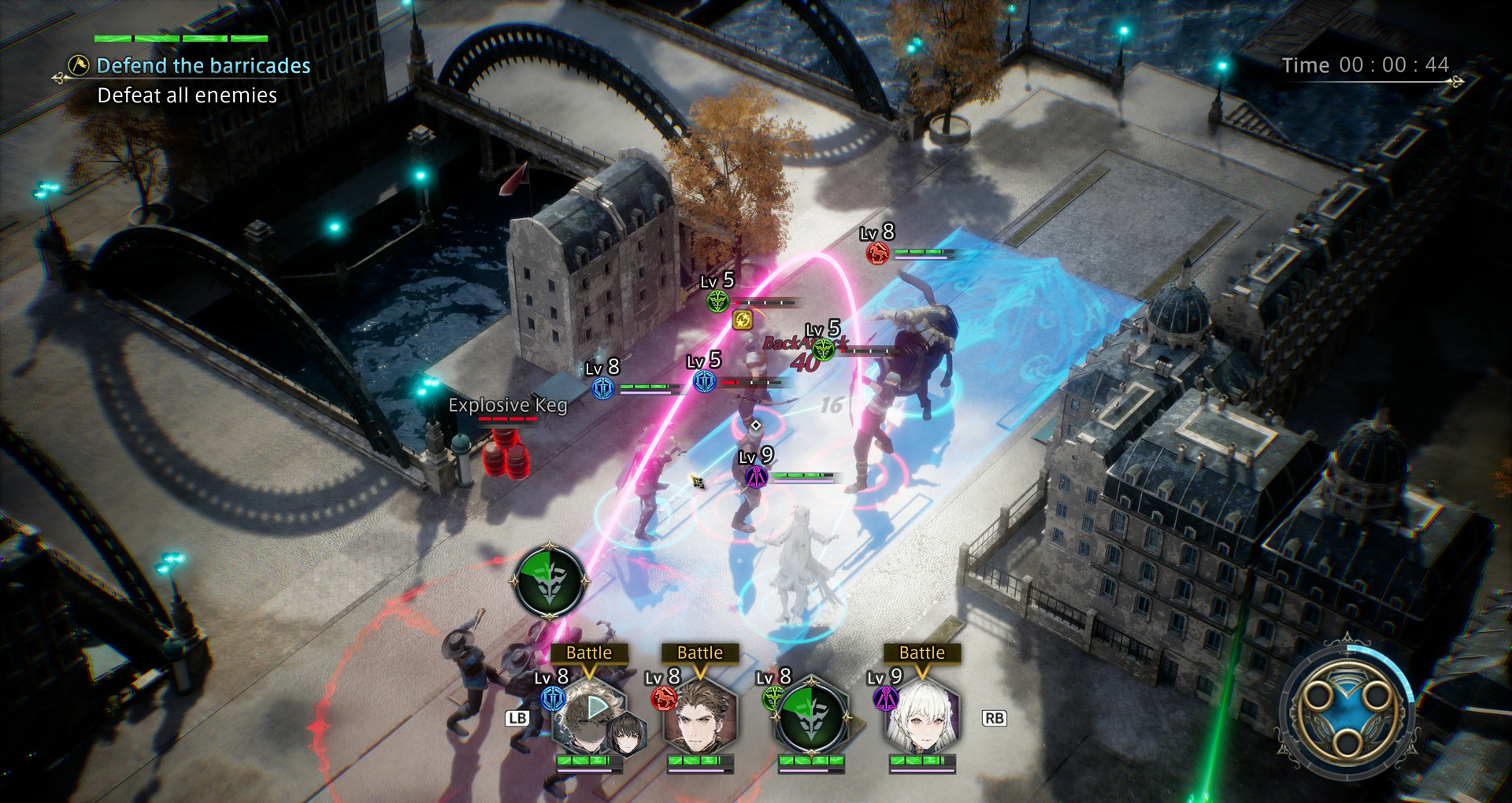
Some missions introduce bosses whose attacks and resilience demand more deliberate preparation than ordinary enemy formations. Their health display includes multiple reserves that must be depleted before a boss falls. Gigas, for example, uses powerful area attacks and charges, while Fenrir can thrust ice from the ground and call additional members of its pack. A boss also gains temporary resistance to a status effect after it is inflicted. Repeating one control tactic therefore has diminishing value; the player must watch the boss’s actions, conserve health and energy, and combine different characters’ skills to keep pressure on it. This draws together the game’s emphasis on real-time observation, squad roles and progression: class abilities provide distinct responses, weapon choices define which skills are available, and developed orbs offer a powerful resource when a large area needs to be affected. The battlefield presentation reinforces the commander’s perspective, setting figures and terrain into miniature-like scenes that remain readable as units move. Story events are also delivered through illustrated scenes and narration between missions, giving the campaign a chronicle-like frame as its political and military events accumulate.
The DioField Chronicle was released as a single-player strategy role-playing game by Square Enix and Lancarse. The Steam listing identifies the base game for PC and also presents a separate demo and Digital Deluxe Edition; the demo covers the opening through Chapter 1 and allows its save progress to carry into the full game. The Deluxe package adds the game alongside specified bonus equipment, a digital artbook and soundtrack, so those extras should be distinguished from the base campaign. PlayStation lists PS4 and PS5 versions, while the publisher’s launch information and the PC store listing identify releases across additional console platforms. At the centre of the full campaign is the same cycle of field command and preparation: a mission changes the company’s position in the war, while the headquarters gives the Blue Foxes a chance to develop the people and equipment they will take into the next fight.
- Developer
- Square Enix and Lancarse
- Genre
- Strategy role-playing game / tactical RPG