
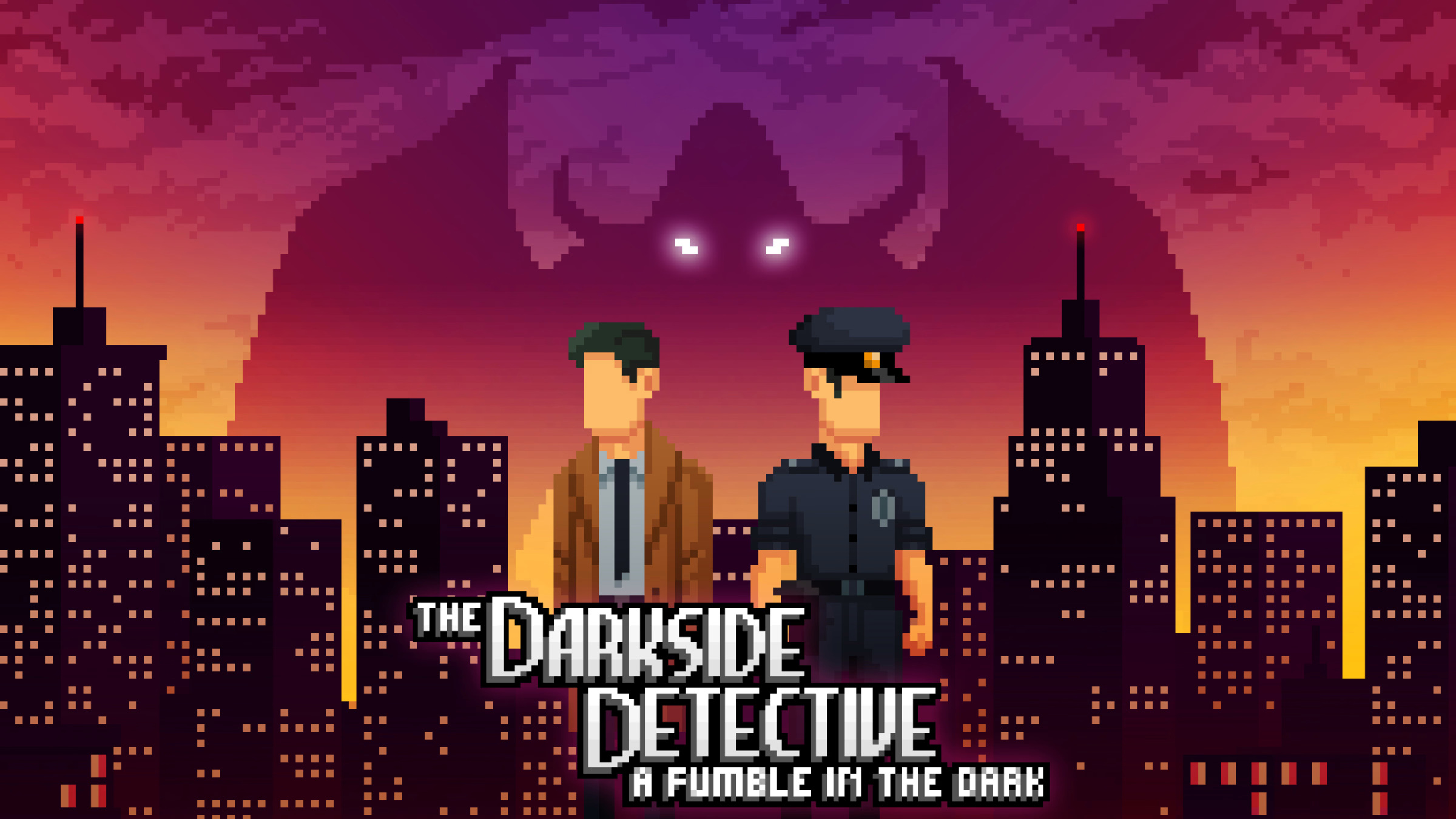
About The Darkside Detective: A Fumble in the Dark
Detective Francis McQueen returns to Twin Lakes after Officer Patrick Dooley vanishes into the Darkside. Investigate paranormal cases through point-and-click scenes, conversations and item puzzles, from an auction house and television studio to a carnival, wrestling venue and Irish castle. Pixel art and Thomas O’Boyle’s music accompany the sequel’s original cases and later bonus investigations.
The Darkside Detective: A Fumble in the Dark resumes Francis McQueen and Patrick Dooley’s Twin Lakes cases after Dooley is trapped in the Darkside at the close of the first game. McQueen’s first assignment is therefore a rescue, not a routine call: the opening case, Missing, Presumed Darkside, sends him through an auction house, a television studio, a junkyard and an apartment while he follows the trail to his partner. The city’s Darkside Division handles supernatural incidents within an otherwise recognizable police department, so the premise can move from an official workplace to occult trouble without changing the detectives’ role. Twin Lakes is the connecting place, but each case supplies a separate disturbance and a fresh cast of people to question. The rescue provides an arc across those incidents; it does not turn every case into one continuous crime scene. The game’s comedy grows from that mismatch between police procedure and paranormal subject matter, with McQueen’s investigation remaining the practical route into increasingly improbable situations.
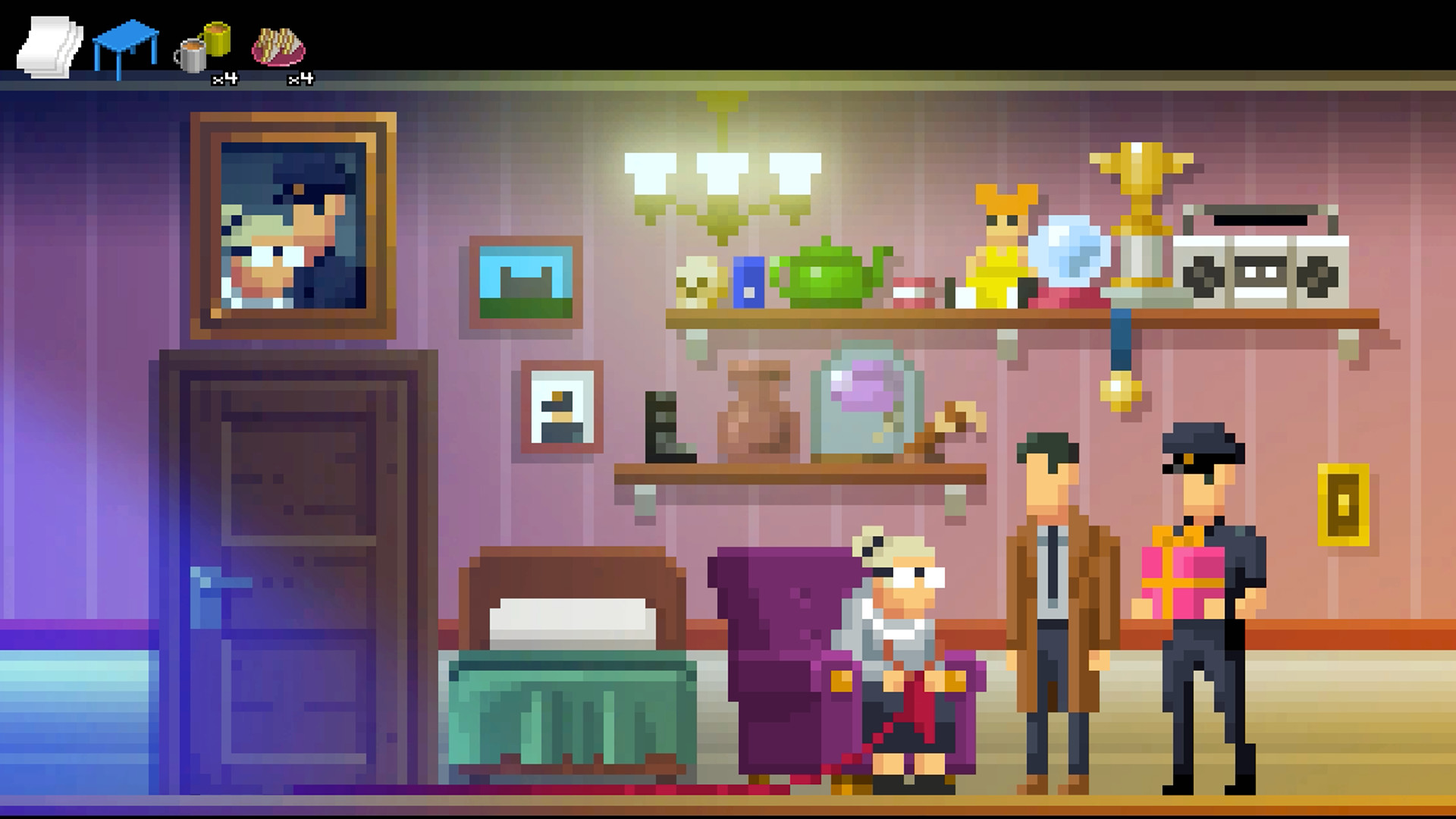
Scenes are presented as fixed locations for the player to inspect with a cursor. Clicking a person opens dialogue, while clicking objects can elicit a remark, reveal an item or expose a point of interaction; collected objects can then be tried on people or features elsewhere. That makes the screen itself the working evidence board: the player scans a room for anything actionable, reads the detectives’ responses, and decides which observation belongs with the current obstacle. Nintendo Life describes the opening case moving among four distinct interiors, while other cases shift into venues such as a carnival, retirement home and wrestling circuit. These locations change what can be examined and who can provide information, rather than introducing a separate movement system. Dialogue options are conversational prompts rather than branching moral choices, and observations often carry the game’s jokes as well as useful feedback. An item can be relevant even when the first attempted use is wrong; the game gives a more informative response in that situation, helping distinguish a promising lead from a wholly unrelated object.
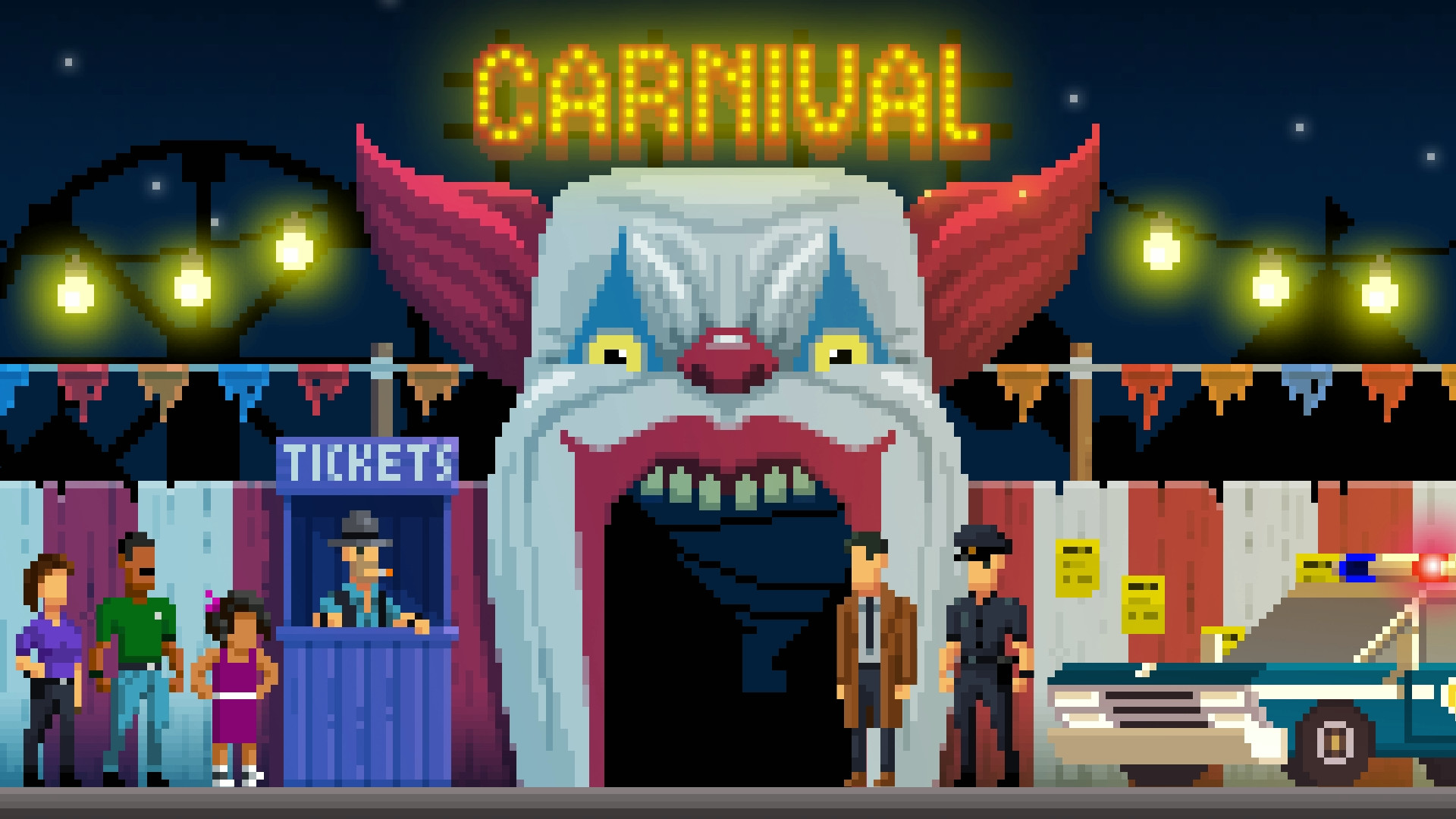
The original run of cases varies its setting through concrete comic premises. Twilight Years takes the investigation to a retirement home; Funfair Dismissal uses a carnival; Royal Fumble moves into an Irish castle; and Class of the Titans brings the detectives to a wrestling setting. Those names and venues signal the series’ habit of shaping supernatural trouble around familiar social environments: an institution, a public attraction, a sporting spectacle or a faraway landmark. The opening case is more spatially expansive than a single-room puzzle, connecting the auction house, studio, junkyard and apartment as McQueen searches for Dooley. Later investigations can be more self-contained, so the sequence alternates between the rescue thread and local cases whose immediate problem is distinct. This range gives the pixel-art locations practical variety: a clue in a studio belongs to a different set of props and routines than one encountered at a retirement home or an Irish castle. The official descriptions also name Ireland, a carnival, retirement-home grounds and wrestling among the stops, without requiring a fixed total for the current edition.
Puzzle progress comes from pairing observations with the right object, person or place. Reviews describe the familiar inventory-adventure loop of picking up an item and using it elsewhere, but note that the sequel’s cases can span larger areas and involve more involved puzzles than the first game. The distinction matters in practice: a clue may be visible in one scene yet only become useful after another character explains the obstacle, so the player has to carry information across locations as well as objects in inventory. Short logic puzzles and minigames interrupt the ordinary inspection-and-dialogue pattern. McQueen advances by interpreting a scene, asking the right question and applying an item where its purpose makes sense. A locked route or an unhelpful witness becomes the next puzzle, and solving it exposes another piece of the case. The detective’s progress is in what he learns about Twin Lakes and its odd residents. Item responses can help signal that an attempted combination has a connection, but they do not replace observing the scene and working out the missing step.
The sequel keeps McQueen and Dooley as its central pair, but their roles change during the rescue case. McQueen begins the search without his partner beside him, and the dialogue and case progression make that absence part of the opening situation. When the cases later return to their shared investigations, the familiar contrast between McQueen’s detective role and Dooley’s presence gives conversations a recurring rhythm. RPGFan describes the characters’ observations as a major source of the writing’s humor: clicking a scene can produce a pun, an overly literal reading or a line keyed to a character’s personality. That means optional-looking examination can contribute to characterization even when it does not reveal a required clue. The relationship also connects the episodic structure without claiming that every local mystery directly advances Dooley’s rescue. Some cases stand on their own, while the larger premise frames the reason McQueen is back at work. This split lets an individual case conclude on its own terms and still belong to a sequel that starts with a clear unresolved rescue.
The visual presentation uses small-scale pixel art and static screens, with characters and objects readable as parts of an illustrated room rather than as moving camera space. The fixed compositions suit the click-to-inspect format: the player can survey the visible objects, revisit a screen after collecting something, and follow an exit to another location. Nintendo Life describes the locations as distinct despite the deliberately limited graphics, and the official listings identify pixel rendering as a feature. Music by Thomas O’Boyle accompanies the cases. The writing is also part of how the scenes communicate: an object may be identified by an observation that is comic before it becomes informative, while dialogue boxes keep the exchange visible during investigation. This combination makes Twin Lakes’ supernatural situations legible through compact scenes and text instead of relying on cinematic movement or voice-led exposition. The case locations provide the contrast: the same visual scale has to accommodate an apartment, public venue, carnival, wrestling space and an Irish castle, while leaving room for odd details within each frame.
The original rescue case and the later bonus investigations sit together in the current Steam game. Ghosts of Christmas Passed, One Flew into the Cuckoo’s Nest and Tales from the Darkside were added free after the initial case sequence, widening the set of Twin Lakes incidents McQueen and Dooley can investigate. A Christmas haunting and the other new premises fit the series’ pattern of placing an occult problem inside a recognizable occasion or institution. The publisher’s press kit names all three, while its current store copy describes a larger package than the launch-era descriptions. The earlier cases still establish the sequel’s shape: McQueen searches for Dooley, then the detectives move through distinctive local mysteries, from retirement-home trouble to a carnival, a wrestling venue and an Irish castle. Each case offers a new set of people, objects and jokes, while the simple act of inspecting a scene and testing an idea remains the means of working out what happened. The added cases extend that work without changing its point-and-click structure or the pair at its centre.
- Developer
- Spooky Doorway
- Genre
- Point-and-click adventure with paranormal investigations and puzzle solving