
About The Dark Pictures Anthology: House of Ashes
At the end of the Iraq War, a US operation seeking weapons of mass destruction collapses into a buried Sumerian temple. Five American and Iraqi protagonists must navigate the underground ruins and decide whether rival soldiers can cooperate against the creatures hunting them, while cinematic choices and timed actions shape who survives.
The Dark Pictures Anthology: House of Ashes is a standalone interactive horror story set in 2003 Iraq. A US military unit searching for alleged weapons of mass destruction comes under fire from Iraqi forces in the Zagros region; an earth tremor then drops members of both sides into the remains of a buried Sumerian temple. With communications cut off and an ancient threat moving through the ruins, survival depends on finding a route through the underground complex. The game frames the conflict through five playable characters whose immediate objectives do not line up: the US personnel arrive as an armed operation, while Iraqi soldier Salim Othman is fighting to return to his son. The temple gives the story a confined setting where the two groups have to reconsider who counts as an enemy.
The playable cast comprises CIA field officer Rachel King, her estranged husband Eric King, Marines Jason Kolchek and Nick Kay, and Salim. Rachel and Eric’s marriage and Rachel’s history with Nick add personal tension to the military mission, while the distinction between the American unit and Salim’s Iraqi perspective shapes the decisions made underground. Scenes shift between these characters as the group separates, encounters danger and tries to regroup. The narrative does not assign one permanent lead whose survival guarantees the ending: playable characters can die, and later scenes respond to who remains. Dialogue choices, actions under pressure and relationships therefore do more than set tone; they determine the people available to make decisions in the chapters that follow.
Most play alternates between cinematic scenes, guided movement through compact environments, object inspection and decisions. While controlling a character, you can look around the passage or chamber, inspect items and signs of earlier activity, and decide when to move a scene forward. The controllable camera gives a wider view of the immediate space than a fixed film shot, which matters in dark rooms and narrow tunnels where details can sit away from the main path. Characters carry light sources such as a weapon-mounted flashlight or a flare, and directing light helps reveal the route and objects in shadow. Exploration is tied to context: journals and other traces introduce the people who worked in or encountered the ruins, while ancient tablets offer possible glimpses of events that may lie ahead.
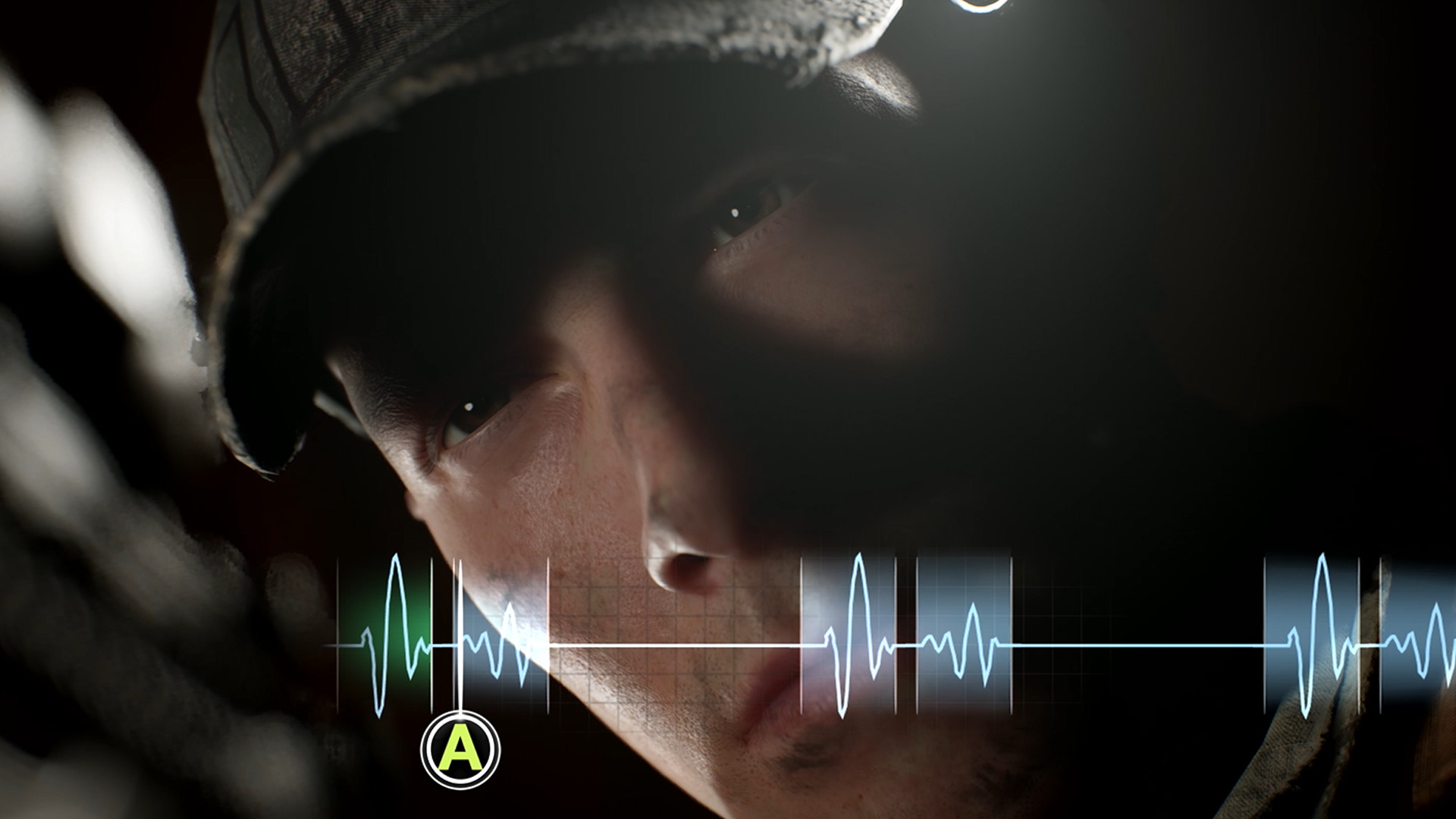
Quick-time events turn sudden attacks and dangerous decisions into short input sequences. Failing a prompt can injure or kill a character and redirect the story. A tense moment is not always solved by pressing every prompt successfully, because the scene may present a choice about whether to act or hold back. Difficulty and accessibility settings let players adjust how demanding the prompts are, including their timing and input behavior. These options affect the action controls rather than removing the story’s uncertainty: a choice can still put one character at risk, and the consequences may appear later rather than immediately.
The major pressure point is the uneasy cooperation between people trained to treat one another as threats. Jason and Salim’s encounters place that conflict in direct view, while Eric’s authority, Rachel’s divided loyalties and Nick’s position within the unit create further fault lines. The creatures force the group into the same physical problem, but the game leaves players to decide whether a character should trust, protect or abandon someone else. The structure tracks consequential decisions through branching scenes and character outcomes, so later passages can differ according to earlier choices. That branching supports replay: returning to the story lets players see alternate interactions and paths without turning the temple into an open-ended exploration map.
House of Ashes also supports play with other people. Shared Story lets two players take part online, with each controlling characters as the narrative unfolds; the experience can separate players into different scenes or perspectives. Movie Night is an offline pass-the-controller mode for as many as five people, assigning the playable cast among the group. Solo play keeps all character decisions with one player. After completing the main story, the Curator’s Cut provides scenes from other characters’ viewpoints and new decisions, making it possible to revisit parts of the same events through a changed perspective. These are story modes built around the same branching campaign, not separate combat or competitive systems.
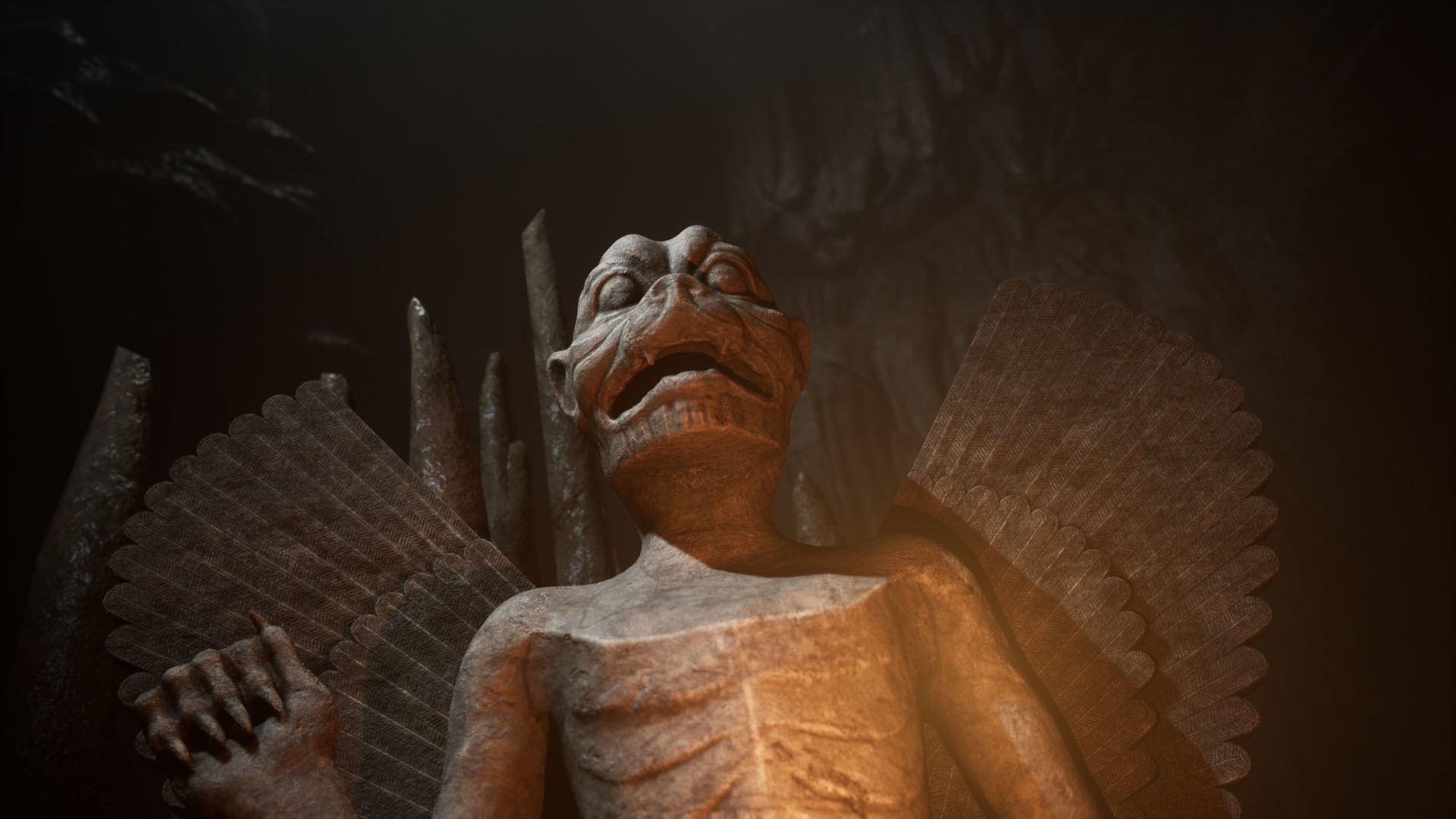
The setting combines a contemporary military search operation with a much older underground place. The temple’s carved architecture, rooms and abandoned traces make movement and observation part of the narrative, while the story alternates between armed conflict above and a struggle to escape below. House of Ashes is the third standalone game in The Dark Pictures Anthology, with its own cast and setting; it does not continue the previous entries’ plots. Its central activity remains selecting responses, examining nearby spaces and carrying characters through timed decisions, with the survival of the group changing the scenes still to come.
- Developer
- Supermassive Games
- Genre
- Adventure; cinematic branching horror