
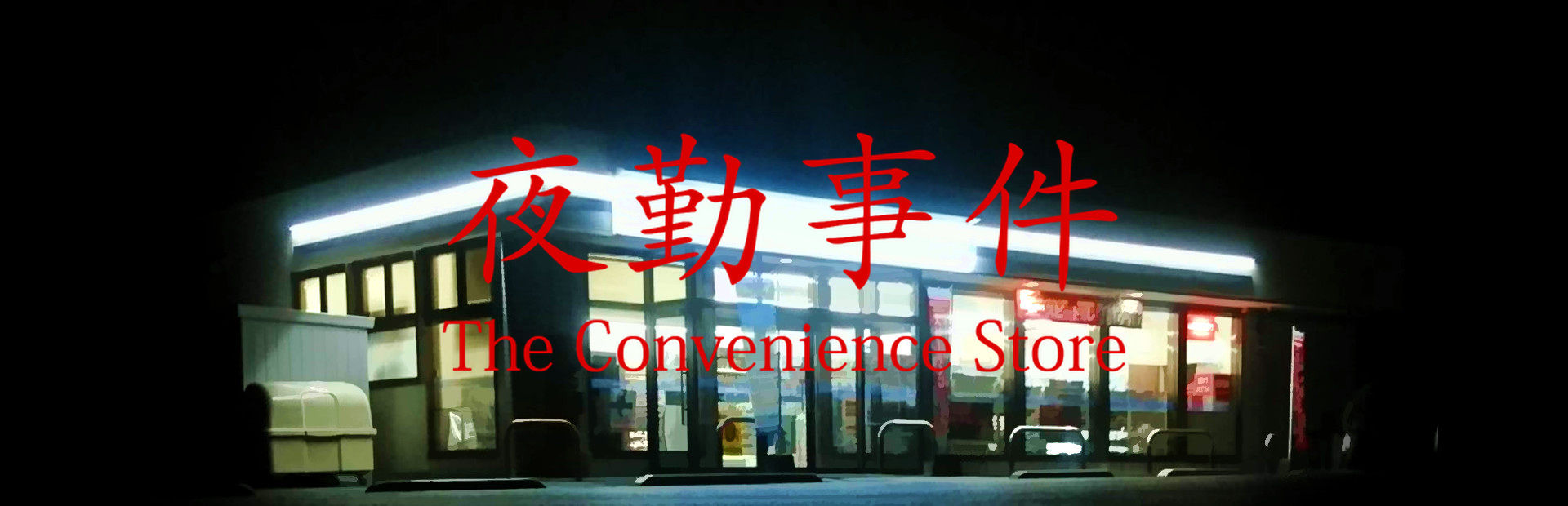
About [Chilla's Art] The Convenience Store | 夜勤事件
A college student takes the night shift at a Japanese convenience store, serving sparse customers and completing routine tasks as strange events gather around the building. Chilla's Art's The Convenience Store uses repeated walks to work, shop-floor duties and a distorted VHS look to turn an ordinary late job into a compact horror story.
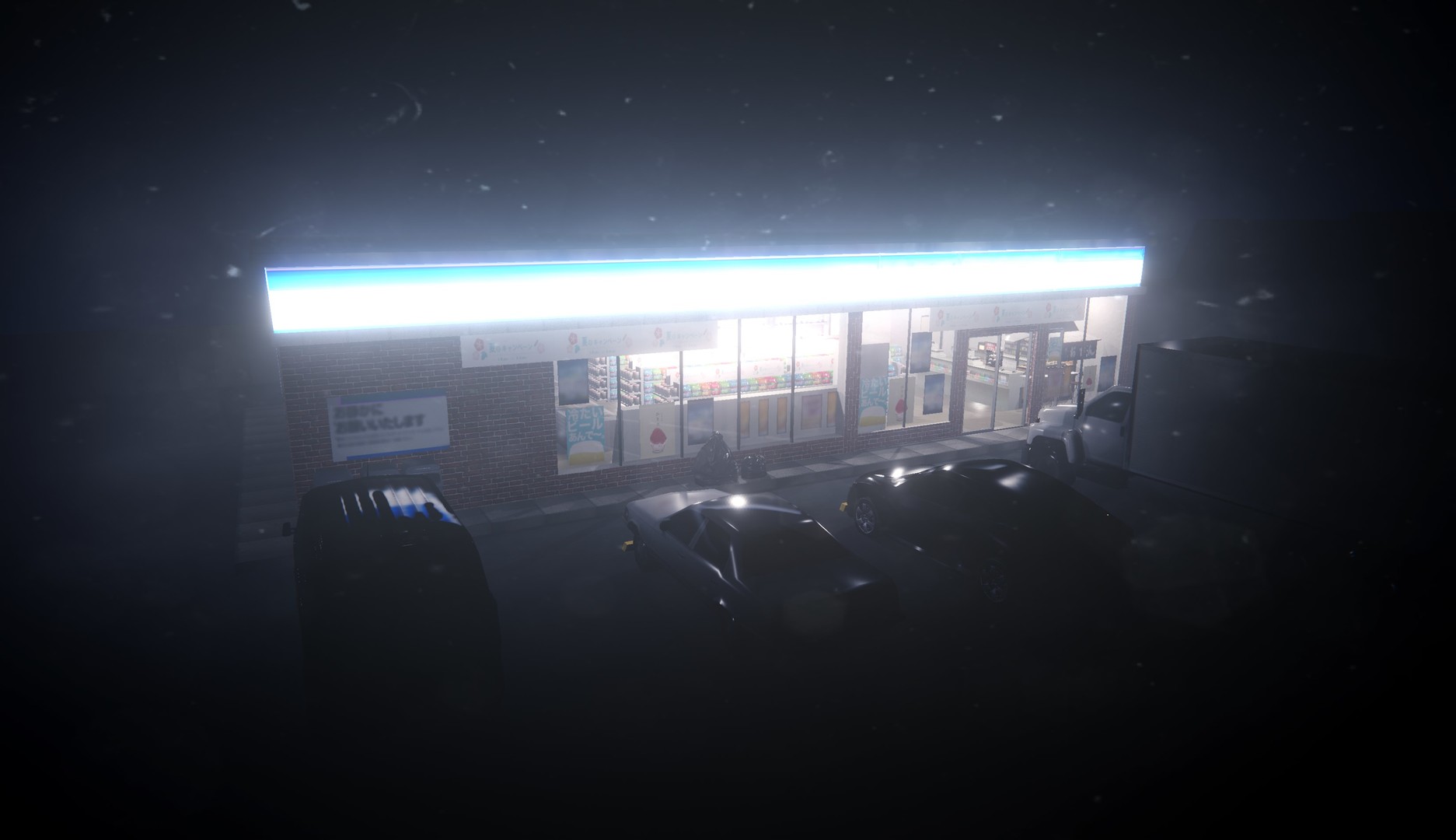
The Convenience Store begins with a college student whose night job seems manageable because the work is so ordinary. She travels from home to a small Japanese shop, arrives for a shift and deals with the duties left for her. The glass-fronted building promises bright light, stocked shelves and a counter separating the worker from customers; outside is a far darker route she must walk again when the night ends. Chilla's Art makes that contrast the game's foundation. The player learns the place as an employee would, through items that need moving and people who need serving, before deciding whether an unusual sound or movement means anything. This is not a story about a professional investigator deliberately entering a haunted site. The protagonist has a reason to return even after the shop begins to unsettle her: she works there. The familiar shape of a late shift gives the horror a schedule, so the next journey to the store can feel different even when the road and storefront have not visibly changed.
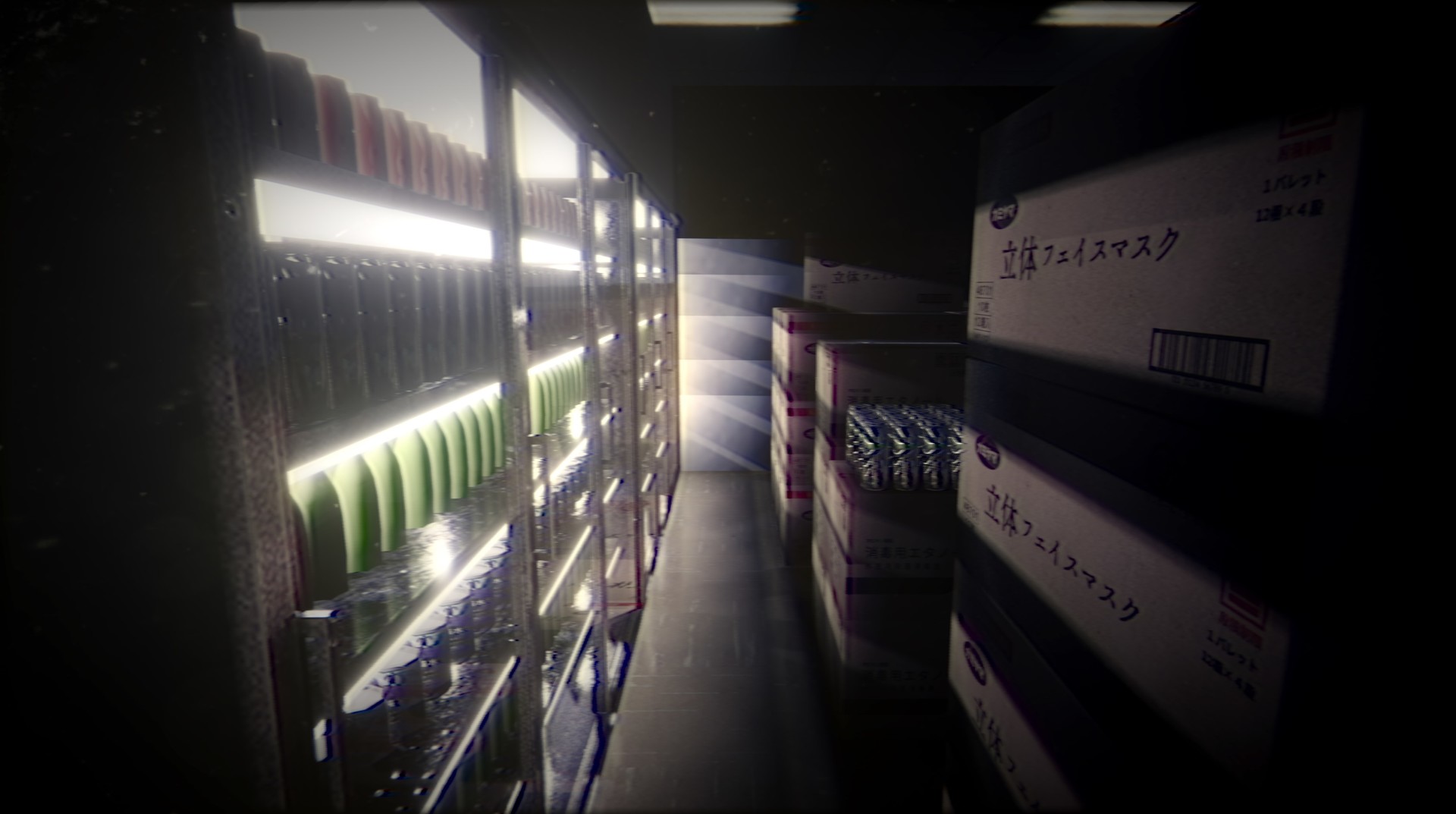
The counter is a practical station rather than a decorative backdrop. Customers come in, move among the shelves, select goods and approach for service. Between visits, the clerk follows instructions, deals with expired products and restocks what is missing. Rubbish and other small maintenance jobs pull her away from the safest, most illuminated part of the premises. Those actions establish what a normal shift looks like. Waiting while someone browses, going into the aisles and returning to the register all take time, which leaves room to watch the door and listen for another arrival. The tasks are simple, but they demand enough attention that an odd detail can appear at the edge of a routine action. The shop is therefore more than a single horror set. Its shelves, counter, stock area, windows and exterior all have different meanings depending on whether the clerk is selling something, cleaning up or trying to work out why a familiar object has changed.
The journey between the protagonist's home and her workplace matters as much as the store interior. She has to cross a dark, mostly quiet neighbourhood before reaching the pool of light around the shop. Early trips introduce the route and its landmarks; later ones ask the player to look at the same stretch with growing suspicion. A bridge and the surrounding darkness make the possibility of being followed difficult to settle by a quick glance. Even when the store appears safer, the worker can never see every side of it from behind the counter. The automatic doors form a visual and audible threshold: they ought to signal a customer, yet their movement can be unsettling when nobody seems to be coming in. The contrast works in both directions. Going inside feels like reaching shelter from the empty road, while returning outside for a job-related task removes that shelter. Repetition helps the player notice the difference between a routine disturbance and an event the clerk cannot explain.
Security footage gives another way to inspect the building, but a camera does not make the clerk omniscient. The image is limited to what a fixed viewpoint can show, and checking it means attending to a screen instead of the room around her. The game's small puzzle elements often revolve around looking closely, interacting with an object or deciding what to do next when a work task no longer behaves normally. An unexpected tape adds a different kind of recorded image to the story. It is not the same as the optional VHS effect covering the game's presentation: the tape belongs to the fiction, while the visual filter changes how the whole game looks to the player. Keeping those two uses of video separate makes the unease more legible. One is a clue whose presence raises questions; the other makes edges, colours and motion seem less stable during every ordinary shift. The question becomes whether an image provides reassurance or reveals something the clerk would rather not see.
Customers and co-workers are not merely interruptions before the next scare. A person who enters the shop can be irritating, strange or completely unremarkable, and the clerk must still finish the transaction. Someone who seems harmless on one night may be remembered when another incident occurs. The manager's directions give structure to the work, while comments from another employee add context to the neighbourhood without turning the whole story into a briefing. The player is not handed a complete explanation for the shop's history at the outset. Instead, short encounters, repeated routines and increasingly conspicuous disturbances change how the ordinary details are interpreted. This keeps the protagonist in a believable position: she cannot abandon every duty to pursue a theory, but she can pay closer attention to the next person through the door. The resulting tension comes partly from uncertainty about whether the danger is another person, something connected to the place, or a misunderstanding made worse by isolation.
The game is played in first person at walking scale. Interaction markers and a few puzzles guide progress through the nights, but there is no large combat system, character build or open neighbourhood to master. Chilla's Art's storefront description calls it a short walking-and-puzzle horror game with two endings, which is a more useful expectation than treating the retail work as a full simulation. Stocking and serving support the plot rather than generating a limitless business-management loop. The visual style borrows the grain, bleeding, jitter and interlaced noise associated with old CRT and VHS images; that effect can be turned off in the options. With it enabled, the bright shelves, dark corners and low-detail figures can be harder to read at a glance. With it disabled, the geography and tasks remain the same. The analogue treatment is one way of presenting uncertainty, not a separate mechanic that changes what products can be sold or which path through the shop is available. This distinction also explains why the security camera remains useful even with the filter disabled. The player is comparing a mediated view of the entrance with the actual shop floor, not trying to decode the graphics setting itself. The shifting relation between those two views gives a small store an unexpectedly broad field of uncertainty.
This profile covers Chilla's Art's 2020 game, not the later film adaptation or the developer's coffee-shop story The Closing Shift. The two games share an interest in late service work, but this one makes the walk to a convenience store, the night clerk's sparse duties and the arrival of an unexplained recording central to its shape. The player should expect a compact sequence of shifts, each using a known place slightly differently, rather than a broad collection of weapons, enemies or shop upgrades. The existence of two endings gives the closing events different possible resolutions without requiring a spoiler here. What matters before that point is learning the store well enough to recognise when a door, customer, shelf or image no longer fits the pattern. The mundane schedule is what allows the unusual events to stand out: an empty aisle is more troubling when the player has already spent time stocking it. In a larger horror game, a new area could provide the next surprise by changing the scenery. Here the more revealing change is often in the player's interpretation of a place already crossed several times. The lights, automatic entrance and aisles remain working parts of a shop even as the clerk's confidence in them drains away.
- Developer
- Chilla's Art
- Genre
- First-person Japanese psychological horror and light puzzle adventure