

About The Coma: Recut
Youngho falls asleep during an exam and wakes in a nightmarish version of Sehwa High. A figure resembling his teacher hunts him through its dark corridors. The Coma: Recut is a hand-illustrated Korean horror adventure about searching for clues, managing a small supply of survival items and finding a safe route through a school he thought he knew.
An ordinary exam day at Sehwa High begins badly for Youngho. He has spent the night studying, arrives exhausted and falls asleep over his test. When he wakes, the other students have gone and the school has changed. Classrooms and corridors remain in place, yet darkness has settled over them and someone who looks like his teacher, Ms Song, is pursuing him. The Coma: Recut places that simple problem inside a larger mystery: why is Youngho trapped here, what has happened to the people he met that morning, and what do the notes left around the school say about its past? A student named Yaesol and other figures become part of his attempt to make sense of events, but meeting someone in this version of Sehwa does not automatically mean finding a safe ally. The game draws on the routines and pressures of Korean school life, especially the weight of final exams, before turning a place organised around lessons and grades into one Youngho must relearn to survive. Its opening gives enough context to understand his predicament without explaining away the danger that follows him through the halls.
The school is explored from a side-on view. Youngho walks between classrooms, stairwells and connecting corridors, looking for a door he can enter, an object he can use or a clue that changes his next destination. A map helps him keep track of the building, while notes give fragments of its history and of the students and teachers who occupied it. Some routes require a key or another object found elsewhere, so progress involves remembering a closed passage and returning when something new becomes available. Conversations and small errands can add information beyond the main route. This is not a sequence of isolated jump scares with no place to investigate between them: the same rooms matter as routes, hiding places and sources of evidence. Their arrangement becomes more familiar as Youngho travels, even as that familiarity makes a sudden footstep or changed room more unsettling. The game's mystery unfolds through that repeated movement and the records encountered along the way. A page can be worth finding because it explains the school, because it suggests where to search next, or because it makes an apparently helpful character harder to read.
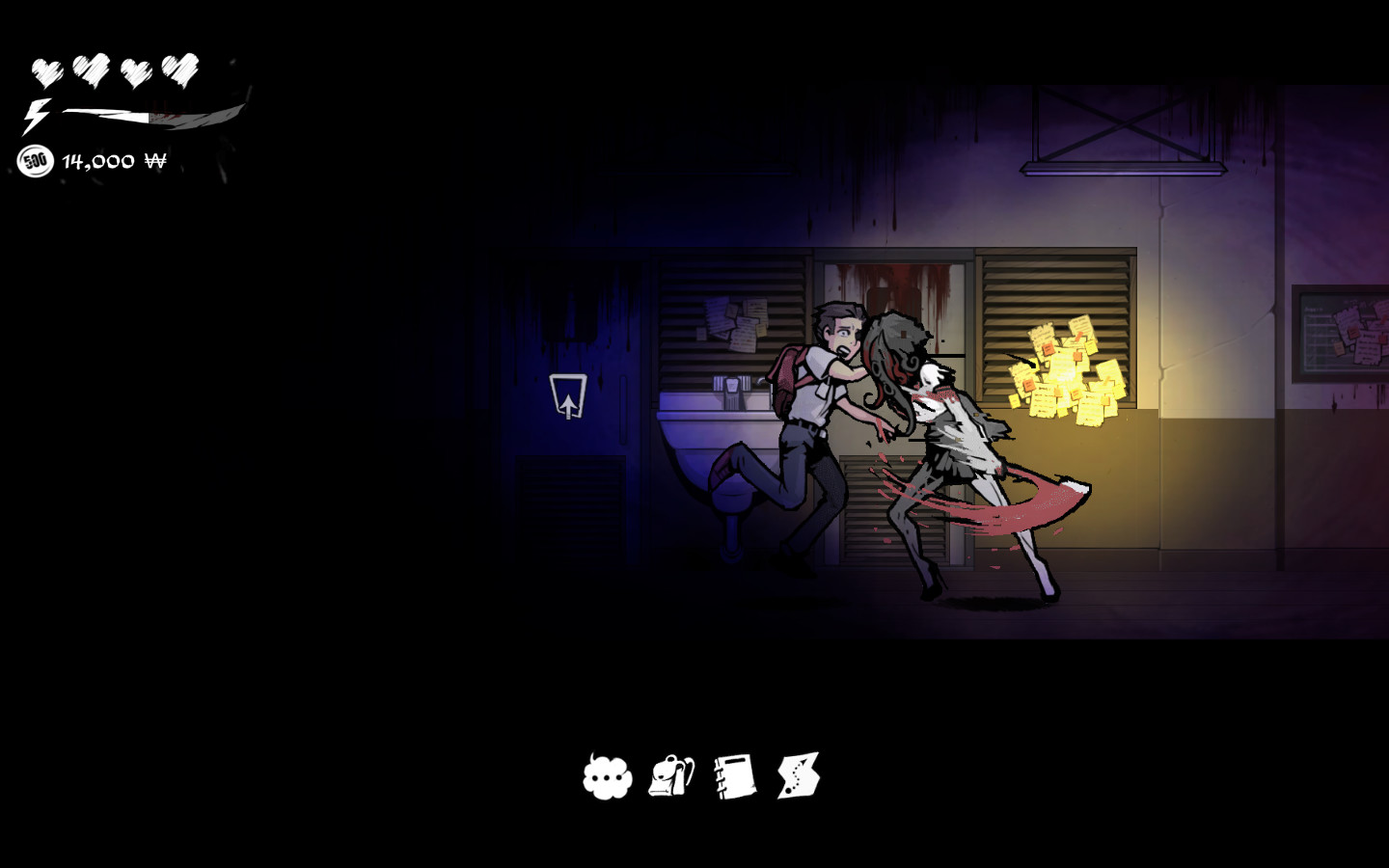
Youngho does not carry a weapon that can dispose of the pursuer. If the killer enters his route, he can run, dodge or try to break sight and hide in a closet or a dark corner. Holding his breath while crouched can help him stay concealed, but it consumes stamina; sprinting and evasive movement draw on that reserve too. The choice is therefore more involved than pressing a permanent safe button. A possible hiding place is useful only if he reaches it in time, and spending all his stamina in one panicked movement can leave him exposed at the next doorway. Footsteps provide a warning that danger may be approaching before the pursuer appears on screen. Youngho can also use his flashlight to find objects in dark rooms, though the light can attract unwanted attention. These systems make observation part of survival. On entering a new stretch of corridor, it helps to notice the next door, the shadowed recess and the distance to a place where he can wait. The tension comes from trying to continue an investigation while an enemy remains capable of interrupting it.
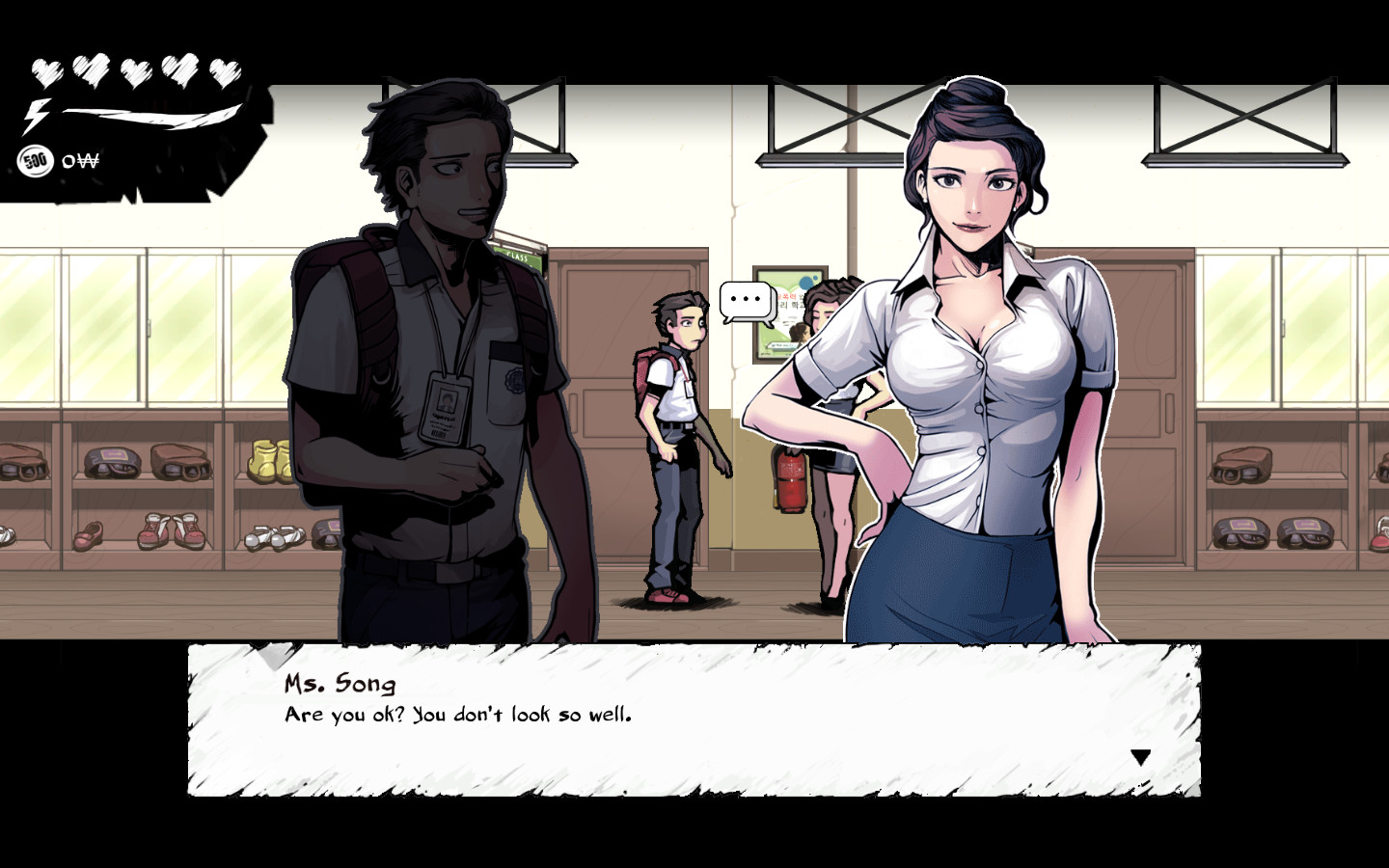
The main pursuer is not the only threat. Sehwa's altered spaces contain grasping shadows, poisonous growths and other hazards that can harm Youngho even when he has temporarily escaped a chase. Health and stamina are resources to watch, and supplies found while exploring or bought from vending machines can help him recover. His backpack has limited room for immediately usable goods, so carrying an item for an emergency has a cost when other useful supplies appear. This is a smaller and more focused survival system than a weapon-and-ammunition horror game, but it still makes a detour for supplies meaningful. A student who reaches a newly opened area with little health may want to locate a safe route back before pursuing the next clue. Saving also asks for attention: classroom chalkboards serve as checkpoints, so leaving a promising discovery behind and returning to record progress can be a sensible part of moving through the school. The game connects these practical decisions to the setting rather than placing a detached menu over them. School furniture becomes cover, a familiar machine dispenses food, and a board once used for teaching offers a pause in an otherwise dangerous building.
Recut is a revised version of the earlier The Coma: Cutting Class. The updated edition changes the artwork and animations and adds or rebalances survival actions, including the more deliberate hiding and breath-holding described by its developer. It retains the hand-drawn, two-dimensional look that sets the school apart from a freely navigable 3D horror space. During exploration, Youngho appears as a small figure against classrooms and hallways; story conversations shift to larger illustrated character portraits and text. That contrast helps distinguish the business of finding a route from the more personal accounts that explain what has happened. Darkness, sharp shadows and occasional bright details make it possible to read a corridor as both a navigable place and a source of threat. Sound has a practical role as well as an atmospheric one: hearing a pursuer's steps can change a plan before Youngho sees the danger. The presentation is tied to his scale within the school. He cannot simply overpower what is hunting him, so an empty passage and the sound beyond its door can carry as much weight as a more elaborate spectacle.
The story is not only about getting out of a locked building. Youngho's classmates, teachers and the notes they leave behind give Sehwa a social history that the altered campus makes difficult to ignore. The pressure of academic success is present before the supernatural turn, and the information found at night asks how the people around Youngho behaved when the school still seemed ordinary. Players can follow the immediate trail of keys and clues without knowing the complete account at the start. Optional dialogue and tasks offer further context, while the main route keeps returning to the question of who can be trusted. This balance allows the horror to work on two levels. There is the immediate risk of a killer appearing while Youngho searches a classroom, and there is the slower unease of discovering why a particular person or place matters. The game does not require an encyclopaedia of Korean folklore to follow that inquiry, but its Korean setting is more than a name on the school gate: the examination culture, illustrated school life and developer's stated interest in Korean horror all shape what is being transformed into a nightmare.
The Coma: Recut was released on PC in 2017 and later appeared on consoles, with store dates and publishers varying by platform and region. This profile describes the remastered game rather than the original Cutting Class release or the later Coma sequels. The separate Steam soundtrack and art pack adds music and artwork, not another chapter of the school to explore. Across the core game, the rhythm is to search, interpret and survive: follow a clue into an unfamiliar room, keep enough stamina to escape a pursuer, and decide when to return to a chalkboard before risking another corridor. Recut's interest lies in how those practical needs compete. A flashlight helps reveal an item yet may give away a position; a hiding place preserves health yet costs time and may drain stamina; a detour for a note can deepen the mystery while putting Youngho back in danger. Sehwa High supplies the map, the evidence and the threat. Learning its layout is necessary to move forward, but understanding the people who inhabited it is what makes the journey more than a series of successful escapes.
- Developer
- Devespresso Games / Dvora Studio Co., Ltd.
- Genre
- 2D survival-horror adventure