
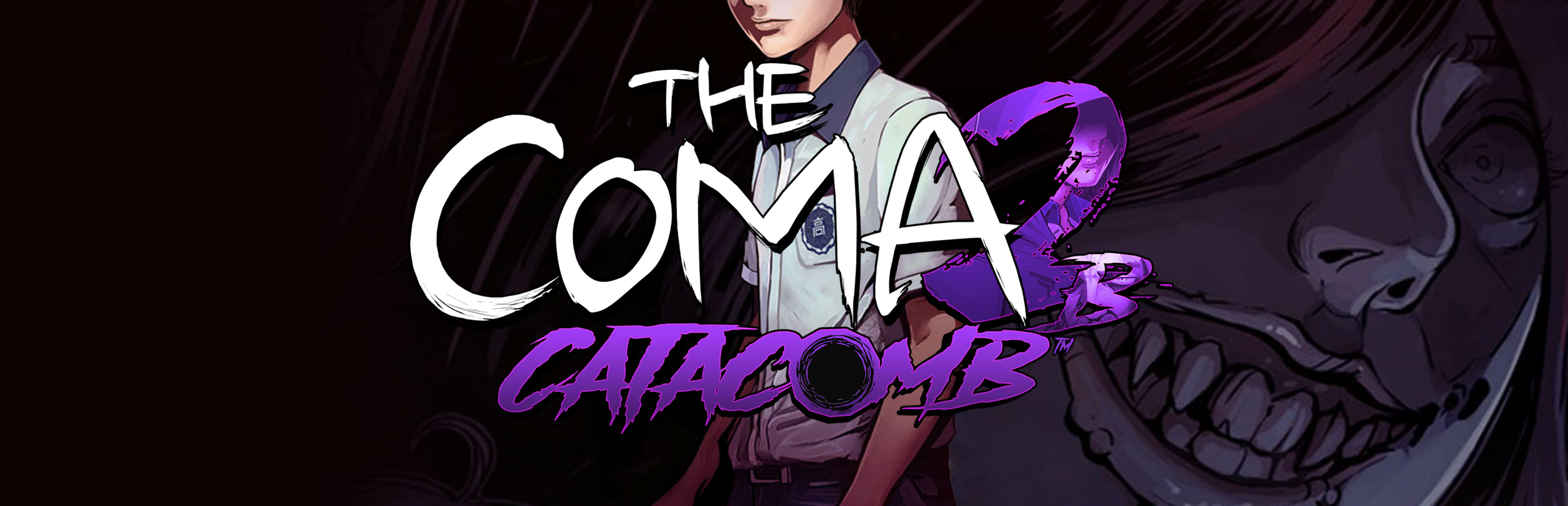
About The Coma 2B: Catacomb
Youngho Choi has escaped the nightmare of The Coma, yet ordinary life at Sehwa does not last. This side-scrolling survival horror follows him back into the mirror district, where Yaesol's notes point toward a relic and a facility beneath Dokaebi Market. Search, trade, solve puzzles and hide while a relentless pursuer closes in.
Youngho Choi believes he has left The Coma behind. After the nightmarish events that introduced him in the first game, a return to school and familiar people ought to mean that the danger is over. The Coma 2B: Catacomb quickly removes that reassurance. Youngho is pulled once more toward the warped mirror of Sehwa, carrying knowledge of its threats but no reliable assurance that experience will protect him this time. The story occupies a deliberate place in the series: it follows Youngho after the original adventure while connecting events to The Coma 2: Vicious Sisters, whose central viewpoint belongs to Mina. Calling it simply a remake or a numbered sequel misses the reason for the 2B title. It is a separate account of what Youngho faces in the interval, and it looks beneath the familiar district for a larger mystery. The return matters because the player knows he has escaped once; the new question is why that escape was not enough.
Yaesol's scattered notes become a route into the new story. Youngho collects their pages to learn the whereabouts of a relic sword that may help him resist the Vicious Sister. The search leads toward a large facility below Dokaebi Market, bringing ordinary district geography into contact with the mirror world's hidden structure. An unwanted visitor to the dimension and a new figure connected to Yaesol complicate Youngho's plan. Those elements give the investigation a specific direction without making the game a straight trip to a single final object. Each note can change what he knows about the world or suggest why another route deserves examination. The everyday market is also important because it is not merely a spooky background: trading there can help Youngho prepare for difficult encounters. Sehwa's streets, buildings and subterranean spaces form a connected survival problem, not just a row of set-piece chases. The player is asked to gather the information needed to move through them and understand why Youngho remains vulnerable.
Movement is side-on through hand-drawn environments, with Youngho stepping between rooms and returning to earlier parts of the district as new tools open passages. That perspective makes a doorway a meaningful threshold. On the other side may be a clue, a useful supply or a pursuer whose approach can be heard before it is seen. The map and the notes help give an investigation shape, while locked routes mean the next destination cannot always be reached in a straight line. Puzzle clues may need to be compared across rooms rather than treated as instructions found beside the answer. Some tasks involve recognising how separate bits of paper or environmental signs relate, so collecting material is only the beginning of solving the problem. The game's pacing comes from alternating those slower deductions with the risk of being interrupted. When a search has to be abandoned, remembering what was observed can save a later return from becoming another blind sweep of the same dangerous floor.
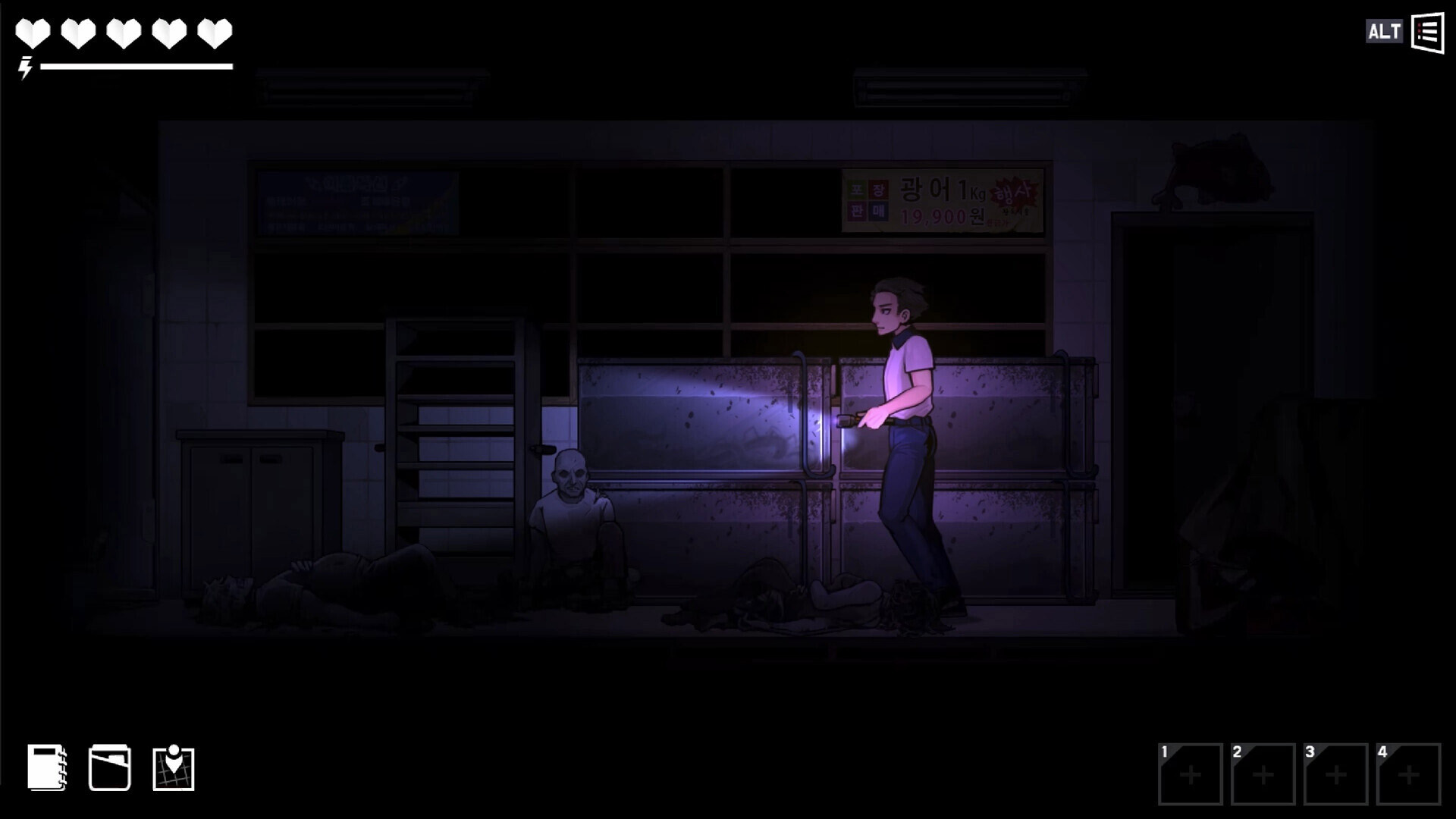
Youngho is pursued rather than equipped to clear every hostile presence from the map. Running and using his flashlight can make him easier to locate, even though light also helps him see and recover things in a dark area. That tension turns a basic exploration tool into a choice. A player who wants to inspect every corner cannot simply leave the beam on and assume it is safe. Hiding places offer a way to outlast a hunt, but the surrounding spirits and environmental hazards can remain dangerous even when the main pursuer is elsewhere. An independent play account describes additional hostile beings that make apparently clear routes less dependable. Stamina, timing and where a chase begins therefore matter alongside finding the next key. The relic sword in the story should not be mistaken for permission to treat the whole game as ordinary weapon combat. Its central play is still survival through moving, listening, concealing Youngho and choosing the moments when it is worth exposing him to light.
Resources and preparation have a broader role than simply restoring health after a mistake. Youngho scavenges what he can, trades at Dokaebi Market and unlocks tools or improvements that permit access to places previously out of reach. This gives exploration a practical payoff. A detour can provide a supply for a later chase, a clue for a puzzle or an item that makes a blocked route useful again. Afflictions and environmental dangers make the question of what to carry more immediate than an abstract completion count. A story-focused player still has reason to inspect side rooms, because the survival systems are connected to progression. The game does not promise that every inconvenience can be bought away at the market, and the inventory is not a substitute for understanding a pursuer's position. It does allow Youngho to prepare rather than merely react. In a nightmare where illumination can announce his presence, the chance to plan and collect a useful object before crossing a dark area carries its own tension. The market also gives a recognisable point of exchange within a world that otherwise seems to change its terms without warning. Returning there with something to trade is a practical way of turning exploration into preparation. It does not remove the need to confront a dangerous corridor, but it can make the next attempt an informed choice rather than a blind gamble.
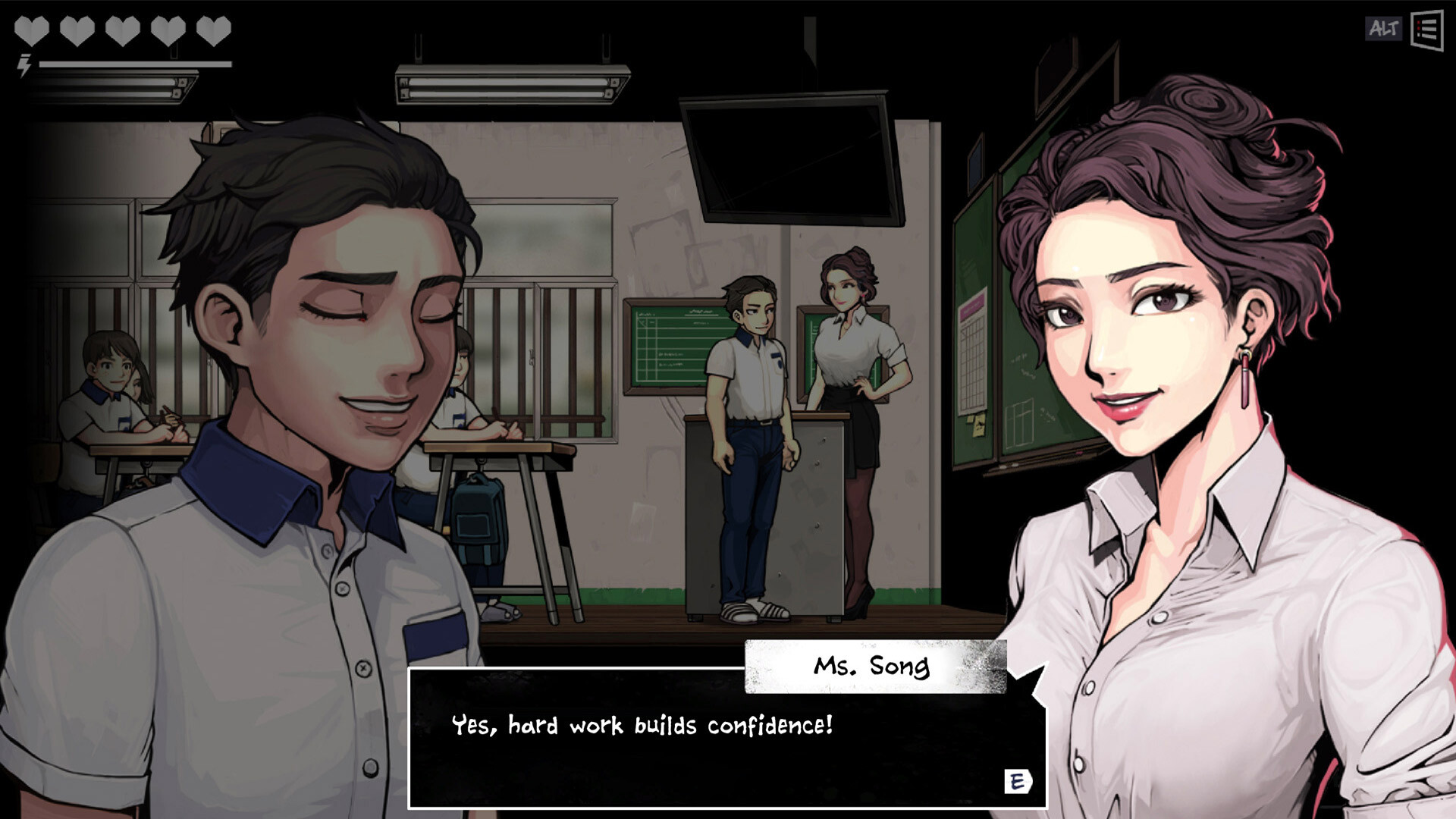
The visual presentation keeps Sehwa recognisable while distorting it. Dvora Studio uses hand-illustrated scenes and comic-strip storytelling, so Youngho's journey retains the strong drawn identity of the series instead of aiming for photographic realism. The mirror district is frightening in part because it resembles places a student knows: school, market and adjacent streets are still identifiable beneath their altered shapes. A recurring threat can make a well-used corridor feel different without the game needing a new location every few minutes. The story also benefits from the contrast between Youngho's prior knowledge and the player's new uncertainties. He is not a stranger who has never encountered The Coma, yet he still has to learn why this return is happening and what has been hidden beneath the market. Familiar characters and references may carry more weight for someone who has played the two earlier games, but the broad survival problem remains understandable from Youngho's immediate search for a way out.
The Coma 2B: Catacomb is its own 2024 release, separate from The Coma: Recut and The Coma 2: Vicious Sisters. Store bundles place the three games together, but buying or reading about one should not collapse their distinct protagonists and stories. The base Catacomb listing also sits beside optional skins, an art book and a soundtrack that are sold separately or included in a Deluxe bundle. Those extras do not define the central journey. What defines it is a student trying to make sense of a second entrapment while the mirror of Sehwa grows larger and harder to navigate. The game draws together notes, a relic search, market preparation, puzzles and persistent pursuit, using each to ask how much Youngho can learn before the danger catches him. Its strongest distinction from a simple repeat of the first school's nightmare is that it follows a survivor who knows some of the rules, yet discovers that the world containing those rules still has unexplored depths.
- Developer
- Dvora Studio Co., Ltd.
- Genre
- Side-scrolling Korean survival horror adventure