
About The Coma 2: Vicious Sisters
Mina Park wakes at night in Sehwa High to find the familiar school twisted into a dangerous shadow of itself. Pursued by a figure resembling her teacher, she searches the surrounding district for a way to survive, gathering clues, crafting supplies and hiding from the relentless Dark Song.
The Coma 2: Vicious Sisters is a Korean survival horror adventure centered on Mina Park, a student at Sehwa High. She wakes in the school at night and soon discovers that the building she knows has become a distorted, dangerous place. A pursuer resembling her English teacher hunts her, forcing Mina to leave the school and venture into the surrounding Sehwa district. What begins as an effort to survive a frightening night becomes an exploration of a shadow world connected to familiar streets and institutions. The game continues the setting of The Coma: Recut, but places Mina at the center of a new story that expands beyond the school’s boundaries.
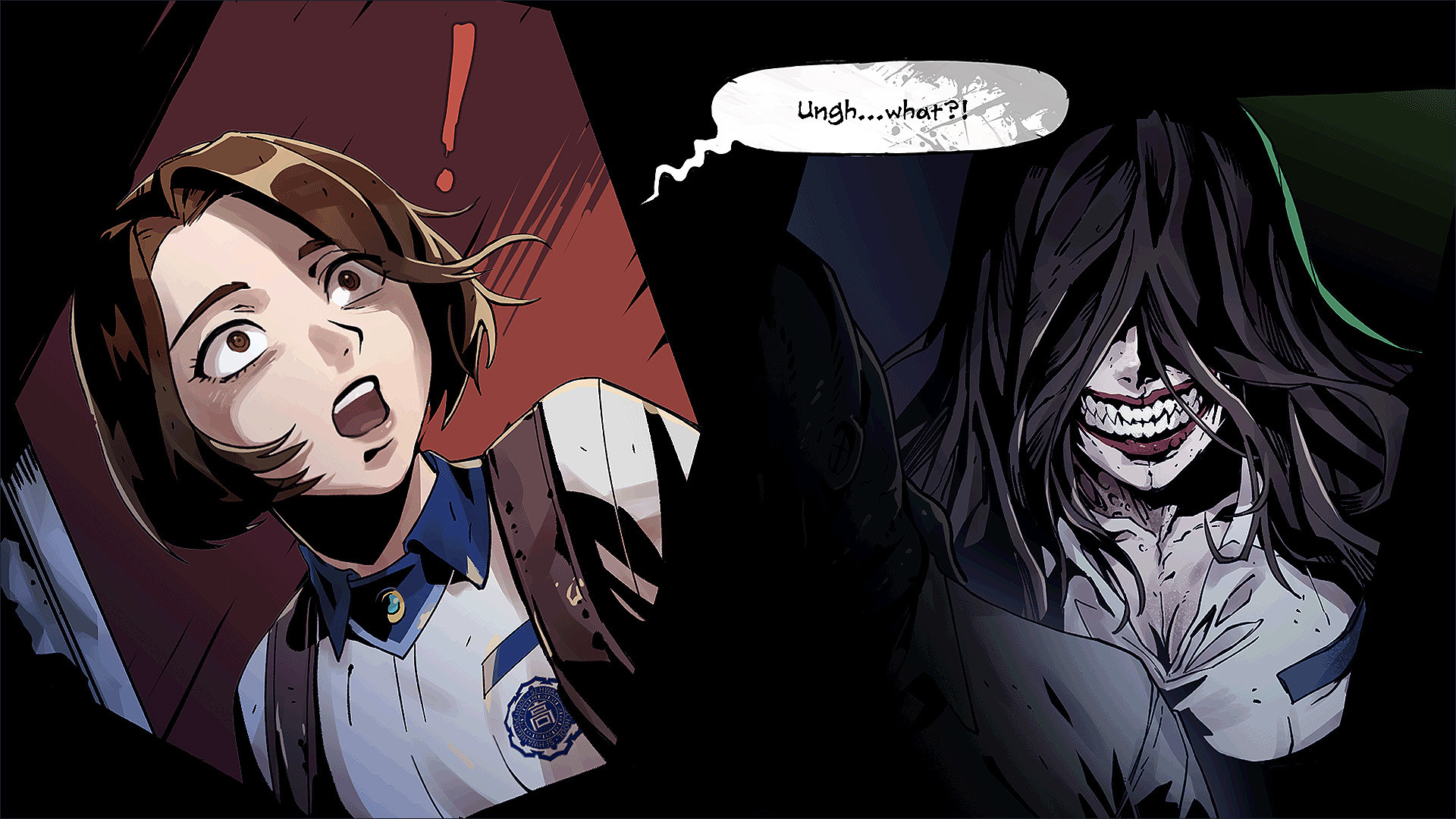
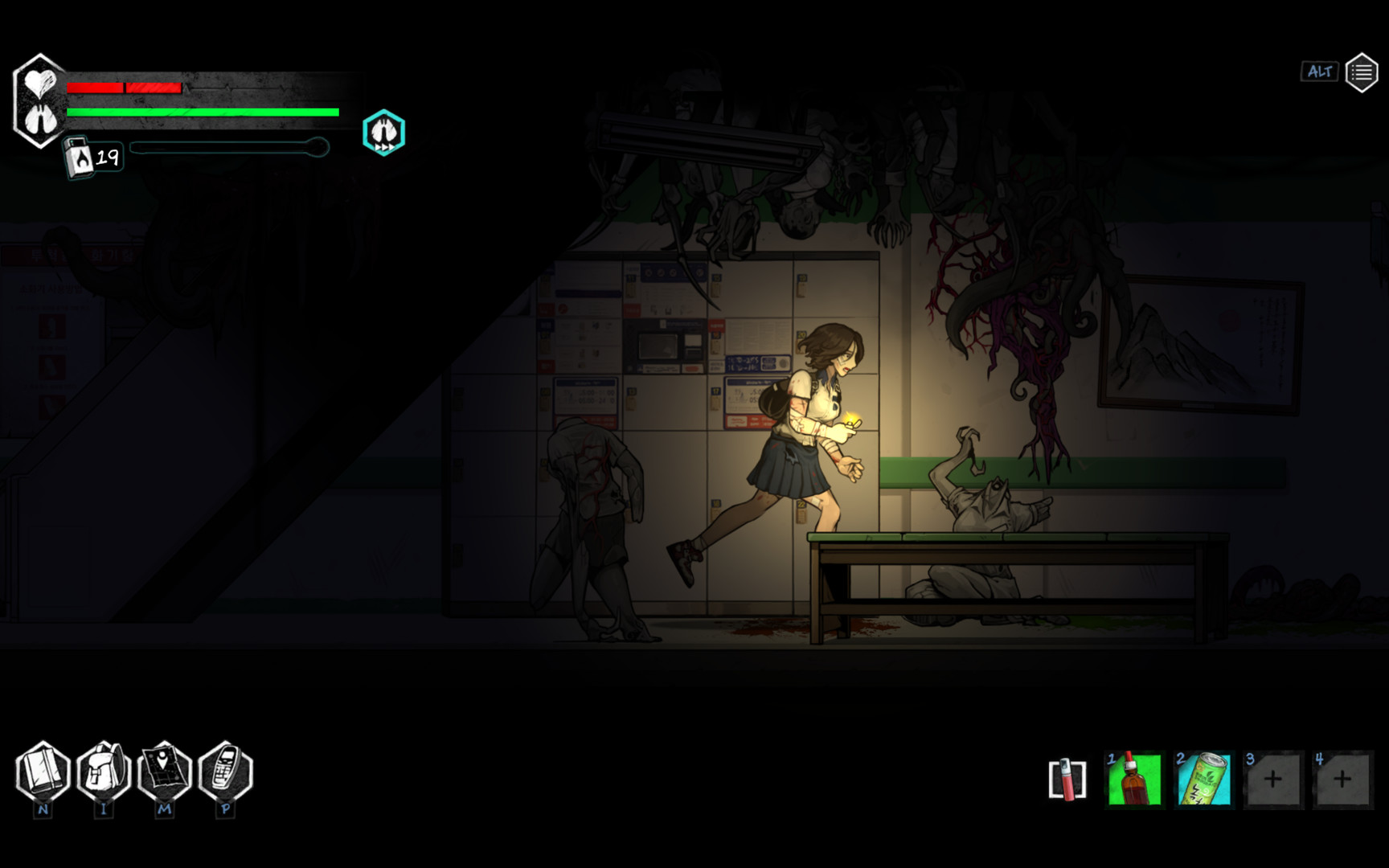
The game presents its world as a side-scrolling series of connected spaces, with hand-illustrated visuals and comic panels shaped by Korean manhwa aesthetics. Sehwa’s nighttime streets, rooms and interiors appear recognizable in outline yet warped by the darkness that has overtaken them. This contrast gives the player a reason to inspect ordinary-looking places carefully: routes may lead to a clue, a resource or a new danger. The visual style supports the story’s shift between the school Mina remembers and the threatening version she must navigate. Characters she meets can be strangers, possible allies or sources of uncertainty, so the district becomes a network of encounters as well as a path away from the school.
Survival depends on exploring while managing the danger of being noticed. Dark Song, the relentless pursuer, searches for Mina, and running or using a flashlight can make her easier to detect. The player must therefore judge when to move quickly and when to remain hidden. Hiding places and concealment challenges offer ways to avoid capture, but the pursuit keeps the threat active while Mina explores. This creates a rhythm of short decisions: learn what is in a room, identify an exit or hiding option, and decide whether there is time to investigate further. The game’s horror is tied to those practical choices, since the player’s desire to search for useful information can expose Mina to the pursuer.
Exploration is more than moving from one screen to the next. Mina finds clues, completes quests, meets other characters and uncovers information about the district’s dark secrets. Unlockable tools and upgrades can open areas that were previously inaccessible, giving return visits a purpose and linking progression to careful observation. The player may have to notice an object, remember a blocked route or find a new way past an obstacle before a space becomes useful. This structure makes the district feel layered rather than linear, even as Dark Song’s presence gives movement urgency. Discoveries help explain the setting while also changing the routes available to Mina.
Items and crafting provide a way to prepare for hazards. Scavenged resources can be turned into supplies for difficult situations, and the game warns that dangerous encounters may leave Mina with lasting injuries. Preparation therefore matters before the pursuer or another threat closes in. The player must decide what to carry and when to use it, balancing the scarcity of resources against the possibility that a later challenge will be more dangerous. Crafting is not a replacement for stealth: supplies help Mina respond to life-or-death moments, but they do not make her safe from the relentless pursuer. Searching, collecting and managing the inventory become part of the survival loop.
The two-dimensional perspective shapes how the player reads danger. Mina moves through a side-view environment where doors, ledges, hiding places and interactive objects can be seen in relation to one another. That clarity does not remove uncertainty, because a familiar corridor may conceal a threat or route to a different part of the district. A pursuit can transform an area the player has just explored into a space that must be crossed under pressure. The player must keep track of nearby cover and exits while considering whether a resource or clue is worth the added risk. This blend of readable layout and uncertain safety supports the game’s tension without relying on combat as the default answer.
The story’s cast gives Mina more to respond to than the pursuer alone. Strange creatures occupy the shadowed district, while mysterious strangers and uneasy allies complicate her effort to understand what has happened. Quests and conversations can provide context, but trust is difficult when the environment itself has become hostile. The narrative advances through what Mina encounters and learns rather than through a detached account of the world. Her movement from Sehwa High into the surrounding area also changes the scale of the story: the danger is no longer confined to a single building, and the player follows clues through the broader district while still needing to survive each immediate encounter.
The Coma 2 keeps its focus on Mina’s base adventure: navigating the altered school and district, evading Dark Song, gathering information and preparing for hazards. Its visual presentation uses illustrated environments and comic-style sequences, while its play combines side-scrolling exploration, stealth, resource scavenging and light progression through tools and upgrades. The result is a horror game where safety is temporary and curiosity has a cost. Searching a room may reveal something important, but the player must also consider whether Mina has a way to hide or leave if the pursuer arrives. DLC outfits and other add-ons are separate from that central experience, while the main story and survival systems stand on their own.
- Developer
- Devespresso Games
- Genre
- Side-scrolling survival horror adventure