
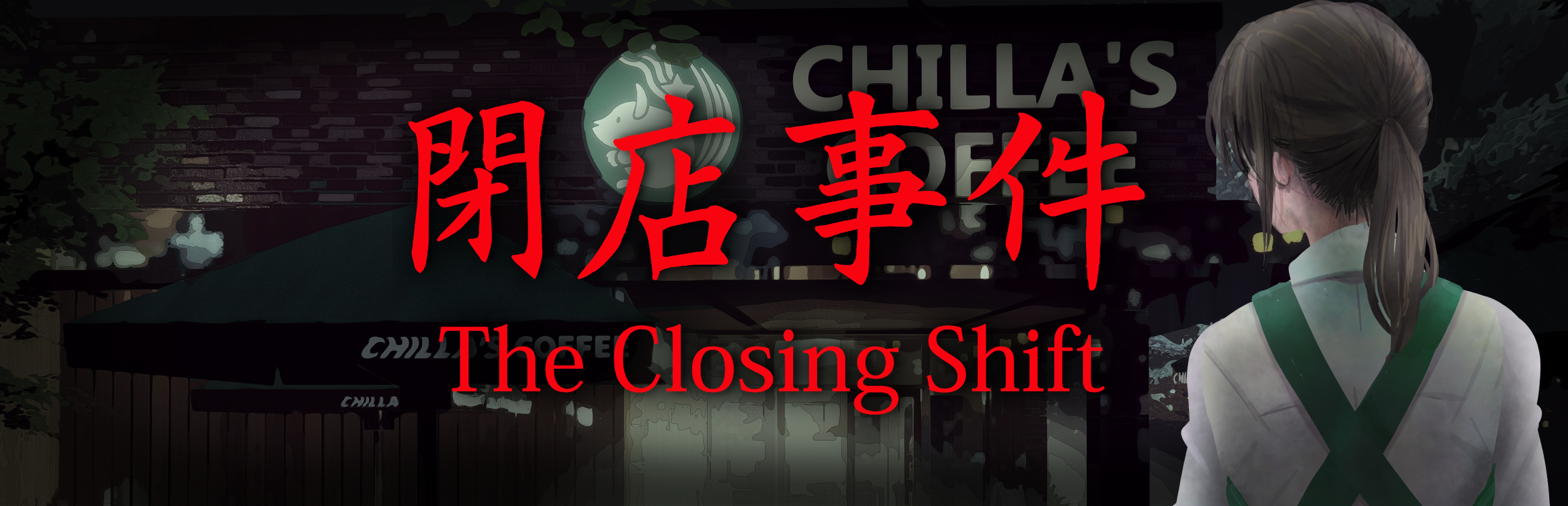
About [Chilla's Art] The Closing Shift | 閉店事件
A young barista works late at Chilla's Coffee, taking orders, preparing drinks and cleaning up while signs of a stalker grow harder to dismiss. The Closing Shift is Chilla's Art's 2022 first-person Japanese horror game, where the precision of a café routine makes the time spent alone behind and outside the counter increasingly uneasy.
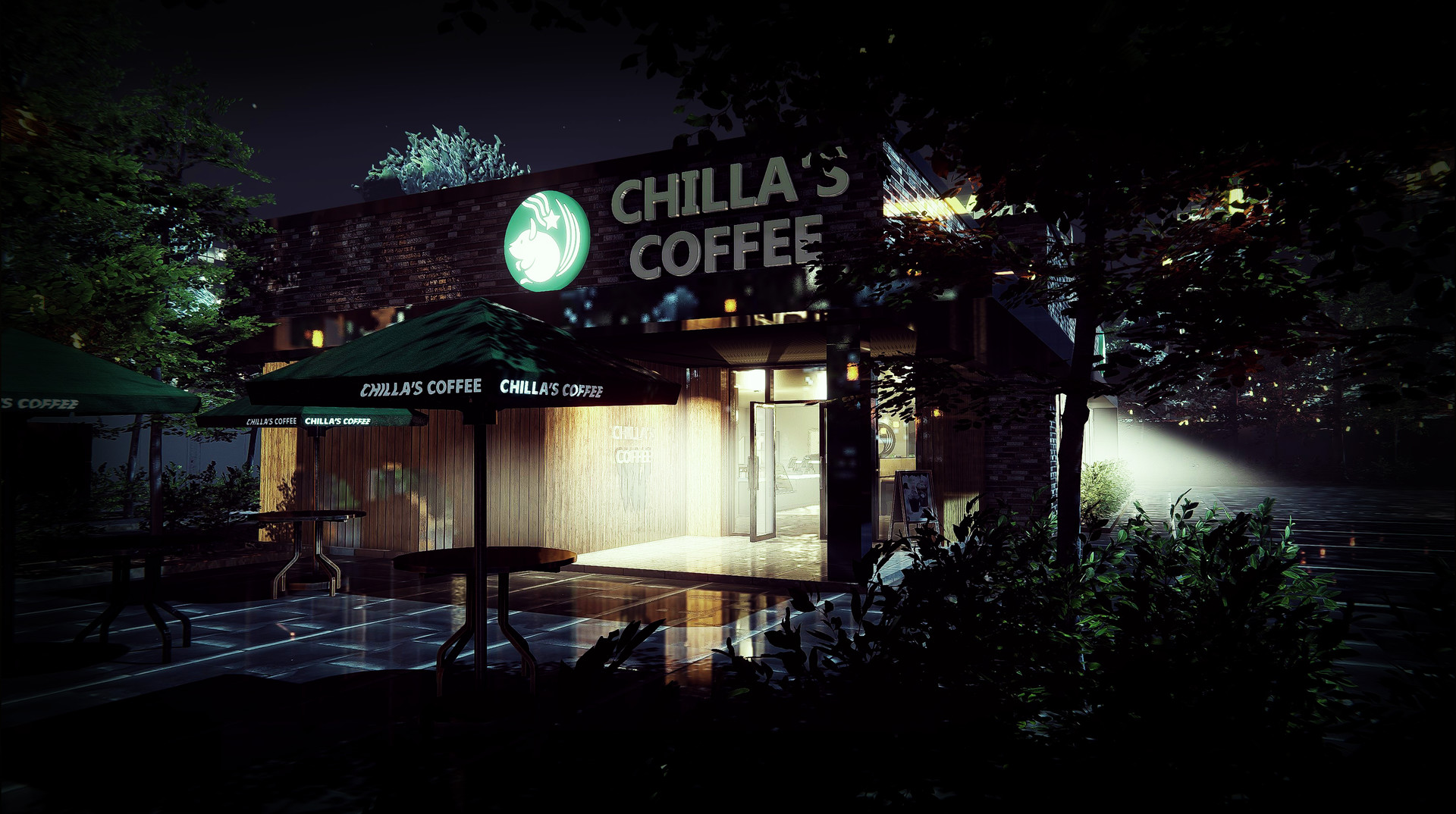
The Closing Shift begins with a task many people would recognise before anything frightening happens: get to work, handle the customers and close the café. Its protagonist is a young woman assigned to the late hours at Chilla's Coffee. The business has a front counter, equipment, recipes, a staff area and a stream of people who arrive expecting ordinary service. Chilla's Art uses that familiarity to establish exactly what the barista must do before there is any reason to distrust the surroundings. Over successive shifts, conversations and incidents suggest she may be watched by someone who has taken an interest in her. The story is not framed as a monster invading a remote ruin; it asks what changes when a workplace, a journey home and the simple act of serving a customer begin to feel unsafe. That grounded premise gives the game's small spaces weight. The player learns what the café looks like when it is merely busy, making later irregularities more conspicuous.
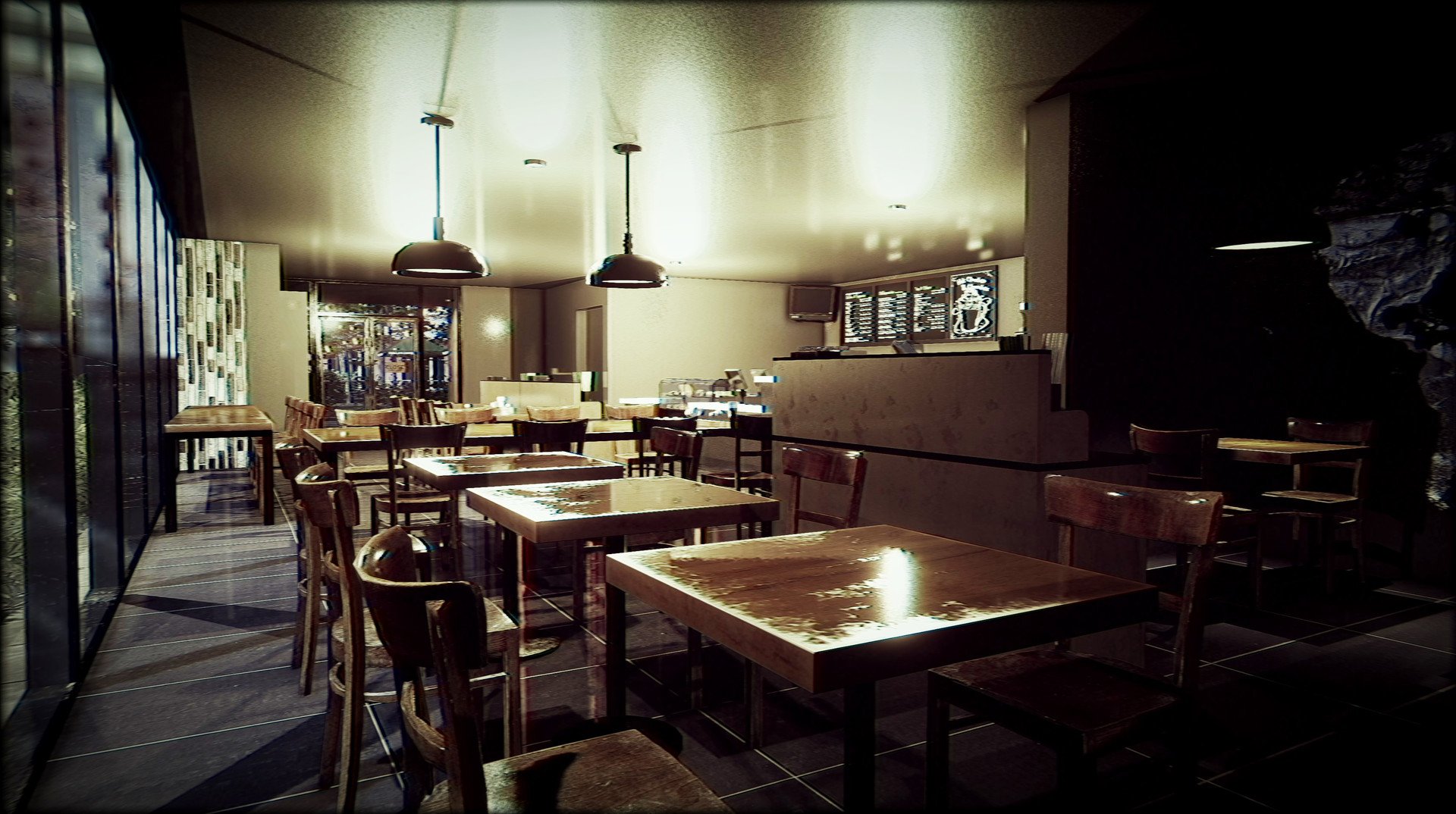
Much of the play involves preparing orders rather than following a ghost through corridors. Customers request drinks and food, and the player works with cups, ingredients and café equipment to assemble what they asked for. A recipe board in the staff area gives the components of available drinks, while training material helps explain the difference between hot and cold orders. The printed request, the preparation stations and the handoff at the counter form a practical sequence that has to be understood. It is possible to begin cautiously, returning to the back room to confirm each step, then recognise the equipment and work more confidently as the shifts continue. That learning is part of the game's design: a player who knows how the café normally operates can notice when an interaction no longer fits the routine. Pastries and packaged items broaden the work beyond pouring coffee, and the range of customer requests keeps the counter from being an empty stage for dialogue alone. The job itself occupies real attention. This is why the drink system matters to the story rather than functioning as an unrelated diversion. The worker must focus on a ticket, locate the correct machine and present a finished order while people move through a shop she cannot see from every position. A growing familiarity with those steps frees attention for the odd details that would have been easy to miss during the first shift.
The café is viewed in first person, placing the counter between the worker and whoever enters. The position gives some control over the drinks but little control over other people's behaviour. The barista cannot simply pause service to investigate every uncomfortable remark, and she may need to pass through a quiet part of the shop to clean or collect supplies. Closing work can take her outside to deal with rubbish, where the warmth and light of the customer area no longer provide even a visual barrier. A parking area or the route between home and work makes the threat feel capable of extending beyond the shift. These are compact places, but the game revisits them as her suspicion changes. A parked vehicle or shape near the café can be irrelevant on one night and alarming on another. The resulting horror depends on how an ordinary environment is re-read, not on making every corner a new supernatural room.
Customer conversations carry part of the story. Some visitors have their own small concerns; others mention troubling behaviour in the area or make the protagonist question whether an encounter was harmless. The player is not given a neat case file that identifies every person and motive at the start. Instead, the social exchanges that occur while taking an order become evidence she may weigh after that person has left. This matters because customer service asks the worker to be polite and keep the queue moving even when a visitor is difficult to place. Her colleague and the division of shifts add another mundane workplace pressure: the late worker inherits a business and a set of tasks rather than choosing when the night begins. The game sometimes cuts away from her direct viewpoint, showing that the audience can know a threat is present while she is still serving drinks. That dramatic difference increases concern about what may be outside her field of view without needing to explain the ending in advance.
The closing procedure changes the pace from one order after another to checking the space. Cleaning tables, putting things away and taking rubbish out require the player to move through parts of the café that felt routine while other people were present. A task can ask the barista to turn her back on a window, go into the staff area or step into the exterior lot. The player can look around, but vigilance competes with the need to finish the job. There is no advertised weapon-building system or campaign of fights. The tension lies in noticing people and objects, carrying out the next required task and judging whether the familiar layout still feels secure. Small puzzles fit into that work-based progression. They are usually objects or actions needed to continue a shift rather than an unrelated series of elaborate locks. The game's checkpoint autosave supports a sequence of nights in which completing the routine and understanding what is happening around it are the two connected goals.
Chilla's Art gives the image an optional VHS treatment. Trails, noise, interlacing and a slightly unstable analogue appearance can make the clean counter and bright signs feel like something viewed through an old recording. That look is a presentation choice, not a claim that the café is literally being captured on a videotape, and the effect can be disabled in the options. The visual roughness helps keep attention on shapes, movement and where a person stands relative to the barista. Sound and the familiar signals of a working shop also matter: a door opening means another customer when the evening is normal, but later it can make the player wonder who has arrived. The shift from service to suspicion can happen without the building changing at all. The equipment is still in place, drinks still need to be made and the next person may ask for something ordinary. Horror accumulates because the protagonist must keep doing the job while her understanding of its safety changes.
This profile concerns Chilla's Art's 2022 PC game, not another product that happens to share the English words The Closing Shift. It also has a different focus from the developer's The Convenience Store, where a night clerk stocks shelves and confronts a more overtly supernatural disturbance. Here the café's preparation tasks are unusually central, and the threat of being followed gives the repeated work a personal shape. A player should expect a short, first-person story built around service, observation and a gradual loss of confidence in an everyday environment, rather than a deep management simulation with endless customers or a combat horror adventure. The game asks the player to learn the work well enough to notice what is changing around it. When a late shift ends, the question is no longer only whether every order has been served; it is whether the worker can trust the space she has spent the night maintaining.
- Developer
- Chilla's Art
- Genre
- First-person Japanese psychological horror and work-task adventure