
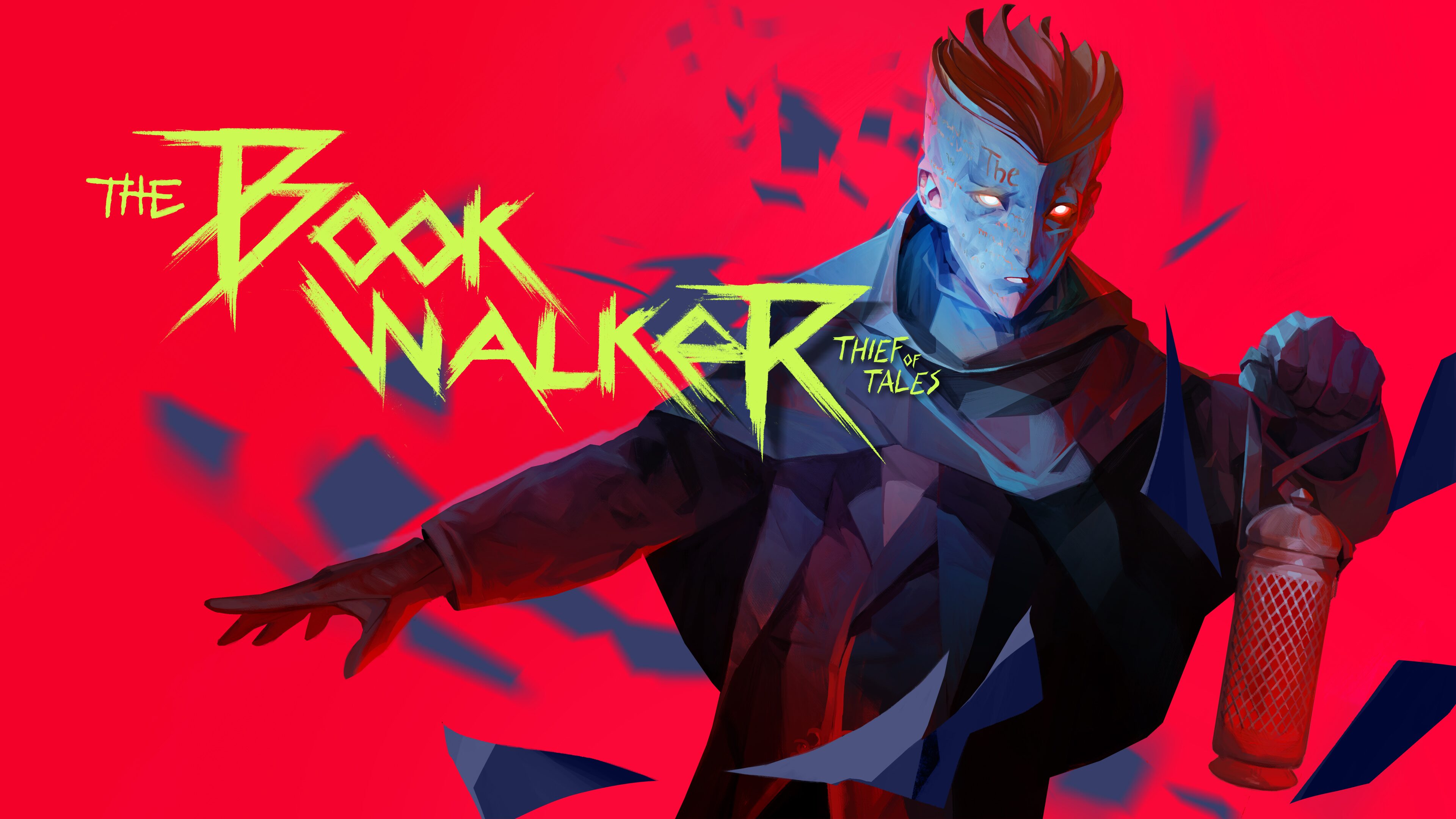
About The Bookwalker: Thief of Tales
Etienne Quist, a writer sentenced after a serious crime, is offered a way to recover his lost ability to write: steal legendary artifacts from six books. Moving between his apartment and imagined worlds, he investigates, solves puzzles, gathers materials, crafts tools, and decides how to deal with characters and enemies as each book’s rules shape the heist.
The Bookwalker: Thief of Tales follows Etienne Quist, once an acclaimed writer, after he is found guilty of an unnamed serious crime and loses the ability to write. A criminal boss offers him a route back toward his former life: enter books and take legendary objects from their stories. The targets include Excalibur, Thor’s hammer and a Potion of Immortality, but the thefts are not presented as visits to a single continuous fantasy realm. Each assignment opens onto a different fictional setting, with its own inhabitants, obstacles and local logic. The larger premise keeps the consequences of Etienne’s sentence in view while the immediate goal shifts from book to book. He is both an outsider entering someone else’s narrative and an active participant whose actions can change the circumstances around an artifact. The game’s central tension comes from that position: the people he meets are described as characters in books, yet they speak, resist and make claims on his attention. A sentient page imprisoned in a lantern becomes his companion and adviser during these excursions. The story uses Etienne’s work as a thief to connect a grounded personal predicament with worlds that range from familiar genre settings to stranger imagined places, without reducing every book to the same kind of adventure.
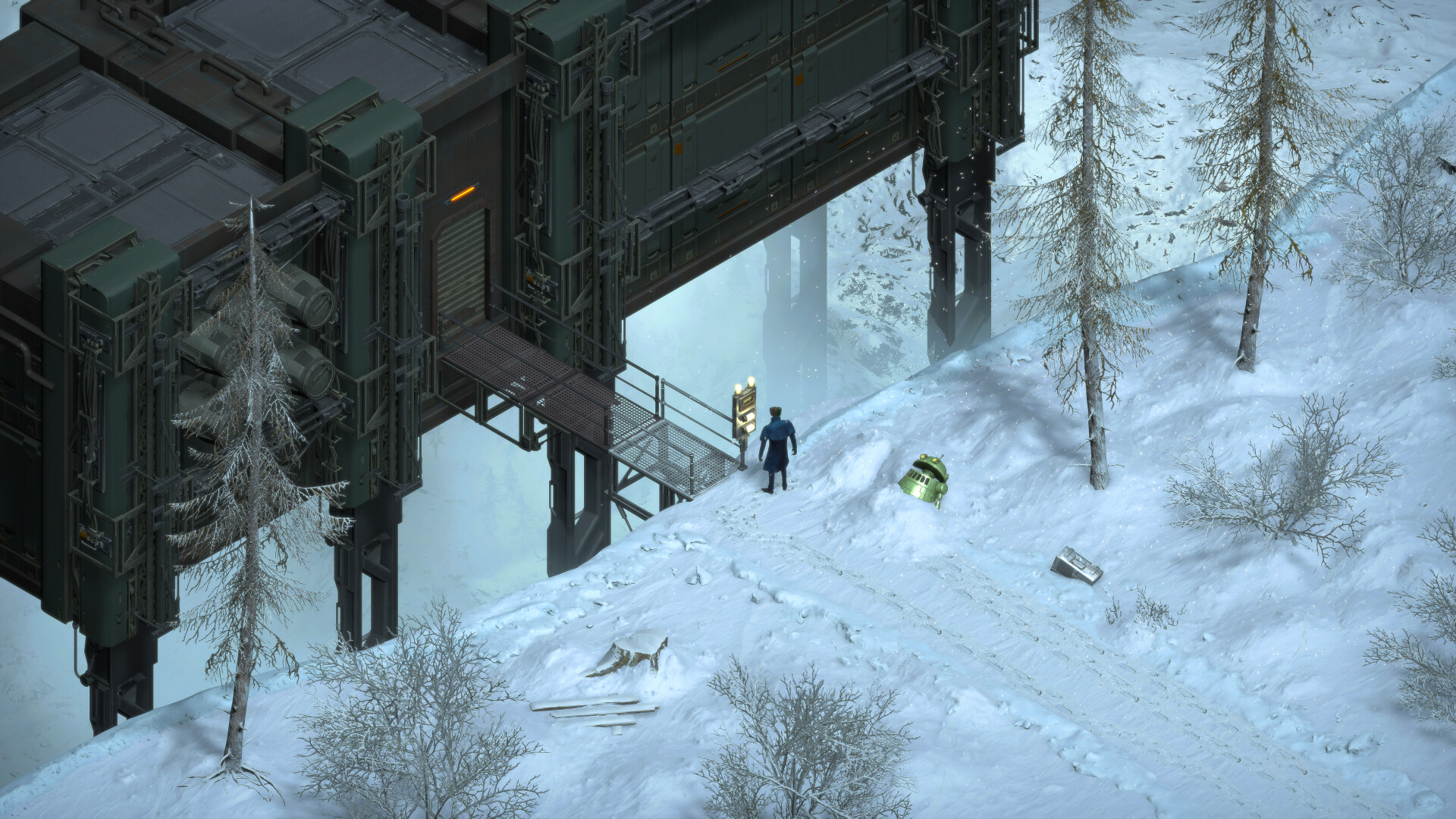
The campaign is structured around six fantastical books rather than one open map. Among the settings identified by the publisher are a grim medieval prison, a snow-covered mountain and a futuristic spaceship; another mission takes place around a wizard academy where the dead hide behind its walls. These are examples of the distinct environments, not a complete account of the plot. Each book supplies a new local problem and a different set of people standing between Etienne and the object he has been sent to retrieve. The imprisoned page travels with him as a recurring partner, while the inhabitants belong to the individual stories he enters. Some dangers cross the boundary between the book’s characters and entities that threaten the bookwalker directly: the Ink Eaters are described as shape-shifting beings dwelling in shadows, and the writer’s police act as forces of censorship. The sequence of heists gives the narrative an episodic rhythm, but the crossing between fiction and Etienne’s own circumstances links those episodes. The books are not merely backdrops for collecting relics; their rules determine what counts as an obstacle and which interactions are possible. The contrast between a prison, a mountain and a spacecraft also lets the game move between medieval, fantastical and science-fiction imagery while keeping Etienne’s mission legible.
The real-world portions and the book portions use different viewpoints. In Etienne’s apartment and its surroundings, exploration is shown from a first-person perspective. The player looks over nearby objects, collects items and can speak with people in the building, including neighbors. This quieter, close-range view anchors the story in Etienne’s ordinary environment and provides opportunities to inspect or gather things before returning to a heist. Inside a book, the camera shifts to an isometric, elevated view of the setting. Movement and interaction then focus on traversing a contained environment, approaching characters and objects, and examining routes toward the current objective. The shift is tied to where Etienne is, rather than being a free camera choice: the first-person apartment and the isometric fictional spaces are the game’s two main spatial modes. The change in perspective also helps distinguish the layers of the premise without a long explanation every time he crosses between them. Exploration is built around finding the people, objects and passages that let the investigation proceed. Since the game frames each assignment as a heist, the route to an artifact involves more than walking directly to it; the player gathers useful items and learns what local characters or obstacles require. The environments are traversed as adventure-game spaces, with dialogue, item use and puzzle solving driving progress.
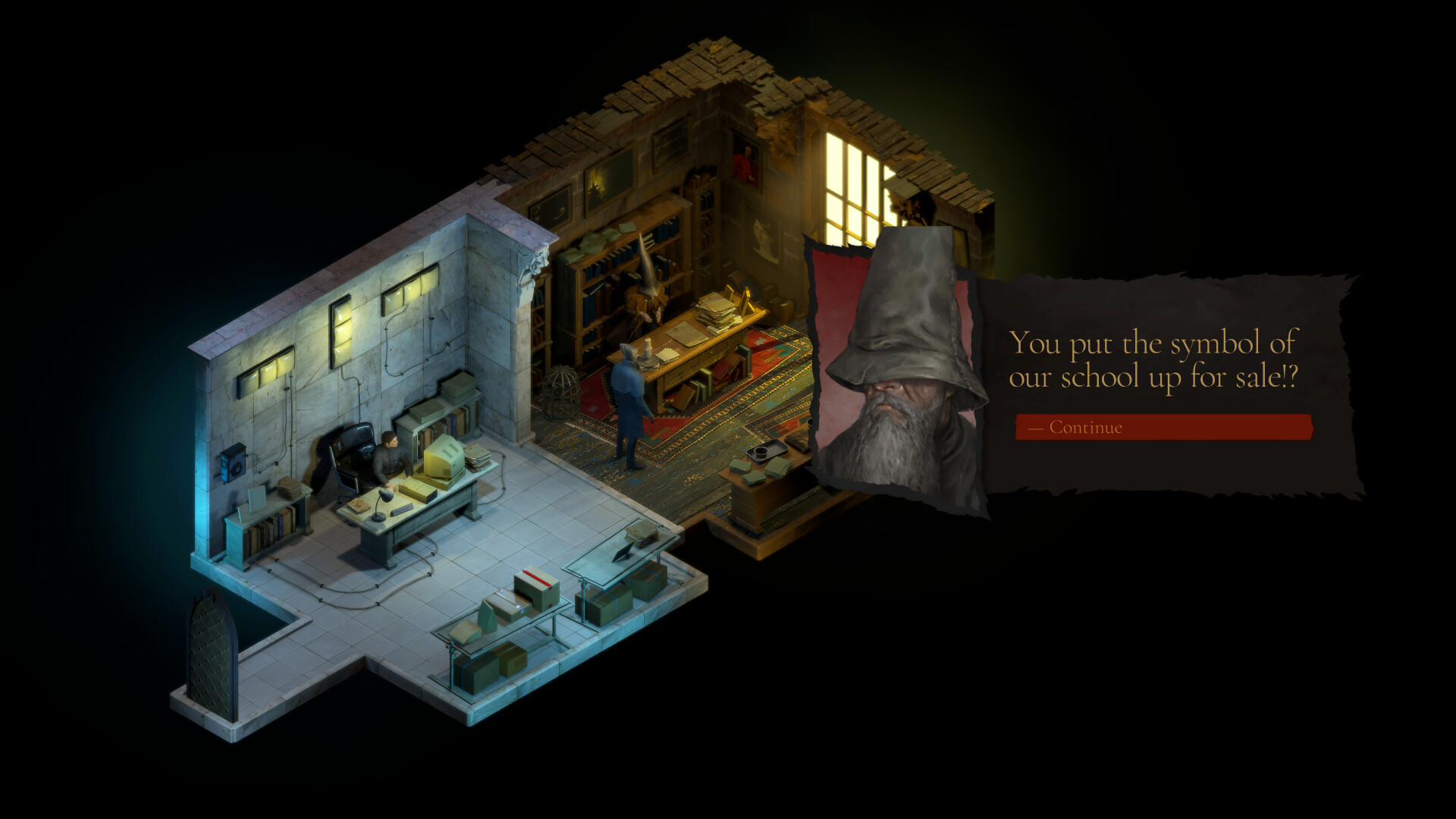
Puzzles draw on the ability to move between reality and fiction, as well as on Etienne’s use of ink within the books. The ink power can manipulate objects in a fictional environment, altering what is accessible and opening routes that were blocked before. It is also a resource used in combat, so the same substance connects environmental problem solving with encounters against enemies. The game places collectible materials and useful objects throughout the spaces, and workstations allow Etienne to turn materials into tools. A crowbar, for example, can open hatches; scattered junk can instead be broken down to replenish ink. This creates a practical choice around what gathered objects are for: materials can contribute to a crafted item, while salvage may support the resource used for powers and attacks. Items in the inventory therefore help solve environmental barriers as well as sustain Etienne in hostile situations. Puzzles are presented through interactions with the setting and its objects, rather than through a separate abstract puzzle interface. The ink manipulation gives those interactions a fictional dimension: Etienne can affect the story’s objects as a bookwalker, and the resulting changes can reveal paths or help him reach what the heist requires. The exact obstacle varies with each book, preserving the idea that every fictional world has its own constraints.
When persuasion or deception does not resolve a confrontation, Etienne can enter turn-based combat. The player chooses an action and a target, then the enemy acts, making each exchange a sequence of commands rather than a real-time action fight. His available actions include a direct attack, a defensive move, an ink-draining attack and a stun that can interrupt opponents. Moves consume ink, linking combat decisions to the same resource used for manipulating objects; at least one attack restores some ink while damaging an enemy, so combat includes a way to recover the resource through action. The encounter flow asks the player to weigh damage, protection, disruption and ink availability. Materials found during exploration can replenish ink outside of a fight, and crafting and scavenging contribute to preparation. Etienne’s moves can be improved over the course of the story, with chapter-based upgrades and additional abilities described by the game’s coverage. There is no need to treat combat as the sole answer to every obstacle: the premise and store descriptions also identify persuasion and deception as alternatives when dealing with people. Hostile encounters include Ink Eaters, undead within the wizard academy and the writer’s police. These opponents reflect different book or story threats, while the shared turn-based structure gives the player a consistent way to respond to them.
The presentation reinforces the divide between the life Etienne inhabits and the stories he enters. His apartment and nearby real-world spaces are seen up close in first person, while the fictional locations are presented from above in an isometric view. The book settings supply much of the visual variety, moving from a grim prison and snowbound terrain to a futuristic vessel and other fantasy environments. Dialogue and character encounters carry the narrative between exploration sequences, and the lantern-bound page provides a continuing voice alongside Etienne as he navigates the stories. Across the game, the player alternates between inspecting spaces, collecting and combining useful materials, dealing with inhabitants, manipulating objects with ink, and engaging in turn-based fights where negotiation fails. The Steam listing identifies the PC release as a single-player adventure developed by DO MY BEST and published by tinyBuild, released for PC. Its listing includes the base game alongside separately listed soundtrack and digital artbook products; these are add-ons rather than a different story edition. The PlayStation Store lists the game for PS4 and PS5 and describes one-player offline play, with the product entitling buyers to both digital versions. Across those releases, the apartment and the six book worlds form the same main adventure.
- Developer
- DO MY BEST
- Genre
- Adventure; narrative adventure with exploration, puzzles and turn-based combat