
About The Blackwell Legacy
After her aunt dies following a long coma, New York writer Rosangela Blackwell learns from Joey Mallone, a ghost from the 1930s, that she is a medium. Their first case concerns three NYU students who have died by suicide. Rosa and Joey investigate the students’ lives and the unexplained force connecting them.
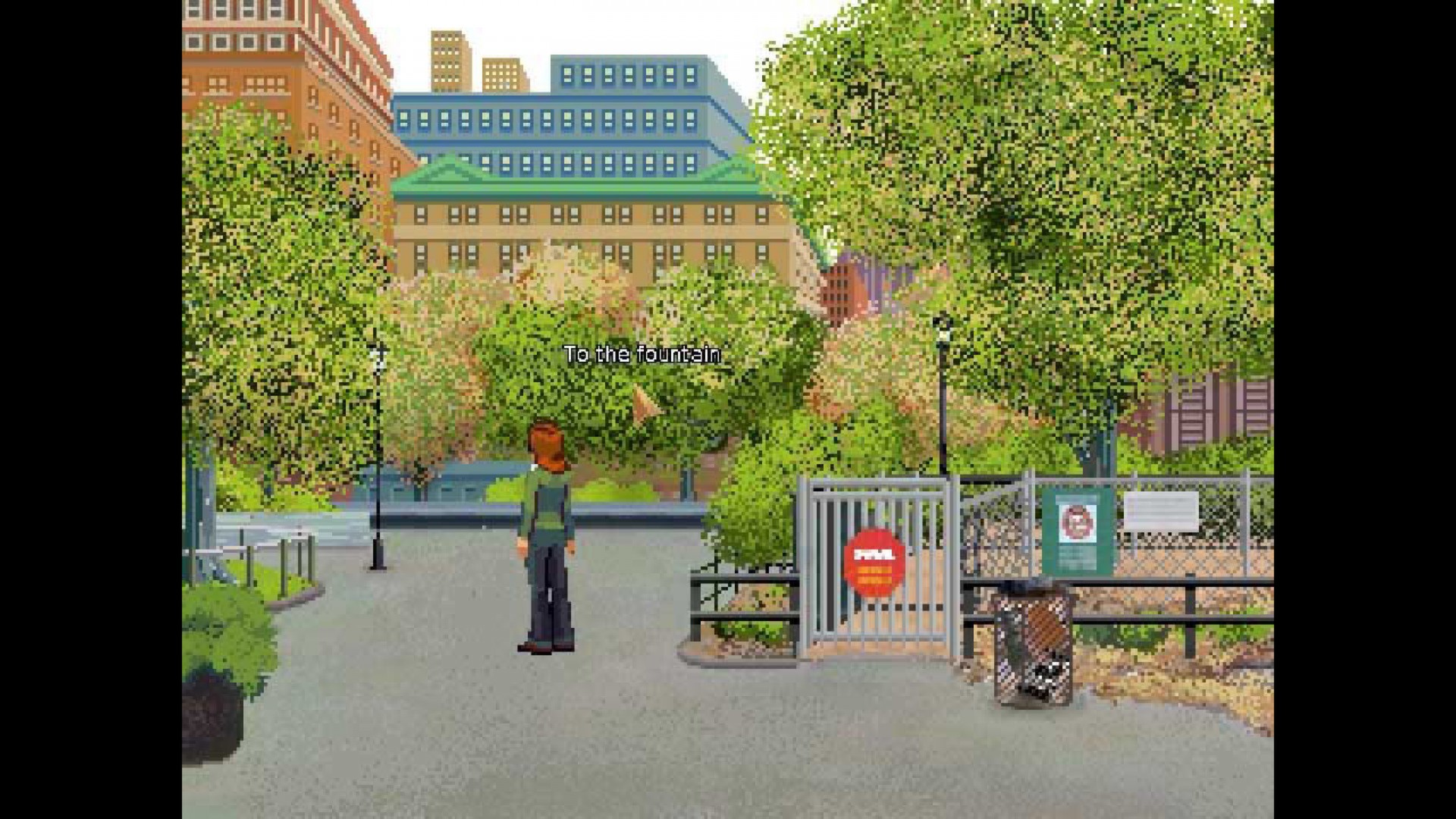
The Blackwell Legacy is a supernatural point-and-click adventure about Rosangela “Rosa” Blackwell, a solitary writer in New York who is drawn into a mystery after the death of her aunt. Joey Mallone, a sardonic ghost dressed in the manner of a 1930s figure, appears and tells Rosa that she is a medium. The revelation gives a new shape to Rosa’s life: she can communicate with the dead, and Joey becomes her guide as she learns what that ability entails. Their first case centers on three students at New York University who die by suicide in succession. The deaths are treated as a mystery with human histories behind it; the task is to find out what happened to each student and why the events may be connected. Rosa’s role as an inexperienced medium sits alongside her ordinary work and her discomfort with unfamiliar social situations, while Joey brings experience and a sharper, more sardonic way of dealing with the supernatural. The story uses their partnership to establish the premise of this first Blackwell adventure. Its scope stays with Rosa and Joey’s opening investigation, rather than later cases or developments from the other Blackwell games.
Exploration follows the traditional adventure format: the player guides Rosa through illustrated locations, examines objects and speaks with people who may know something about the students or the places they visited. A scene is a compact area to inspect rather than an open world to cross, and the main form of movement is clicking between points and rooms. Conversations reveal personal details, timelines and leads; examining an object can produce either a practical item or a fact worth remembering. These observations are important because the game’s puzzles often depend less on combining many physical objects than on understanding what Rosa has learned. The locations include spaces connected to the students and to Rosa’s own investigation, giving the player a set of social and physical clues to assemble. Returning to a person with better questions can be as useful as finding a new object, so the process encourages listening and keeping track of names and circumstances. Joey’s presence changes the context of exploration, since Rosa is not investigating only visible evidence: she can also address the dead and learn how an unresolved past still affects the present. The player’s progress comes from inspecting, asking and interpreting rather than from action challenges or traversal skill.
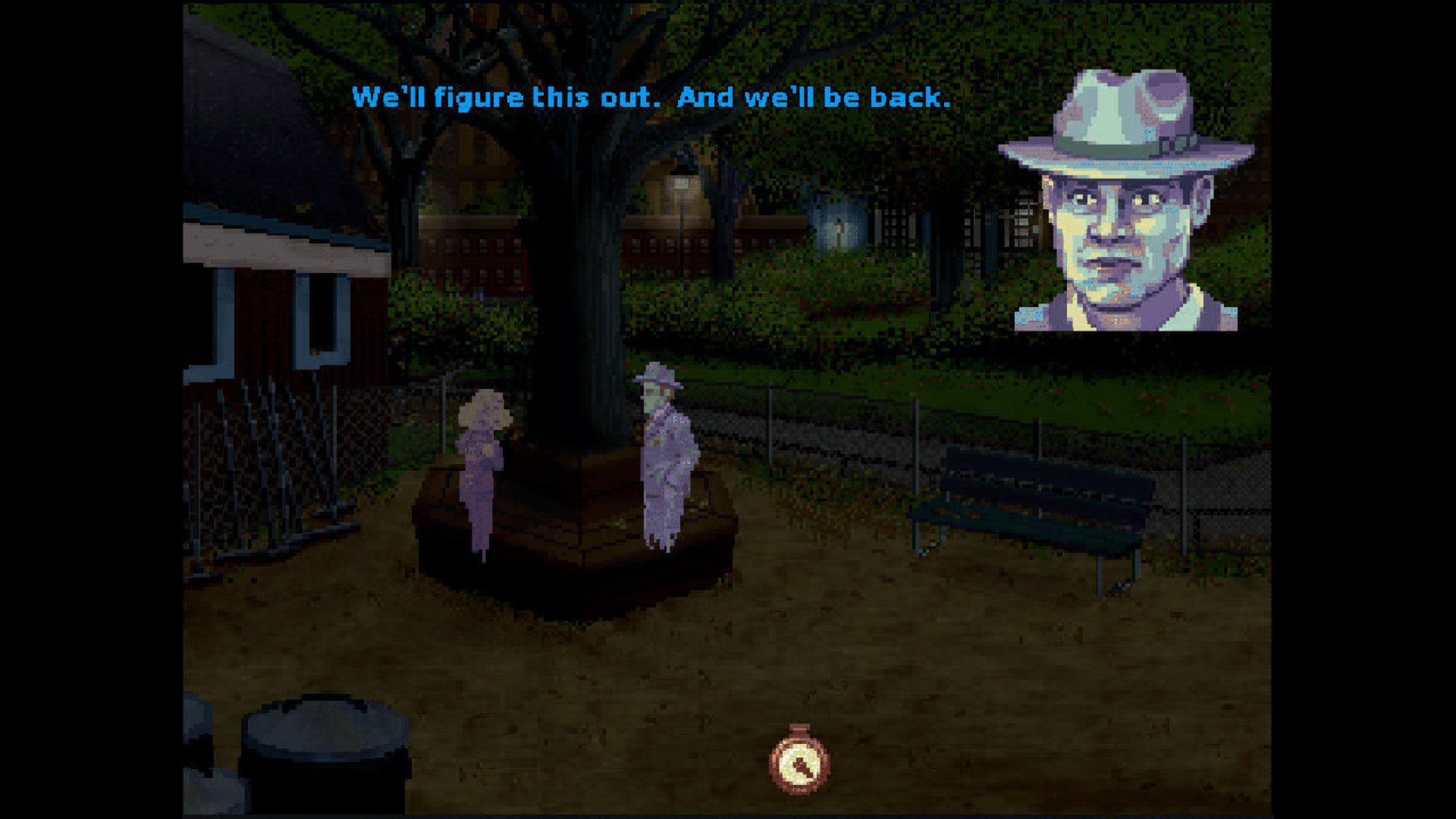
The central interaction is conversation. Rosa interviews people, chooses topics, and follows up when the information she has gathered suggests a new question. Dialogue also establishes the contrast between her awkward, cautious manner and Joey’s more confident, wry voice. Their exchanges are not just commentary over the investigation; the pair’s different perspectives affect how a conversation is approached and how they understand a ghost’s situation. The game is fully voiced, and dialogue often carries character detail alongside clues. The player can revisit subjects as the notebook grows, making the investigation a cycle of learning something, recording it and testing it in conversation. Joey is Rosa’s spirit guide, but the game presents their relationship as a partnership rather than replacing her with a supernatural problem solver. Rosa must gather facts and decide what to ask, while Joey’s familiarity with the dead helps make the paranormal dimension understandable. This gives the opening case a grounded investigative rhythm even when a conversation crosses into the afterlife. There is no combat-centered loop; social inquiry and puzzle solving form the main activities. The player’s choices of topics are used to expose connections and contradictions rather than to manage a branching dialogue-stat system.
Rosa’s notebook is the most distinctive progression tool. As she discovers names, places and other useful details, they are recorded as clues. The player can select clues and combine related pieces to form a new question, or bring a clue into an interview as a conversation topic. When two pieces of information contradict one another or point toward an unasked question, linking them helps turn scattered observations into a direction for the investigation. This makes the notebook more than a journal of plot details: it is an active interface for reasoning. It also shifts the usual point-and-click balance. Inventory objects exist, and physical items can matter, but much of the problem solving asks the player to remember what people said and test an idea against someone else’s account. The design invites close attention to dialogue and to the connections between a person, an event and a location. Rosa’s developing understanding of mediumship is conveyed through new evidence and conversations, not through a leveling system or equipment upgrades. As the pair learn more about each student, the notebook accumulates material that opens further lines of inquiry, bringing the case toward an explanation while preserving the mystery of how the students’ experiences fit together.
Joey’s ghostly nature creates another layer of investigation. The students are not simply clues to be sorted; the case involves troubled spirits who do not necessarily understand their own condition or what has happened to them. Rosa and Joey must learn about each person’s life and circumstances, then work out what is preventing that spirit from moving on. This premise gives the puzzle structure a particular purpose: questions, documents, places and memories help reveal the human context behind a supernatural problem. Rosa’s ability to speak with the dead makes her a participant in those stories, while Joey’s knowledge helps her approach them. The game’s title points to the family legacy that Rosa has inherited, but the narrative remains centered on her first experience as a medium and the students’ case. Its advancement is chapter- and clue-driven, with each solved connection changing what the pair can ask or understand. The game does not frame this as a broad ghost-hunting career with interchangeable missions or a collection of combat encounters. It is a compact narrative investigation in which a small cast, recurring locations and the notebook’s developing set of clues carry the player from the initial mystery toward its resolution.
The presentation uses two-dimensional pixel-art scenes, character animation and close-up dialogue portraits, with voice acting throughout. The visual style favors readable rooms and city locations over elaborate movement or spectacle; expressions and small character motions help give conversations a human scale. The written and spoken dialogue is central to the experience, and environmental examination supplies context between exchanges. The game’s supernatural subject matter is framed through a contemporary New York investigation, with ghost stories connected to people’s specific lives rather than to a separate action-oriented fantasy world. A director’s commentary audio track is included in the PC game’s presentation, with commentary attached to points in the adventure; it discusses locations, references and development, and is separate from the main story. The Blackwell Legacy is the first game in the series; Blackwell Unbound and the later episodes turn to other cases and periods of the family's history. This opening story is where Rosa and Joey first learn to work together, and where the notebook begins to turn fragments of testimony into questions they can use.
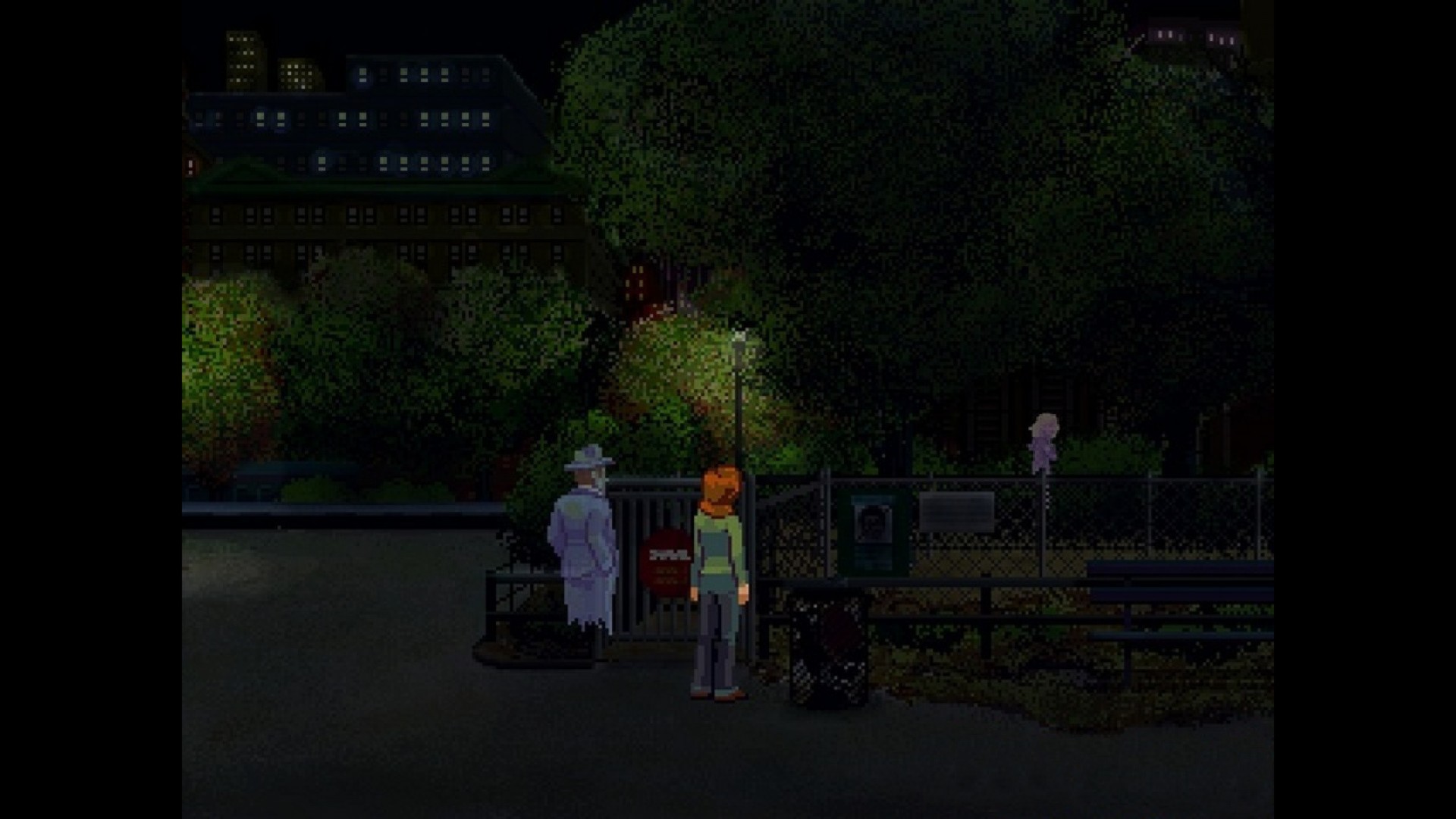
Rosa's notebook makes the first Blackwell case a mystery about connections as much as discoveries. A name or location alone may not advance the investigation; placing it beside another person's account can produce the question Rosa needs to ask next. Joey gives her a way to approach spirits, but he cannot replace the work of listening to people and understanding what happened before a ghost appeared. The story's small New York cast lets the students remain people with histories instead of anonymous supernatural obstacles. Rosa is also learning the meaning of her own family legacy as she investigates, and her wary exchanges with Joey give the case a second thread beyond the immediate deaths. The compact point-and-click structure keeps returning to interviews, notebook clues and visits to familiar locations until the connections become clearer. Later Blackwell games develop the partnership and its consequences further; this first game is Rosa and Joey's opening investigation, where a writer's ordinary life is interrupted by an obligation to the dead.
- Developer
- Wadjet Eye Games
- Genre
- Single-player supernatural point-and-click adventure