
About Telling Lies
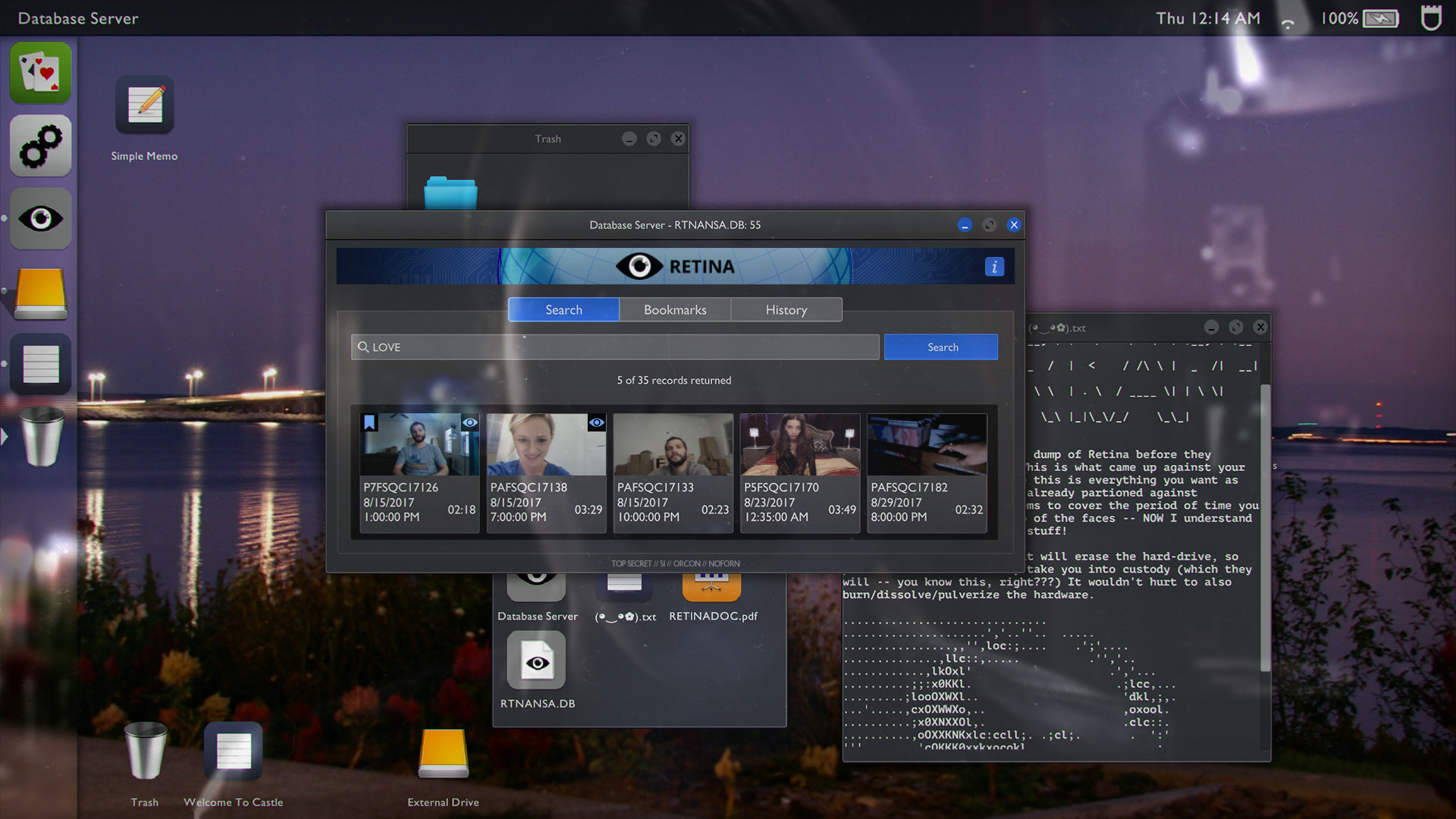
Telling Lies places the player at a laptop containing secretly recorded conversations from four people's private lives. Searching spoken words brings up video clips, while scrubbing through one side of a call at a time helps connect relationships, timelines and context across a fragmented archive.
Telling Lies is an investigative thriller presented through a computer desktop and a cache of secretly recorded video conversations. The fictional database contains material spanning two years in the lives of four people, whose relationships and circumstances are not introduced in a simple chronological sequence. The player begins with access to the archive and a search interface, then decides which words and moments to pursue. Instead of controlling an investigator walking through locations, the player works with recorded evidence: a search result opens a piece of footage, and each recording can suggest new terms, people or periods worth looking into. The initial task is to understand why these private recordings exist and how the people in them are connected, without the game arranging every discovery into a fixed viewing order.
The main tool is a text search across the speech in the database. Typing a word returns clips in which that word is spoken, so each recording can become a route to another. A useful search may come from a name, place, subject or repeated phrase heard in a conversation. The search results are limited, which means a broad term may not surface every relevant recording; narrowing the vocabulary and following less obvious wording can reveal different parts of the archive. The player can also select words in subtitles to search for them directly. This turns attentive listening and reading into navigation: dialogue provides both the content of a scene and the terms that may uncover another scene elsewhere in the stored footage.
The clips are longer conversations rather than only brief excerpts, and a search usually places playback near the moment when its word occurs. From that starting point, the player can watch forward, pause or scrub backward and forward at different speeds to examine surrounding context. Scrubbing is an active way of moving through a recording, useful for tracking how a conversation changes or for finding what came before the searched phrase. Subtitles remain available as the footage is navigated and make words clickable for follow-up searches. Because clips can begin in the middle of an exchange, the player often has to work out who is speaking, what prompted the moment and how much of the interaction is missing from the current view.

A recording shows only one participant in a phone or video conversation at a time. The other person's voice may be heard, but the database does not provide a conventional split-screen view of both sides together. To follow the exchange, the player searches for terms the unseen participant might use and looks for another recording from their side. Comparing the timing, language and reactions across separate clips can reveal how the same relationship looks from different positions. The one-sided presentation makes facial expressions, pauses and the way someone responds to a voice off screen part of the evidence. It also means that a single clip rarely supplies a complete account of what happened between the participants.
The desktop frames the archive as something being examined on a laptop, with the search application as the principal means of accessing footage. Its files are not arranged like a normal folder of watchable videos, and the player cannot simply choose any recording from a complete chronological list. Searching is therefore both an interface constraint and the core investigative loop: hear a word, test it in the database, review the returned clips, and refine the next query. The interface's other desktop details add context to the act of examining a stolen government archive, but the essential progress comes from linking video evidence. There is no conventional mission list telling the player which conversation to watch next; curiosity about the people and their connections supplies the direction.
The four lives in the archive range across personal relationships, work and everyday routines, giving searches several possible directions. A term encountered in one discussion can lead toward a different person's home life or toward a conversation involving another part of the group. Repeated searches gradually build a picture of how people appear in different contexts and how the apparent chronology shifts when recordings are viewed by keyword rather than date. Background details in rooms, changes in a person's circumstances and differences in tone can help place one clip beside another. The player is not asked to choose dialogue responses or alter what the recorded people do; interaction lies in selecting what to inspect, how long to remain with it and what connection to pursue next.
Telling Lies combines search, playback and interpretation into a continuous process rather than dividing investigation into distinct stages. New words open possible leads, while scrubbing through longer scenes makes it possible to reconsider a clue with more context or notice an expression that passes between spoken lines. The database can be approached through repeated searches and revisits, allowing earlier moments to make more sense as new recordings are found. Because footage is fragmented and each side of a call is separate, the player assembles a personal sequence from material that was recorded for other purposes. The resulting activity is close observation: follow the available language, compare perspectives and construct a working understanding of four connected private lives from an incomplete video archive.
- Developer
- Sam Barlow, Half Mermaid and Furious Bee Limited
- Genre
- Live-action investigative thriller with non-linear storytelling