
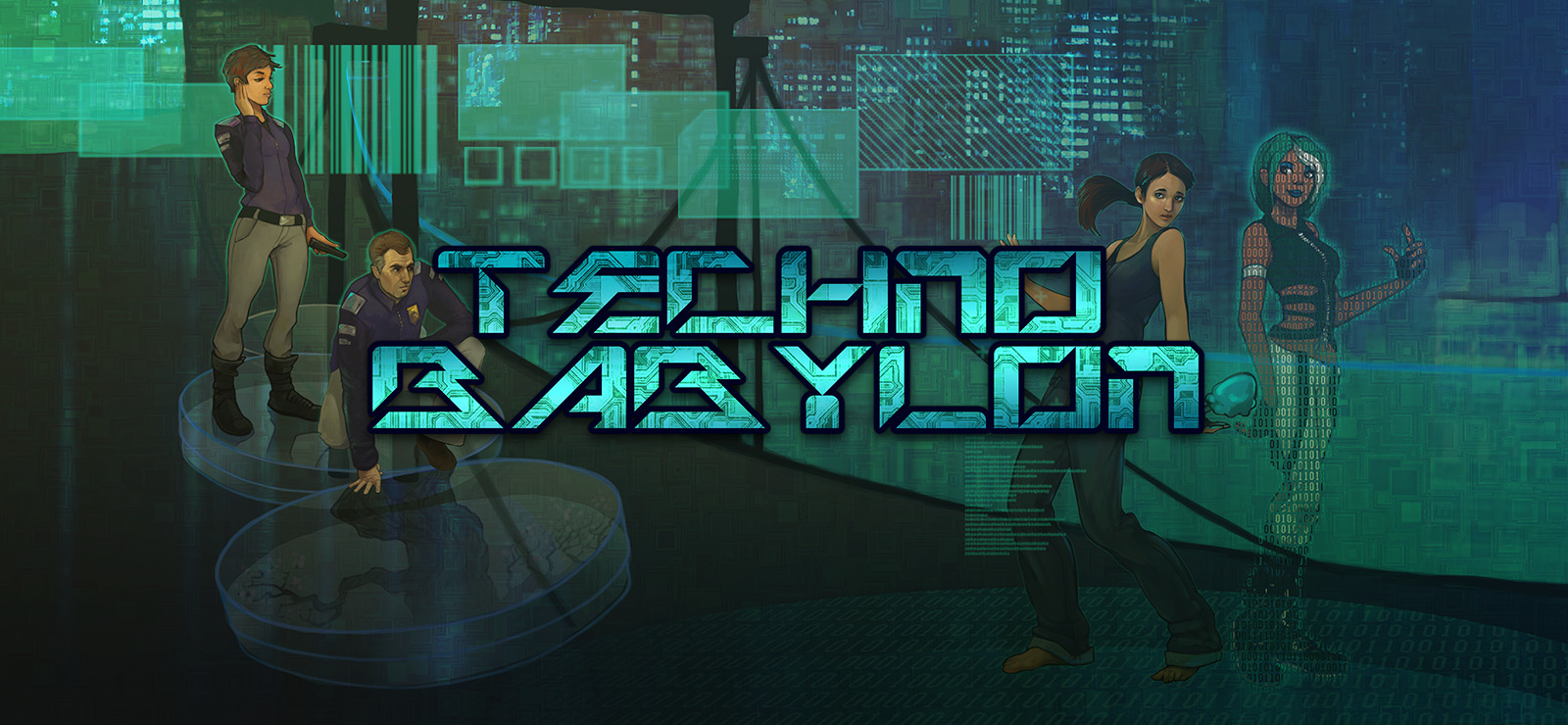
About Technobabylon
In 2087, Newton is shaped by genetic engineering, pervasive surveillance and the immersive Trance network. CEL investigators Charlie Regis and Max Lao pursue a killer who steals knowledge from victims, while Trance-dependent Latha Sesame becomes a target. Their separate investigations converge into a conspiracy that puts their loyalties and place in the city under pressure.
Technobabylon is a point-and-click science-fiction adventure set in Newton, a dense city of the year 2087. Genetic engineering is commonplace, an omnipresent artificial intelligence called Central powers the city, and its CEL force monitors residents. The Trance, a network entered through neural interfaces, offers an immersive alternative to physical life and shapes how people work, socialize and escape. The plot begins with a serial Mindjacker who connects to citizens’ neural wiring, takes their knowledge and leaves them dead. CEL agents Charlie Regis and Max Lao investigate the crimes as Latha Sesame, an agoraphobic resident who spends much of her life in the Trance, faces danger herself. The three leads occupy sharply different positions in the same system: Regis is an experienced officer with reasons to distrust the technology around him; Lao is his technically capable partner; and Latha knows the virtual environment from the inside. Their paths intersect as personal history complicates the case and the meaning of loyalty to colleagues, institutions and the city becomes part of the mystery. The story moves between a procedural investigation and the lives caught in it, with its speculative technology embedded in apartments, workplaces and streets rather than isolated in a remote future setting.
The game presents its world through connected, hand-drawn pixel-art locations that the player examines with a point-and-click interface. Clicking on people, objects and parts of a scene produces observations, conversations or clues; returning to a location can matter after a new lead changes what the characters know. Interviews and environmental inspection work together, so progress comes from comparing accounts with what can be found in the surrounding space. The setting supplies unusual objects and systems, but the core loop remains recognizable as an adventure: gather information, decide which details connect, and use the relevant person, item or piece of knowledge to move a situation forward. The game also shifts between the physical city and the Trance, allowing the virtual realm to function as a place to explore rather than merely a plot device. Those spaces contrast the material conditions of Newton with a digitally constructed environment whose rules and appearance can differ. The result is an investigation that asks the player to read scenes closely while also keeping track of why each lead has access to particular kinds of information. Movement between scenes is point-and-click navigation; the game does not present a separate free-roaming traversal or platforming system.
Play is divided among Latha, Regis and Lao, and the shift between them changes the perspective from which the player approaches the city. Their skills shape the available investigative possibilities. Regis can pursue conventional police work and deal with physical obstacles, Lao brings technical knowledge and hacking ability, and Latha is adept within the Trance and its digital systems. The characters are not simply interchangeable avatars for a single inventory: the same problem can invite different approaches depending on who is present and what that person knows. For example, a secured barrier can be considered through force, computer access or information from Central. Not every puzzle offers several solutions, but this character-based design links problem solving to the protagonists’ backgrounds. Switching focus also lets the narrative revisit the same broad crisis through people with conflicting assumptions about technology and authority. The player reads those differences in dialogue and in the tools each character can use, while the plot gradually brings the separate strands closer together. This structure gives the game a progression pattern based on new scenes, new evidence and changes in viewpoint rather than on character levels, equipment rarity or a broad upgrade tree.
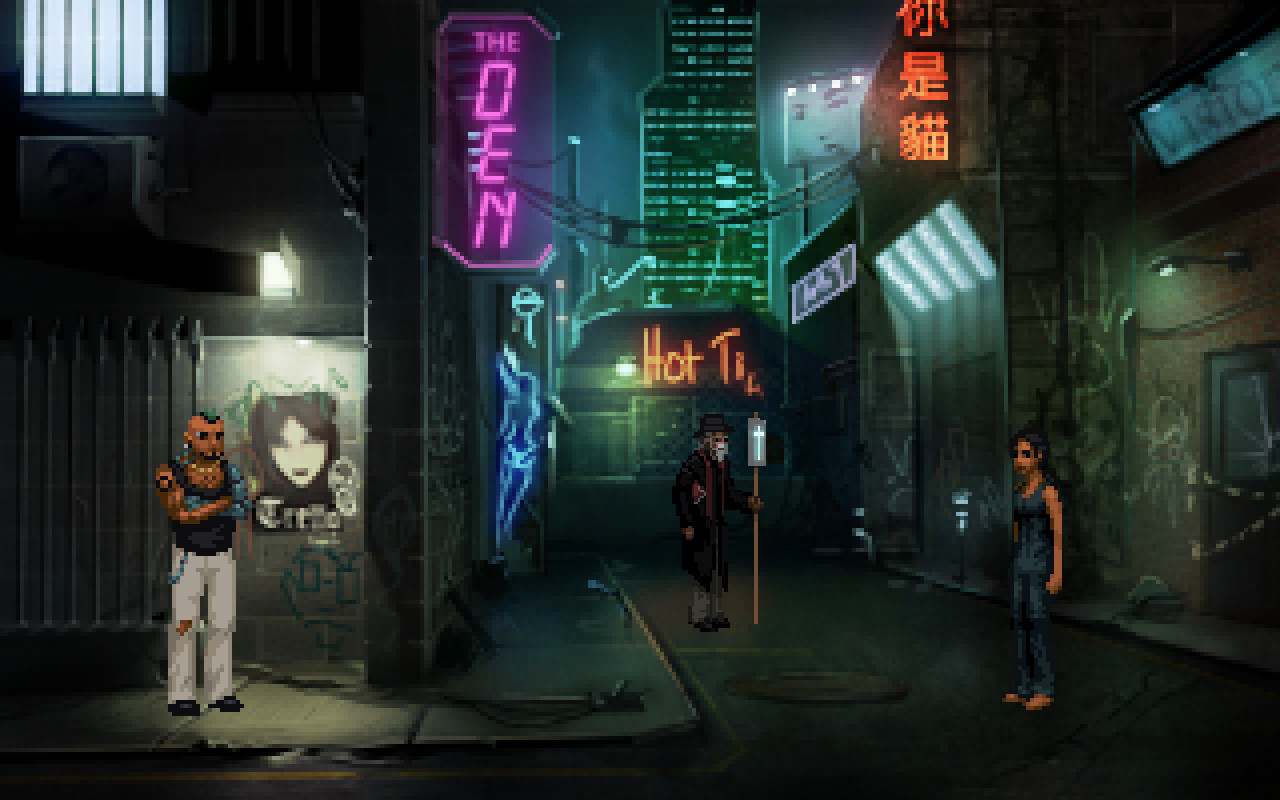
Newton’s technology is also the basis for puzzles. Physical scenes can involve looking for evidence, handling objects and questioning people, while Trance sequences let Latha work inside a virtual environment and interact with digital systems. Hacking is presented as part of adventure-game problem solving: the player must understand what the system is doing and find a way to use its functions, rather than engaging in a separate reflex-based minigame as the main activity. Conversations can uncover access details or clarify a person’s motives; objects and observations provide other pieces of the answer. The design often makes the protagonists’ different approaches meaningful, and the investigation rewards carrying information from one scene into another. There are occasional action-oriented sequences, but the game’s structure remains centered on exploration, dialogue and puzzles. It does not turn into a combat campaign, nor does it rely on repeated enemy encounters or a character-build system. The virtual world broadens the kinds of spaces and interfaces the player can inspect, while the physical city keeps the case grounded in identifiable locations and human consequences. The central progression is therefore case-based: each cluster of clues and conversations opens the next part of the story, with the three characters’ personal dilemmas gradually interwoven with the Mindjacker investigation.
The Trance is especially important because it is both a social technology and a playable environment. Many residents use it to communicate or spend time away from Newton’s physical conditions, and Latha’s familiarity with it contrasts with the discomfort other characters feel toward the network. When she enters it, the player encounters a digital space with its own visual language and logic. Some sections involve moving between virtual and physical contexts, with a discovery in one helping make sense of the other. This is not presented as unrestricted creation or an open-ended online world; it is a sequence of designed adventure scenes tied to Latha’s investigation. The distinction matters to the game’s pacing: a shift into the Trance changes the puzzle environment and the information available, while the story remains focused on specific people and consequences. The city’s dependence on technology also shapes the other leads’ interactions with Central and CEL systems. Their differing comfort with surveillance and network access provides context for the actions they take. Exploration therefore includes both inspecting a room or street and understanding how a digital layer changes what can be seen, accessed or concealed. These systems support the mystery without requiring the player to master a general-purpose computer interface outside the situations constructed for the story.
Progress is narrative and investigative rather than numerical. The player advances by finding leads, asking questions, connecting clues and solving the obstacle currently separating the characters from the next piece of the case. The three viewpoints create a rhythm of partial information: a detail encountered by one protagonist can gain a different meaning when seen from another person’s position. Dialogue is substantial, and character comments help establish how Newton’s residents interpret its institutions, technologies and social divisions. There is no conventional experience-point economy or skill tree described for the game; the central change is what the player and protagonists have learned. Puzzles use observations, objects, conversation and character-specific technological abilities, with each solved problem moving the investigation forward. The story also confronts the costs of surveillance, genetic engineering and dependence on virtual life without reducing those concerns to background decoration. The emphasis remains on how the investigation is played and how its three protagonists make the same city legible from different positions.
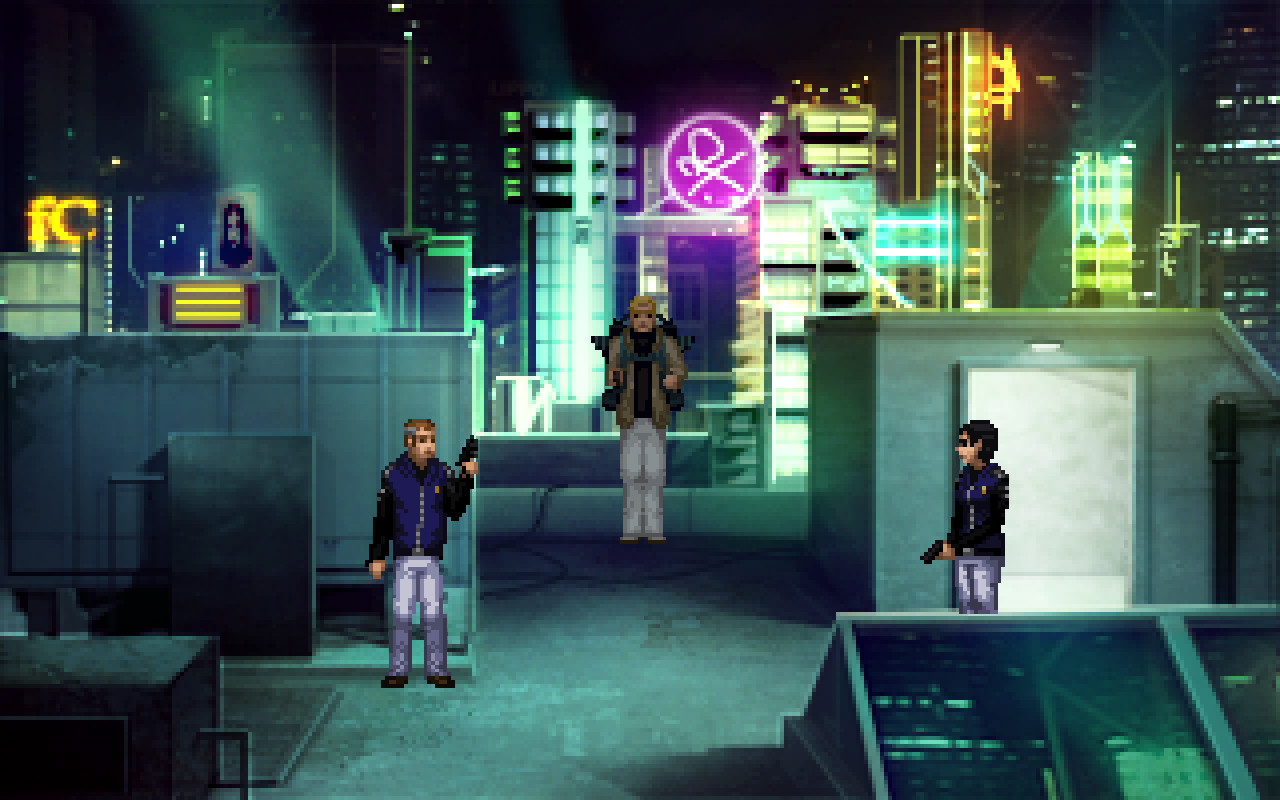
Newton is most revealing when the investigation crosses between its ordinary streets and the Trance. A detail that seems like a piece of police evidence to Regis can have another use for Lao or Latha, whose knowledge of the city's systems comes from a different position. That division of perspective gives the central case momentum without relying on character levels or a combat economy: new access and new understanding are the meaningful forms of progress. Central's reach, CEL's surveillance and residents' dependence on the virtual world make each technological puzzle part of the city's social order rather than an isolated futuristic trick. The three protagonists have to work through those structures while the Mindjacker's crimes bring their separate concerns together. Technobabylon's pixel-art rooms, voiced conversations and designed Trance spaces give the investigation distinct physical and digital settings. The full game follows that converging mystery; its separately offered demo is only an introduction to it.
- Developer
- Technocrat Games
- Genre
- Single-player point-and-click science-fiction adventure