
About Tchia
Tchia sets a rescue journey across a New Caledonia-inspired archipelago, where free climbing, sailing and gliding meet the ability to possess animals and objects. Play ukulele melodies to change the world, improvise through encounters with fabric soldiers, and explore islands shaped by local landscapes, music, languages and folklore.
Tchia begins with a clear personal goal: the young protagonist sets out to rescue her father from Meavora, the tyrant who rules the archipelago. The journey moves across a fictional island world inspired by New Caledonia, the homeland of Awaceb’s co-founders. That influence reaches beyond palm-lined beaches. The developers describe drawing on varied landscapes, local music and languages, folklore and traditions to shape the setting and its characters. Tchia is a made-up world, not a reconstruction of New Caledonian history or culture. Its story follows Tchia’s coming of age as she meets people and places connected by the rescue she is trying to complete.
Moving through the islands is deliberately open-ended. Tchia can run, jump, glide and climb, with free climbing letting her ascend trees and other surfaces. Her glider turns a height advantage into a way to cross gaps, while dives and tricks add a more playful rhythm to getting around. At sea, she can summon or reach her boat and sail between shores, then swim below the surface to explore reefs and shipwrecks. The archipelago includes different biomes and weather, so routes can change from forested slopes to open water and more rugged ground. Exploration is not locked to a single path: a distant landmark can be approached on foot, from the air or by boat.
Soul Jumping is the ability that most changes how Tchia interacts with that world. She can take control of animals and objects, borrowing their movement or useful traits for a short time. A bird can carry her through the air, a fish can move through the ocean, and a dog can dig for buried finds. Objects also become practical tools: one can help her launch herself, get around an obstacle or approach a problem from an unusual angle. The roster includes more than 30 playable animals and hundreds of objects. The point is not simply to collect forms; switching bodies makes the landscape itself part of the toolkit, and can help with traversal, puzzles and secrets.
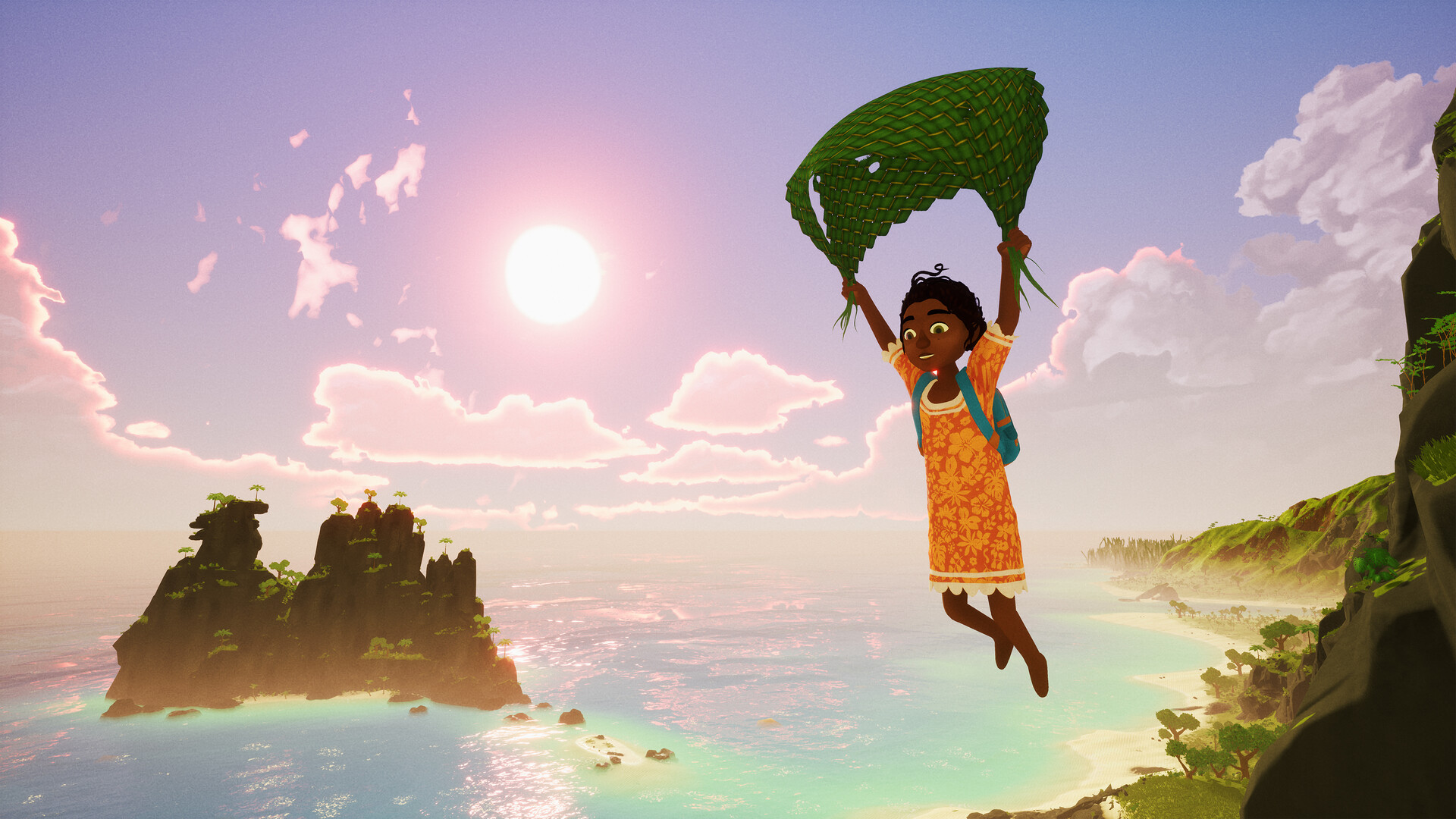
The ability develops along with Tchia. Early on, Soul Jumping is introduced as a new power that she is still learning to control. Completing challenges as the story progresses unlocks additional Soul Meter capacity, which lets her remain in a possessed body longer. The meter gives the power a limit to manage, while the selection of animals and objects gives the player room to experiment with routes and solutions. A bird offers a direct way to cover distance, but another nearby creature or object may be more useful for a particular obstacle. The game’s broad sandbox premise comes from trying these different capabilities in the environment rather than relying on one fixed movement method.
Tchia’s ukulele is another tool that connects everyday exploration with the story. It can be played freely, and some key scenes use rhythm sections in which music becomes part of the moment. As Tchia learns Soul Melodies, she can play them out in the open world to trigger effects, such as attracting animals, changing the weather or altering the time of day. These tunes can create an opportunity to Soul Jump into an animal that is otherwise hard to reach, or change conditions to make a route more manageable. The instrument also sits alongside an original orchestral score infused with local sounds. Characters speak in traditional languages, with subtitles available in multiple languages, including English and French.
When Meavora’s fabric soldiers, called Maano, stand in the way, the game shifts into open encounters. Tchia can keep moving and improvise with the same abilities used for exploration, including Soul Jumping and the slingshot. This leaves space to try different approaches rather than treating every confrontation as a separate combat system. Totem Shrines offer another kind of challenge, testing Tchia’s skills in mystical trials. Elsewhere, small items such as a flashlight, compass and camera support exploration, while unlockable clothing and boat cosmetics let players change her look and vessel. The world’s objects can therefore serve several purposes: some help cross terrain, some support a plan in an encounter, and others are simply part of the scenery to investigate.
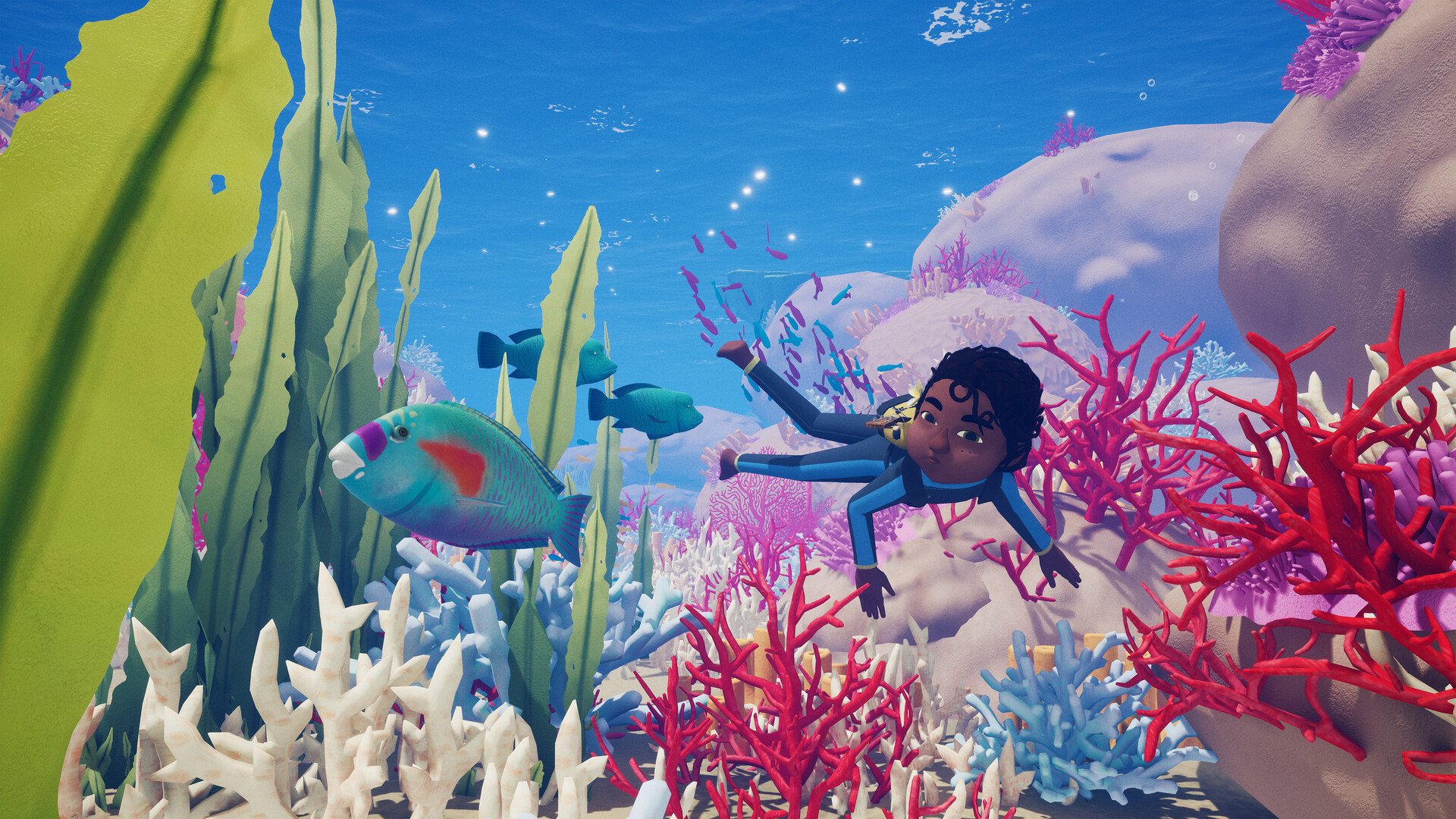
The Steam release added features and content beyond those in the original release. Its additions include new Soul Melodies, comfort settings, cosmetic items and perks attached to complete outfits. One melody can summon food, another enables a faster boat, and Acrobat Mode increases Tchia’s jump and trick potential. Outfit perks can attract animals, while Infinite Soul Meter gives players an option to keep using Soul Melodies without depletion. These additions broaden the ways to explore and play, but they do not replace the central arc: Tchia’s trip across the islands to save her father. The game’s identity rests on the connection between that story, a living archipelago and the freedom to use music, movement and possession to find a way forward.
- Developer
- Awaceb
- Genre
- Open-world action-adventure with exploration, traversal, possession-based abilities and open encounters.