
About Tales of Xillia Remastered
In Tales of Xillia Remastered, Jude Mathis and Milla Maxwell meet in Rieze Maxia, a world shared by humans and spirits, as a device threatens its mana. Choose either hero’s perspective, travel with a growing party, and fight in real time by linking allies for coordinated support and combined artes. The remaster adds navigation, encounter and other convenience options.
Rieze Maxia is a fantasy world in which humans, monsters and spirits live together. People draw on mana produced by an organ called the mana lobe and give it to spirits to use spirit artes. The two large nations, Rashugal and Auj Oule, maintain a tense rivalry while the world appears largely peaceful. That balance is unsettled when Rashugal begins using a powerful device that drains mana, the source of life in the world. The story follows the effort to stop the damage and restore that balance, linking a political conflict between nations with a crisis that affects the relationship between people and spirits. The setting’s magic is therefore part of ordinary life as well as the larger threat: the resource that makes spirit artes possible is also what the device is taking away. This premise gives the journey a clear connection between its personal encounters and the world-scale danger, because the same mana sustains both spirit techniques and the broader life of Rieze Maxia.
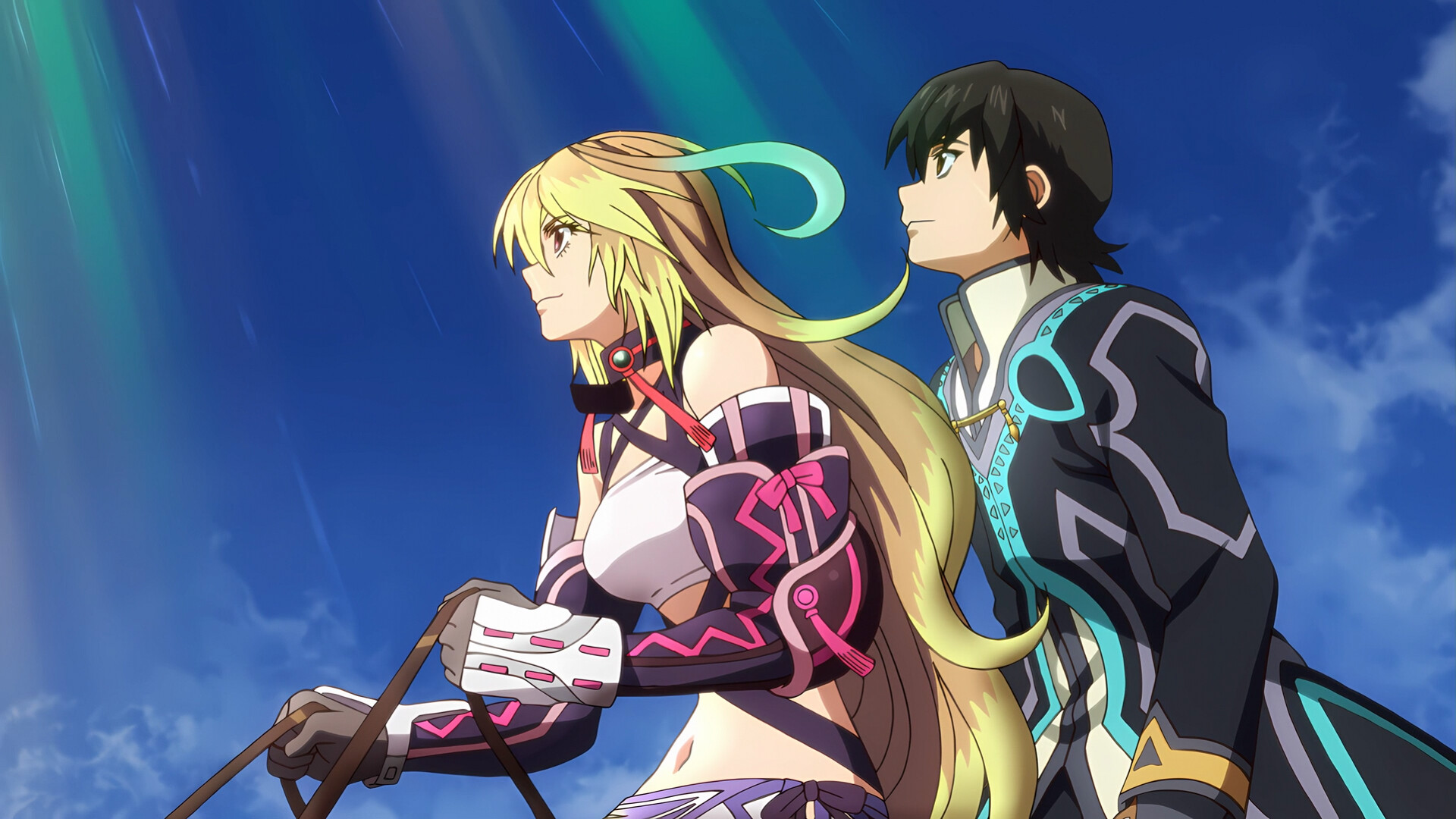
The opening choice places the journey in the hands of Jude Mathis or Milla Maxwell. Jude is a medical student from the capital, while Milla is a mysterious woman who identifies herself as Maxwell, the master of spirits, and travels with the four great spirits of earth, water, fire and wind. They meet when their concerns converge around the mana-draining device, then set out together to destroy it. The two routes tell the same broad story, but the chosen hero changes which side of events the player sees; the difference is in viewpoint rather than a wholly separate plot. This framing gives the central partnership two different starting positions: Jude approaches the crisis as a young human drawn into events, while Milla begins with a direct connection to the spirits and the balance they depend on. Either route can be started first. Shared events may look different from the other character’s position, so the selection determines whose experiences frame the story rather than choosing between unrelated campaigns.
The journey carries Jude and Milla through a world whose conflict involves both nations and the people caught between them. The party includes Alvin, Leia Rolando, Elise Lutus and Rowen J. Illbert, whose paths join the two protagonists as the story unfolds. Travel alternates between field and location maps, with story events and conversations providing context for the next destination. The remaster adds star markers for main objectives across the world map, local map, mini-map and field, together with a distance readout; sub-events can also be marked on local maps, with a separate hourglass marker for those that are time-limited. A character who triggers a sub-event receives an exclamation mark, and the selected event’s destination is shown on the world map. These signposts support the original journey structure while leaving the player to move through its locations and decide when to follow optional conversations. Map updates also mark uncollected chests, search bags, search points and Aifread’s Treasures, alongside already acquired items. Because some optional events have a limited occurrence period, their special marker distinguishes them from ordinary conversations and gives the player a way to notice when timing matters.
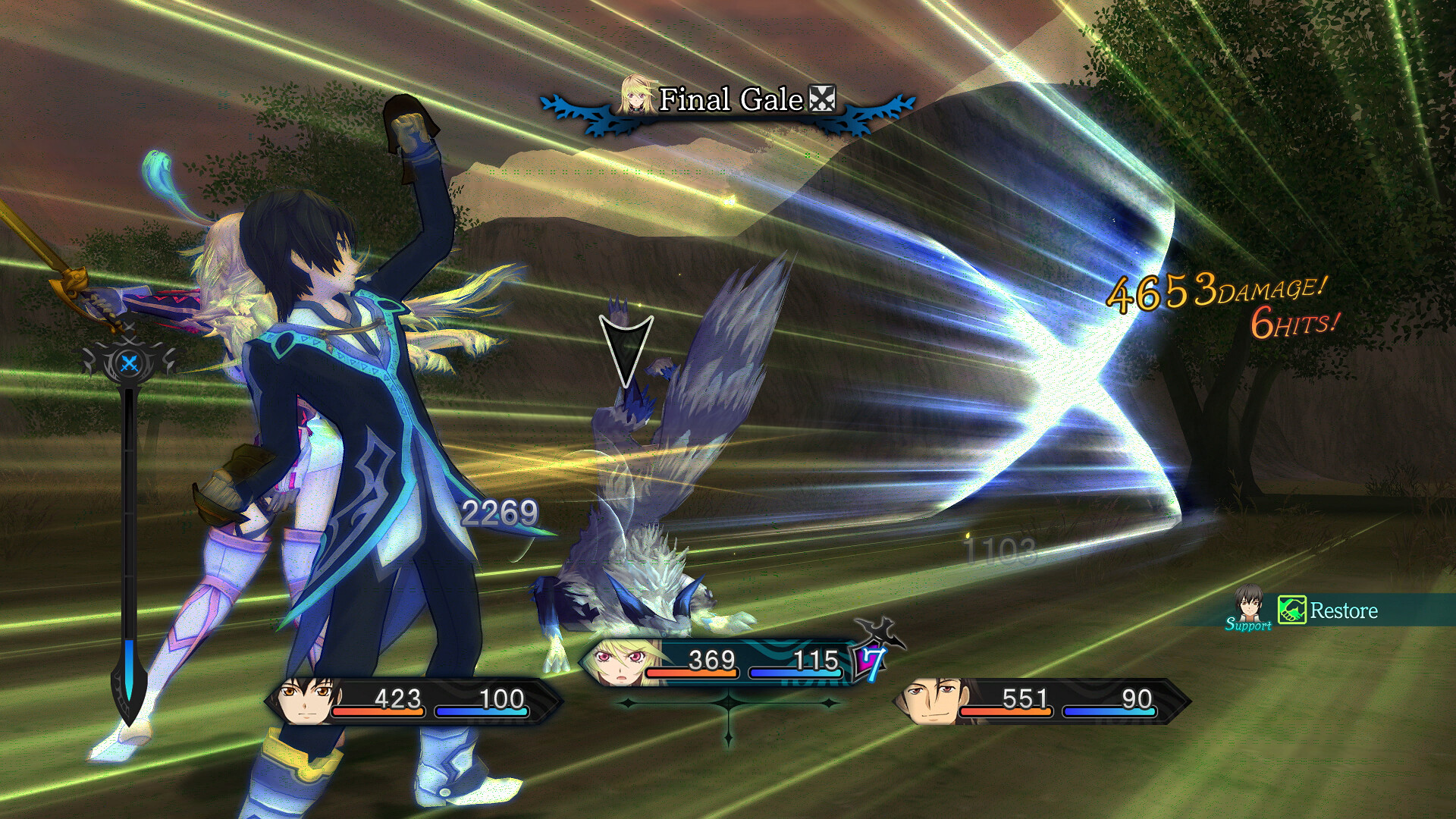
Battles use the Tales series’ Linear Motion Battle System: the controlled character moves along a line connecting them to a selected enemy, then combines directional input with buttons to attack. Xillia’s Double Raid variation adds a partner layer to that real-time foundation. The player can link the active fighter with another party member, forming a pair whose support skill depends on which ally is chosen. While Link Mode is active, landing attacks builds a gauge that enables a Link Arte, a joint technique assembled from the linked characters’ abilities. For example, Jude’s Demon Fist and Milla’s Wind Lance can combine into the linked arte Absolute Wind Blade. Choosing a partner changes the support available, while landing attacks builds toward the combined technique. This gives each encounter two connected concerns: keep pressure on the selected enemy and use the chosen ally’s support at the right time. The player moves and attacks directly rather than selecting commands from a turn queue, with the active character’s position and direction shaping how each exchange unfolds.
The story campaign is designed for one player, while local co-op opens the battles to as many as four people. During encounters, additional players can take control of party members and join the same real-time fight; travel and story scenes remain centred on the selected protagonist. This keeps cooperative play focused on combat rather than creating a separate multiplayer campaign. Battle scenes also have their own presentation options: subtitles can be shown for boss and tutorial exchanges, battle results, linked artes and Mystic Artes, and their display can be adjusted in the options. Map and battle controls can be remapped as well. These settings help players follow voiced exchanges and set inputs to their preference while the encounter continues in real time. The result is a single-player journey that can become a shared local activity when combat begins, with interface and control options available for those battles.
Progression is presented through the party’s continued journey, its equipment and items, and the systems that let players shape how the adventure unfolds. The remaster brings the Grade Shop forward to the first playthrough, starting it with 5,000 GRADE and allowing many effects to be purchased immediately; some can be switched on or off in the options. First-run access excludes effects for transferring character levels and other data, as well as fully unlocking chats. The shop also adds an item that halves the cost of all items. This early access makes a familiar series system available before finishing the game, while the exclusions preserve distinctions tied to carrying progress between playthroughs. The game also supports item and equipment management as the party travels, and newly acquired items or learned artes receive a NEW marker. Remastered changes to store menus let players select multiple bonus materials at once and compare equipment stat changes, making those decisions easier to track. The shop’s half-price effect is an option in the Grade Shop, rather than an across-the-board rule that applies automatically. Likewise, the first-run limitation on transfer effects means that early access does not unlock every kind of carryover benefit. Together, these details distinguish convenience features available within a fresh campaign from bonuses associated with later playthrough data.
Tales of Xillia Remastered is the updated release of the 2011 PlayStation 3 game, with enhanced graphics and quality-of-life changes across Nintendo Switch, PlayStation 5, Xbox Series X|S and Steam. Autosave records progress at specified points such as after map travel or events; a retry option is available after defeat in regular battles. Encounter settings can turn off contact battles, although certain event battles are exempt, and dash can be toggled while exploring. Destination and sub-event icons, map item markers, adjustable map camera distance, skippable cutscenes and skits, and automatic skipping of viewed events address navigation and replay. The release includes more than 40 pieces of original DLC, including costumes and useful items, but some licensed content is excluded. The Standard Edition contains the base game; the Digital Deluxe Edition adds a digital artbook and soundtrack, a Battle BGM Pack and a Super Growth Support Herb Set. These edition extras sit alongside the remaster’s shared story and system changes. The publisher also lists adjustable subtitles for battle scenes and a setting to switch between English and Japanese voice tracks. Those options accompany the graphical update and the convenience tools without changing the identity of the central game: a two-perspective story built around travel, party battles and the alliance between people and spirits.
- Developer
- DOKIDOKI GROOVEWORKS, Inc.
- Genre
- Action RPG; official Steam genre listing is Action and RPG.