
About Tales of Berseria
Velvet Crowe leaves imprisonment with a daemon's arm and a fixed purpose: confronting the person whose betrayal destroyed her family. Her voyage across Midgand's islands pits that anger against the Abbey's promise of order. Tales of Berseria joins this conflict to an action battle system where artes, Souls, guarding and evasion all affect the length of a combo.
Velvet Crowe's story begins before she becomes the figure feared by much of Midgand. She lives with her family in an old village, until a Scarlet Night tears that life apart. Daemonblight, a disease that transforms people and animals into monsters, already troubles the wider world. On this night a person Velvet trusted betrays her; she loses her family and her left hand, which becomes a monstrous limb able to devour daemons. Three years later, after a long imprisonment, she is no longer waiting for anyone to set matters right. The person she seeks is celebrated elsewhere as a savior, and her pursuit brings her into direct conflict with the institutions built around him. That gap between a public hero and Velvet's private experience gives the opening its tension. She does not set out as an officially sanctioned defender of the realm. Her anger is the force that gets her moving, while the consequences of that anger remain part of the story's question. The game calls this conflict emotion against reason, but its premise is more concrete than a choice between two abstract virtues: a woman who remembers one night vividly travels through a society that has organized itself around a very different account of safety and order.
Midgand is not one uninterrupted landmass waiting to be crossed. Its empire stretches over many islands and territories, with shipping routes connecting places whose climates and customs differ. The northern reaches are particularly cold; elsewhere the weather, architecture and daily routines change with geography. Trade ships move goods between territories, and advances in shipbuilding make sea travel central to the kingdom's life. Those routes are constrained by currents, weather and the presence of pirates. Velvet eventually joins a pirate crew, which means her journey passes through a world whose economy depends on precisely the seas that are difficult to control. The island setting gives the revenge story a changing backdrop: ports, settlements and the people tied to them are affected by Midgand's political and spiritual struggle, rather than existing simply as stops between battles. The contrast between busy trade and pervasive fear also matters. Ships can still sail and communities still function, yet daemonblight can turn a familiar person or animal into a threat. An ordinary traveler might see the Abbey as the organization holding a fragile society together; Velvet has reasons to look at its authority from the opposite side.
The Abbey sends exorcists through Midgand's towns and ports to protect people from daemons. To residents who have seen daemonblight's effects, these fighters can look like necessary guardians, and the Abbey's claim that reason brings peace has a practical appeal. Its reach extends into politics and the military, however, so the conflict is not confined to a single villain or battlefield. Exorcists draw on the powers of malaks, spiritual beings connected to nature. Malaks can take human, animal or other forms, but those under the Abbey's control are treated as familiars with little room for a separate will. That arrangement raises a question beneath the Abbey's reassuring language: whose freedom is being traded for the order everyone else receives? Daemonblight makes the categories no simpler. Most afflicted people lose control and attack others, yet some retain their minds even when their bodies change. Velvet and Rokurou are among the examples the publisher gives. The person called a daemon therefore cannot automatically be understood by appearance alone. As Velvet pursues revenge, the distinctions between protector, prisoner, servant and monster become part of what the world asks the player to examine.
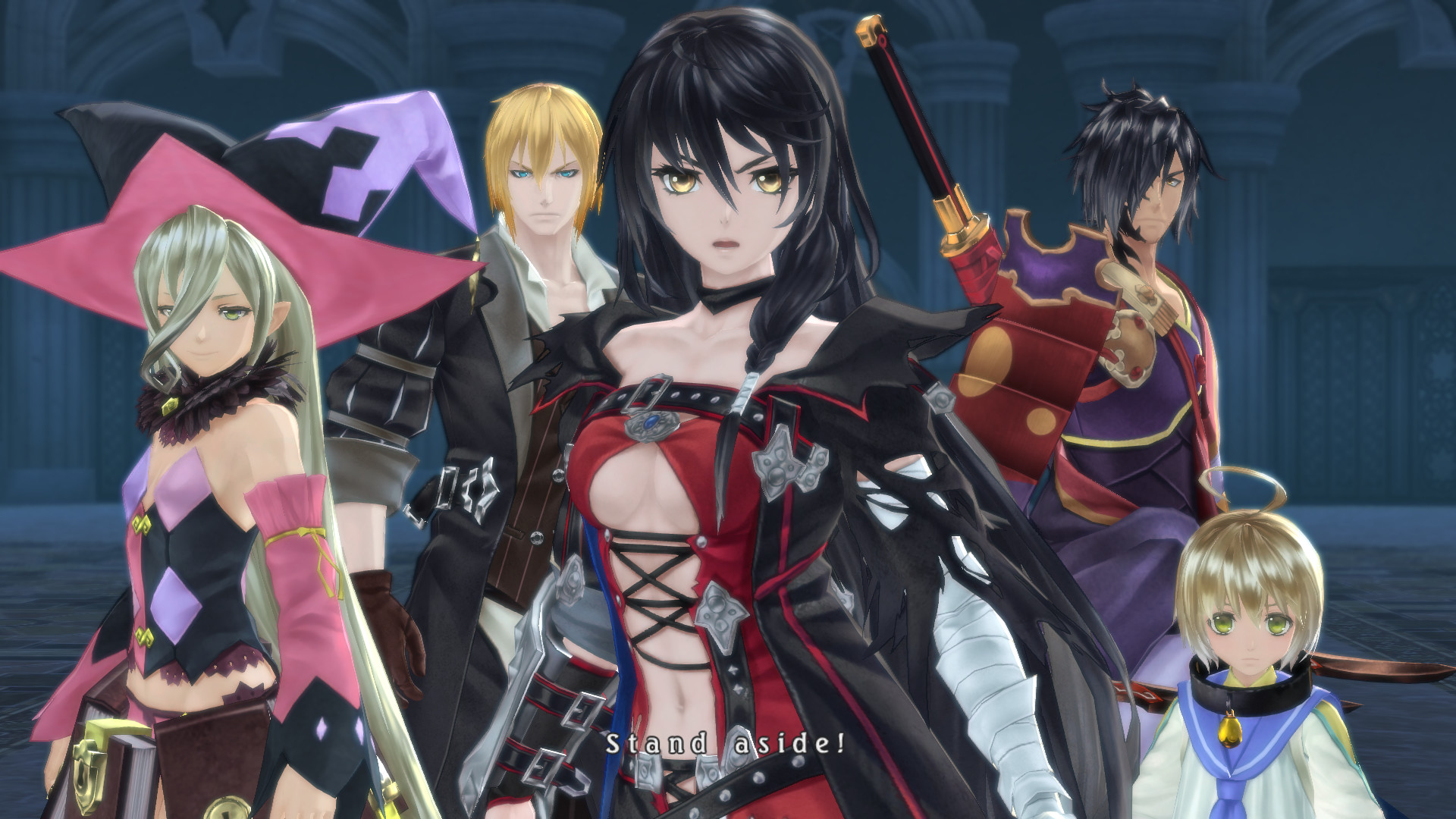
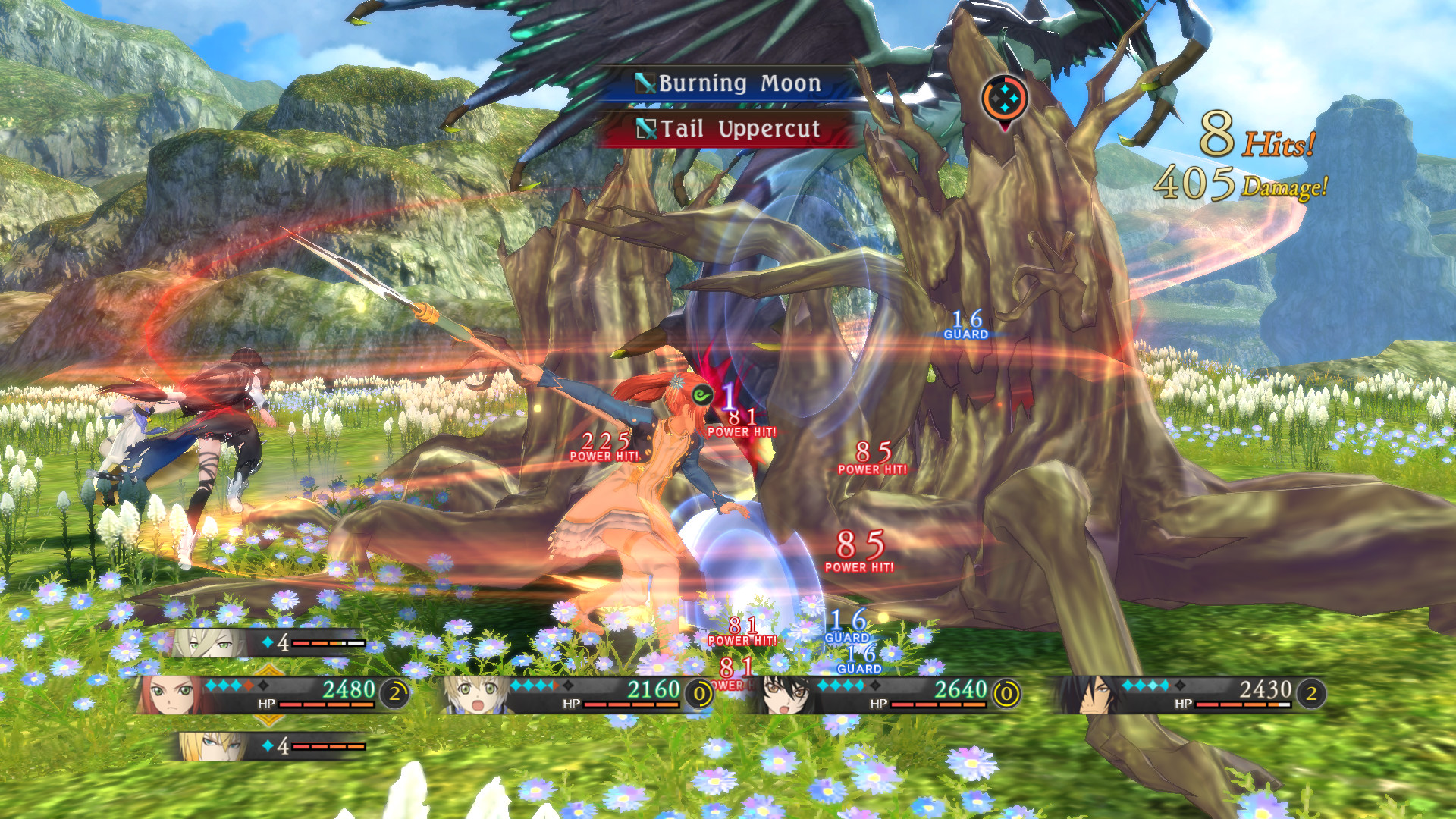
The voyage brings Velvet into a group of companions rather than leaving her alone with that purpose. The original game offers six playable characters, each with a different set of skills, so the people aboard the journey are also alternatives in combat. The party's variety matters because Tales of Berseria builds its action around artes that can be assigned to controller buttons and chained into sequences. An arte may attack directly, use magic, stun a target or inflict a status condition. Changing the assigned order changes which moves follow one another and which weaknesses a sequence can exploit. The camera can be controlled freely during fights, allowing the player to read the space around the party instead of watching only a fixed line of exchanges. Yet a long chain is not granted simply because the buttons have been mapped. The number of Souls a character holds limits how many artes can be linked in a combo. The same resource is held by enemies, and it can move between the two sides of a fight. That turns a visible row of Soul icons into a quick account of how much each combatant can attempt before the exchange changes direction.
Soul and the Soul Gauge are related but distinct pressures. Each arte spends SG, and a depleted gauge leaves attacks more vulnerable to being repelled even though an arte can still be attempted. Waiting or guarding gives SG time to recover. Stuns, status ailments and defeating enemies can increase a character's Souls, while enemy attacks can stun the party or take Souls away. A quickstep can avoid a blow and sometimes produce a Soul opportunity, so stepping out of danger can also improve the next offense. The important decision is not simply whether to keep attacking; it is whether the current set of Souls and available SG will support the sequence being attempted. A character with room for a longer chain can target a weakness and try to turn that opening into another Soul. A character who has lost the resource may need to guard, evade or wait for a better entry. The assigned face-button sequence is a plan made before the fight, but its usefulness changes as the Soul count shifts during each exchange. The system makes tempo reversible: an enemy that was being overwhelmed can reduce the party's options, while one precise interruption can give those options back. Because every playable character has distinct artes, changing the active fighter also changes the practical route through this shared resource system.
Tales of Berseria presents those struggles through a deliberately heightened visual style. Mutsumi Inomata designed Velvet, while ufotable animated the game's cutscenes; the shift from character conversations to animated sequences helps give important turns in her journey a form beyond battle text. The cast's appearance and the maritime landscape are connected to the story's larger opposition: Velvet travels through a realm whose official champions look secure in their roles, while she and her companions occupy a less comfortable place in its moral order. This page concerns the original Tales of Berseria, developed by Bandai Namco Studios and released for PlayStation 4 and PC in the West in 2017. A separate Tales of Berseria Remastered later brought the adventure to newer platforms and added conveniences such as earlier Grade Shop access and encounter controls. Those additions should not be mistaken for features of the original edition. In either version, the central game is Velvet's passage across Midgand and the clash between her personal demand for justice and the Abbey's public claim to act for everyone. The battles express that tension on a smaller scale, asking when to press an advantage and when to step back before an apparent source of power turns into a liability.
- Developer
- Bandai Namco Studios
- Genre
- Action role-playing game