
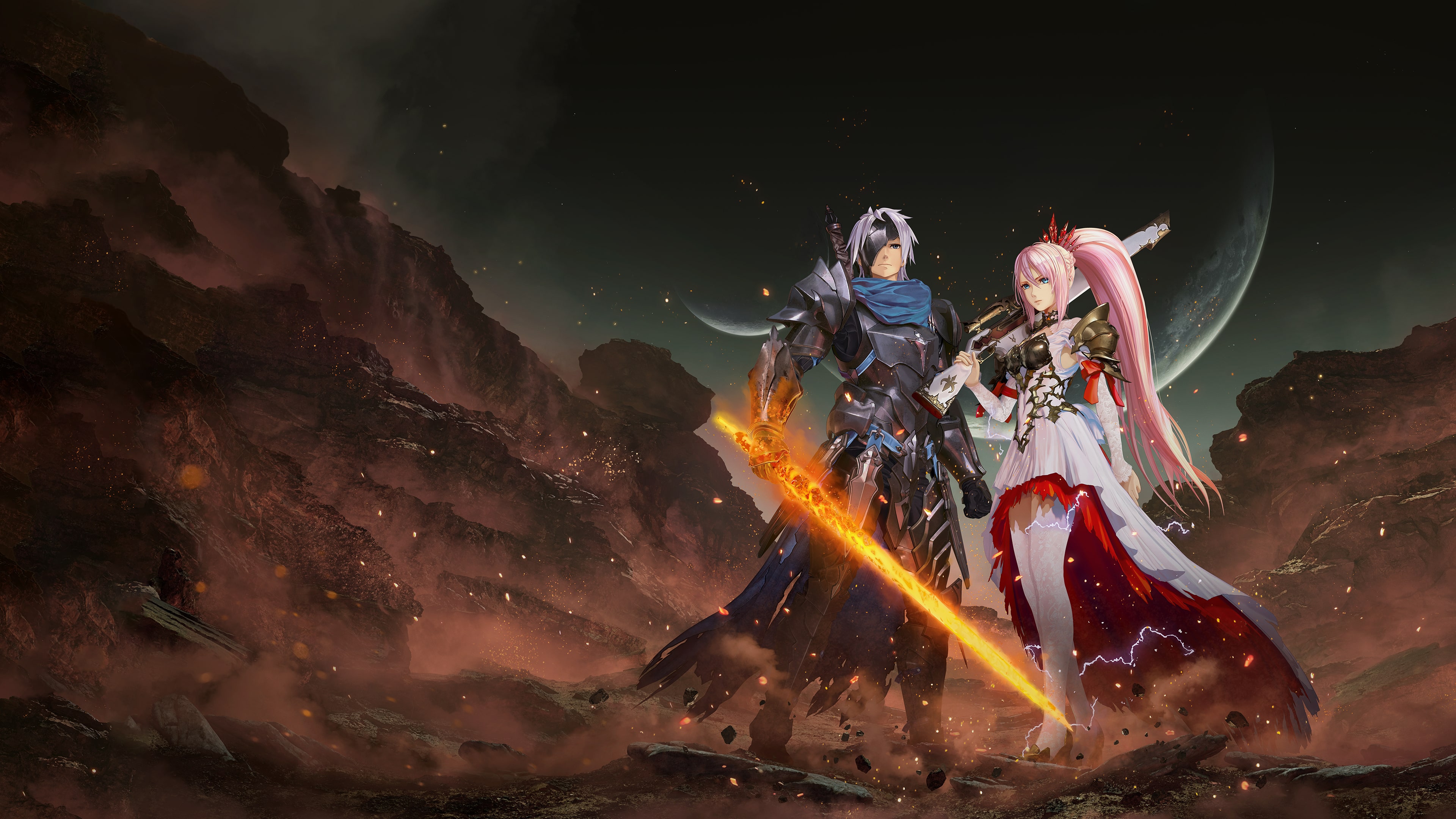
About Tales of Arise
Dahnan Alphen and Renan Shionne join forces to challenge three centuries of Renan rule over Dahna. Travel through distinct territories and towns, build a party of allies, and fight in real-time battles where Artes, evasive counters and character-specific support attacks connect individual timing with coordinated finishers.
Tales of Arise begins on Dahna, where Renan rule has lasted for three hundred years. Renan forces strip the planet of resources and deny the Dahnans dignity and freedom. Alphen, a masked Dahnan who has lost his memories and cannot feel pain, meets Shionne, a Renan woman whose body shocks anyone who touches her. Their lives converge around the Blazing Sword and a shared desire to change the conditions imposed on Dahna. The conflict expands as they travel through the planet’s territories, where local rulers enforce Renan control over the people they govern. Each new region brings the party into contact with another community living under that system, making liberation an unfolding journey rather than a single confrontation. The story also follows the divide between Dahna and Rena through its central pair: Alphen and Shionne begin from opposing sides of the occupation, and their cooperation raises questions about responsibility, trust and what a different future would require. Their companions add further perspectives as the group grows, with relationships developed through story scenes and the series’ Skits.
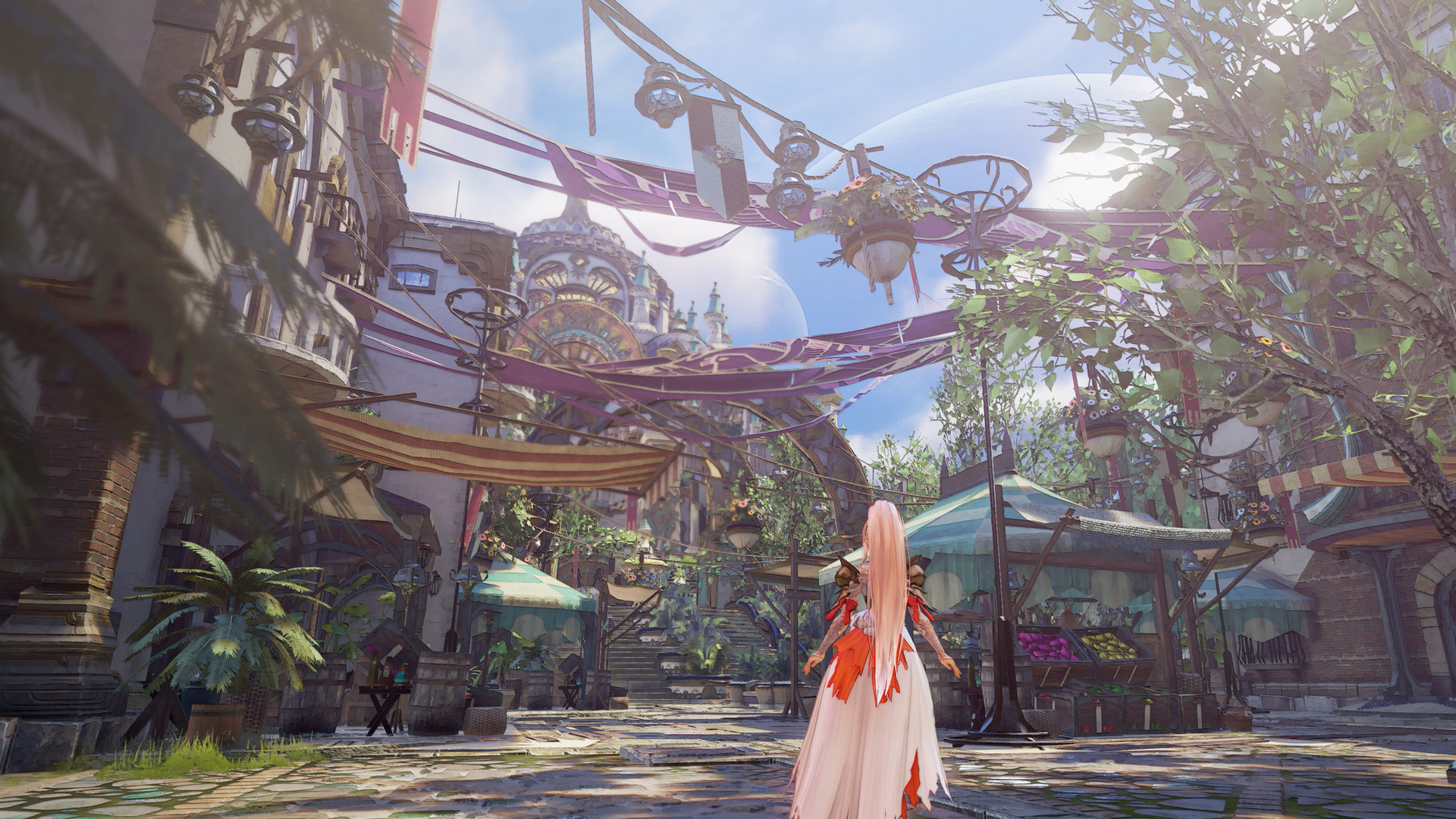
The party’s changing composition gives the journey its human scale. Alphen and Shionne are joined by four allies, each bringing a different background, weapon and combat role to the group. These characters do not enter as an already unified team; travel and shared struggles gradually establish how they work together. The game follows the party across distinct Dahnan territories, settlements, dungeons and story locations rather than an uninterrupted open world. Towns provide places to speak with residents and take on side quests, while field areas carry the party between those communities and the main story’s confrontations. The regional structure keeps each part of Dahna tied to its local population and the effects of Renan rule. As the group advances, encounters with local authorities and ordinary residents connect the central conflict to everyday life on the occupied planet. Optional town requests and party conversations extend the time spent with those places and companions, while the main story continues to guide movement from one territory to another.
Field travel uses jumping, dashing and swimming to cross terrain such as rocky slopes and rivers. These actions operate within bounded areas and story routes, so exploration offers detours without turning the map into a seamless open world. Campfires give the party a place to rest and cook between encounters. Cooking provides a practical preparation stop, with meals granting temporary stat benefits for the party’s next stretch of travel. Town activities and side quests add tasks outside the central storyline. Some field events ask the player to spend Cure Points, or CP, to remove an obstacle and open an alternate route. CP also powers healing Artes, so taking a detour can reduce the resource available to support the party later. The alternate path may contain a weapon or healing items, making the decision a tradeoff between immediate supplies and later recovery. The party therefore moves through areas by weighing their resources as well as the terrain: a side route can reward exploration, but its cost is drawn from a pool also used to keep allies alive. This makes traversal part of the party’s preparation, not just a way to reach the next story scene.
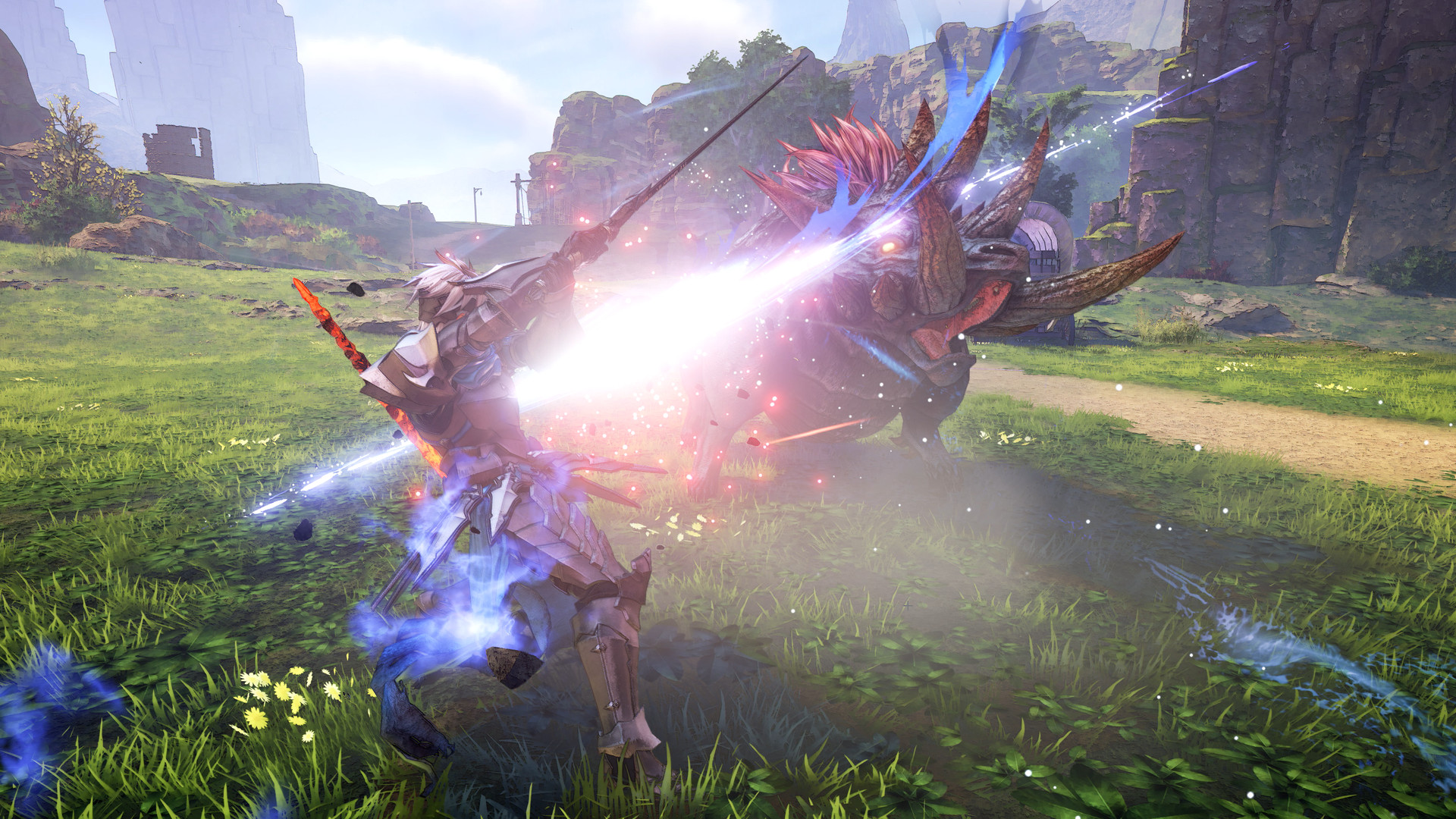
Combat is real-time action built around direct control, Artes, evasion and coordinated support. Characters can string standard attacks into Arte sequences, while enemy appearances can signal weaknesses for the player to target. The battle design emphasizes reacting to incoming attacks and finding openings rather than simply repeating a fixed combo. Each character has a Boost Gauge that fills during battle; when ready, a Boost Attack calls in that specific ally for an action with a unique effect and restores the Art Gauge, allowing more Artes to follow. This creates a clear sequence between normal attacks, a character’s support move and renewed Arte use. The Boost Gauge and Art Gauge serve different purposes in that cycle: the former determines when a support action is ready, while the latter governs continued Arte use. Calling an ally at the right moment can therefore reopen the player’s options for extending an attack sequence. As a fight develops, long combos and an enemy’s low remaining health can make a Boost Strike available. This paired finisher brings two allies together to close out an opening. These systems move combat between individual timing and party coordination: the player watches enemy behavior, chooses when to call a support action, and builds toward a team finisher rather than relying on one character alone.
Character roles give those shared systems different applications. Kisara carries a large shield and can block attacks, while other party members contribute through their own weapons and distinctive actions. A just evade or just guard can lead into a Counter Raid, a quick response that briefly slows the surrounding action and can connect into a further attack. Character Traits also reflect a fighter’s background and weapon expertise, so the combat roster is not a set of interchangeable versions of Alphen. Choosing whom to control and which ally to call changes the flow of a battle. Each Boost Attack has an effect specific to the called character, so the choice of ally changes the support action available in that moment. The party’s combat system thus links fiction and function: the shield user’s defensive specialty, the individual traits and the evasive counter system all contribute distinct options as opponents attack. These differences support switching the active fighter and adapting the group’s responses while retaining the same underlying action controls.
Progression connects the party’s time in towns and fields to preparation for later encounters. Experience, weapons and items gathered along the route help develop the team, while side quests offer additional tasks and rewards from residents. CP remains a strategic resource beyond any one obstacle: it fuels healing Artes, and it does not simply replenish over time. That makes spending it on an exploration detour consequential, especially when the party may need healing before reaching a campfire or other rest point. Conversation is another form of character progression. Skits use the party’s three-dimensional models in comic-panel-like frames, and can reflect current costumes, time of day and location. Field dialogue and campfire scenes let companions respond to events and discuss their experiences beyond formal story scenes. These exchanges are tied to the same journey as the party’s practical development, giving the players a way to see how the group’s relationships change as they travel through Dahna. The combination of optional requests, limited resources and contextual conversations gives towns and rest stops roles beyond simply marking the next destination.
The visual presentation uses an Atmospheric Shader designed to combine anime-inspired imagery with a watercolor-like quality, setting expressive characters against natural environments and changing light. Animated sequences by ufotable punctuate key story moments, while the action system gives battles their own visual rhythm through evasions, support attacks and paired finishers. These presentation choices help distinguish formal story scenes from the party’s more conversational Skits and field dialogue. The base game follows Alphen, Shionne and their companions as they challenge the division between Dahna and Rena. Beyond the Dawn is a separate expansion with its own post-story scenario, dungeons, subquests, costumes and items; those additions are outside the base game’s main narrative.
- Developer
- Bandai Namco Studios Inc.
- Genre
- Action role-playing game