
About Tacoma
In Tacoma, you board a space station in 2088 on a mission to retrieve its artificial intelligence and investigate what happened to the six-person crew. Explore the station and examine 3D recordings of pivotal moments, rewinding and moving through scenes to follow overlapping conversations. Objects, notes and digital records fill out a story about relationships, trust and crisis.
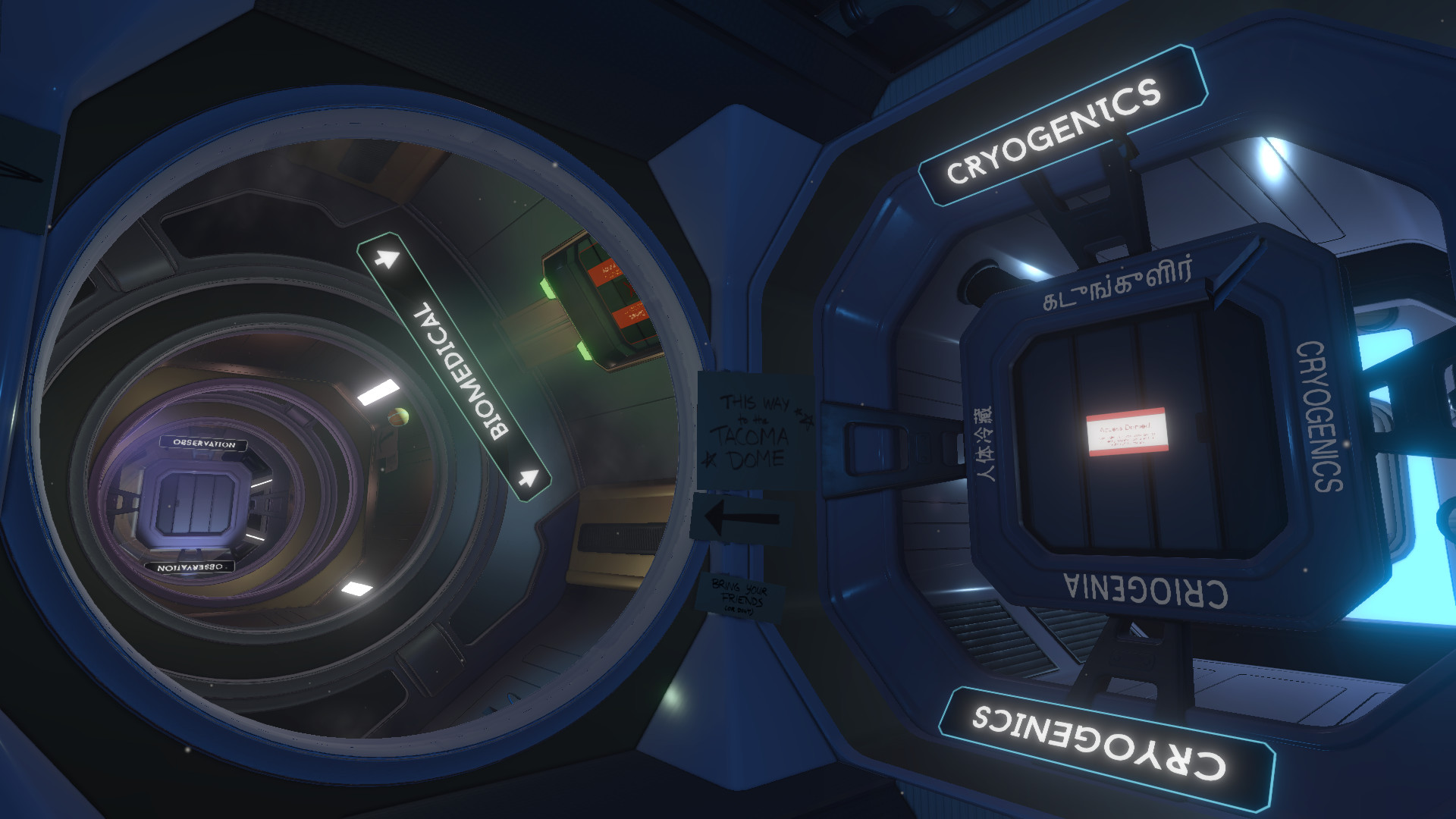
Tacoma is a narrative adventure set aboard a high-tech space station in 2088. The player arrives on a mission to retrieve the station’s artificial intelligence for the Venturis Corporation, then explores the facility to understand the events surrounding its six-person crew. The station is not simply a backdrop: the rooms, work areas and personal spaces preserve details of how the crew lived and worked. The mystery develops through these surroundings and through recordings of moments captured by the station’s digital surveillance system. Together, the physical environment and recorded scenes let the player investigate a crisis by examining its traces. The game’s focus is on reconstructing what happened and understanding the people involved, with themes of trust, fear and resolve shaping the story. It is a single-player, non-combat experience centered on exploration and narrative discovery.
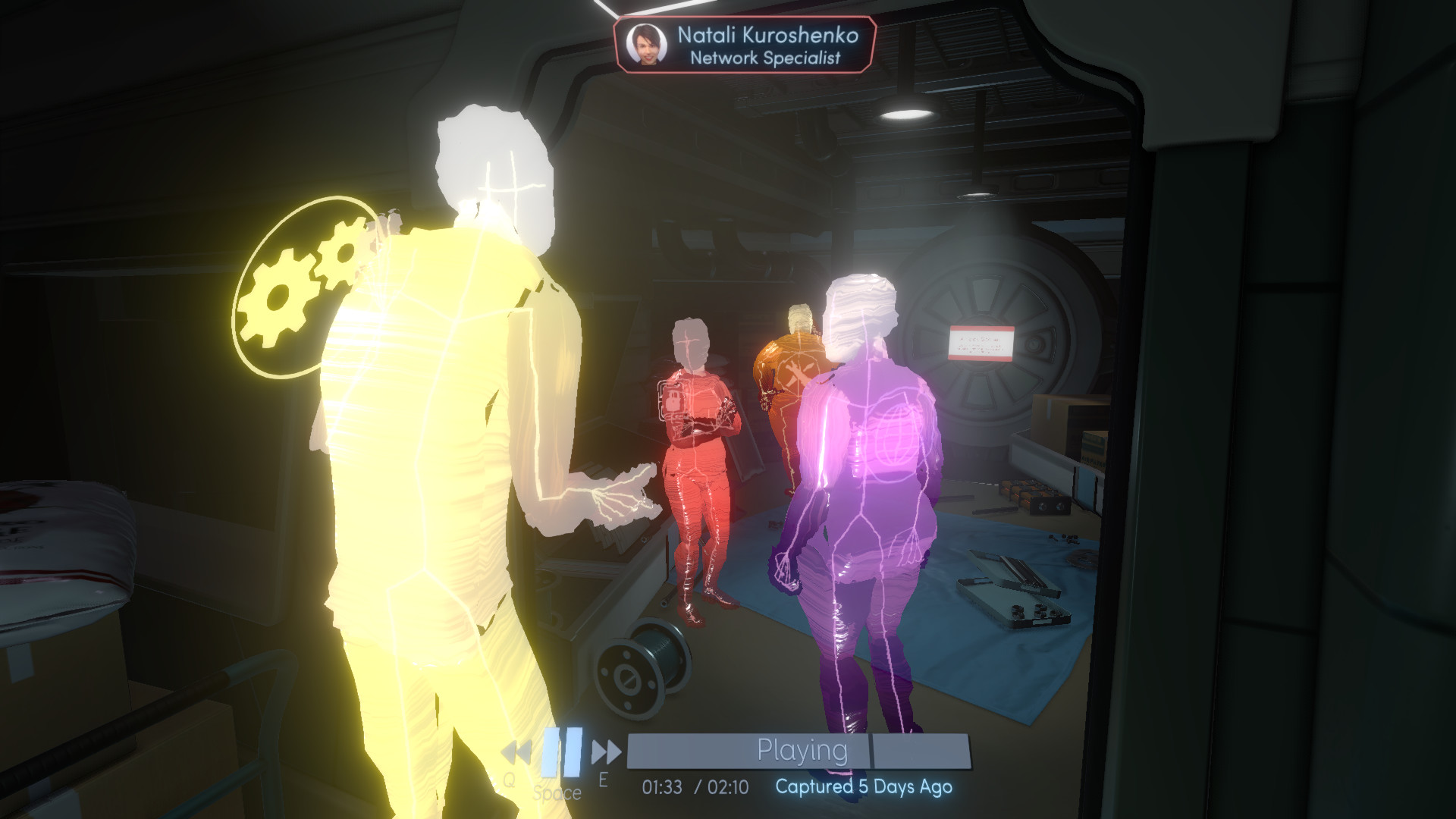
Tacoma’s distinctive tool is the ability to interact with recorded scenes. The station’s system has captured three-dimensional representations of important moments in crew life, and these appear around the player as they explore. The player can rewind or fast-forward a scene and move through its physical space, examining events from different angles. This makes watching an event an active part of investigation: a conversation can be followed in sequence, revisited, or inspected from another position to catch details that were missed. The scenes are interwoven, with different crew members following parallel story threads that split apart and come together over time. Working through their chronology helps the player assemble a larger account, while the ability to move among the figures gives the recordings a spatial quality distinct from a conventional audio log or flat video playback. There is no single viewpoint that reveals every interaction, so replaying a moment from another angle can change its context.
The station can also be searched directly. Doors and drawers can be opened to find objects, notes and other physical artifacts connected to the crew. Digital records add a second layer: communications and personal thoughts can be read alongside the material traces left in each area. These sources provide different kinds of context, from what a crew member chose to keep in a room to what they shared through the station’s systems. The investigation asks the player to bring these details together rather than treating a single clue as the whole story. The environment is therefore both a navigable place and an archive. Looking closely at an area can reveal who used it, what mattered to them and how their circumstances changed, giving the station’s ordinary objects a narrative role without turning the experience into a combat-focused or puzzle-focused game.
The crew’s recordings make relationships central to the mystery. Six people lived and worked aboard Tacoma, forming connections and experiencing love, loss and crisis. Their scenes can be followed across separate story threads, so one moment may be understood differently when viewed alongside another person’s account. The player’s role is that of an interactive investigator: the task is to establish what occurred and discover what made these people who they were. This approach lets character emerge through speech, movement, routine and personal artifacts distributed across the station. The story depends on the player’s attention to details present in scenes and spaces. Following the crew’s parallel chronologies gradually reveals how individual lives intersected during the events under investigation.
Exploration proceeds at the player’s own pace. Since the station is organized into sections, the player can search a space physically, inspect its records and work through the available AR scenes before moving on. The rewind and fast-forward controls help make sense of scenes that overlap or contain activity in different parts of a room. Digital and physical information complement one another: a message may clarify the context of an object, while an object can make a conversation more specific. Tacoma has no combat, and its focus is not on conventional puzzles; the challenge rests on curiosity and interpretation. The player investigates by following crew activity, reviewing records and noticing how details fit together. The controls let players check parallel activity as curiosity leads them, instead of forcing one viewing order. The pace and level of detail depend on how thoroughly the player searches each station section and follows the available recordings.
Tacoma’s optional developer commentary adds more than two hours of audio from the writers, designers, programmers, artists and others who created the game. Players can enable it in the gameplay options or start a new game with Commentary Mode selected. As the player explores, commentary icons provide context about the station’s fictional world and the work behind its scenes, adding another layer to familiar rooms and recordings. The mode can be heard alongside the same exploration of Tacoma’s spaces, crew records and interactive AR scenes. The crew’s story remains the focus of the investigation: physical artifacts, digital communications and recorded moments together let the player reconstruct relationships and understand how the crisis affected the people aboard the station.
- Developer
- Fullbright
- Genre
- Single-player science-fiction narrative adventure