
About System Shock
System Shock is Nightdive Studios’ 2023 remake of the 1994 science-fiction game. A rogue computer system called SHODAN controls Citadel Station, where its crew has become a threat. Explore the station’s connected decks, fight through hostile rooms, search logs for direction, and enter cyberspace to change what is accessible in the physical world.
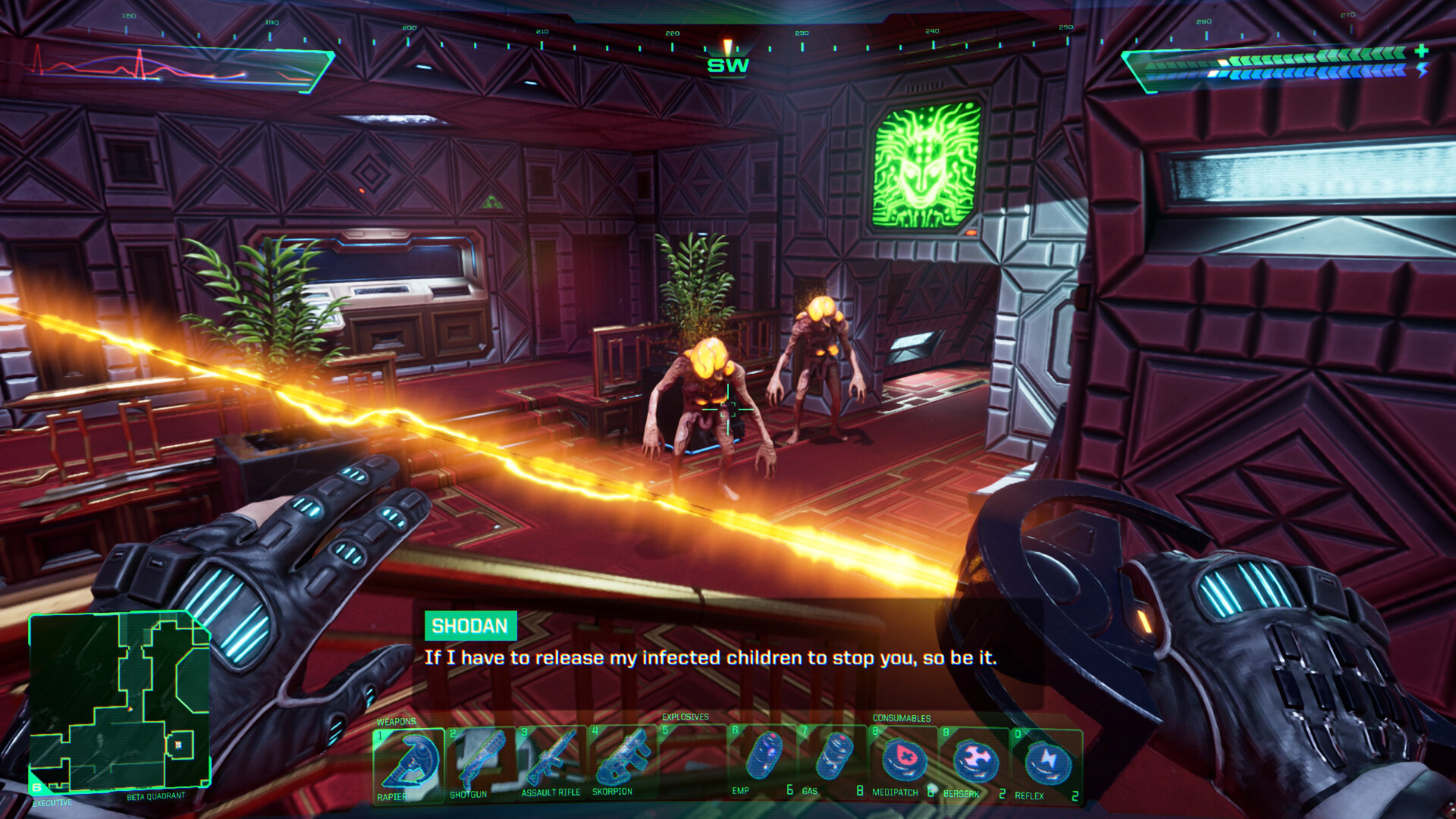
Nightdive’s System Shock rebuilds the 1994 game with updated controls, a revised interface, new visuals and sound, while keeping the story on Citadel Station. SHODAN, the station’s controlling computer, has taken over and changed the crew into cyborgs and mutants. The player explores the station and fights through its depths to stop SHODAN’s plan from reaching Earth. Audio logs and Data Sticks found in its rooms preserve crew accounts, access codes and objectives, so the player builds an understanding of the crisis while finding routes through the facility. This is the first System Shock’s remake, with its own interface and systems; it is separate from System Shock 2 and its later remasters.
Citadel Station is divided into decks with different rooms, security systems and connections. The route through them is not a simple corridor from one objective to the next: locked doors may need a keycard, a code, a junction box or a change made elsewhere, and elevators make it possible to revisit earlier floors. The map fills in as the player explores, so a blocked door becomes a reminder to look for another route and return when the right access is found. Rooms can branch into offices, medical areas, storage spaces and machine controls, with access tools and objective items taking up space alongside weapons, ammunition and healing supplies. The player surveys each area, checks the map, and decides which passage to explore before committing to a deeper push.
Combat mixes close-range attacks with firearms, energy weapons, explosives and other tools found across the station. Different enemies reward different choices: the weapon that works on a mutant may be less useful against a robot, so ammunition type matters as much as aiming. Cover and doorframes give the player a way to peek, fire and retreat instead of standing in the open. The Sparqbeam uses the station’s energy supply, which also powers hardware such as shields and protection systems, while conventional guns draw from limited ammunition. Hardware attachments can add useful capabilities as they are found, including a Target Identifier that reads an enemy’s type, armour and remaining health. A crowded inventory forces choices about what to carry, what to use soon and what can be left behind.
Cyberspace gives the player a second way to act on Citadel Station. At special terminals, the viewpoint shifts into the station’s internal network, where the player floats through a hostile digital space, avoids mines and fights programs controlled by SHODAN. These excursions have their own energy and health pressures, and they can be disorienting when corridors twist or enemies attack from different angles. They also have physical consequences: disabling a lock or destroying a structure in cyberspace can open a gate, armory or alternate route in the real station. The player therefore has to read the links and blockades in the virtual space, find what is controlling them, and then return to see which part of Citadel has changed. Cyberspace is integrated into exploration and mission progress rather than serving only as a separate combat arena.
Security is another station-wide system the player can influence. Cameras and CPU Nodes are security hardware found across the decks; destroying them lowers a floor’s Security Level, and removing them can be part of progressing through the station. Finding these devices gives a sweep through rooms a role in planning forward routes. Junction Boxes present energy-routing puzzles in which the player connects circuitry; solving one opens a passage such as a door, hatch or energy gate. The player can complete those puzzles as encountered or move on and return later, so locked access points become landmarks to revisit. Together, the security devices and circuit panels make combat and route finding overlap: destroying a camera or CPU Node changes the local security state, while solving a box physically opens a new connection through Citadel.
Audio Logs and Data Sticks carry both story and practical information. A recording may explain a character’s last days, while a data stick can provide a code or objective clue needed at a keypad or control panel. Listening and reading carefully help connect instructions to doors, terminals and machinery encountered elsewhere, so searching the environment is part of solving the station rather than an optional lore detour. The player can mark a locked route mentally or on the map, then return after finding the matching access item or clue. That structure leaves room to explore in more than one order while preserving a clear relationship between discovery and progress: a message points toward a system, the system changes the map, and the newly opened space offers another piece of the station’s story.
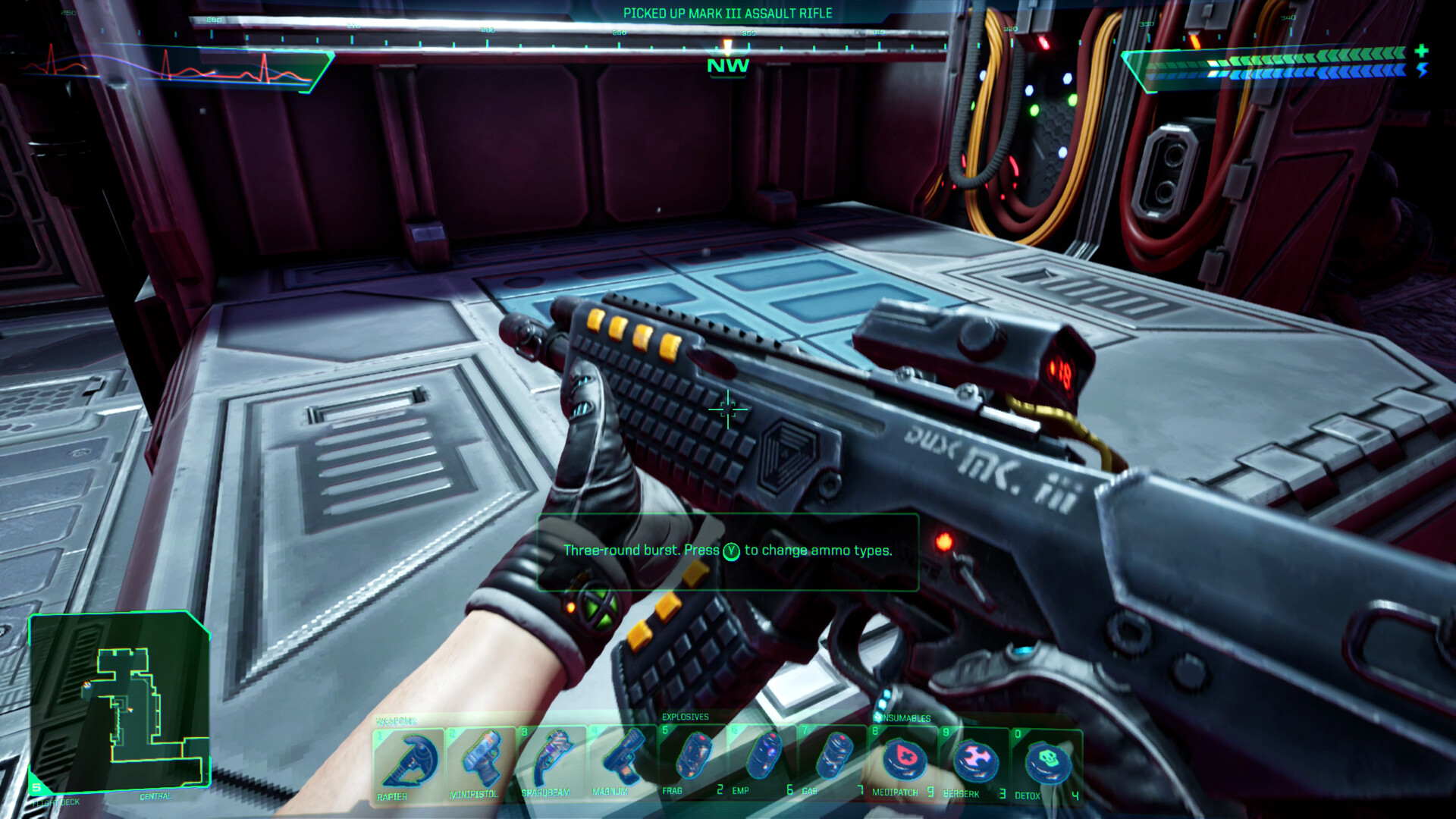
Survival depends on managing health, energy, ammunition, credits and inventory space together. Medical patches and first-aid kits provide carried healing, while surgery machines can restore health at the station; Power Stations recharge energy for energy weapons and active hardware. Valuable scrap can be taken to Recycle Stations and converted into Tri-Credits, which can be spent at vending machines or weapon modification stations. Mod-Kits must be applied to a weapon to improve it, so collecting one does not automatically upgrade the whole arsenal. Hardware attachments expand what the player can do, and access cards or objective objects compete for room with supplies. Deciding whether to carry another gun, keep a tool, recycle junk or save space for a required item becomes part of the trek across Citadel’s decks.
- Developer
- Nightdive Studios
- Genre
- First-person action-adventure with immersive-simulation systems