
About Sword of the Sea
As the Wraith, surf across a desolate world on the Hoversword and restore the sea buried beneath its shifting landscapes. This atmospheric adventure makes movement its central activity, using ramps, ruins, restored waters and returning marine life to reshape how the world can be crossed.
Sword of the Sea follows the Wraith, a figure resurrected in a barren and abandoned realm. Their task is to bring life back to a world where a vast ocean has been buried beneath moving waves of sand. The journey crosses the Necropolis of the Gods, a place of submerged tombs, shipwrecks, petrified battlefields and ruins shaped by an ancient culture. The Wraith travels through these remains on a Hoversword, a magical board that makes surfing the landscape the core of the adventure. The premise links forward movement to restoration: as the Wraith explores the desolation, they seek to revive the sea and the creatures that once lived within it.
The Hoversword combines movement ideas associated with snowboarding, skateboarding and hoverboarding. The player builds momentum, carves across slopes, catches air from ramps and performs tricks while moving through the environment. Ruins are arranged like skateparks, with halfpipe-like tombs, fallen statues and the chains of old machines providing surfaces to ride or grind. The board is not just transport between story events; learning how to move with speed and control is the primary way the player engages with the world. Open stretches invite acceleration, while obstacles and structures turn the route into a place to launch, balance and redirect that momentum.
Exploration begins in a wide desert playground where the player can become familiar with the board and its tricks. As the Wraith travels farther, skatepark-like ruins reveal ramps, wall rides and hidden secrets. The world changes as restoration progresses, carrying the player through places that extend beyond sand, including windswept snowfields and glacial mountains. The constant undulation of the terrain gives each region a different flow of slopes and surfaces. The player must read the shape of the ground to keep moving smoothly, using speed and maneuverability to cross broad spaces and to reach routes built into the ruins.
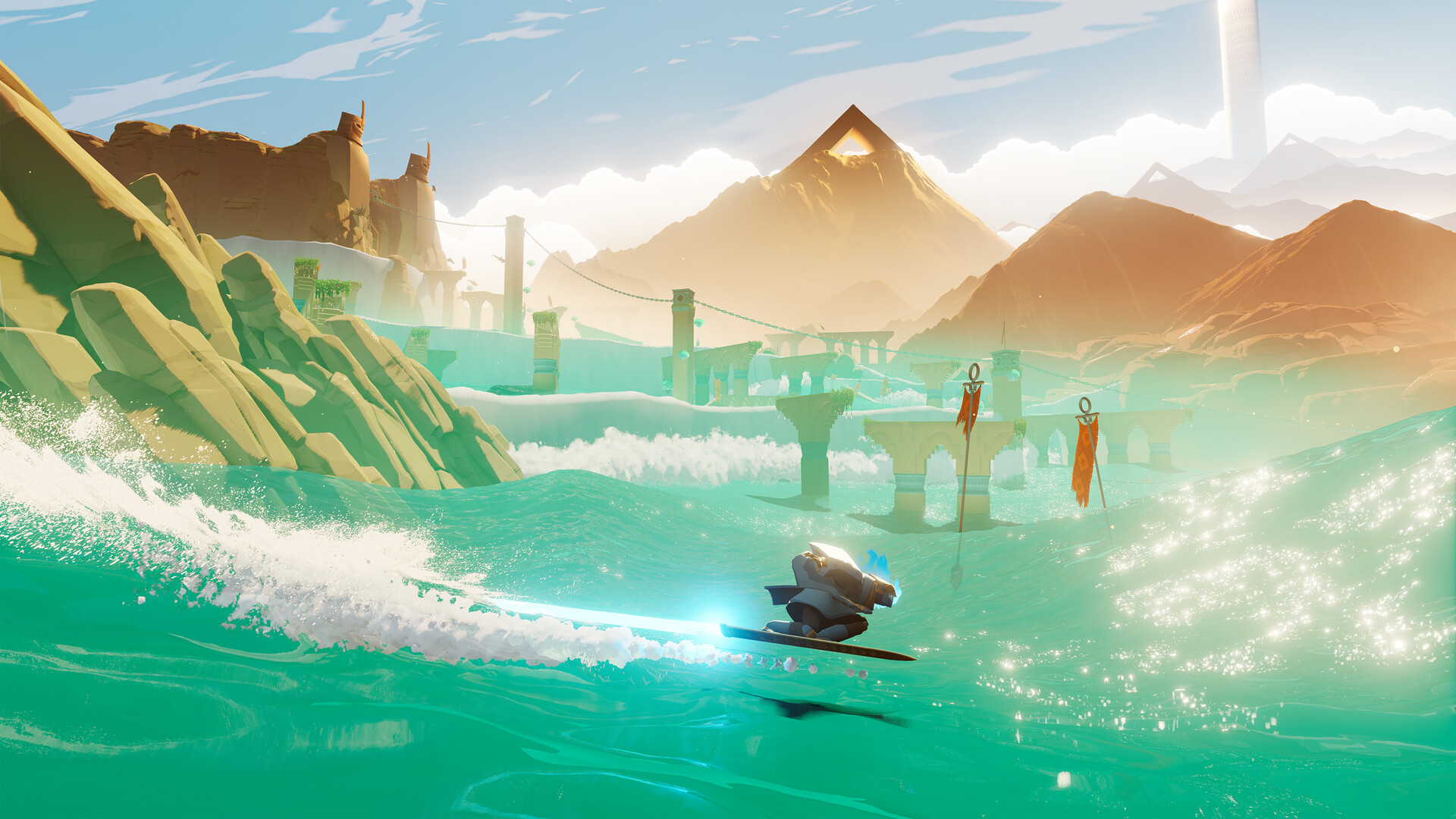
Ocean Seeds mark important points in the effort to revive the landscape. When the Wraith restores one, water and marine life return to a section of the world, transforming dry dunes into green-blue oceans and bringing fish and kelp forests back to forgotten places. This visual change affects how the player moves. The Wraith travels faster on water, which makes larger jumps and more elaborate tricks possible. The restored sea therefore changes the physical character of a route as well as its appearance. Areas that first seemed like lifeless sand become flowing spaces where the player can gain speed and continue the journey in a new way.
The returning sea life also becomes part of traversal. Schools of fish move through the revived waters, while larger creatures can offer different opportunities. Buoyant jellyfish work like jump pads, sending the Wraith upward, and long stretches of seaweed can be climbed to gain height. Orcas and dolphins may follow the Wraith or provide a ride. These encounters make restoration tangible: the world is not simply repainted after an objective, but gains living elements that interact with the player's movement. Gliding through shoals, bouncing from a jellyfish or riding alongside a larger animal gives the restored ocean its own rhythms and routes.
While surfing supplies the game's energy, Sword of the Sea frames the journey as atmospheric exploration. The Wraith moves through monumental spaces that encourage the player to slow down and take in architecture, lighting, color and landscape. Secrets lie within the skatepark-like ruins, and uncovering the history of the Necropolis accompanies the effort to bring back its ocean. Massive leviathans also inhabit the land and can stand in the Wraith's way, lending danger to an otherwise fluid journey. The adventure shifts between bursts of speed and moments of quiet observation, using movement to connect the player to the changing environment.
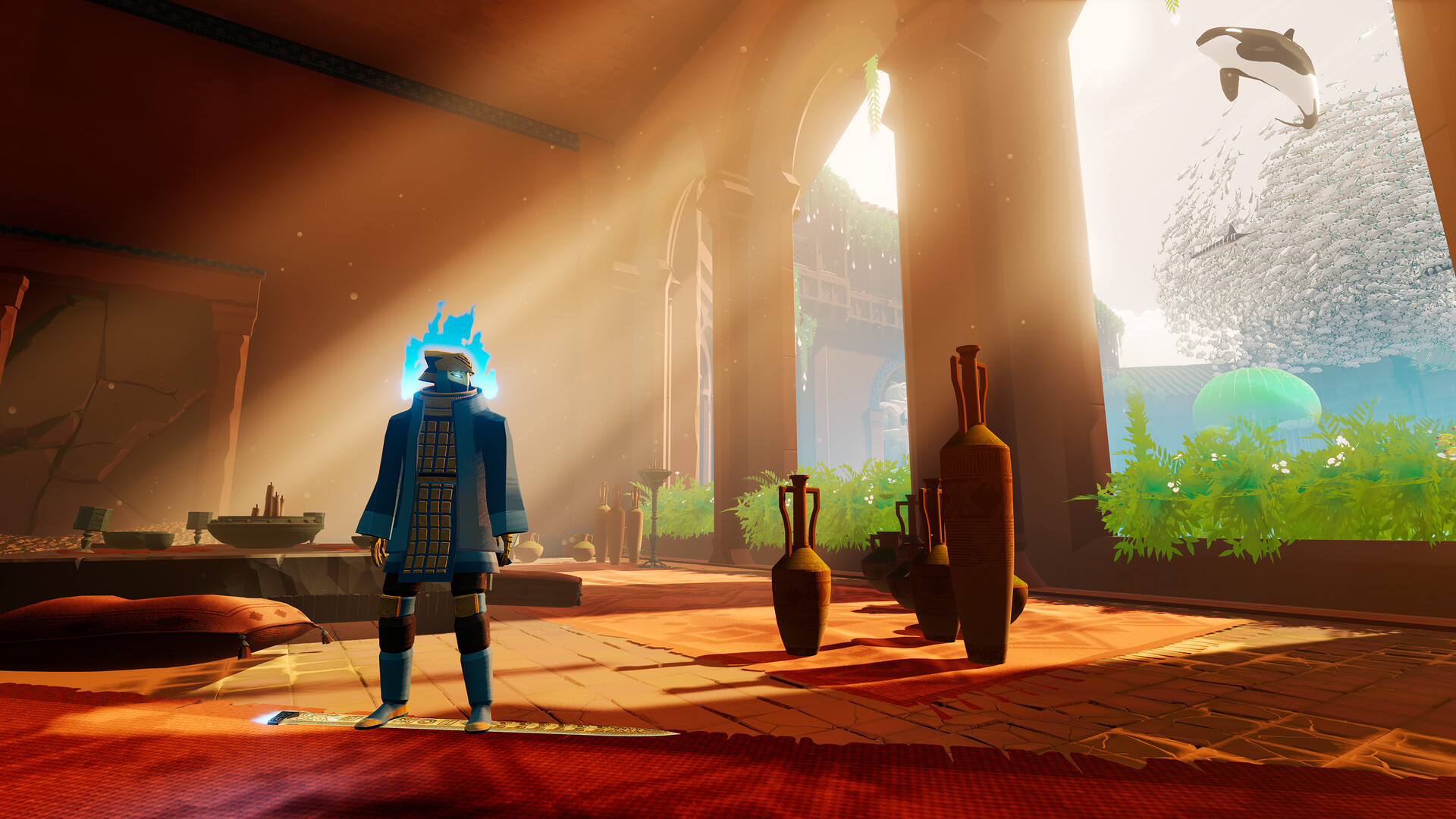
The game's world design gives its central action a clear purpose. Ramps and walls create opportunities for tricks, ruins reveal places to explore, and restored water changes the speed at which the Wraith can cross the terrain. The player is encouraged to experiment with the Hoversword's expressive movement while following the path of restoration from one area to another. Rather than focusing on a large collection of separate combat systems, the adventure centers on momentum, flow and environmental discovery. The score by Austin Wintory accompanies this progression, and the art direction distinguishes barren expanses from the vivid life returning to them.
Sword of the Sea brings together a simple objective and a movement system that influences nearly every part of play. The Wraith surveys a desolate land, finds opportunities to restore its waters, then surfs across the resulting landscape as it changes. Speed provides exhilaration, while the scale of the ruins and the reappearance of marine life invite pauses to look around. Each restored region offers a different relationship between sand, water, wildlife and the Hoversword. The result is an adventure in which exploration is not separate from the act of surfing: the board is how the player discovers the world, and the revived world continually changes the ride.
- Developer
- Giant Squid
- Genre
- Surfing adventure