
About Superliminal
Superliminal is a first-person puzzle game set inside a lucid-dream therapy program. Rooms turn perspective into a practical tool: objects can change scale when picked up and placed, while painted surfaces and optical illusions make familiar routes behave unexpectedly. Dr Glenn Pierce’s guidance accompanies a journey through an increasingly unstable dreamscape.
Superliminal begins after the player sees a late-night television commercial for Dr. Pierce’s Somnasculpt dream therapy program and falls asleep. Waking inside the program’s dream, the player moves through a sequence of designed spaces while trying to find a way out. The setting starts with the ordered appearance of a clinical treatment environment, but doors, corridors and rooms become less dependable as the dream proceeds. Dr Glenn Pierce speaks through the experience and attempts to guide the sleeper home. An automated assistant is also part of the program, though it does not understand why the player is present and has plans of its own. That tension between a calm therapeutic script and an unpredictable dream world gives the puzzle rooms their context without changing the basic task: inspect the space, work out its rules and reach the next exit.
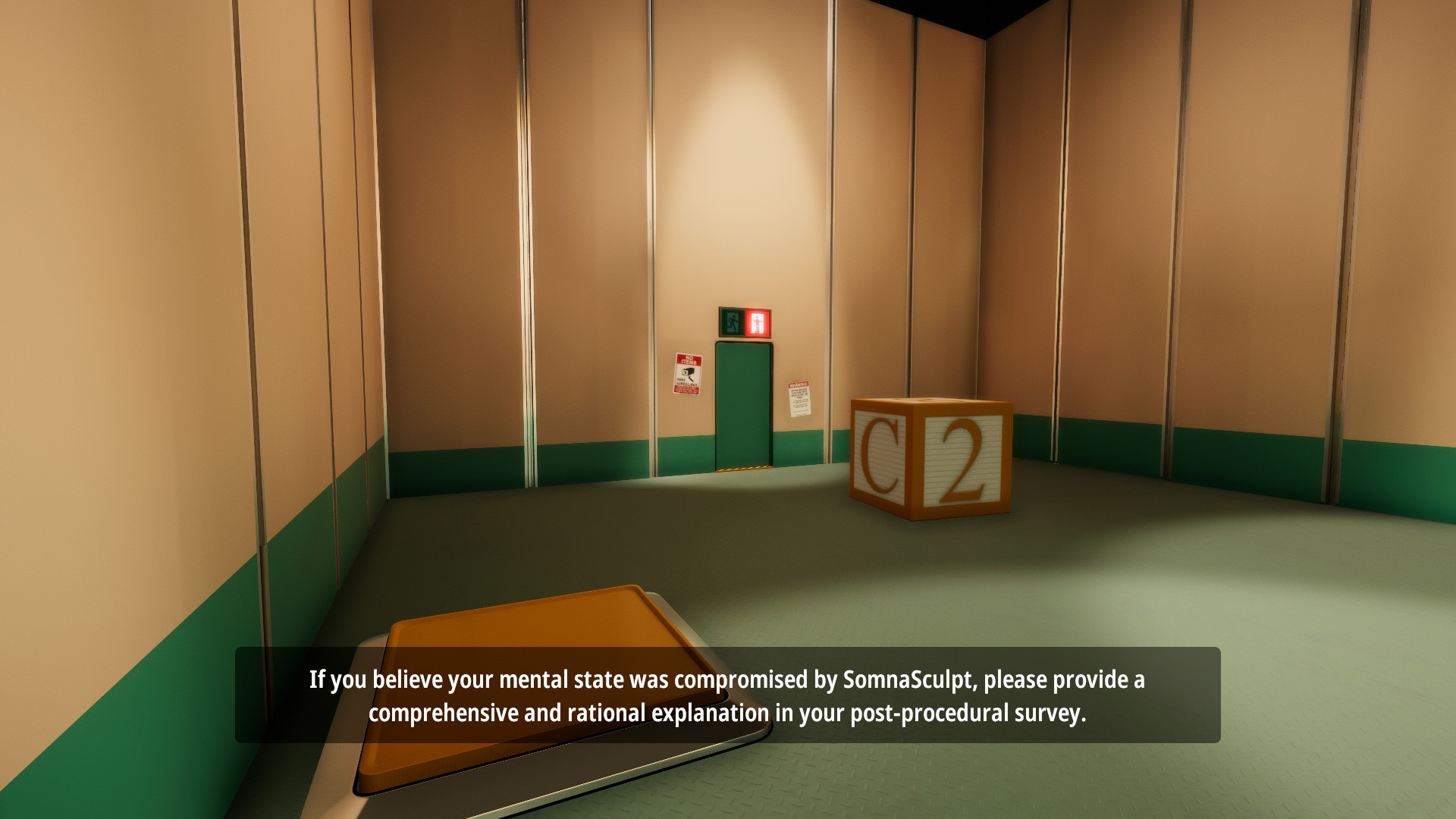
The main tool is forced perspective. When you pick up an object, its apparent size on screen becomes the size the game tries to preserve as you move it to another distance. A small chess piece held close can therefore become a large object when placed farther away, while a distant object can be brought into reach at a reduced scale. The key is not simply to collect and carry items; it is to frame them from a useful position, hold them, and place them so their resulting physical dimensions suit the puzzle. A block may become a step, a platform or a way to reach a higher surface. The same object can serve different purposes at different scales, so it helps to compare its silhouette with the gap, ledge or doorway that needs attention before setting it down.
Scale changes work alongside ordinary movement and environmental objects. Some rooms ask you to create a climbable route, while pressure plates and doors make object placement matter for more than height alone. Because a large or small object can alter both the route and the way it rests in a space, you need to think about where it will land as well as how it looks from your current viewpoint. The game includes a clambering movement to make the boundary between a successful climb and a failed one clearer. That matters in a puzzle built around continuous changes of size: if a ledge is just out of reach, a slightly different object scale can change whether the next step is possible. The result is a loop of spotting an obstacle, testing a perspective and using the transformed object to move onward.
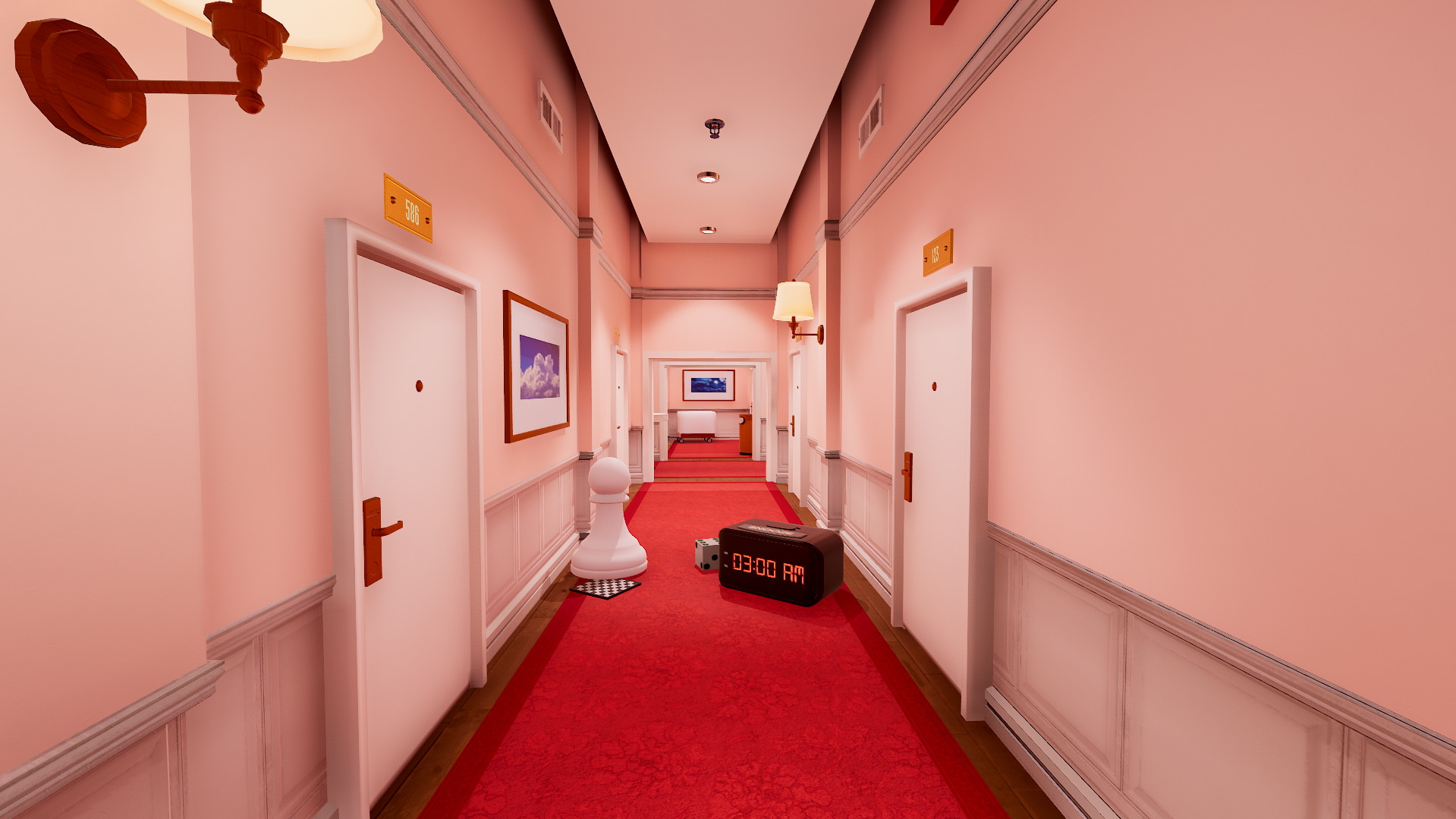
Not every apparent object is a normal three-dimensional prop. Painted images can resemble openings or objects until a change in viewpoint shows that they are flat surfaces, and hallways can resolve into pictures rather than traversable space. These optical illusions make observation part of the movement puzzle: standing somewhere else may reveal which surfaces have depth and which only project the idea of it. The rooms use depth, shape and scale to redirect attention, inviting the player to check how a feature behaves instead of trusting its first appearance. Some tricks are visual clues, while others determine whether a route is real. Looking around the whole room therefore supports the hands-on mechanics. A wall, picture or distant shape may be part of the puzzle even when it is not something that can be picked up.
The dream’s progression builds from a small set of rules, then asks the player to reuse them in new combinations. Object resizing remains the central language, but each space changes what counts as a useful placement: an object that once helped with a simple climb may later interact with a switch, fill a gap or reveal a path by changing the scale at which the room is read. The surrounding architecture also becomes less trustworthy, so a solution can depend on identifying the actual boundary of a painted scene or recognising that two surfaces only appear connected. Dr. Pierce’s voice provides a human guide through the program, while the automated assistant introduces a second presence with a different understanding of the situation. Their roles frame the journey as a treatment session that has moved beyond its expected course, without requiring the player to stop solving rooms to follow the dialogue.
Beyond the main journey, the Steam release includes a Challenge Mode shaped around repeatable per-level goals. It scores runs using measures such as completion time, object grabs and jumps, giving players who want to refine their routes a different reason to revisit stages. The score changes what efficient movement means: a route that reaches an exit may still be improved by reducing the number of interactions or jumps. Steam Workshop support offers another play space, letting users bring 3D objects into the game and experiment with the same perspective tricks. Those features extend the basic idea into timed self-improvement and player-made objects, while the campaign remains a sequence of authored rooms that teach the player to treat visual scale and apparent depth as parts of the puzzle itself.
- Developer
- Pillow Castle
- Genre
- First-person puzzle game