
About SUPERHOT
SUPERHOT is a first-person shooter in which the world advances when the player moves. In stark, white and grey spaces, red figures close in with guns and other weapons. Each short encounter asks the player to read trajectories, reposition, use found weapons and survive while time slows around stillness.
SUPERHOT frames its action as a game inside a computer interface. A friend sends the player a cracked copy of superhot.exe, and the story moves between chat messages and the combat scenarios launched from it. The player reads and responds through a sparse command-line-like screen before returning to the first-person encounters. This framing keeps the narrative close to the act of opening and playing a strange program, while leaving much of its meaning for the player to piece together. Dialogue is presented through the interface rather than through a conventional cast moving through the arenas. The situations have the feel of abrupt action-film moments: a deal going wrong, an elevator under attack, or enemies converging.
The arenas use a stark visual vocabulary. Pale concrete-like rooms and ordinary objects form the setting, while hostile figures appear as bright red, faceless shapes that shatter when defeated. The contrast makes enemies, weapons and moving bullets easy to pick out as a scene unfolds. Chairs, cars, bottles and other objects can become useful parts of an arena when the player needs to interrupt an attacker or change position. The spaces are compact combat scenarios rather than large maps to explore. Their clean presentation gives the player visual information about an incoming shot and its direction, feeding directly into timing-based combat. Each small environment makes layout, line of sight and threat placement matter.
Time responds to the player’s movement. When the player stands still, events continue only very slowly; moving forward, turning, reaching or attacking advances the world. This rule lets the player pause to read a situation and then make a small adjustment while a bullet crosses the room. It does not make the player safe: enemies keep approaching, and actions consume time as they happen. Turning to face an attacker, stepping aside or reaching for a weapon each changes what can happen next. The player alternates between looking and acting, using brief movements to test a plan and longer movements to carry it out. Bullets leave visible trails that reveal their direction, helping judge whether to sidestep or change the angle of attack. Ordinary FPS actions become timing choices because the player decides how quickly the room advances by deciding how much to move.
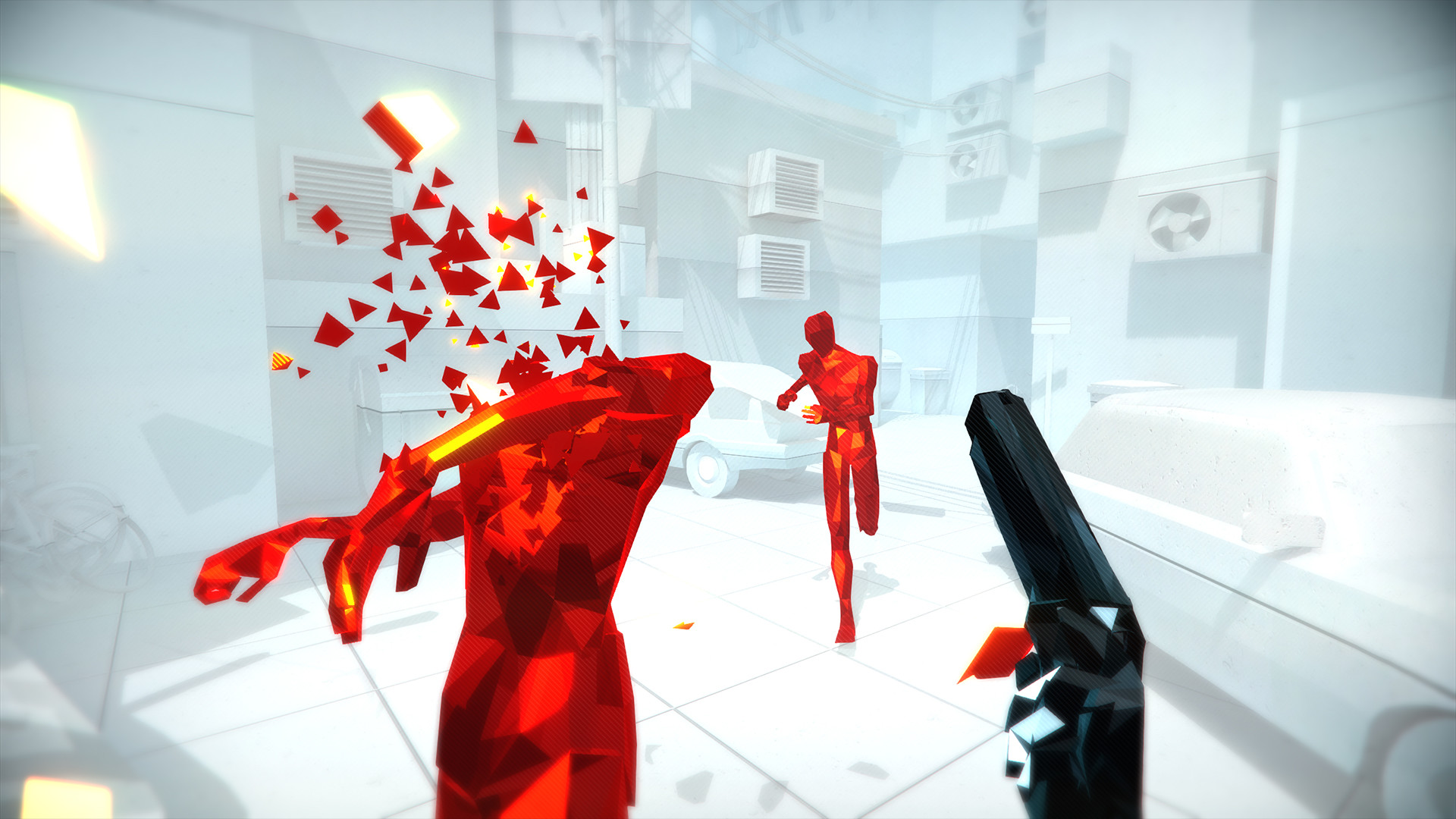
A scenario usually places the player outnumbered and outgunned, and a single hit is enough to end a run. Weapons are found in the environment or taken from fallen enemies; the game does not rely on convenient ammunition drops or reloading. When a gun runs empty, the player can throw it to strike an enemy and create a chance to grab another weapon. Throwing an object at an armed opponent can also knock their weapon loose. A pistol, shotgun or other pickup changes the distance and timing of the next exchange, but handling it takes movement and advances time. Melee attacks offer another way to disarm or finish a nearby enemy. The player weighs the benefit of a new gun against the risk of crossing a bullet’s path to reach it, chaining choices about position and equipment.
Objects in each room expand those choices. A bottle or other throwable can interrupt an enemy long enough for the player to move in, and a discarded weapon can itself become a projectile before it is replaced. The katana has a different role: it can cut incoming bullets out of the air, turning a defensive timing action into a way of reopening space. Picking up an item requires the player to reach for it, so collecting a weapon is not a menu choice outside the action. A firearm provides a short window of ranged attacks, while an object thrown at a target may create an opening to approach. The player combines these uses depending on enemy positions and the arena’s contents. Because the world barely moves while the player is still, there is time to assess the available objects, but the plan still has to be carried out through motion.
The campaign strings together short scenarios and introduces threats through changing layouts and positions. An elevator, bar or street can place enemies nearby, at a distance or in several directions. The player must eliminate attackers without taking a hit, then continue through the sequence. Death returns the player to the start of that firefight, giving another chance to adjust its opening moves. The rules stay consistent, but enemy placement makes each encounter a different spatial problem. After a fight, the game can replay the completed action in real time, showing movements that seemed nearly frozen as they happened. This recap makes the route through the arena visible as one action sequence and shows how the pauses and movements fit together.
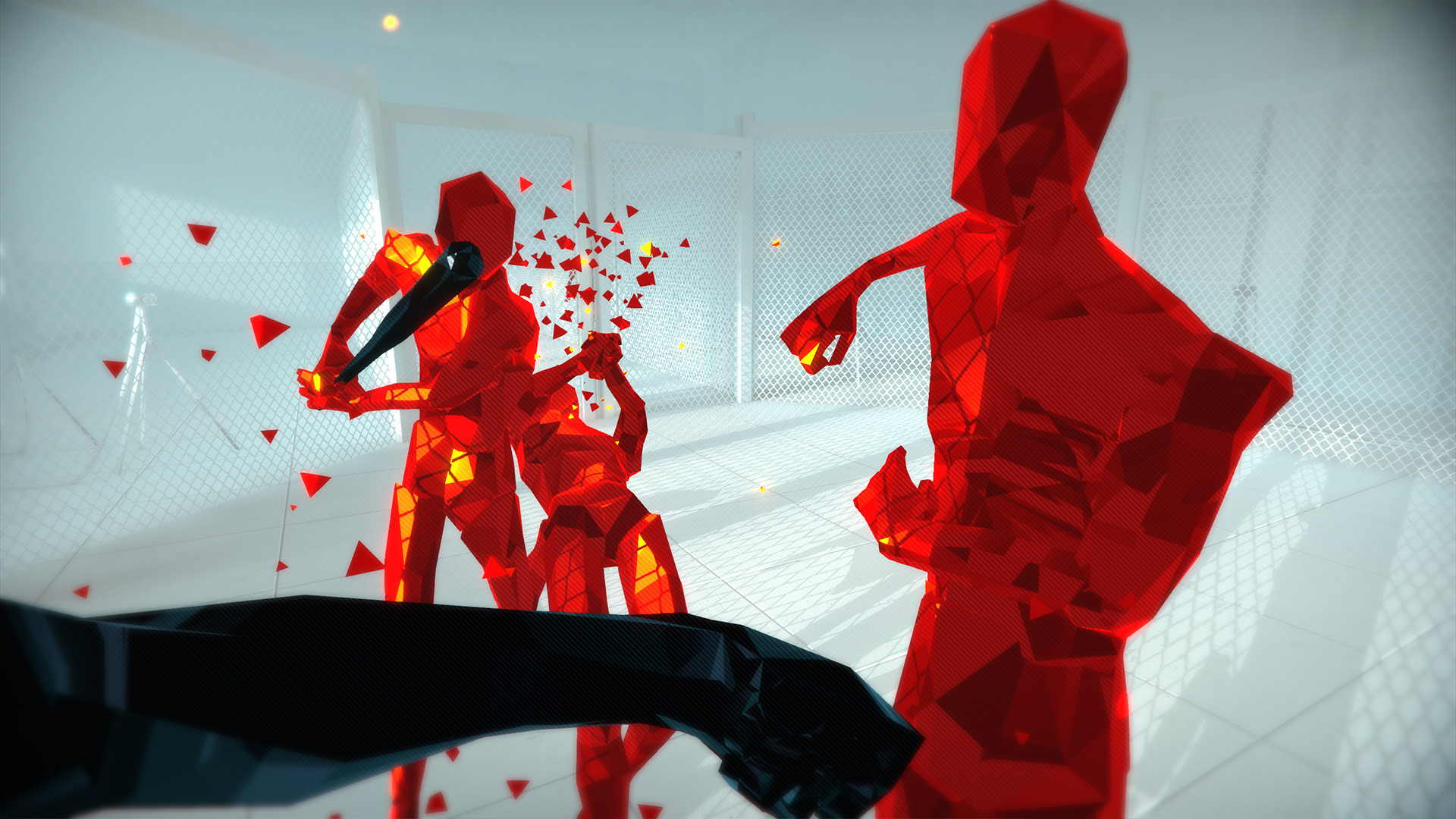
Completing the campaign opens additional ways to revisit combat. Endless mode asks how long the player can survive against waves of enemies, while challenge modes impose conditions such as speed runs, limited weapons or no restarts. Other extras include mini-games and ASCII art within the interface. These modes build on the same movement-driven time rule and one-hit danger, changing constraints rather than replacing the core actions. A challenge that limits weapons makes throws and melee more important; a no-restart run raises the cost of a mistake across encounters. Endless combat shifts attention toward surviving successive waves instead of progressing through the story sequence.
- Developer
- SUPERHOT Team
- Genre
- Single-player first-person shooter / puzzle-shooter