
About Subnautica
After crash-landing on the ocean planet 4546B, you must manage oxygen, food and water while exploring its reefs, caves and deep-sea biomes. Gather materials, craft diving gear and vehicles, build underwater habitats, and investigate the wreckage and strange structures that may explain what happened here.
Subnautica puts you in a damaged Life Pod above an alien ocean and makes the surrounding water your route to almost everything. The first dives are short: swim down, collect nearby materials, catch something to eat, then surface before your oxygen runs out. The shallows offer coral, kelp and small caves, but the seabed quickly opens into plateaus, larger reef areas and darker passages. There is no fixed route that takes you through the whole ocean. Instead, radio messages, wreckage and unusual landmarks give you reasons to choose a direction, while the shape of the terrain and the equipment you carry determine how far you can safely go. Each trip balances curiosity against the practical need to get back with supplies intact.
The basic survival loop connects directly to exploration. A Fabricator in the Life Pod turns gathered resources into tools, containers and supplies; fish and plants can provide food and water, and a knife lets you harvest some materials from the environment. Oxygen capacity, fins and lights make a difference to how long a dive lasts and what you can see. Scanning fragments found around the ocean unlocks blueprints, so a wreck or abandoned piece of machinery can lead to a new tool or vehicle rather than just another scrap pile. As recipes become more demanding, you have to range farther from the Life Pod, learn which materials occur in which places, and carry enough space and equipment to make the trip worthwhile.
Depth changes what a familiar tool or vehicle can do. The upper ocean lets you survey reefs by swimming, but deeper trenches and cave networks bring longer trips, tighter routes and pressure limits. Building a Seamoth gives you a fast small submersible for surveying the mid-depths; later, the larger Cyclops can carry supplies and a smaller vehicle such as the Seamoth, extending how far you can organize an expedition from the Life Pod. A vehicle does not remove the hazards: it changes the scale of a trip and gives you more options for carrying gear, while the ocean remains dangerous outside its hull.
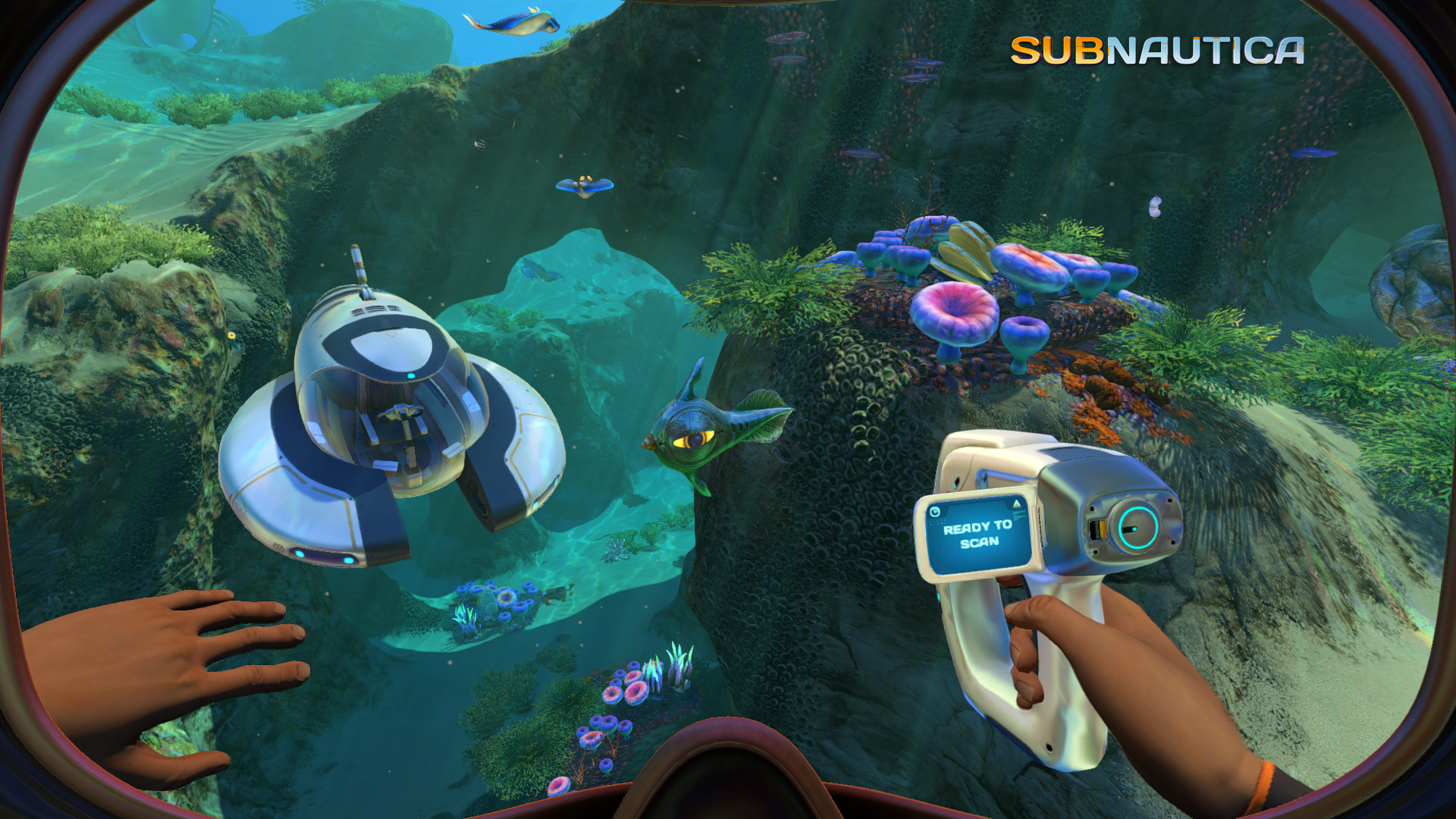
Underwater bases turn a chosen patch of seafloor into a useful stop between excursions. With the Habitat Builder, you place modular rooms, corridors, hatches, windows and foundations, then connect them into a layout that suits the site. Depth and construction affect hull integrity: more compartments and weaker sections such as windows reduce the structure’s margin, while reinforcements raise it. If the hull fails, the base can flood until you repair breaches and restore integrity. Power is another practical constraint, since equipment such as Fabricators needs an active generator. Once a base is running, it can store materials, replenish oxygen and shelter a vehicle, letting you work farther from the Life Pod without hauling every resource back across the map.
The ocean’s wildlife is part of how you read each area. Small fish can be food, while plants and animals also yield crafting materials; larger creatures can block a route or make a dive much riskier. The game offers tools for manipulating the environment, including a Propulsion Cannon that can grab, push, drag or fling smaller objects, and the ecosystem can sometimes help you distract a threat. These options create choices about distance and timing instead of turning every encounter into a fight. You have to judge whether to swim around a creature, use the terrain to break line of sight or turn back for better equipment. The sea’s life is therefore part of the navigation problem as well as the resource loop: knowing what lives in a biome helps you decide how to cross it.
The story develops through signals, abandoned equipment, data and alien structures scattered through the world. Your PDA records information gathered from scans and discoveries, giving you a way to revisit details about the organisms and technology you encounter. Lifepod signals and wreck sites can direct you toward other survivors’ traces or useful supplies, but the ocean remains open for detours: you can follow a signal, investigate a cave entrance you passed earlier, or return to a biome once you have a longer-range vehicle. The larger questions—why the ship came down, what the structures are for and what is affecting local life—emerge alongside the practical work of staying alive. Exploring the planet and understanding the crash are intertwined, since evidence often lies beyond the depth your current equipment can reach.
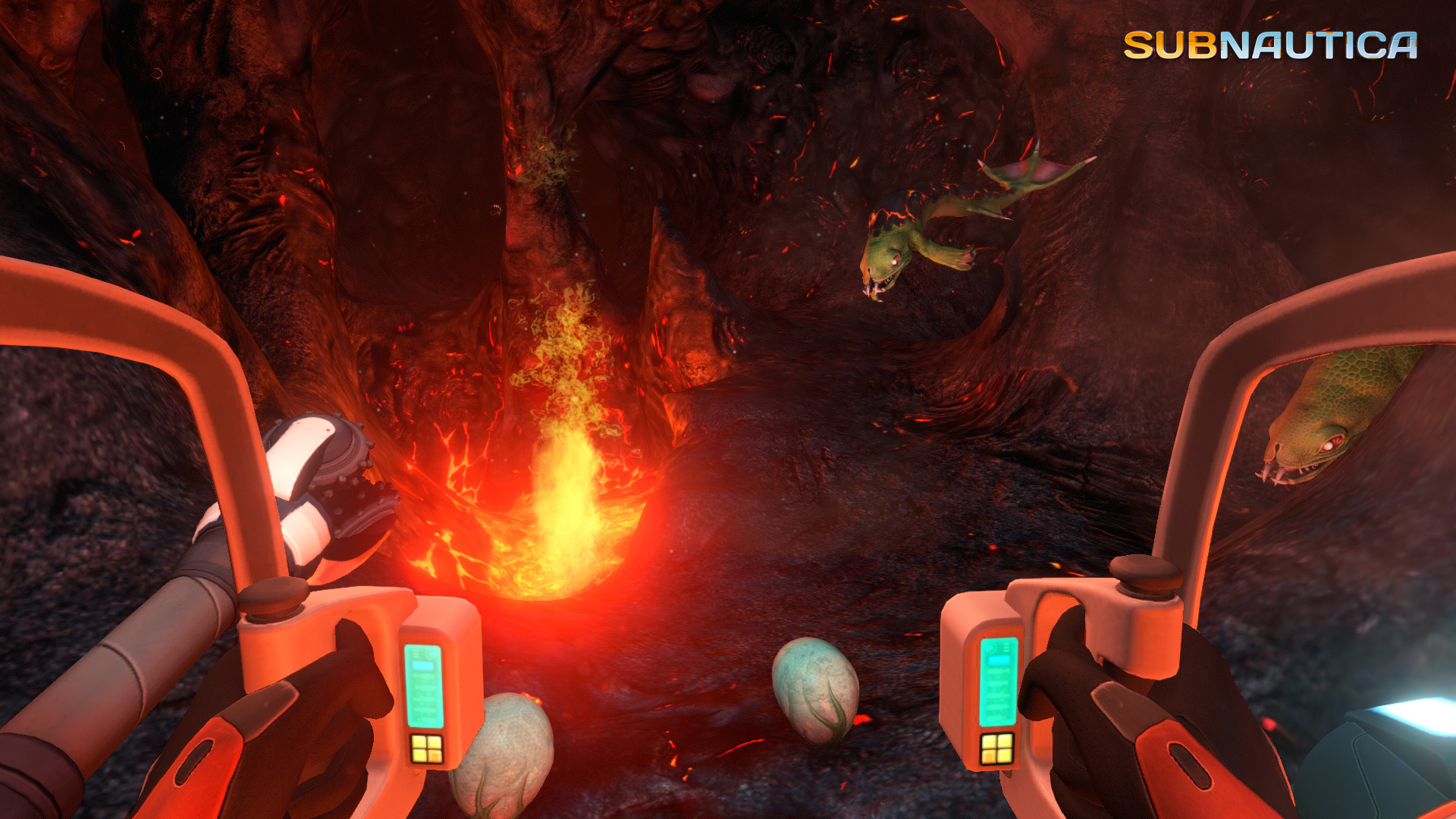
Progress is measured through access and knowledge more than a conventional character-level system. Finding fragments expands the fabrication menu; crafting a better oxygen tank, vehicle or depth upgrade makes another band of the ocean reachable; building a base gives you a forward point to organize the next descent. Those steps feed one another. You may find a blueprint while searching a wreck, then need rare materials from a deeper biome to build it, and finally use the finished equipment to reach a place that was previously out of range. The route is yours to manage, including how much to gather, where to set up a habitat and whether to travel in a small sub or a larger submarine. The pressure to prepare comes from oxygen, depth, hostile wildlife and the size of the world.
Light changes the practical shape of a dive. Subnautica’s day-and-night cycle alters the ocean’s visibility, with darkness making familiar routes harder to read and some areas more dangerous to cross. You have to keep an exit in sight, watch your oxygen and avoid losing orientation inside a winding passage. An expedition that is straightforward in clear light can become a slower search through shadow, with a longer swim back to your vehicle or habitat.
- Developer
- Unknown Worlds Entertainment
- Genre
- Underwater open-world adventure and survival crafting