
About Subnautica: Below Zero
Two years after the first Subnautica, researcher Robin Ayou returns to Planet 4546B to investigate the disappearance of her sister Sam. Subnautica: Below Zero pairs underwater exploration and survival with an arctic land expedition, as Robin searches abandoned Alterra facilities, studies unfamiliar life, builds habitats and vehicles, and follows clues about the region's past.
Subnautica: Below Zero is a separate full game set two years after the events of Subnautica, on the same planet, 4546B. Researcher Robin Ayou travels to its polar region to investigate what happened to her sister Sam. Alterra has withdrawn from the area after a mysterious incident, leaving research stations, equipment and records scattered across an environment that is difficult to cross safely. Robin's investigation develops through exploration and the information she uncovers in the world, rather than through a sequence of missions from a settlement. Logs and databanks preserve fragments of the scientists' work, while abandoned installations and alien structures suggest that the human research was only one part of the region's history. The story keeps Sam's fate and the older alien mystery as reasons to continue exploring without making this an episode of the first game's escape narrative.
The map combines an arctic ocean with exposed snowfields and caves, so movement changes between swimming and land travel. Underwater areas include the blue-lit gorges of Twisty Bridges, the tall vegetation around Arctic Kelp Forests, crystalline caverns and thermal vents; above the water, Glacial Basin brings snow, ice and weather into play. Each biome has its own shapes, resources and wildlife, and routes often pass through narrow channels or under ice. Land excursions have their own exposure problem: cold conditions drain warmth, so Robin needs suitable clothing or heat from sources such as Thermal Lilies. The Snowfox hoverbike gives her a way to travel over snow, while the environment still requires close attention to shelter, hazards and the route back to water. The alternation means a supply run can include two very different kinds of exposure and navigation.
Diving is constrained first by oxygen, then by depth, distance and hostile animals. Robin must surface or return to an oxygenated base before her tank empties; deeper trips consume oxygen faster, which makes a longer route costly even when the destination is visible. Some Below Zero creatures provide additional air: an Oxygen Plant contains a bubble that can be used underwater, and the large Titan Holefish carries oxygen within its body. These are local breathing opportunities, not substitutes for planning a return path. Scanning and collecting help expand what Robin can make, while better equipment improves how far she can safely travel. Food and drink also matter during expeditions, and the cold above the surface adds a separate survival pressure. The player therefore balances time spent investigating a wreck or cave against the resources and air needed to get back out.
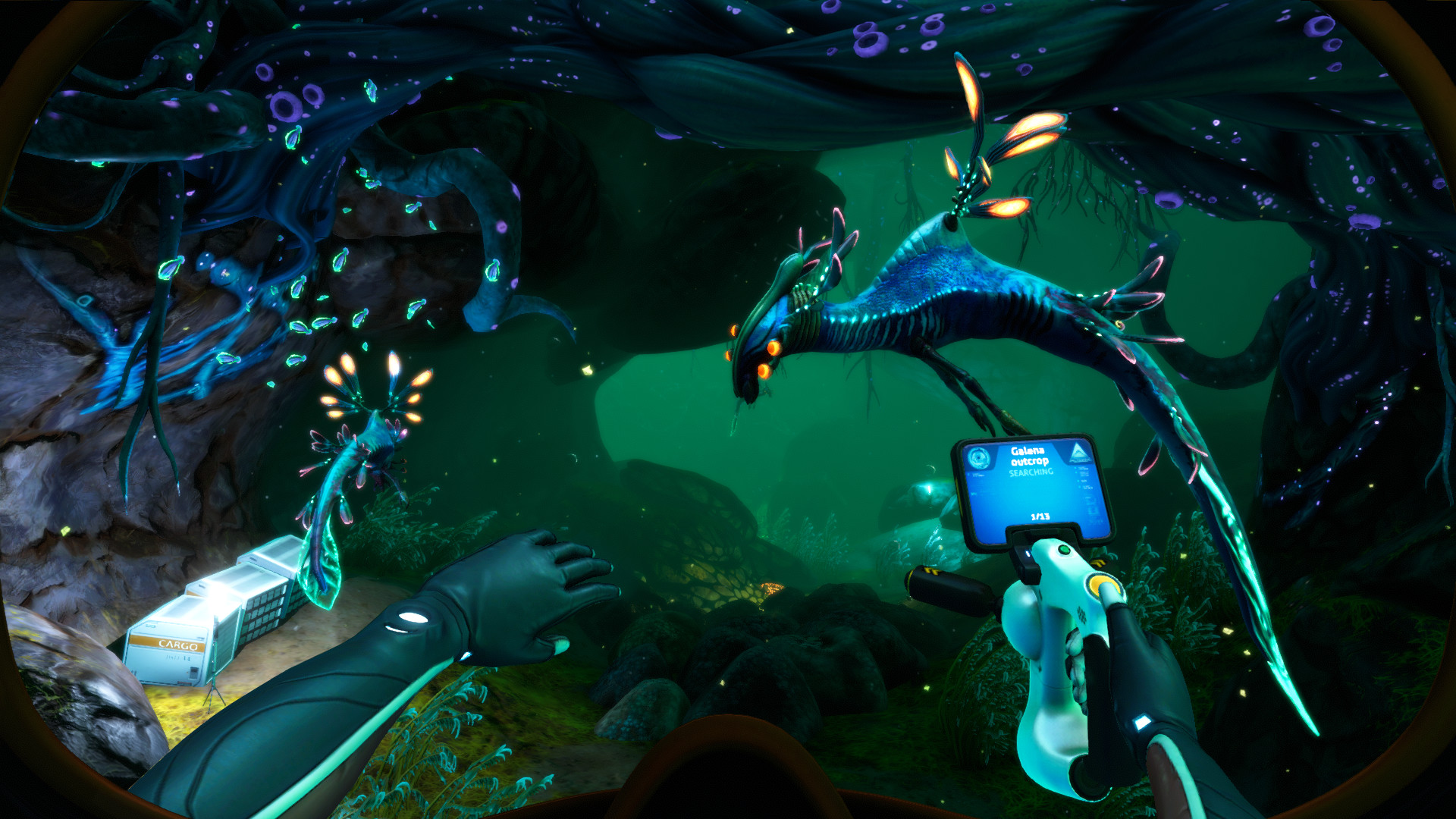
The Scanner turns fragments and unfamiliar objects into research that can unlock blueprints. Robin uses gathered materials at fabricators to produce tools and equipment, and uses a Habitat Builder to place rooms and fittings for a personal base. A base can become a safe point between expeditions, with storage and equipment that make longer trips practical. Construction depends on materials and structural integrity, while installed machinery also needs power. Solar panels draw on light and lose effectiveness at depth; a bioreactor uses organic material, and a thermal plant can draw energy from nearby heat. When a base runs out of power, installed equipment stops working and the base no longer supplies oxygen. Choosing a site and energy source therefore affects whether a habitat can support the next trip, rather than making it a decorative stop alone.
Vehicles extend Robin's reach and let the player carry exploration farther from a base. The Seatruck is an underwater craft built around a powered cab that can be linked to functional modules, so the player can configure a traveling setup for different needs. Adding modules brings utility and storage but also affects how the vehicle moves, creating a trade between capacity and speed. It can be upgraded to reach deeper areas, where the surrounding pressure and dangerous fauna make a vehicle more important. The Snowfox serves a different role on land: it crosses frozen ground where swimming gear is no help and connects separated surface locations. Both vehicles are made possible by discovered plans, components and crafting stations, so they represent earned steps in the exploration loop. The contrast between them also reflects Below Zero's divided terrain rather than reproducing the original game's vehicle lineup unchanged.
Large creatures make knowledge and avoidance part of survival. Some animals are passive or useful to observe, while others defend their territory or pursue Robin; scanning them adds information to her databank and can help the player understand the ecosystem. The Titan Holefish is both a living source of oxygen and one of the distinctive species in the polar sea, while Pengwings appear on the surface among the ice. More dangerous encounters, including the Shadow Leviathan, are presented as hazards in deeper regions. Robin can use tools, vehicles and terrain to manage distance, but not every threat is best approached as a fight. Looking for an alternate passage, timing a crossing, or retreating toward a vehicle can preserve equipment and supplies for the investigation. The life forms are part of the world's navigation and resource systems as well as subjects of study.
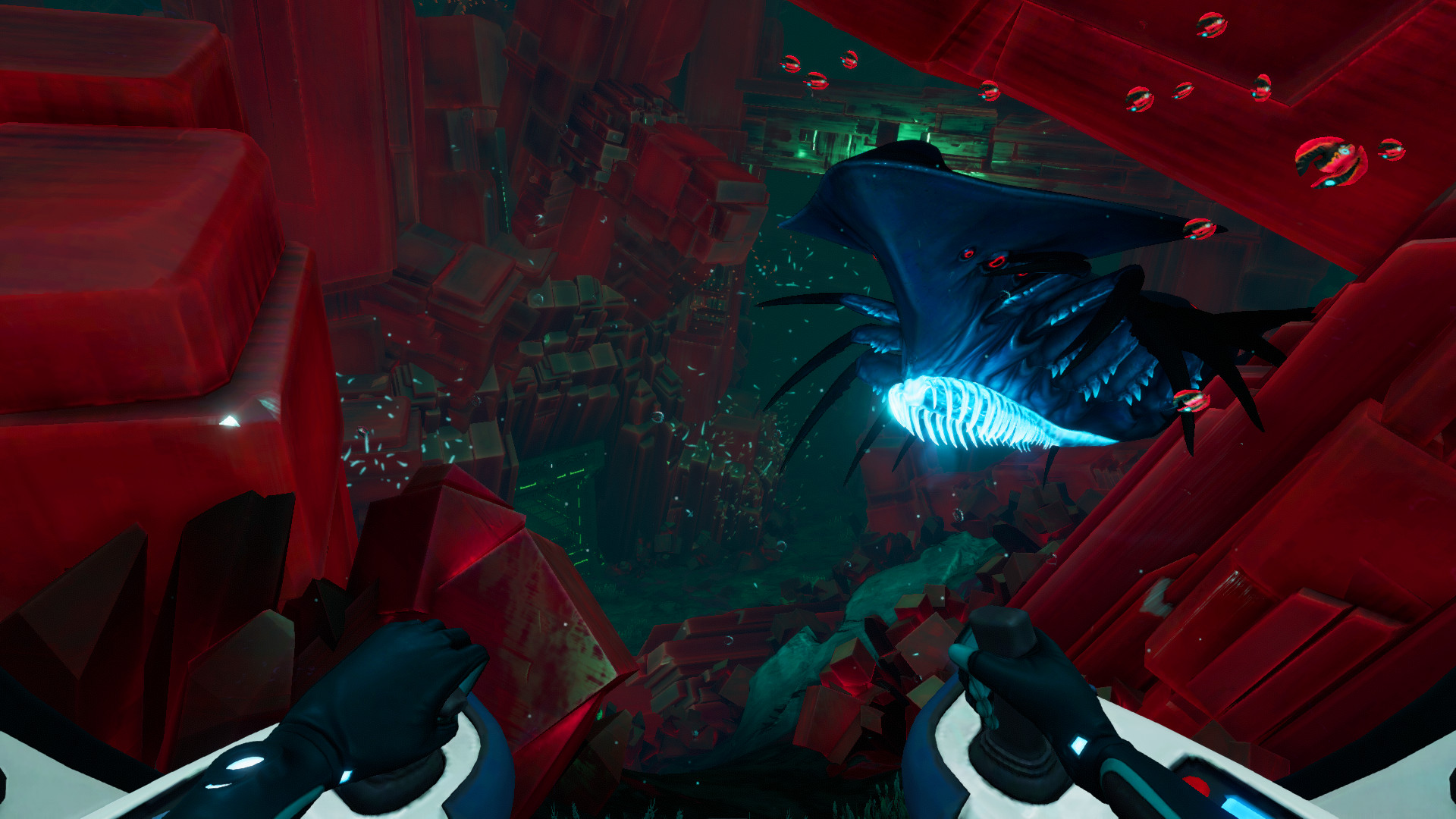
Exploration gradually links human and alien evidence across the region. Alterra facilities hold research records and practical supplies, while alien sites point toward activity that predates the current expedition. Robin's questions about Sam and the scientists give these locations narrative context, and the discovery of blueprints and materials gives each visit a practical consequence. The story remains distinct from the first Subnautica: it revisits 4546B and its larger mysteries, but follows a new protagonist through a new Arctic map, with surface travel, a modular Seatruck, cold management and a different investigation at its center. What the player does is repeatedly move between evidence gathering and preparation: find a clue or resource, return with new knowledge, craft an upgrade or extend a habitat, and then venture into a harder-to-reach part of the planet.
- Developer
- Unknown Worlds Entertainment
- Genre
- Underwater survival adventure