
About Stray Gods: The Roleplaying Musical
Stray Gods: The Roleplaying Musical casts Grace as a young woman drawn into a hidden world of Greek gods after the Last Muse's death. Talk, investigate and make choices in dialogue and branching songs as Grace tries to prove her innocence and decides who to trust, befriend or love.
Stray Gods: The Roleplaying Musical begins when Grace, a university dropout, receives the power of song from the Last Muse shortly before the Muse dies. The gift pulls Grace into a concealed community of Greek gods living in a modern urban-fantasy world. The Chorus, a group of mythological beings, gives her one week to prove she was not responsible for the Muse's death. That deadline supplies the story's central pressure, while the setting lets ancient figures exist alongside contemporary life. Grace has to work out who can help, who may be hiding something and how to use a power she has only just received. The premise mixes a murder mystery with a character-led musical, so conversations and songs carry both information and feeling. Rather than treating the gods as distant figures from a separate age, the game presents them as people with current relationships and unresolved histories. Grace's investigation puts her among them, making questions of trust, identity and belonging part of the same urgent task.
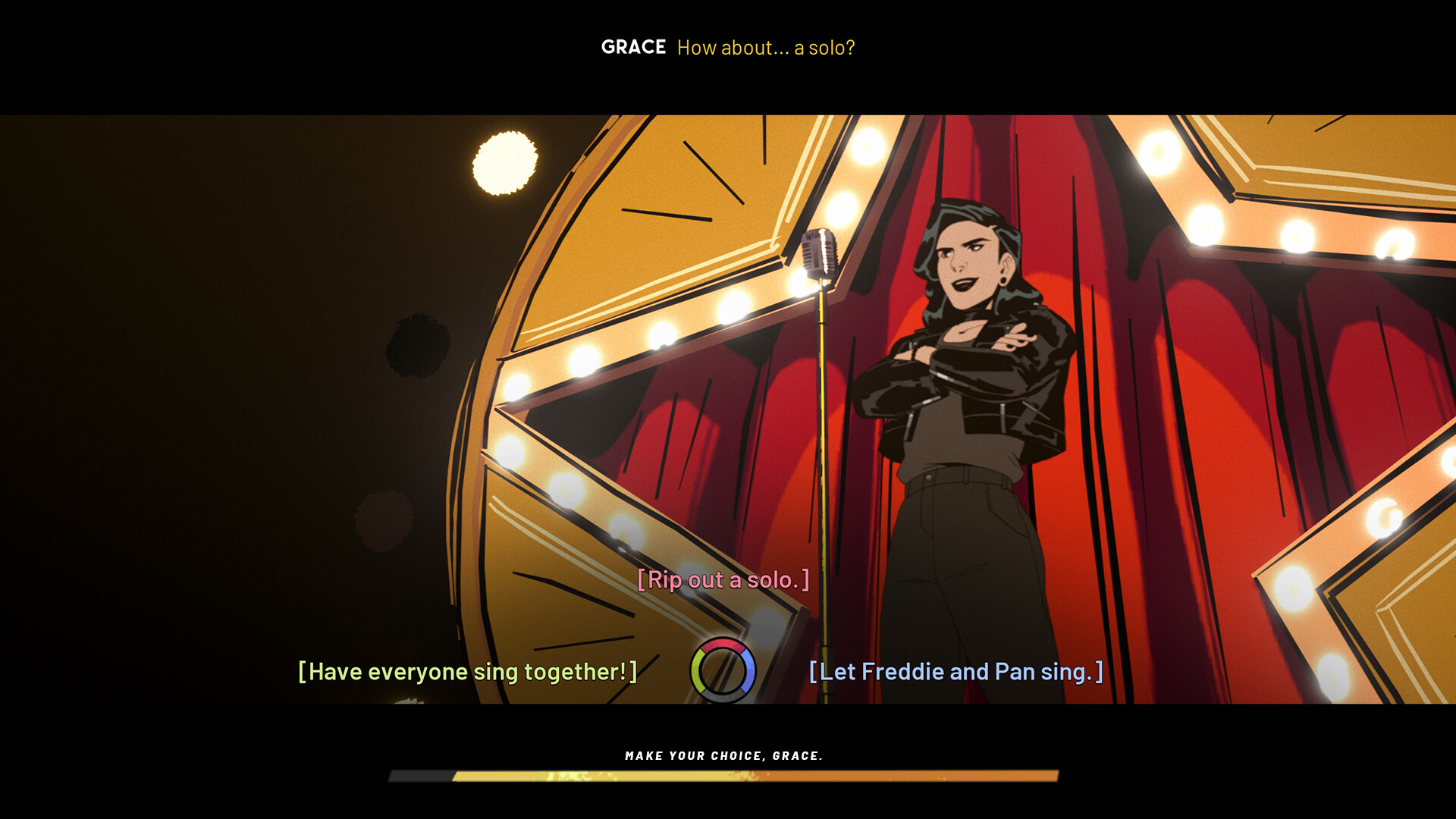
Songs are interactive scenes rather than breaks from the dialogue. As a number unfolds, the player chooses responses for Grace at decision points, and those choices steer how the song continues. Song choices reflect three traits: Charming, Kickass and Clever. A player can choose whichever option fits their read of Grace, and can turn timed choices off so the music pauses while deciding. This structure gives a performance a dramatic job. A line can express confidence, warmth or a sharper edge, and the selected approach changes what follows. The song still moves forward as a musical number, but its direction is shaped by the player instead of being a fixed cut-scene. That makes a conversation through song feel different from a conventional dialogue tree: voice, arrangement and character reaction all belong to the same moment. The musical form is therefore part of how the player communicates, not just a presentation layer over the story.
Choices reach beyond one lyric or exchange. Earlier decisions can affect later options in scenes and songs, connecting the branches across the story. The player can choose a route through a problem, pick a trait to guide a response, or approach a particular character for information. These decisions influence Grace's path through the mystery, while her relationships can shift toward friendship, antagonism or romance. Freddie, Pan, Persephone and Apollo are four possible romance interests. That combination lets investigation and interpersonal story overlap: learning something from a character may also change how Grace treats them, and a conversation can carry both practical and emotional stakes. The structure does not ask the player to build a combat loadout or navigate an explorable battlefield. Its agency sits in speech, song and relationship, with consequences carried forward through the narrative. The game frames choices as the way Grace makes a place for herself in a world with rules and histories she did not choose.
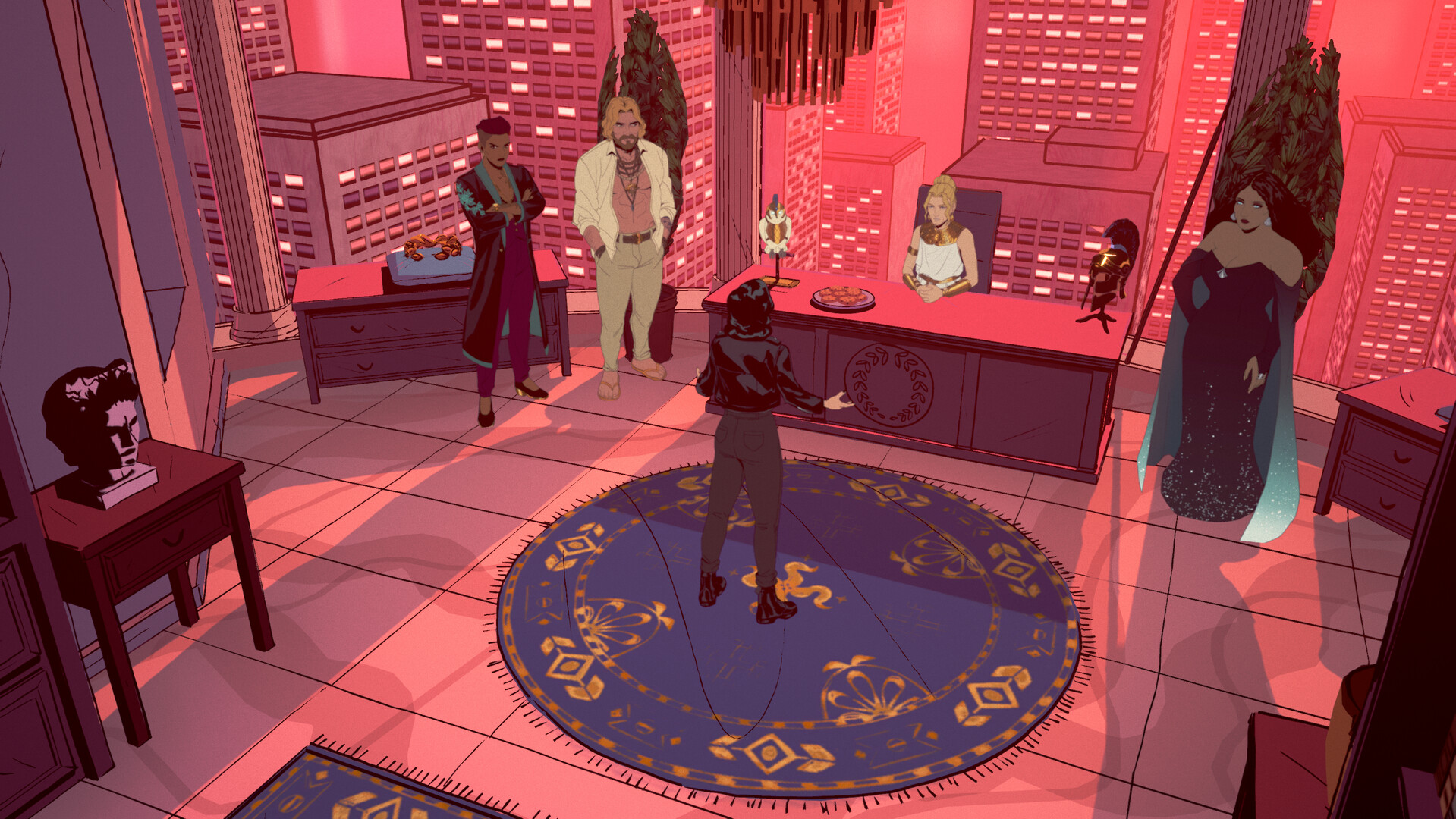
The Greek mythological cast is reworked for this contemporary setting. Familiar names appear as members of a hidden community, each with a distinctive temperament and motive. Grace is not simply retelling an old myth from the outside; she is meeting these figures while trying to understand the circumstances around the Last Muse's death. That creates a tension between recognition and surprise. Knowing a name from mythology may suggest one version of a character, but the game asks the player to respond to the person Grace encounters. The setting also has room for comedy, romance and conflict, which prevents the mystery from being only grim. Conversation lets the player test how Grace handles a person, while songs make arguments and emotional turning points audible. The story's mythic scale sits beside everyday questions about who to trust, which relationships to pursue and what kind of person Grace wants to become under pressure.
Performance and choice are closely joined in how the game presents its musical numbers. Songs progress automatically until a decision point, where the player selects an option; turning off the timer pauses the music while choices are made. That small option changes the tempo of play without removing the interactive structure. Separate volume controls are available for songs, score, voices and sound effects, alongside closed captions and regular or large subtitles. These details matter because musical material is central to how the story communicates. The player can follow sung text, listen to the score independently from vocals, or slow down a choice when more time is useful. The game remains a narrative experience, but the presentation gives players some control over the balance between performance and readability. Even when a song pauses for a decision, it is still one connected scene in which Grace is addressing another character through music.
Chapter selection lets players revisit scenes. Returning to an earlier point replaces saves from that point onward, because later choices depend on earlier branches. That design reflects how the narrative tracks decisions across conversations and songs. A second route is possible, but it requires accepting that the later story must grow from new earlier choices. This continuity means that Grace's words, musical responses and relationships help define how she moves through the mystery. Song decisions involve selecting among options while the performance advances, rather than matching button timing to music. The role-playing structure does not depend on a large inventory of combat statistics. Its central tools are personality, dialogue and relationships Grace develops with gods and mortals. The combination of musical theatre and branching narrative places the player inside the performance as the person deciding what Grace sings and says next.
- Developer
- Summerfall Studios
- Genre
- Interactive narrative adventure / role-playing musical