
About Strange Horticulture
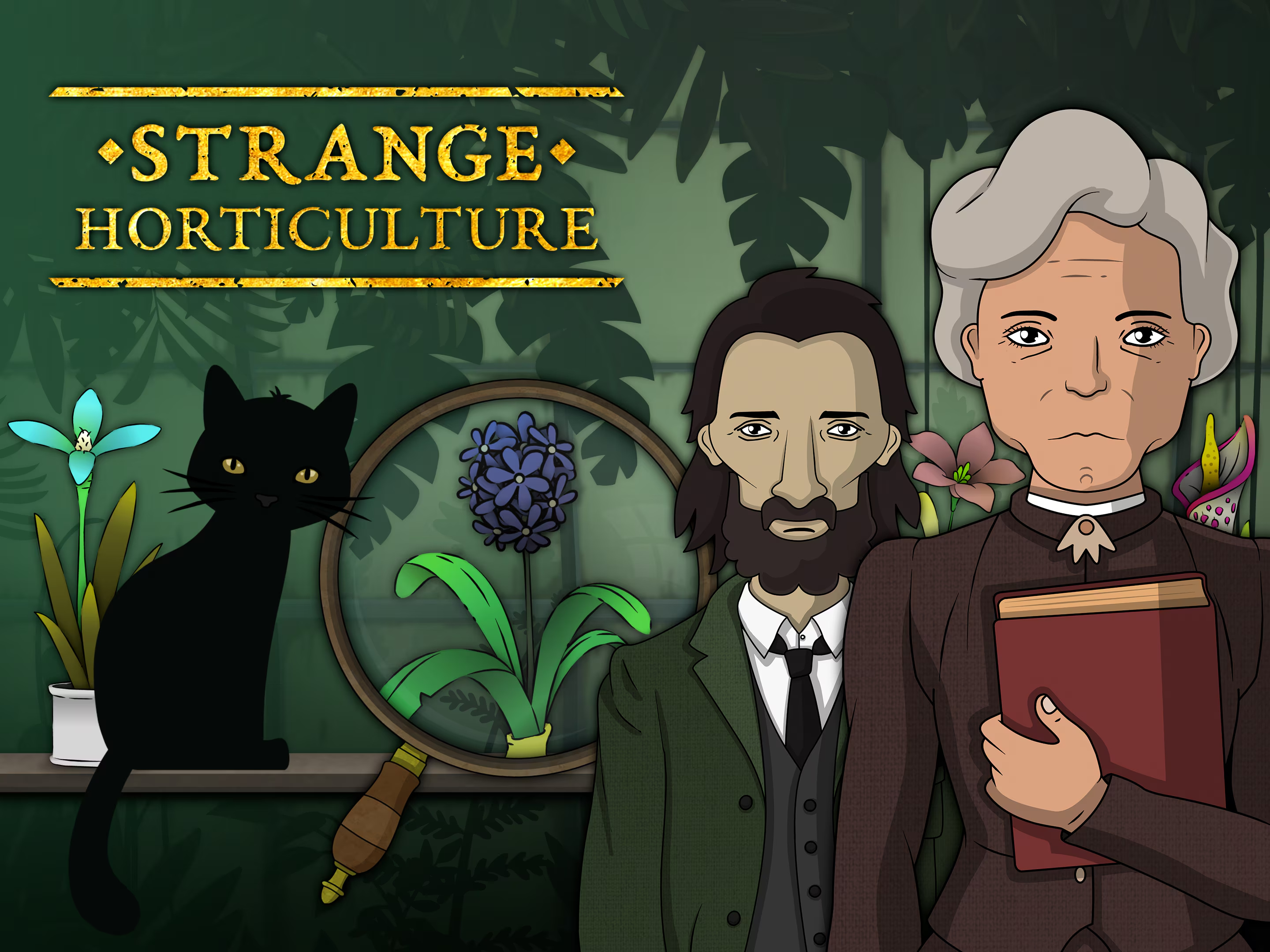
In Strange Horticulture, you run a plant shop in the English town of Undermere and become its Horticulturist. Identify unfamiliar flowers, herbs and fungi from a growing encyclopedia, help customers with their requests, and use clues to explore the surrounding region. Your botanical choices draw you into a branching occult mystery involving the town’s residents and their factions.
The shop called Strange Horticulture stands in Undermere, a small English town bordered by forests, lakes and rugged hills. You take the role of the Horticulturist, stepping into the business and its collection of unusual specimens as customers begin arriving with questions, ailments and private motives. Some needs are ordinary: a customer may want help with a rash, fatigue or a troublesome memory. Others hint at events that do not fit ordinary botany. The town’s occult history reaches back centuries, and an emerging crisis draws together people with sharply different ideas about what should happen next. A librarian, members of a coven, occult scholars, investigators and people associated with a cult all become part of the shop’s orbit. The story gives no single character a complete view of events. Instead, customers bring fragments through conversations, letters, notes and requests, and the player has to decide what those fragments mean. The shop is both a livelihood and an information point: serving someone can help them, harm them, or affect what they are able to do later. Hellebore, the black cat who rests on the counter, offers a quiet presence amid the increasingly strange business.
Most of the game’s investigation happens at the desk. The player examines a plant collection, consults an illustrated encyclopedia, reads incoming papers and letters, and responds to people who enter the shop. New specimens arrive unidentified, so recognition comes from comparing their visible features with written descriptions and clues already gathered. The book records the properties of each known plant, while the physical collection gives those descriptions a concrete referent: a label can be attached once an identity is established, making a specimen easier to find later. The task is more than matching a name to a picture. A customer may describe a symptom or desired effect rather than request a botanical name, so the player must work out which properties matter and connect that need to the right entry. Some plants have effects that are medicinal; others can alter perception, influence a person or act as poison. Similar specimens and incomplete notes can make identification uncertain, and a wrong response can have consequences. Correct identifications expand both the collection and the information available for future cases, so each solved request makes later deductions more informed.
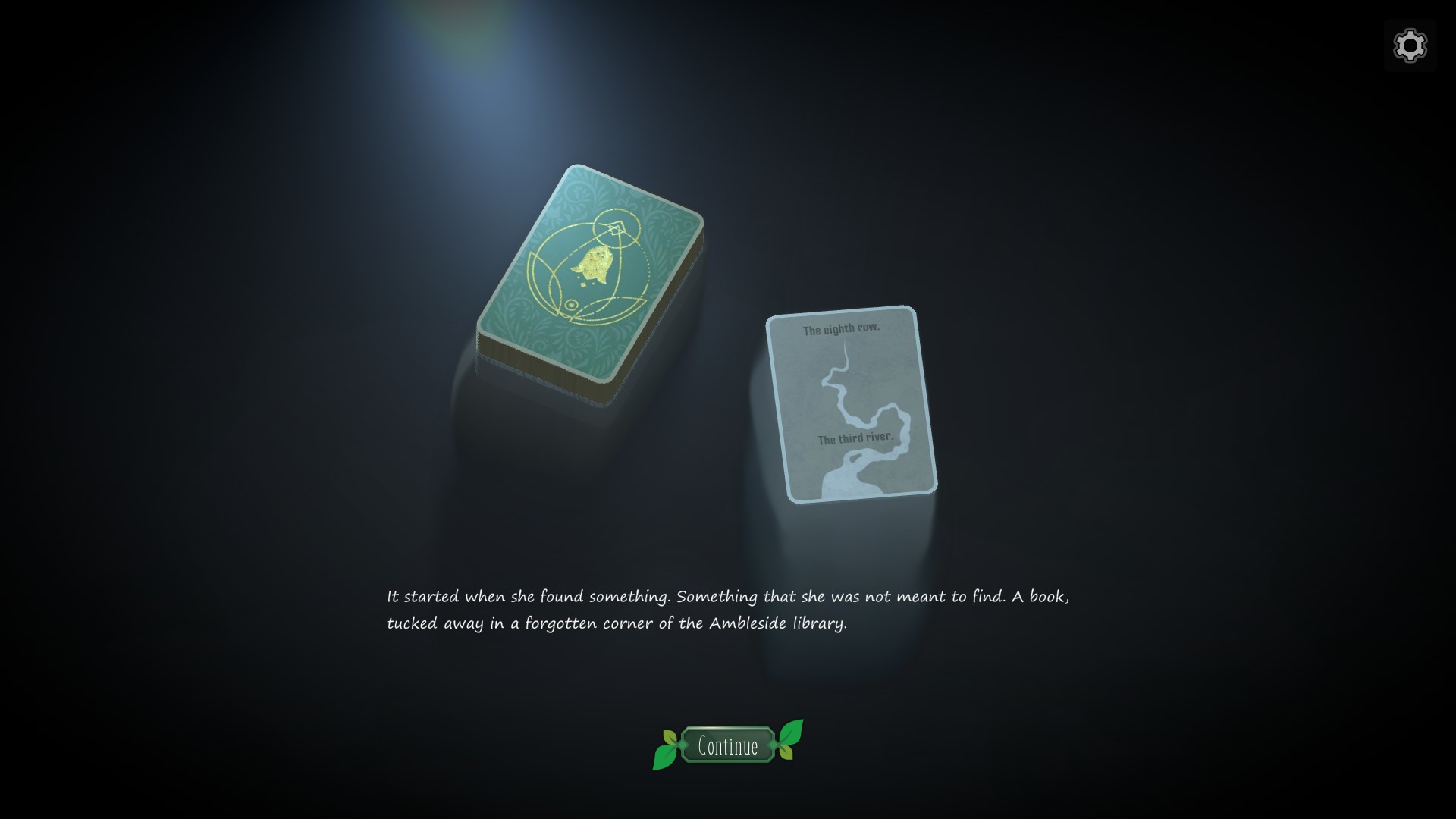
Exploration takes place through a map of the area beyond the shop rather than through direct character movement. Clues in correspondence, notes and other objects point toward possible locations, and the player selects a map coordinate to send the Horticulturist there. The excursion is then conveyed through text describing what is encountered and whether the trip yields a plant, information or an unexpected danger. This structure turns geography into a deduction puzzle: a clue may describe a landmark, a direction or a relationship between places, and the player must translate that language into a location worth visiting. The woods and lakes are not uniformly safe, so going somewhere is itself a choice informed by what has been learned. Discoveries feed back into the desk work: a new plant adds another specimen to identify and another entry to connect with a customer’s problem, while a found document can explain how to reach another place. There is no freely navigated avatar walking through a continuous outdoor level; the map, its coordinates and the written outcomes are the means of travel. This indirect approach keeps the focus on interpretation and on the contrast between a settled shop and the uncertain countryside around it.
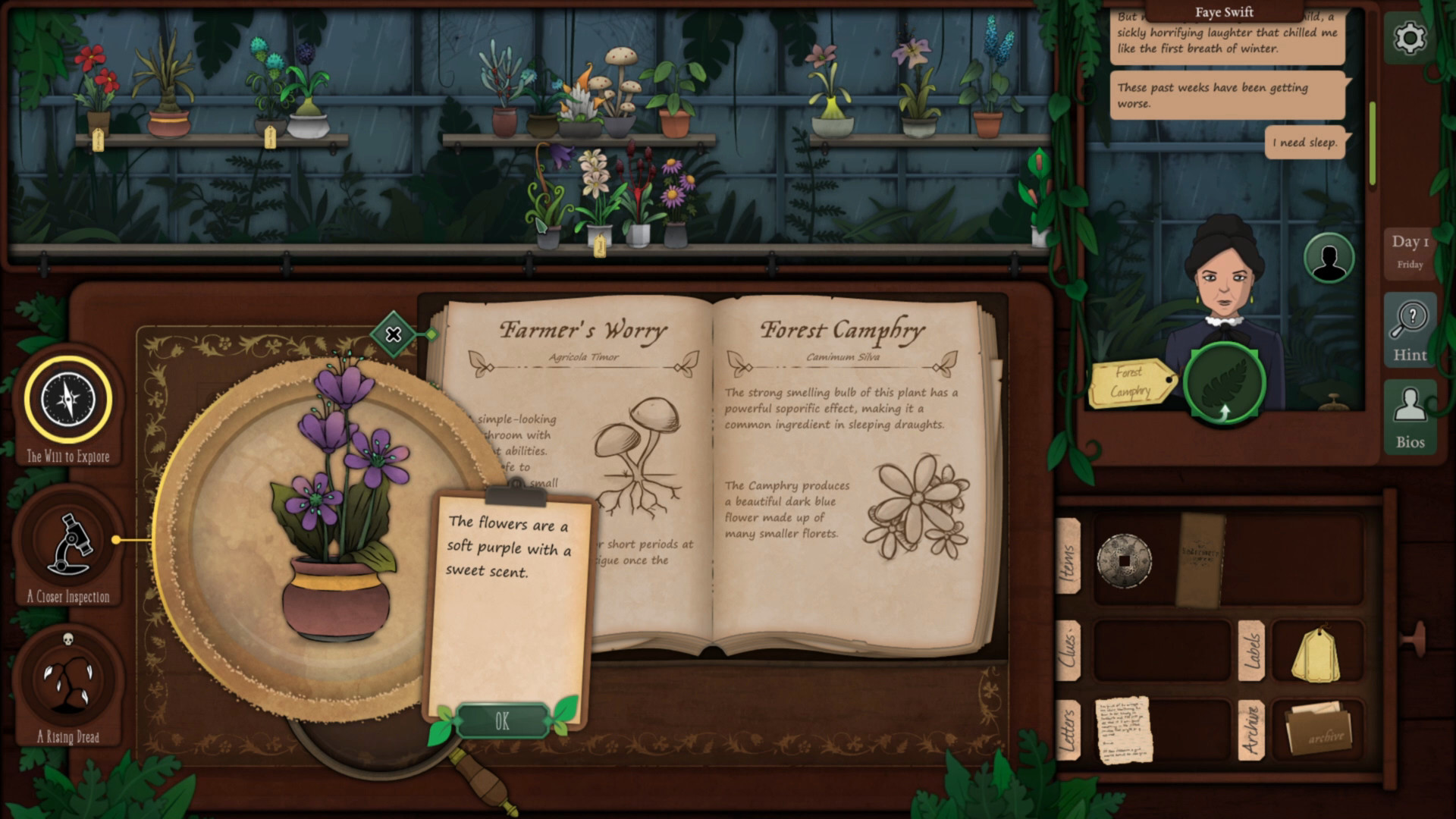
Movement is therefore handled through point-and-click interactions with the desk, map and documents. The player selects objects, opens or shifts papers, inspects specimens, consults the book, places labels and chooses destinations. There are no platforming jumps, real-time traversal routes or reflex-based travel sequences to master. The physical arrangement of the workspace is part of the tactile presentation: tools, letters, notes and the encyclopedia can be moved around, and the drawer provides a place to put away material. Plants may be rearranged on the shelves and watered. These small actions support the fiction of running a working shop and make the screen feel like a particular place rather than a menu of abstract options. The player’s own movement is a cursor across a still, close view, while travel into the larger region is represented by map decisions and narrative descriptions. On Nintendo Switch, the same desk-centered interactions are adapted to controller navigation and touch-screen support; the interface is still built around reading, selection and arranging. Hellebore can be petted, a brief interaction that sits beside the investigation without becoming a separate movement or progression system.
Combat is not a player-controlled action system in Strange Horticulture. The Horticulturist does not fight through direct attacks or navigate enemy encounters in real time. Danger instead enters through the consequences of exploration, the effects of plants and the choices characters make in the unfolding mystery. The encyclopedia’s descriptions matter because some plants can soothe or treat, while others can induce hallucinations, manipulate someone’s state or poison them. A request for help may therefore be ethically complicated: supplying a plant can change a person’s prospects, and the same store of botanical knowledge can be used to assist or undermine. Certain explorations also carry a risk of losing one’s composure, represented by a short recovery puzzle if the player makes repeated mistakes in a day. This consequence interrupts the routine briefly without erasing accumulated progress. The tension comes from interpreting incomplete evidence and accepting responsibility for a choice, rather than from aiming, dodging or managing combat resources. The map’s warning signs, plant effects and people’s competing aims are the systems through which the game expresses threat.
Progress grows through knowledge and story branches rather than through a conventional character-level system. Each newly identified plant adds to the reference book; clues open further map destinations, and items or tools can reveal ways to interpret information that was previously opaque. As days pass, customers return and the relationships among their requests become clearer. A plant handed to one person can affect what that person is capable of doing, so the shopkeeper’s decisions influence which characters are supported and which agendas advance. The recurring cast includes people tied to the town’s library, occult scholarship, a coven and a cult, with factions that do not share a common goal. Daily events and the choices made in response shape which parts of the larger mystery are resolved and who reaches the end of the story. The game has multiple endings, making a later playthrough a way to see how different decisions change outcomes; those resolutions remain open until the player follows a particular path. The core systems remain linked throughout: exploration supplies specimens and clues, identification makes plant effects legible, and that knowledge informs customer responses and consequential choices.
The presentation supports close reading and a quietly theatrical mood. The player looks across a carefully arranged shop interior, with shelves of labeled and unlabeled plants, a desk crowded by the materials of the investigation, and a window onto gloomy weather. Outside locations are conveyed through the map and descriptive text, while the writing gives the town a wider presence than the single main room might suggest. Plant entries combine illustrations with details about appearance and effect, so the encyclopedia functions as both a puzzle reference and a portrait of this fictional botany. Dialogue is delivered in text, and the overall pace leaves room to pause over a clue, inspect the collection or tidy the workspace. Strange Horticulture is a single-player occult puzzle adventure developed by Bad Viking and published by Iceberg Interactive. It is available on PC, Nintendo Switch and Xbox; the Nintendo Switch edition supports TV, tabletop and handheld play, with touchscreen features listed by Nintendo. The PC, Switch and Xbox releases all centre on the same plant shop, map-led excursions and changing customer relationships.
- Developer
- Bad Viking
- Genre
- Single-player occult puzzle adventure