
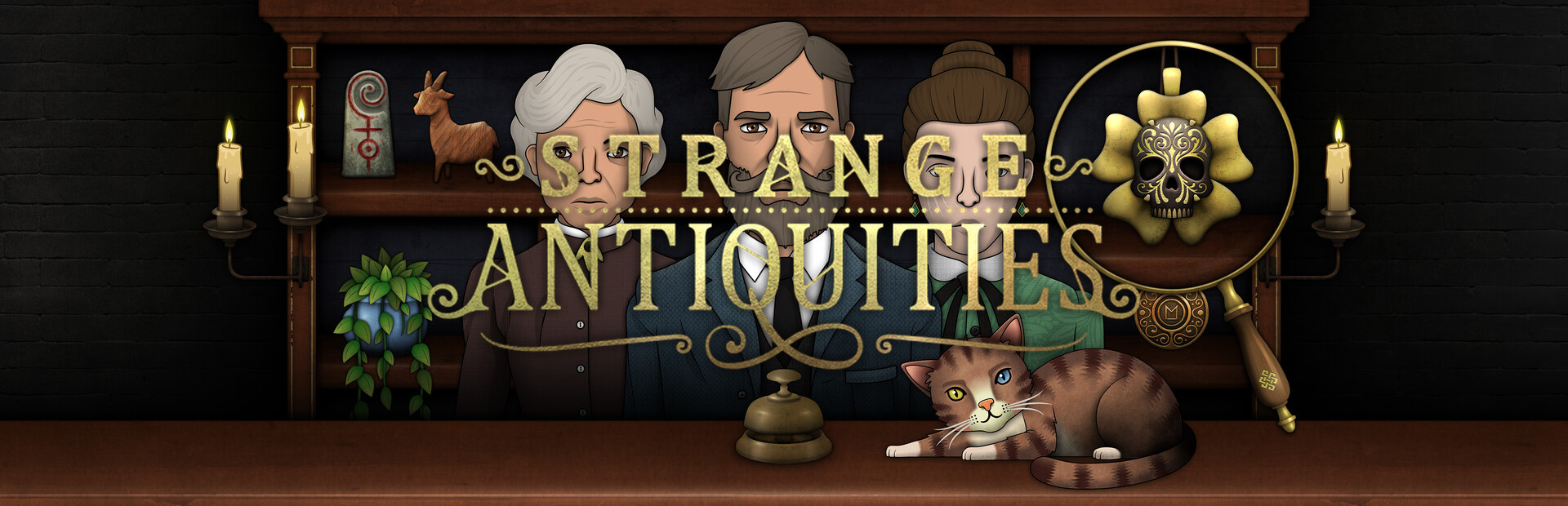
About Strange Antiquities
Strange Antiquities returns to Undermere as an apprentice takes charge of a shop filled with occult objects. Customers bring problems that require careful identification, research in illustrated books and decisions about which artefact to offer. The shop's maps also lead beyond its candlelit counter, where the town's mysteries and the consequences of helping its residents begin to connect.
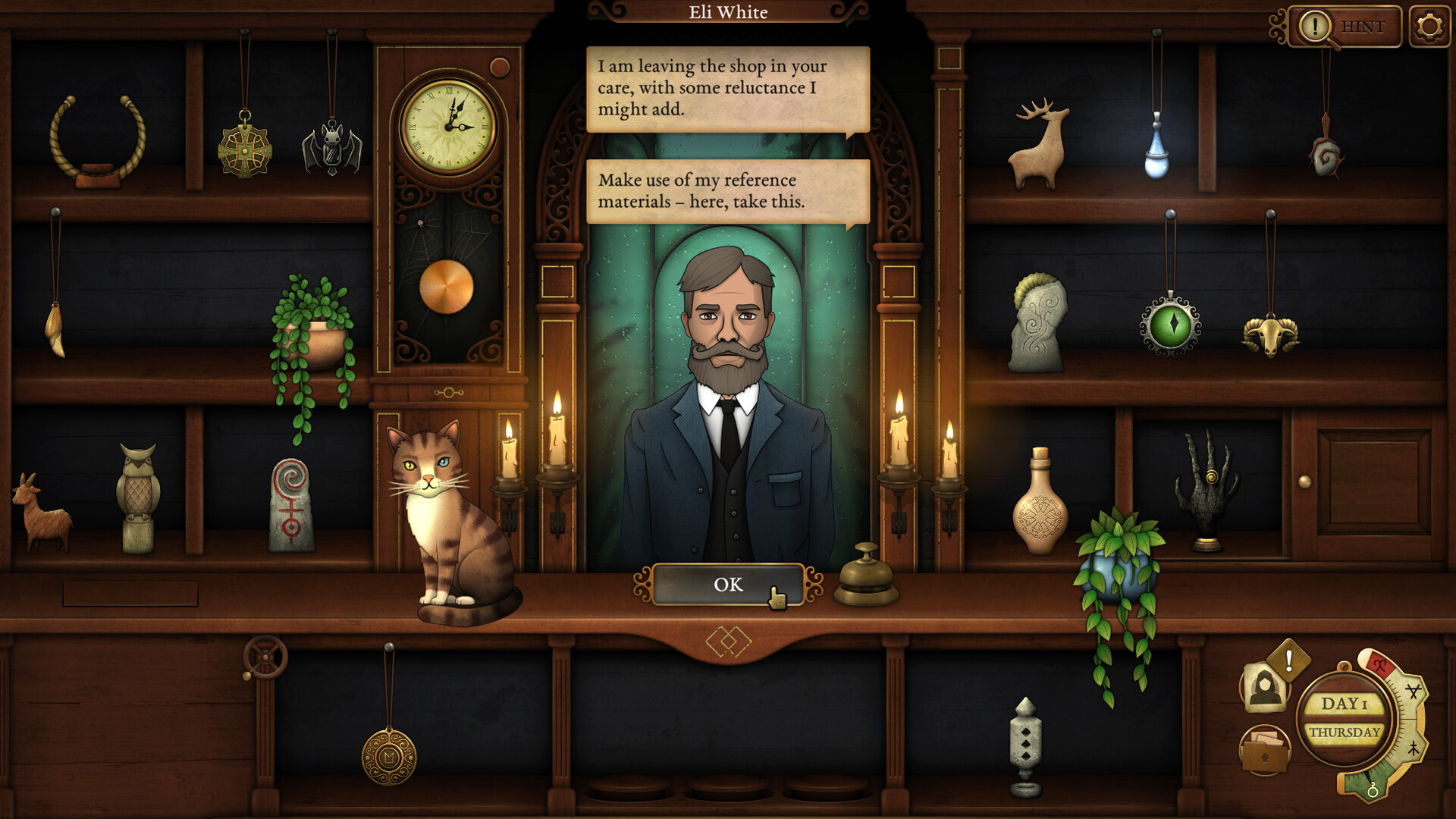
Undermere is the sort of town where an unusual request can arrive at a shop counter and turn into a much larger problem. In Strange Antiquities, the player takes the role of an apprentice thaumaturge entrusted with an occult-object store while its proprietor, Eli White, attends to other matters. The day begins with customers who need help, but the shelves hold artefacts whose powers are not always obvious or safe. A visitor may describe a troubling situation rather than name the item they want. The apprentice has to work out which object is being asked for, what it actually does and whether giving it away is wise. The setting looks welcoming in its own dark way: a candlelit interior, a cat among the stock and a town beside a lake. Its occult trade has a serious purpose, however. Eli's introductory letter suggests that Undermere stands close to the boundary between ordinary life and something beyond it. The shop's work becomes a form of local stewardship. Every correct identification can help someone, and every mistaken or deliberately harmful choice can travel back into a community where people remember. The game asks the player to learn this world by handling its objects and listening to the people who come through the door.
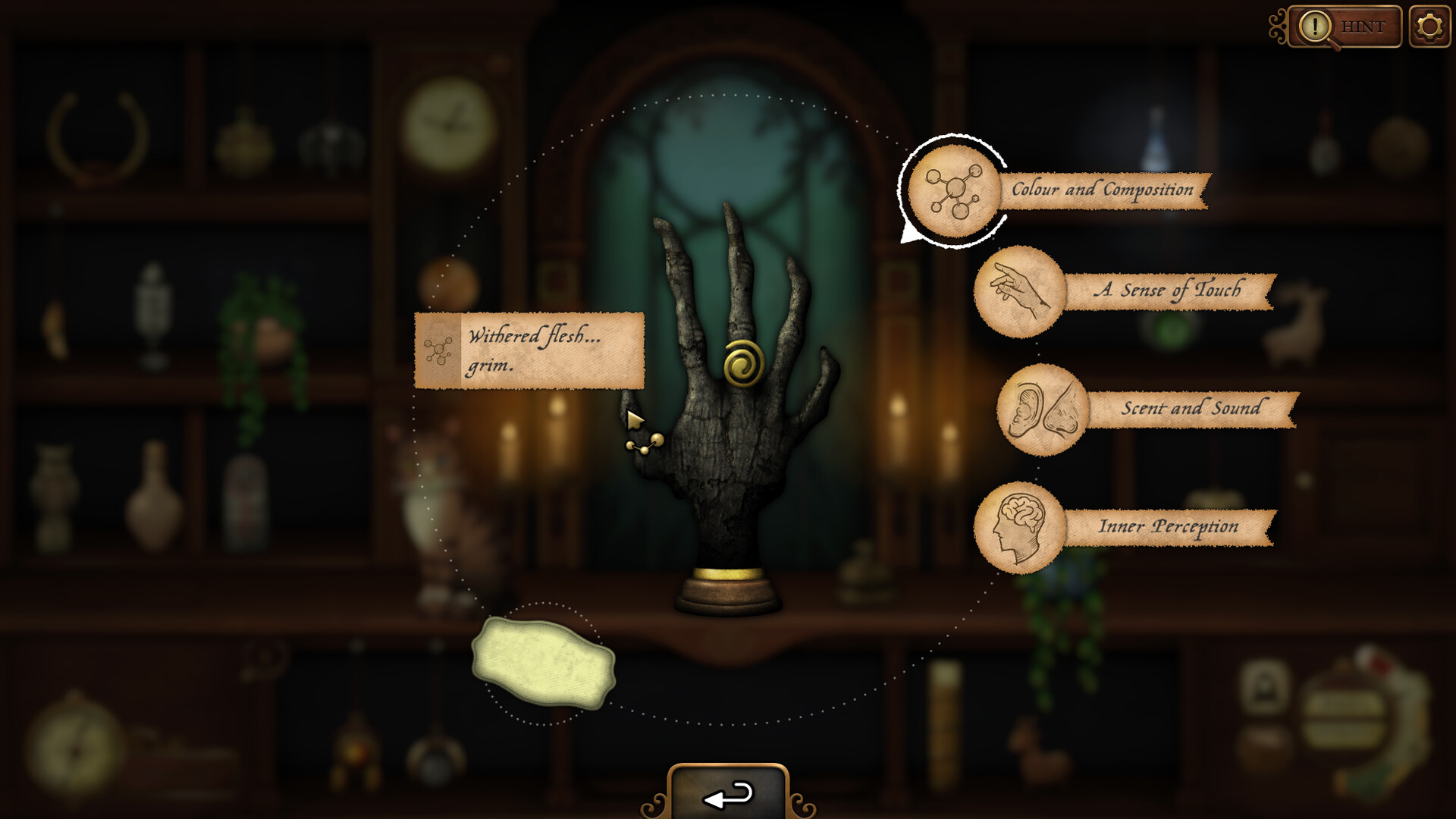
Identifying an artefact is more than matching a silhouette to a label. The player studies an object, compares its appearance and qualities with illustrated reference books, then catalogues it among the shop's collection. Observation and deduction drive the work; the brothers at Bad Viking have explained why the change from plants to antiques matters. Plants in Strange Horticulture shared enough visible features to support a common identification language. Here, the stock can contain many different kinds of objects, and the developers built more than eighty unique items. One clue may concern shape or markings, another what an object feels like, another the folklore attached to it. The resulting puzzle is not a standard shopkeeping price calculation. It is an investigation into what something is before any decision about what to do with it can be made. Reference volumes become useful because they offer descriptions that can be compared against a thing actually lying on the desk. A player who rushes to a name without checking details risks mistaking a dangerous object for a useful one. Conversely, learning how the texts describe an item can turn a shelf of strange possessions into a readable catalogue. The work feels deliberate because the game's interface makes those materials physical parts of the shop rather than distant menu entries.
Visitors supply the other half of the puzzle. The correct artefact for a person's request is not always obvious from a first conversation, and the meaning of the request may change as Undermere's wider troubles emerge. The apprentice can choose to help, to hinder or to take a more troubling path with a powerful item. The store description is explicit that such decisions matter and that a town this size remembers misdeeds. That makes each customer more than a mechanism for testing whether the player has identified a trinket. A resident has a problem, a set of beliefs about what might solve it and a future beyond the shop door. Handing over an item moves the story in a direction that may not be reducible to a simple right-or-wrong mark. Bad Viking has said its approach is to add new tools and ideas gradually while keeping the visitor as a contained, understandable puzzle. Familiar shop routines provide a rhythm, but the changing requests and growing network of clues keep that routine from becoming mere repetition. The player learns the collection partly through private study and partly through the consequences of serving people who live nearby.
The work also takes the apprentice outside the shop. Rumours and the search for artefacts lead to locations around Undermere, with hand-drawn maps guiding the way. These excursions extend the mystery beyond what a customer is willing to say across a counter. The town sits near ancient woodland and carries a body of macabre folklore, so a place named on a map can have its own history and danger. Bad Viking has described the map as an object pulled from a drawer and examined on the desk with a magnifying glass. That design choice is consistent with the rest of the game: investigation happens through things the character can handle. A book lies beside an artefact, the map comes out when a lead points outward, and a return to the shop can give a newly found object a place in the growing collection. The structure does not promise a free-roaming open world; it offers trips guided by evidence and the particular needs of the case. Looking beyond the door also clarifies why the shop matters to Undermere. It is connected to the town's geography and secrets, not simply a backdrop in which customers line up to purchase magical goods.
Strange Antiquities shares Undermere with Strange Horticulture, but it tells a new story and does not require the earlier game's plot to be understood. The developers call it a standalone sequel. Familiar faces and references may reward returning visitors, while the shift from plants to occult objects gives this apprentice a different practical skill to learn. Rob and John Donkin, the brothers behind Bad Viking, have said the antiquities idea let them keep the shop-based puzzle structure while widening the possible forms of identification. They researched amulets, symbols and folklore, and visited collections of historical objects for inspiration. The game's art and its tabletop arrangement turn that interest into an environment the player can work in. A rain-darkened town outside the window and a carefully illustrated artefact on the desk serve different scales of the same mystery. Ben Young composed the score, adding to the atmosphere without making the shop's quiet tasks feel like combat preparation. Even the cat reinforces that someone lives and works in this place. The mood can be cozy in its routine and unsettling in what an object or visitor suggests, and the game draws much of its character from holding both feelings in the same room.
There are several ways to approach the premise. The player who likes classification can take satisfaction in building a reliable catalogue. Someone drawn to stories can pay closer attention to the visitors and the choices that follow them home. A reader of maps and folklore can look for the connections between a local rumour and a thing on the shelf. These interests reinforce one another because an artefact's identity, its origin and its possible use are parts of the same question. The game was developed by Bad Viking and published by Iceberg Interactive in 2025. Its original release returned to a world already known from Strange Horticulture, but the antiquities shop offers a distinct entry point. The practical loop is legible: inspect, research, identify, respond and sometimes travel to learn more. The harder question is what responsibility comes with finding the right answer. Eli has entrusted the apprentice with objects whose effects can reach beyond the counter, and Undermere's inhabitants will live with what the shop provides. This overview leaves the names and solutions of individual artefacts, and the eventual shape of the town's mystery, for the investigation itself.
- Developer
- Bad Viking
- Genre
- Occult shopkeeping and deduction puzzle adventure