
About State of Decay: Year-One Survival Edition
In Trumbull Valley, survivors try to keep their community alive after a zombie outbreak. State of Decay: Year-One Survival Edition combines the original campaign with Breakdown’s open-ended endurance mode and Lifeline’s military story in Danforth, alongside improved lighting, textures, animations and combat mechanics.
In Trumbull Valley, the opening campaign follows a small group of survivors trying to endure a sudden collapse. Marcus and Maya are among its established characters, and the group’s early foothold is a fortified church where Lily coordinates survivors over the radio. From there, the main campaign follows the effort to keep people alive while the situation across the valley changes. Its story missions introduce established characters and human groups, including the armed Wilkerson family, but much of the unfolding history comes from the needs and losses of the wider community. The result is a single-player survival story with a defined route through Trumbull Valley and a changing cast whose safety can depend on how prepared the group is when a mission or supply run goes wrong.
The player manages a community rather than a single hero. Marcus, Maya and other story characters share the field with survivors generated for the group, and the active character can be changed as the roster grows. Each person brings particular skills, traits and limitations, so a capable fighter is not automatically the best choice for every task. Permanent death makes the roster matter beyond its numbers: losing a survivor also means losing the abilities that person contributed. Missions can take a familiar character away from the safety of home, while everyday runs give other members room to develop. Lily remains an important voice at the base, relaying requests and directing attention to events elsewhere. Her radio calls connect the larger plot with small practical errands, so community members can become more than names on a management screen as their concerns intersect with the crisis.
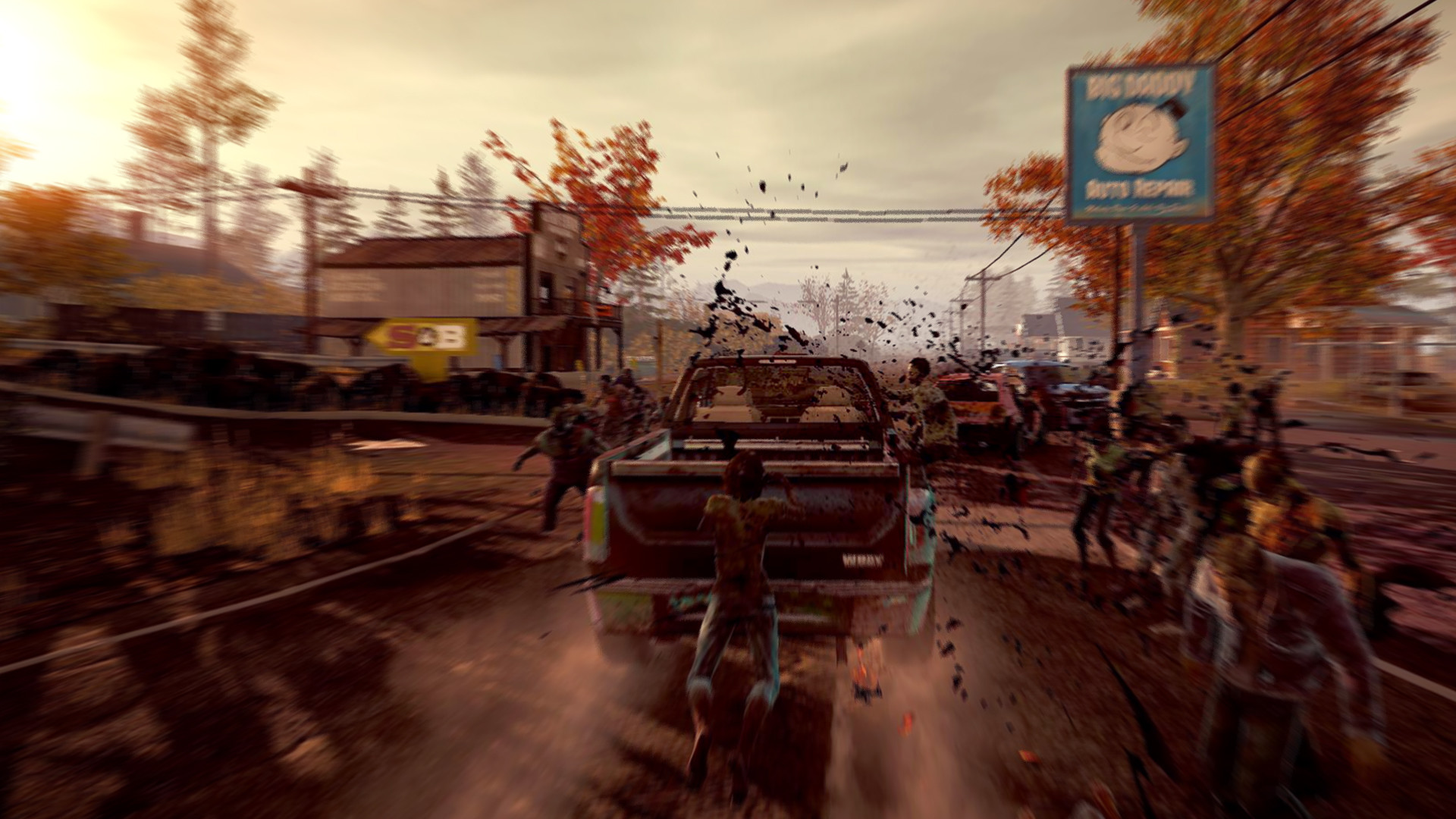
Trumbull Valley is an open map of small towns, homes, businesses, farms and stretches of countryside to search. A run often begins with a specific need—food to keep the group supplied, medicine for injuries, ammunition for dangerous encounters or construction materials for the base—but containers and buildings can hold useful items beyond the immediate objective. Searching takes time and exposes the active survivor to the infected outside. A vehicle can carry supplies back and provide a quick escape, though noise and crowded streets can turn a drive into another risk. The world is not simply a backdrop between missions: new calls, hostile clusters and opportunities appear while the group is working elsewhere. The player can head directly toward a story marker or spend that time clearing buildings, gathering equipment and preparing a safer return route.
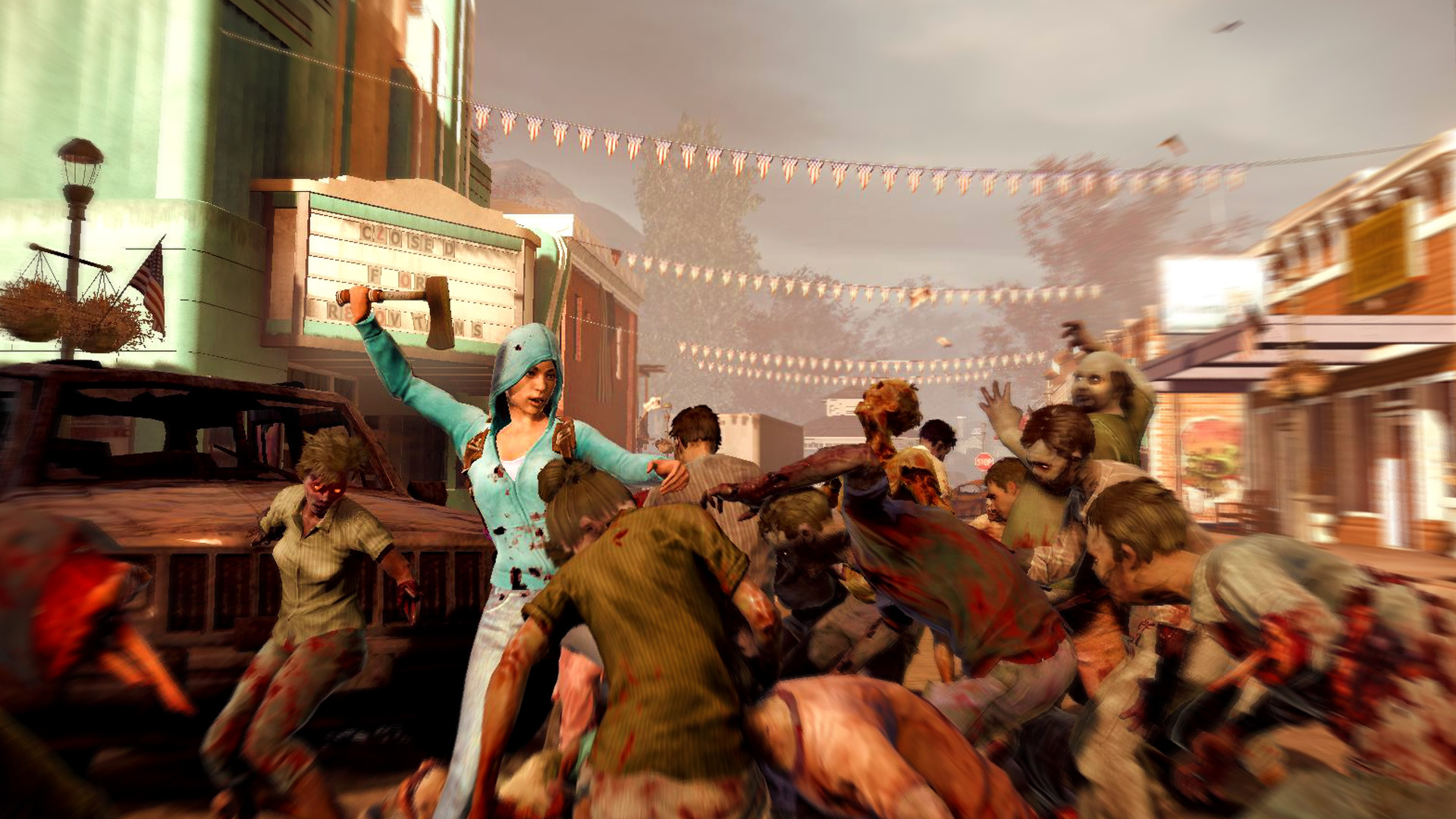
Home is a changing stronghold that must support the people living there. The community needs supplies, working facilities and defensible space, so a new location or an upgrade represents a decision about what the group can maintain. Survivors contribute their particular strengths at the settlement, while the player selects a member for an expedition and carries that person’s equipment, stamina and condition into the field. When the cramped church is no longer enough, the group can move to a more spacious shelter elsewhere in the valley and make a new home there. Influence earned through missions and runs can be spent to request help from other survivors, including backup for a difficult fight. That support can save a vulnerable team, but radio assistance is a limited resource to reserve for the moments when a crowded infestation or a high-stakes objective makes the difference.
The main campaign advances through missions that reveal more about the outbreak and the people trying to endure it. Some requests lead toward supplies or a survivor in trouble; others bring the group into contact with human factions whose interests do not always match its own. The Wilkersons, for instance, are a dangerous local family whose dealings become part of the valley’s shifting alliances. Those encounters sit alongside the management work rather than replacing it: an expedition still requires a suitable character, enough room to bring back useful goods and a way to handle the undead between the road and the target. Weapons are tools with finite durability, so a plan that relies on one favorite melee weapon can leave a survivor exposed if it breaks. Avoiding a horde, using a vehicle or bringing help can be as important as winning a direct fight.
Year-One Survival Edition brings together three distinct ways to play. The original State of Decay is the Trumbull Valley campaign. Breakdown removes that story structure for a continuing endurance challenge, asking the community to survive for as long as it can and move on when the pressure demands it. Lifeline shifts to Danforth and follows Greyhound One, a military unit working to protect survivors during the outbreak; its more directed missions create a different rhythm from Breakdown’s open-ended runs. The edition also folds in new missions, weapons, vehicles and survivor options, including Lifeline characters who can appear in Breakdown. These modes share the series’ focus on managing people and supplies, yet frame it differently: a story about the valley, a test of how long a community can last, and a military effort in a separate city.
- Developer
- Undead Labs
- Genre
- Single-player open-world zombie survival role-playing game