
About STASIS
Aboard the Groomlake, an immense spacecraft drifting above Neptune, John Maracheck wakes from stasis to find his wife and daughter missing and the vessel apparently abandoned. Explore its isometric rooms, read records, operate terminals, combine objects and solve puzzles as John searches for his family and tries to understand what has happened.
STASIS places John Maracheck in a crisis before he can make sense of his surroundings. He wakes from suspended animation aboard the Groomlake, a spacecraft descending through the blue methane clouds around Neptune. His wife and daughter are missing, and he is injured, alone in a vessel that seems deserted. The immediate search for his family gives the journey a personal focus, while the ship’s condition raises a wider mystery: what occurred aboard, and why is John here? The story moves through environmental details, encounters and information left behind by the people who lived and worked on the Groomlake. The setting is a piece of industrial science fiction, where machinery, medical spaces, crew areas and corporate infrastructure share a confined vessel. Each newly accessible room can provide a practical lead or a fragment of context, linking John’s attempt to find his family with the history of the ship.
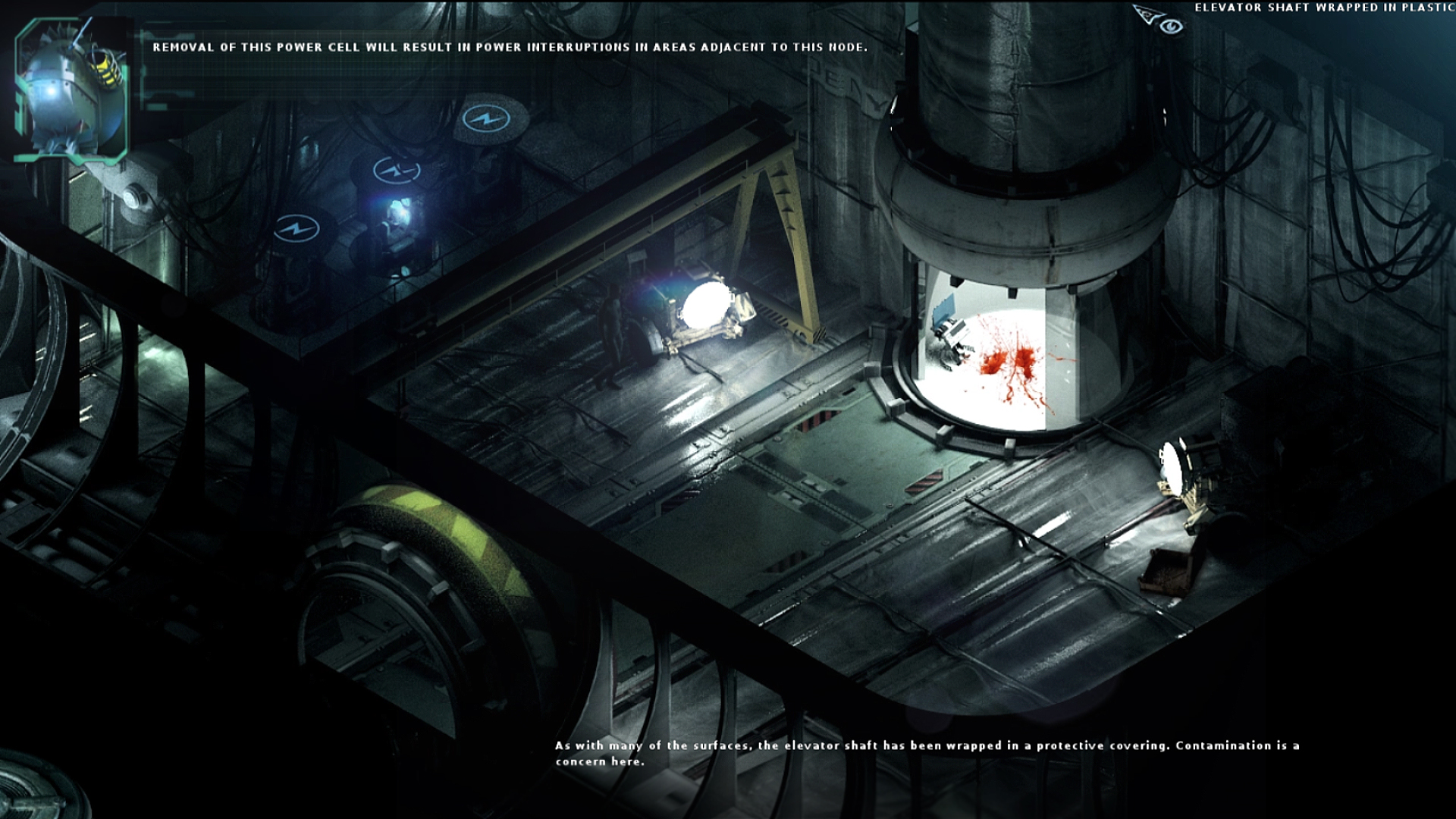
The game is a single-player point-and-click adventure viewed from an isometric angle. Rather than steering John through a three-dimensional corridor, the player selects places and objects in carefully composed scenes, then observes how he interacts with them. This perspective shows the room as a compact arrangement of doors, consoles, machinery and obstacles, while cut scenes can shift the presentation for important moments. Clicking, reading and examining form the basic rhythm: search a space, identify what can be used, and connect it to a problem that blocks progress. The visual language draws attention to details without turning the Groomlake into an open map. Movement between its sections follows the adventure’s progression, and a clue or object found in one area may only become useful after a later discovery. The ship therefore works as both setting and puzzle structure, with each scene framing a small part of a much larger situation.
Inventory puzzles ask the player to combine collected objects or use them on parts of the environment. A locked mechanism, a damaged system or an inaccessible route can call for a chain of observation and experimentation rather than a single obvious key. The game describes its puzzles as challenging and realistic, and the ship’s computers are active parts of exploration: terminals can be accessed to learn about systems and circumstances aboard the Groomlake. Personal digital assistants found among the dead preserve character backstories and other information, so reading is a meaningful way to reconstruct the vessel’s past. These records broaden the story beyond John’s immediate viewpoint while remaining tied to physical places. The player moves between practical problem-solving and interpretation, deciding which details matter and testing ideas against the objects and machinery visible in a scene. Progress comes from understanding how the ship’s pieces relate, not from combat encounters or an abstract points system.
John’s encounters with other people give the search more than one perspective. Their dialogue can supply context or a role in the puzzles, and their histories connect to the wider dystopian setting. Voice performances and cut scenes carry these exchanges, while the score by Mark Morgan and Daniel Sadowski supports the shifts between investigation and danger. What the player learns comes from several kinds of evidence: conversations, scattered records, computer access and the condition of the ship itself. These details build a picture of life aboard the Groomlake without interrupting John’s immediate goal. A crew member’s backstory may explain a local detail, while a terminal or object can show how a system worked before the vessel became deserted. The personal search and the ship’s history therefore develop together, each giving context to the rooms and people John encounters.
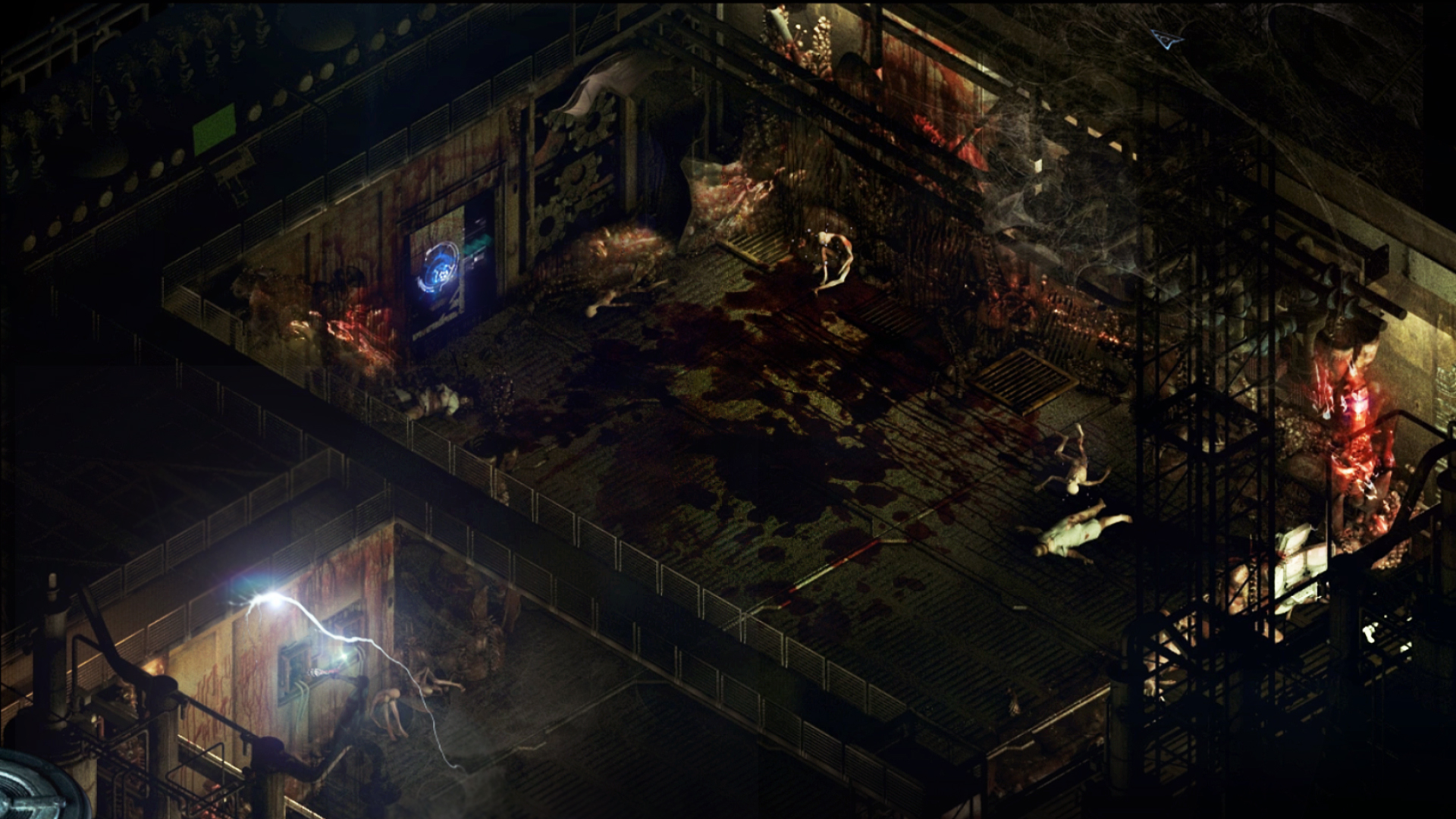
Horror is built into the environment and the risks surrounding John’s exploration. The Groomlake is not simply an empty maze: its rooms contain evidence of violence and loss, and the ship’s descent makes the search feel time-sensitive. John can die, and some objects can be used on him in fatal ways, reflecting the game’s deliberately grim content. The player’s practical task remains to inspect spaces and solve puzzles, but the possibility of failure changes how objects and hazards are read. Medical equipment, tools and machinery may be useful, dangerous or both depending on how they fit a situation. The narrative includes disturbing imagery and themes. The confined ship makes each hazard feel close to John’s investigation: a blocked route may conceal a useful object, while an apparently ordinary tool can take on a different meaning when the player understands the danger nearby.
The Groomlake ties the adventure’s different activities into a single investigation. John searches its rooms for his family, but moving forward also means learning how the vessel functioned and what its crew experienced. Objects found in one area can answer a practical puzzle elsewhere; written records and terminals add context that changes how a place is understood. Conversations introduce people whose knowledge or circumstances expand that picture. This layering gives exploration a steady purpose: a scene matters because it offers a route, a clue, an item or a new question. The isometric view makes these rooms legible as spaces to inspect, while the point-and-click controls keep attention on their details. Even as the story turns toward horror, the player’s progress depends on observing carefully and connecting information gathered across the ship.
- Developer
- THE BROTHERHOOD
- Genre
- Isometric point-and-click science-fiction horror adventure