
About Star Wars: Squadrons
Set after the Battle of Endor, Star Wars: Squadrons follows pilots serving the New Republic’s Vanguard Squadron and the Empire’s Titan Squadron as both sides fight over Project Starhawk. Its cockpit-view campaign alternates between the factions, while Dogfight and Fleet Battles turn ship handling, squad coordination, and power management into the core of competitive space combat.
The war continues after the second Death Star falls at Endor. In the aftermath of Return of the Jedi, the Rebel Alliance has become the New Republic, but Imperial forces still command a formidable fleet. Star Wars: Squadrons places the player in the cockpit of custom pilots on both sides of that conflict. The single-player campaign alternates between Vanguard Squadron, serving the New Republic, and Titan Squadron, flying for the Imperial Navy. Their commanders, Lindon Javes and Terisa Kerill, are tied to a struggle over Project Starhawk, a New Republic shipbuilding effort that the Empire wants stopped. Missions move between briefings, hangar conversations and first-person flights, giving the conflict a personal scale while keeping the wider contest between the two fleets in view.
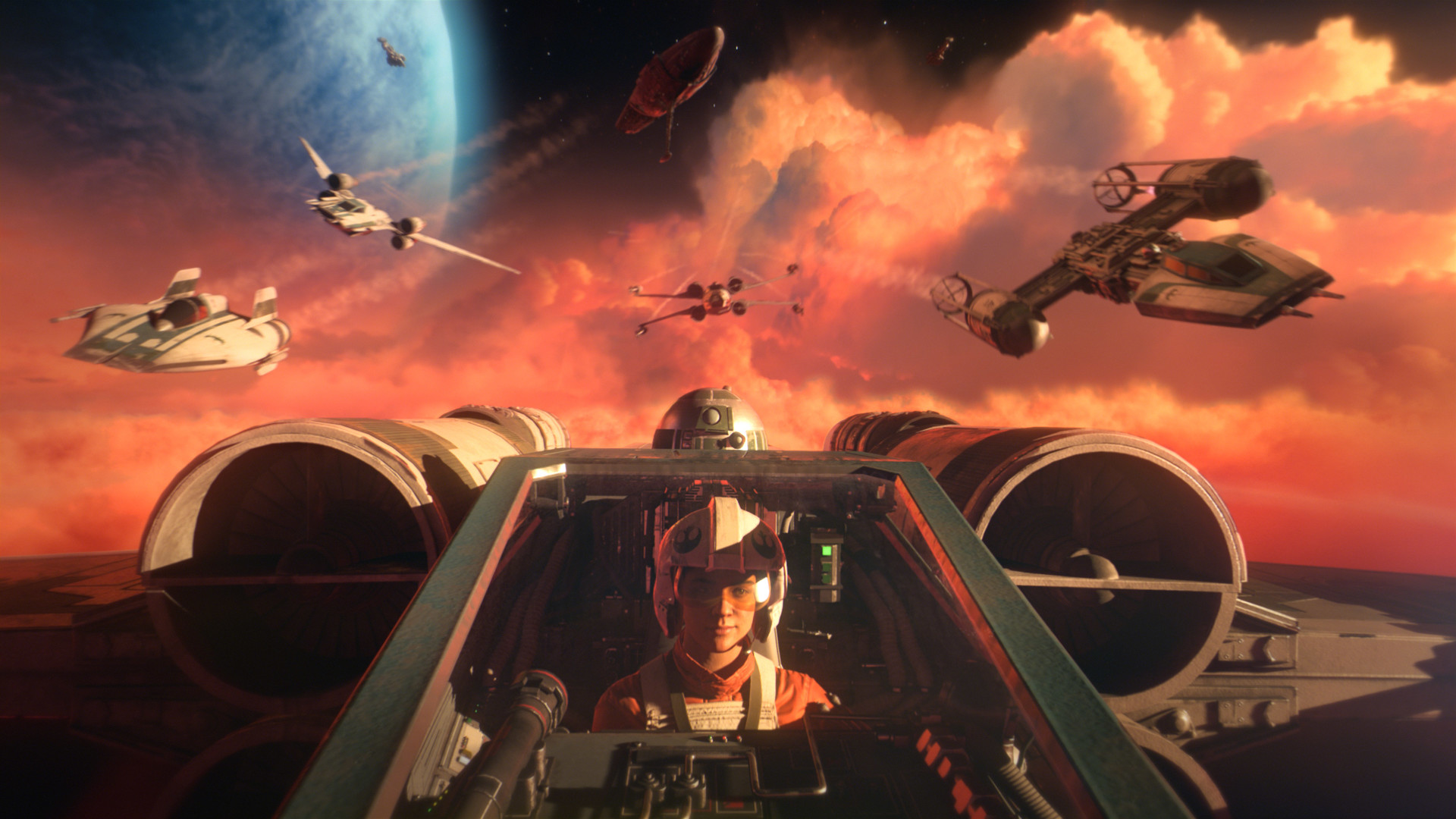
Every flight is seen from inside the starfighter, where instruments, targeting information and the surrounding battlefield share the pilot’s limited field of view. The eight craft are organized into four roles on each side: fighters, interceptors, bombers and support ships. The New Republic fields the X-wing, A-wing, Y-wing and U-wing; the Empire answers with the TIE fighter, TIE interceptor, TIE bomber and TIE reaper. Fighters balance attack and defence, interceptors emphasize speed and manoeuvrability, bombers bring heavy ordnance to objectives, and support craft help a squadron through specialized equipment. Faction differences affect how a ship handles its systems, so changing sides also changes the choices a pilot makes in a dogfight. The hangar provides a space to select a craft and prepare its equipment before a mission or multiplayer sortie.
Power management is a constant cockpit decision rather than a menu adjustment. Pilots redirect energy among engines, laser weapons and, on ships that carry them, shields. Feeding engines improves speed and enables a boost; concentrating on lasers charges weapons for stronger fire; strengthening shields provides more protection. Imperial fighters have no shields, and their power conversion lets pilots trade between engine and weapon output instead. Boosting can flow into a drift, allowing a ship to change direction sharply while carrying momentum. These controls make energy, position and timing work together: an approach that maximizes speed may leave less energy for weapons, while a defensive turn or attack run can depend on when power is shifted. Learning the cockpit means managing these systems while still tracking enemies and objectives.
Each starfighter has a distinct component loadout. Pilots choose a primary weapon, two auxiliary devices, countermeasures, hull, shields where available, and engines. Components change practical strengths rather than simply raising every statistic: a shield can resist blaster fire more effectively while becoming more vulnerable to missiles, and a weapon or auxiliary can trade one advantage for another. Auxiliaries include tools for attacking, disrupting or helping a squadron, while countermeasures respond to incoming threats. Component unlocks and cosmetic options are earned through play; the aircraft can be tuned for the job a pilot expects to perform, then changed in the hangar as needs shift. That preparation matters in team modes, where a squadron can combine specialized craft instead of treating every fighter as an interchangeable gun platform.
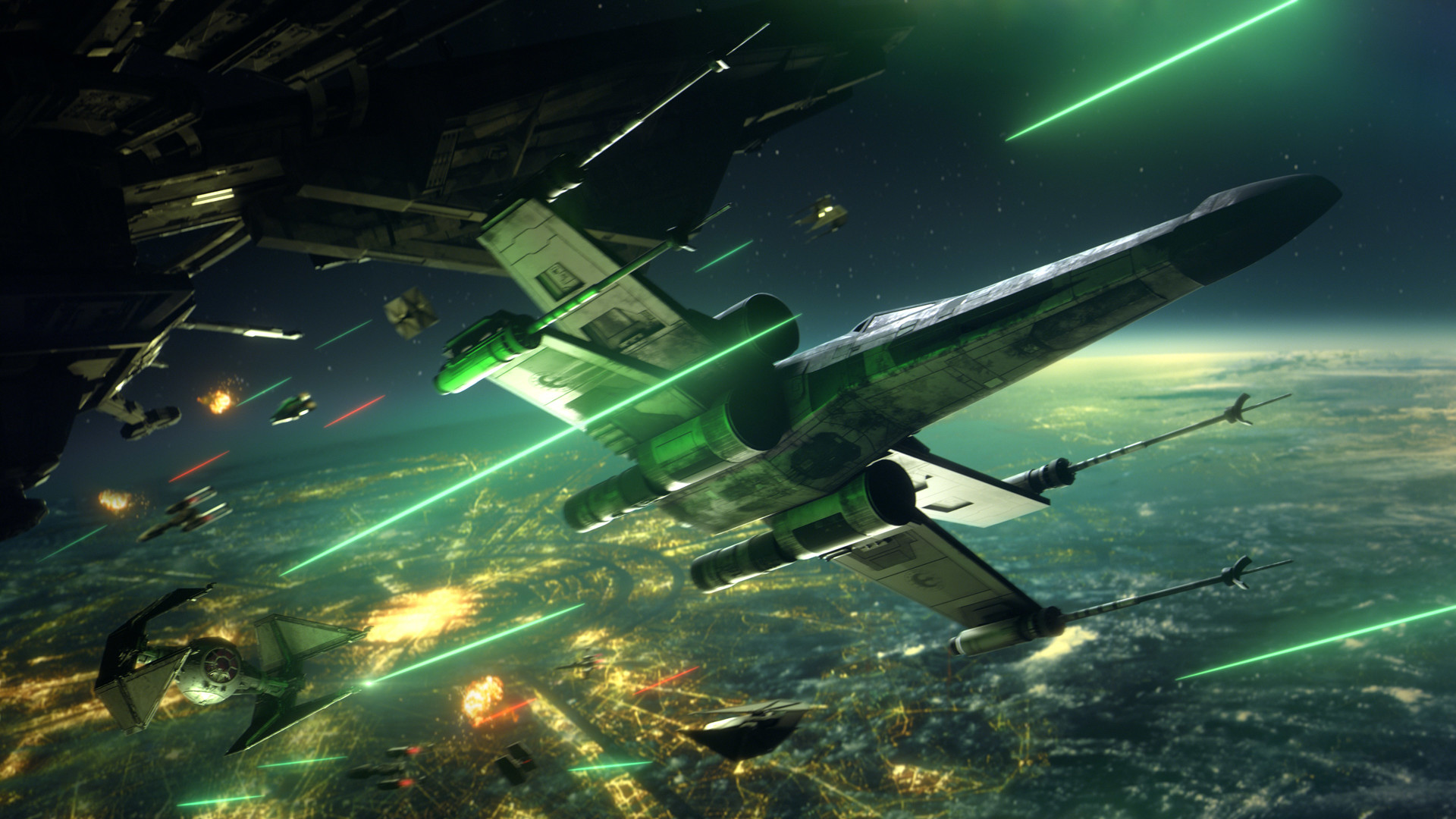
Dogfight is a direct five-versus-five contest in which teams score by destroying opposing starfighters. Fleet Battles adds a longer objective sequence: each side first contests the frontline, then attacks or defends supporting vessels and the opposing flagship as the momentum changes. Destroying fighters and completing objectives help a team push forward; bombing runs target capital ships and their vulnerable systems on the route to the flagship. The mode can be played against other pilots or computer-controlled opponents, including a solo option. Success depends on more than individual aim: pilots identify priority targets, communicate threats, and decide whether to clear enemy fighters, protect an ally or damage a larger ship. The shifting front makes this a coordinated contest instead of a single uninterrupted dogfight.
The campaign and online modes use the same cockpit fundamentals but give them different purposes. Story missions introduce objectives and situations through the changing viewpoints of Vanguard and Titan pilots, while multiplayer lets players specialize a ship and coordinate directly with a squadron. Both formats allow time in the hangar to choose craft, review equipment and set cosmetic details. The game supports virtual reality on compatible PlayStation 4 and PC setups, while also offering conventional controller, keyboard-and-mouse and joystick controls. Cockpit communication is another part of flying as a unit: pilots can identify targets, mark threats and respond to squadron pings, making it easier to direct attention without abandoning the fight. Selecting an attacker, checking a friendly ship’s status and calling out an objective all compete for attention with steering and weapons. The campaign is presented as a way to hone these flying skills before carrying the same cockpit toolkit into competitive matches. Whether following the post-Endor conflict or entering a match, the player spends each sortie reading instruments, conserving or redirecting power, selecting a target and deciding when to attack, support teammates or break away.
- Developer
- Motive Studios
- Genre
- First-person starfighter combat