
About Star Wars Battlefront II
This 2017 Star Wars Battlefront II follows Imperial commander Iden Versio and Inferno Squad after the Battle of Endor, while its multiplayer moves across the saga’s three cinematic eras. Play as troopers, reinforcements, vehicles, starfighters and heroes in objective-driven multiplayer, or take Iden’s campaign into a story about the Empire’s changing fortunes.
Star Wars Battlefront II is the 2017 DICE-developed game, distinct from the 2005 game with the same subtitle. Its single-player campaign begins around the Battle of Endor and follows Iden Versio, commander of the Imperial special-forces unit Inferno Squad. Iden, Del Meeko and Gideon Hask carry out missions for an Empire facing a sudden crisis, and the story moves through familiar and new locations as the conflict changes. The campaign presents the aftermath of Return of the Jedi from an Imperial point of view, rather than beginning as a Rebel soldier’s account. It combines infantry firefights, starfighter sequences and encounters with familiar Star Wars characters. The story also connects to the wider period between the original trilogy and the rise of the First Order, but its central perspective remains with Iden and the squad whose loyalty and responsibilities are tested by events.
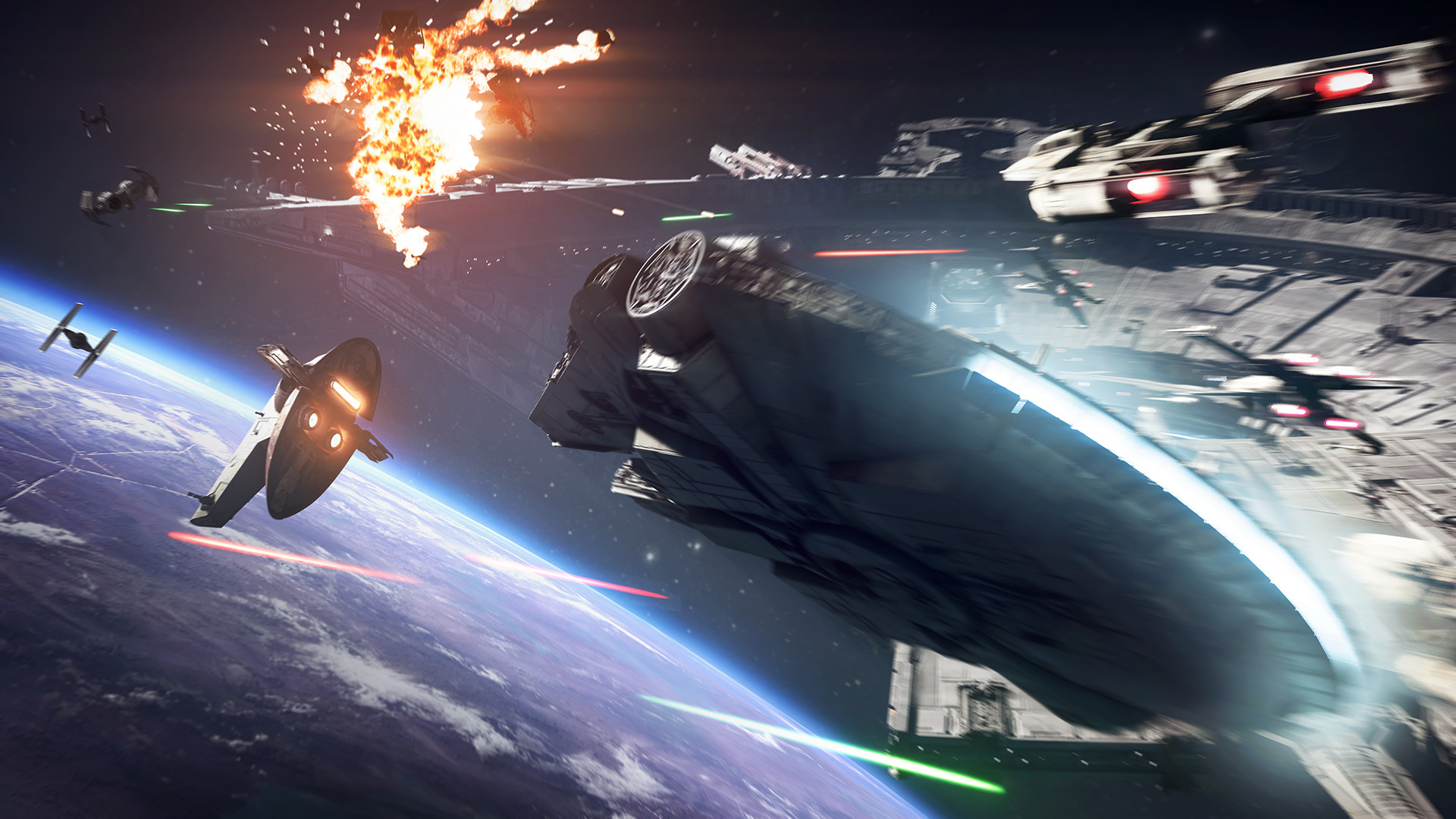
Multiplayer moves among the prequel, original and sequel eras, with ground combat and space battles built around different objectives. Galactic Assault is a large, multi-stage contest in which attackers push toward successive goals and defenders try to stop them. Strike and Blast offer smaller infantry engagements, while Heroes vs. Villains sets iconic characters against one another. Starfighter Assault shifts the fight into space, where squadrons attack or defend large vessels. Arcade provides solo scenarios against computer-controlled opponents; on console, it also supports split-screen cooperative play. The maps place opposing factions in locations such as Kamino, Kashyyyk and Starkiller Base, bringing period-specific units and vehicles into the same broad combat framework. Depending on the mode, a match may be a close infantry clash, a moving front line or a multi-stage assault on a major military target.
Players generally enter a ground battle as one of four trooper classes. Assault specializes in mobile, close-to-medium-range attacks; Heavy brings greater durability and a personal shield; Officer supports nearby allies and can deploy equipment such as a blaster turret; Specialist uses long-range weapons, traps and battlefield information. These roles are designed to complement one another: an Assault can advance, a Heavy can anchor a position, an Officer can reinforce the group and a Specialist can watch a distant lane. Four-player spawn waves also let queued players coordinate before returning together, selecting their class and available alternatives for the next life. The class system changes how a player contributes to an objective, while keeping the same broad goal—capture, defend, advance or eliminate opponents—at the centre of each mode.
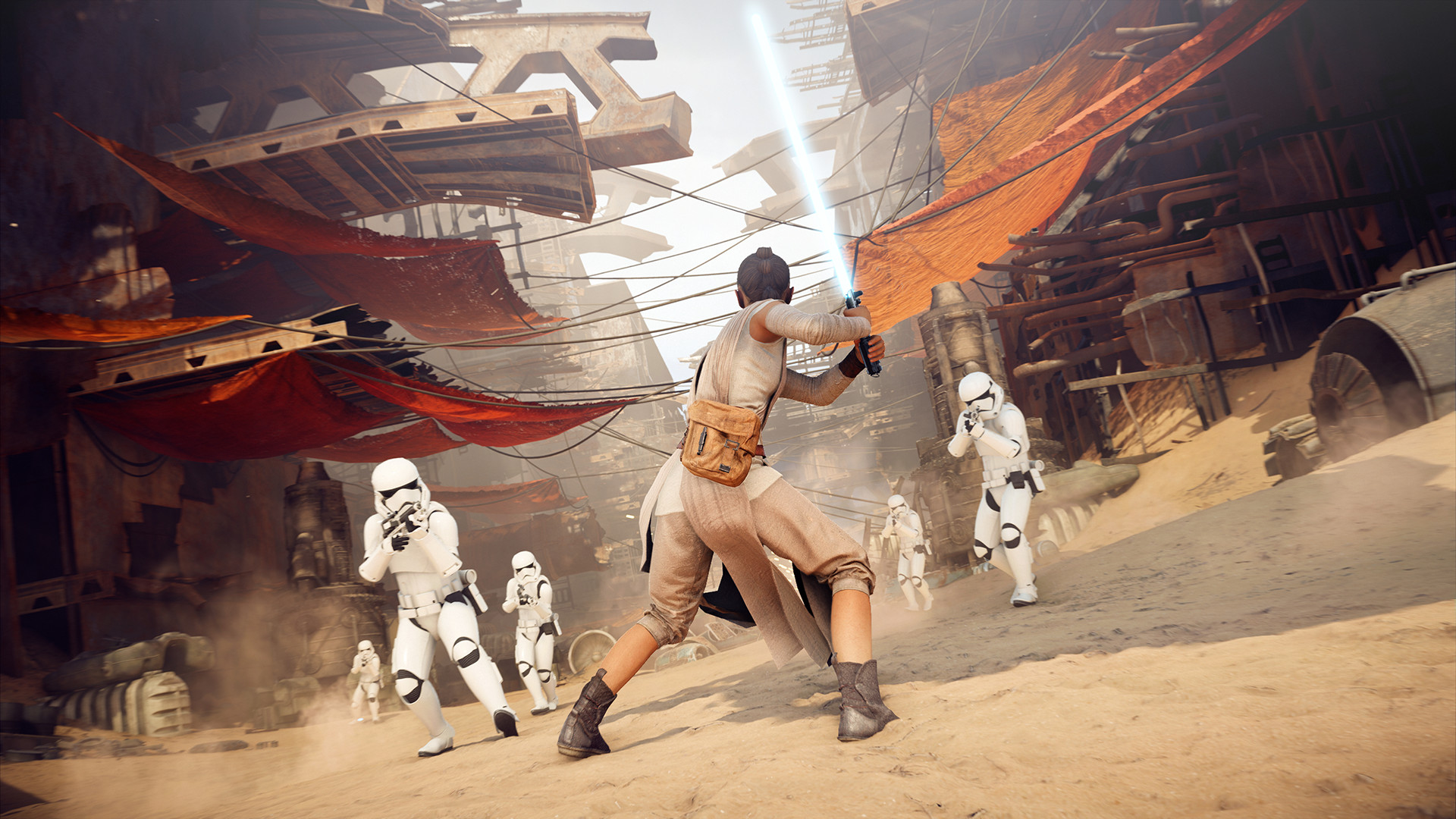
Contributions to combat and team objectives earn Battle Points, which can be spent when respawning to choose a stronger unit. A player may return as a special reinforcement such as a jetpack-equipped Aerial or a durable Enforcer, take control of a ground or air vehicle, or spend more points to become a hero. Because points can also be earned while playing reinforcements and vehicles, a successful life can help fund another tactical switch later. That creates a timing choice: spend early to answer a difficult push, or keep fighting as a trooper until a more expensive option becomes available. Heroes and villains bring unique abilities and can shift an engagement, but they still enter a team battle shaped by objectives, incoming fire and the availability of Battle Points rather than operating in a separate story mode.
Star Cards let players tailor abilities and equipment for classes, heroes, vehicles and starfighters. Each class has three abilities, and cards can modify or enhance those tools; trooper cards are tied to the chosen class and can be adjusted in the Collection menu. Space combat has its own three regular starfighter classes: Fighters balance offence and defence, Interceptors are agile but fragile, and Bombers trade mobility for heavier attacks against objectives. Hero ships have distinct weapons and abilities. In Starfighter Assault, players earn Battle Points by contributing to objectives and defeating enemy craft, then may spend them on a hero ship at respawn. Choosing a loadout therefore affects the next engagement—whether the task is to dogfight, pressure a capital ship, repair damage or support another craft—while the battle’s changing objectives determine where that equipment is useful.
Co-op places a squad of four human players alongside computer-controlled allies against computer-controlled opponents. Troopers, reinforcements, vehicles and heroes are available, with Battle Points earned during the match unlocking the choice of who to deploy as; the opposing force also mixes ordinary troops, special units and heroes. Instant Action offers a separate offline route into large-scale combat: both teams contest five Command Posts, and the aim is to hold a majority until the team score reaches its limit. These modes allow players to engage with maps and unit types without the same opposing human team found in competitive multiplayer, while using the same capture points, class choices and Battle Point economy. The Celebration Edition listing on Steam is the 2017 base game with a cosmetic collection: EA describes additional Hero and Trooper or Reinforcement appearances, emotes, voice lines and victory poses. Those edition extras change character presentation; the campaign and combat modes remain part of the base game.
- Developer
- DICE (campaign developed with Motive Studios; Criterion Games contributed to space combat)
- Genre
- Third-person and first-person shooter with ground, vehicle and starfighter combat