
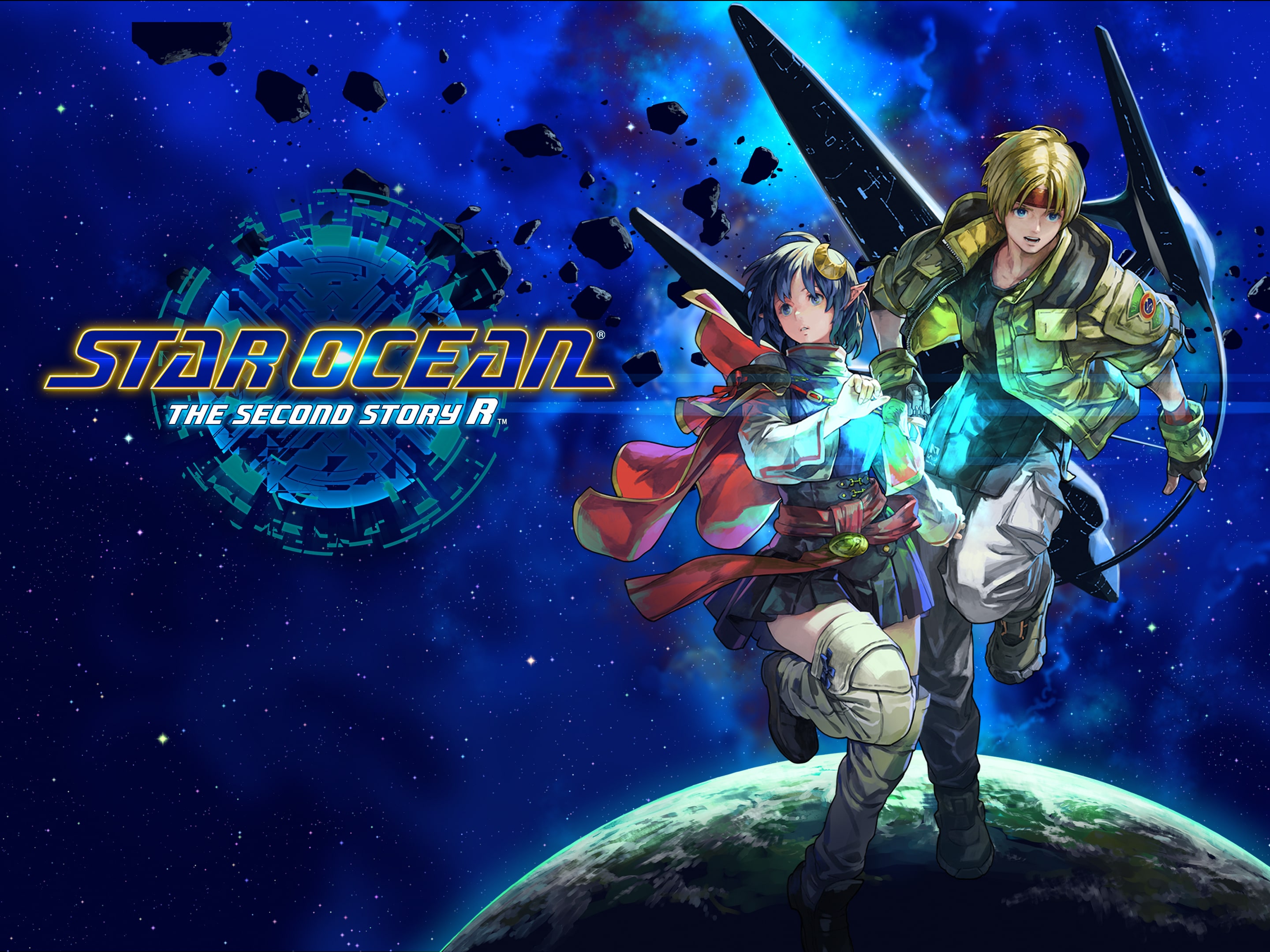
About Star Ocean The Second Story R
This 2023 remake follows Federation officer Claude C. Kenny after he is stranded on the planet Expel and meets Rena Lanford. Choose Claude or Rena’s perspective, recruit a changing party, explore towns and dungeons, and combine real-time battles, item creation and Private Actions that shape relationships and endings.
STAR OCEAN THE SECOND STORY R is a science-fantasy role-playing game and a remake of the 1998 STAR OCEAN: THE SECOND STORY. Its story begins with Claude C. Kenny, a young officer in the Pangalactic Federation, investigating an unexplained structure with his father, senior officer Ronyx J. Kenny. Claude touches a device and is transported to Expel, a world with unfamiliar technology and a largely medieval appearance. When he rescues Rena Lanford from a monster using his Federation weapon, she interprets the light-emitting gun as the legendary Sword of Light and brings him to Arlia Village. Rena’s people believe a hero will answer an ancient prophecy and save them from a spreading danger. Claude, meanwhile, wants to find a way back to his ship and father. Their goals meet in a journey that places spacefaring science fiction alongside villages, caves, monsters and prophecy. The opening establishes both the misunderstanding and the wider stakes: Claude is not simply a local champion, and Rena’s assumptions about his role do not erase his own need to understand Expel. The R remake retains this premise while rebuilding the 1998 game with new presentation and additional systems. Its setting travels between populated settlements, wilderness, dungeons and larger story developments, so the contrast between Claude’s Federation background and Expel’s traditions continues to frame the party’s discoveries.
At the start, the player selects Claude or Rena as the lead. The main story follows that choice, presenting events through the selected character and changing which companions can be recruited. Claude’s route foregrounds an outsider trying to navigate Expel with limited knowledge of its people and customs; Rena’s route makes her home, community and connection to the prophecy the starting point. The routes share a central journey but are not identical character skins over the same account. The choice affects the perspective and available party combinations, which in turn change battles and the conversations that can occur. The cast includes fighters, spellcasters and other specialists such as Celine, Ashton, Precis, Bowman, Leon, Opera, Ernest, Noel, Chisato, Dias and Welch. The player does not simply collect every listed character in one run: recruitment possibilities depend in part on the chosen protagonist and story decisions. The game is designed for repeat journeys that reveal another side of the shared events and new combinations of allies. The central plot supplies the expedition and its threats, while the changing roster supplies a distinct social and tactical character to each playthrough.
Exploration moves between towns, field areas and dungeons, each rebuilt for the R remake with three-dimensional environments populated by pixel-art characters. Settlements let the party rest, talk and shop, while routes and caves lead to encounters and story events. Fast travel reaches currently available Private Action markers, making it easier to return to a town where a character scene is waiting. Fishing offers a separate reason to search beyond the direct story path: spots appear by rivers, the sea, wells and small pools, including some found inside dungeons. A catch can trigger a monster battle, while fish can be exchanged through Reel for valuable items. The remake refreshes field, town and dungeon maps and uses the contrast between 3D scenery and 2D characters to make locations newly legible while preserving the original’s pixel-art identity. Looking around therefore supports both navigation and optional activity, from finding a fishing spot to locating the route onward or an event marker. Players can also work toward filling the fishing encyclopedia, giving catches a collection goal beyond exchanging them for items. Fish are not only scenery or a collectible counter: a monster catch can turn a quiet detour into a fight, while Reel’s exchange gives successful fishing a practical reward. This adds small field diversions to the route between the larger story locations.
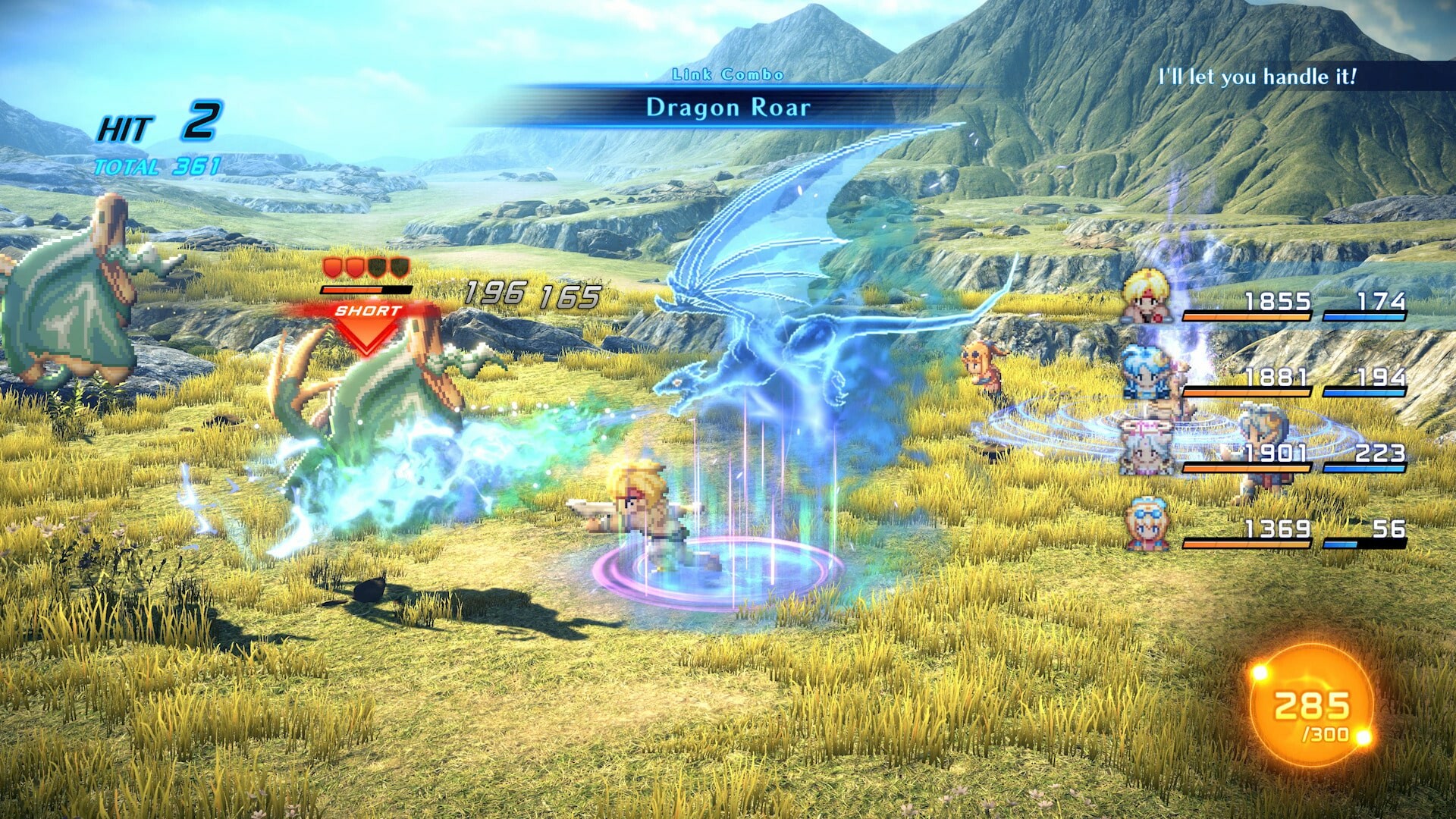
Battles take place in real time, with each character able to move, attack and activate skills. The remake adds Break, Bonus Gauge and Assault Actions to the original framework. Every enemy has a Break Gauge; emptying it briefly stuns the foe and increases the damage it receives. Skills are classified as HP-focused, balanced or Break-focused, so the player can choose steady damage or target an opening. The Assault Gauge fills during combat; once full, it allows a configured ally to follow up, letting the player combine that attack with the active character’s skill for a custom combo. Earth, Galaxy and Universe offer different challenge settings.
Character growth and Item Creation extend preparation beyond the battlefield. The party learns skills such as Cooking, Art, Alchemy and Penmanship, developing proficiencies that can unlock Super Specialties and additional group activities. Item Creation turns those skills into a practical resource: the player can produce equipment and other items instead of relying only on shop stock or finds from the field. The enhanced system can craft powerful equipment with different effects, so a finished item is more than a simple step up in attack or defence. Building Specialty levels and choosing which characters develop particular skills broadens the party’s creation options. This gives the player a reason to invest in proficiencies outside combat and lets crafted gear support the fighting style chosen for the active characters. Choosing whom to recruit changes the available party, while developing that group expands the tools brought into later encounters. Specialty levels bring several character skills together into Super Specialties, expanding the activities available to the group. The player can raise individual skills as characters grow, then use Item Creation to turn those developments toward useful equipment. Because crafted pieces have different effects, comparing the result with the party’s current needs matters: a weapon or armour choice can support a character’s role rather than simply replace a shop purchase. The remake’s broader skill selection makes this preparation part of party development, not a separate crafting menu detached from progression.
Private Actions are optional character events that occur when the party temporarily separates at story points. The selected lead can meet individual companions in scenes about their lives, concerns and relationships. Availability varies with story progress and the recruited roster, and some moments can change how companions view the protagonist or affect the wider plot. The remake adds a status-screen view of party affinity, letting players check how relationships stand as the journey advances; these relationship outcomes contribute to the multiple endings. Optional scenes therefore connect the social side of the journey with the campaign’s broader outcomes. As the lead changes location, the available encounters can shift with that chapter’s situation.
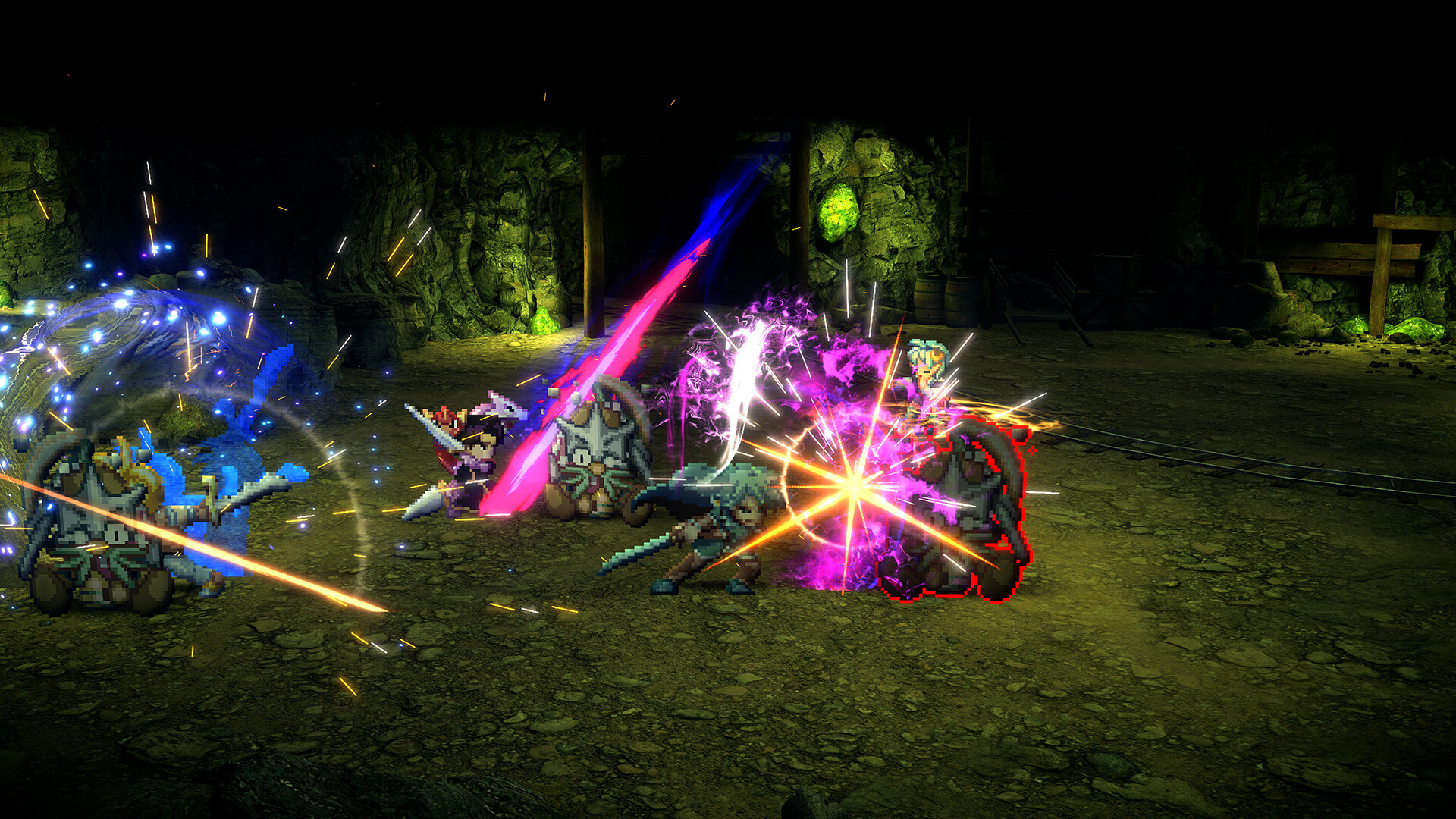
The remake’s presentation combines crisp pixel characters with newly constructed 3D environments and refreshed character portraits by series illustrator Yukihiro Kajimoto. The portraits give dialogue scenes a distinct illustrated treatment, while movement and battles use the layered 2D-and-3D world. Event scenes are fully voiced; players can choose between newly recorded performances by the original cast and dialogue audio from Second Evolution, with voice choices adjustable for each character. Motoi Sakuraba’s rearranged score includes full-band battle tracks and new recordings for exploration and cinematic scenes. These changes distinguish the 2023 remake from both the 1998 STAR OCEAN: THE SECOND STORY and the 2008 STAR OCEAN: SECOND EVOLUTION while preserving the same underlying adventure. It released on PlayStation 4 and 5, Nintendo Switch and PC through Steam, with a Nintendo Switch 2 version also available.
- Developer
- Gemdrops, Inc. (remake); Steam also lists Square Enix as developer; original 1998 version developed by tri-Ace Inc.
- Genre
- Single-player science-fantasy role-playing game with real-time action combat