
About S.T.A.L.K.E.R.: Call of Prypiat - Enhanced Edition
As Major Degtyarev, a special-services officer sent into the Zone, you investigate the fate of a missing expedition. Search abandoned territory, follow missions and side stories, recover artifacts from dangerous anomalies, and manage weapons, equipment and supplies while negotiating with the people who live and work there.
S.T.A.L.K.E.R.: Call of Prypiat follows Major Degtyarev, a special-services officer investigating what happened to a lost expedition in the Zone. The premise places an official investigation inside a territory already occupied by stalkers, scavengers, armed groups and people trying to earn a living among radioactive ground and lethal anomalies. The assignment gives the journey a central question, while the people Degtyarev meets and the side stories found along the way broaden the picture of life there. Rather than treating the Zone as an empty backdrop, the game uses camps and encounters as places where information, trade and local relationships matter. The Enhanced Edition retains this chapter’s place as the concluding game in the Legends of the Zone trilogy and updates its presentation, including improved textures and environmental detail, revised weapon models and field of view, visual effects, bug fixes, quality-of-life changes and gamepad support.
The investigation unfolds through missions recorded in Degtyarev’s PDA. Its map displays locations in the Zone, while the task and message sections keep current objectives, conversations and events together; mission markers also feed into the map and minimap. This gives the player a practical way to follow an investigation that depends on moving between people and places, rather than a simple line of targets. Conversations with neutral or friendly characters can lead into trading, and the game’s side stories give individual encounters room to develop beyond the central assignment. The PDA also tracks player statistics, including missions received and completed, stashes found, enemies and mutants killed, cash, time spent in the Zone and emissions survived. Reading those records helps connect exploration with the investigation: a newly logged location, message or objective can point toward what to examine next, while a completed task remains part of the wider account of Degtyarev’s progress.
Anomaly fields shape the practical route through the world. These hazardous areas can generate artifacts, valuable objects whose effects may help the wearer but usually come with radiation exposure. The detector is a dedicated piece of equipment for this work, and the inventory screen shows the detector alongside armor, weapons and carried items. Approaching an anomaly therefore involves more than collecting whatever is visible: the player must watch for environmental dangers, use suitable protection, and consider whether an artifact’s benefit justifies its cost. The interface marks exposure to radiation, chemical, heat and psy hazards, while the general status indicators also flag bleeding, hunger and fatigue. Food and medicines can provide different temporary effects, including healing, protection against particular hazards, radiation reduction or additional carrying capacity. This makes preparation a sequence of decisions about which equipment and consumables to take, what threat a route presents and how much room to reserve for anything recovered.
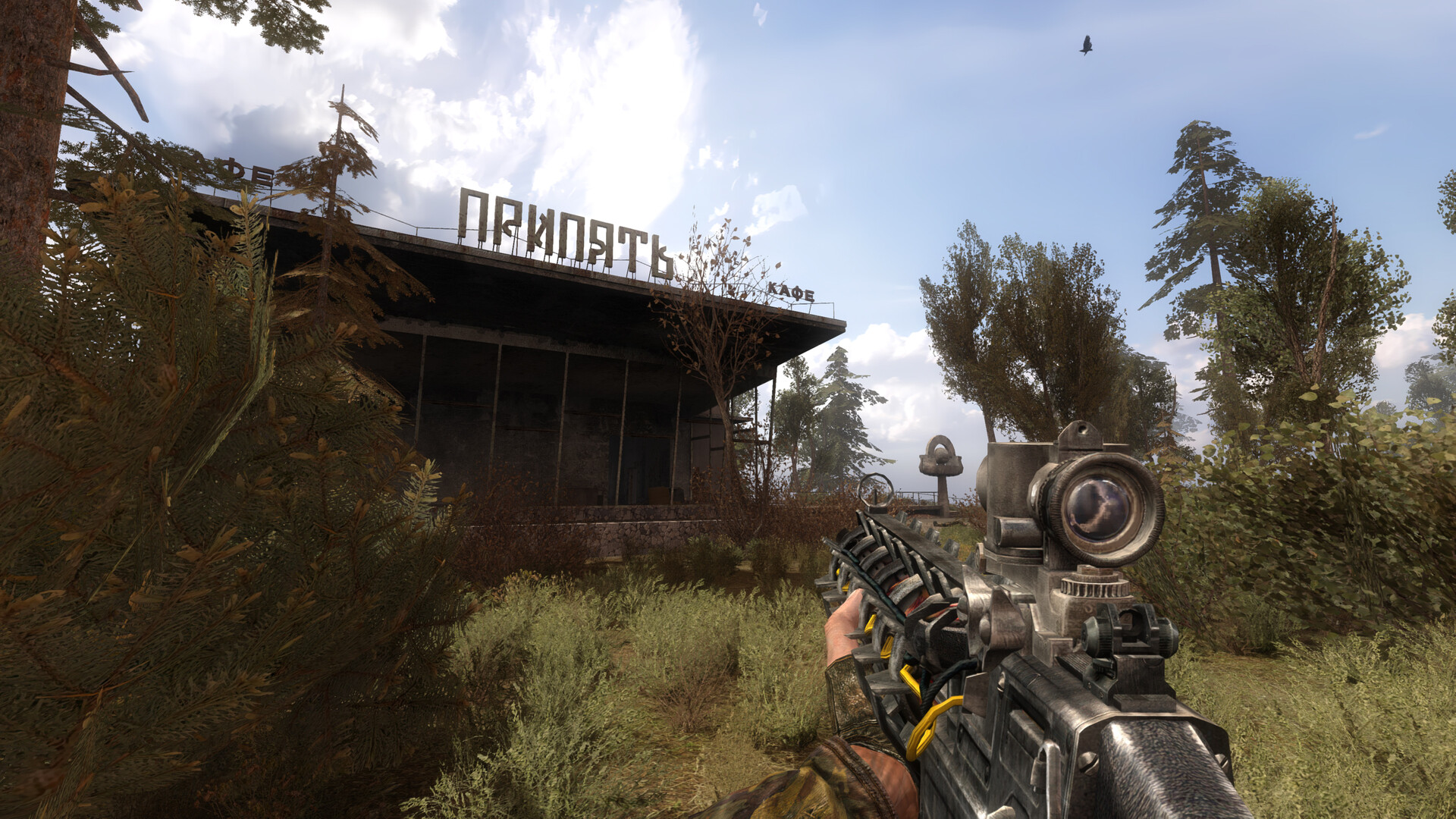
Combat is built around choosing weapons and ammunition for the problem in front of Degtyarev. Pistols, shotguns, assault rifles, heavy weapons, grenades and sniper rifles differ in handling, range, rate of fire and stopping power; a weapon’s accuracy, handling, damage and fire rate help determine its role. Ammunition types also matter, with some rounds suited to armored targets. The player can switch a compatible weapon between single shots, bursts and automatic fire, and firing while moving is less accurate than firing from a steadier position. Human opponents are not all automatically hostile: the PDA and interface indicate whether a nearby person is friendly, neutral or hostile, and lowering or holstering a weapon supports peaceful contact. Mutants, by contrast, are aggressive and often territorial, so they add a different kind of threat to encounters with armed stalkers. Paying attention to target, range, ammunition and surroundings makes each fight part of the wider survival problem.
A backpack and equipment screen turns scavenging into load management. Degtyarev can carry weapons, protective gear, ammunition, artifacts and supplies, but every item adds weight, so recovered equipment competes with the provisions needed for the next excursion. The player can equip, inspect, use or discard objects, keep two weapons ready, and use quick-access slots for items such as bandages, medkits and food. Damage and hazards can produce bleeding, radiation exposure, hunger or fatigue, each reflected in the status display and calling for a different response. Camps provide a place to talk and trade with characters, exchange cash for equipment or supplies, and find a technician. Technicians repair weapons, armor and helmets and offer modifications that can improve equipment when available. Spending on repairs or upgrades therefore competes with buying replacement gear and carrying useful stock, tying the return from a dangerous trip to the next decision about what to take back out.
Call of Prypiat offers four difficulty settings: Novice, Stalker, Veteran and Master. Higher settings make anomalies, mutants and human enemies more dangerous, changing the pressure across several parts of the same expedition. A route through an anomaly field, an unexpected mutant encounter and a firefight with armed people all draw on that setting rather than one isolated combat modifier. The menu also lets the player enable or disable the crosshair, use a dynamic crosshair, show target distance and turn autosaving on or off. These options shape how information is presented and how progress is recorded while Degtyarev follows the missing expedition’s trail. The selected difficulty and interface settings therefore affect the conditions under which the game’s investigation and survival systems are experienced, including how readily danger is signalled and how much information appears on screen.
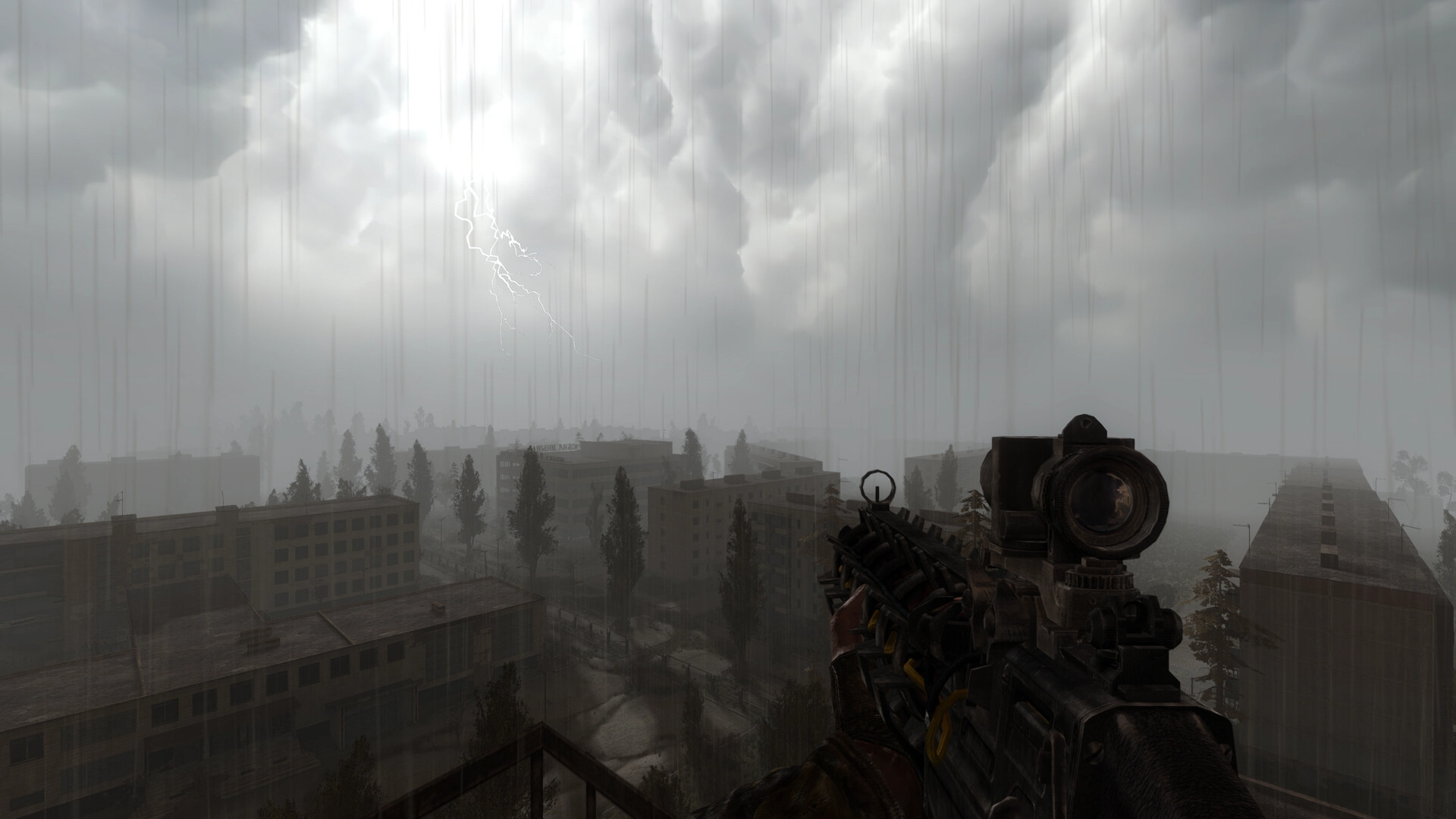
- Developer
- GSC Game World
- Genre
- Action, Adventure, RPG (Steam listing)