
About S.T.A.L.K.E.R. 2: Heart of Chornobyl
Play as Skif in a branching first-person survival story across the sealed Chornobyl Zone. Use bolts and detectors to navigate anomalies and find artifacts, manage supplies and equipment, and deal with mutants and rival stalkers as choices influence your relationships and access across the Zone.
S.T.A.L.K.E.R. 2: Heart of Chornobyl is a single-player first-person survival story centered on Skif, a stalker entering the Chornobyl Exclusion Zone. In the game’s fictional history, a second catastrophic explosion in 2006 created an anomalous territory where ordinary physical laws no longer hold. Years later the Zone remains sealed, yet stalkers cross its perimeter in search of artifacts and answers. The branching story uses a dark science-fiction landscape, with choices shaping the route ahead. The world stretches from the abandoned city of Pripyat and the rusted Duga-1 structure to forgotten villages and underground laboratories reclaimed by the Zone.
Anomalies require their own method of navigation. Fire fields burn, gravitational fields can tear a stalker apart, acid fields corrode equipment and electric fields deliver a shock. A warning sound can signal proximity, but a thrown bolt is another way to test uncertain ground: when it hits an anomaly, the hazard triggers and becomes visible. Some anomalies discharge for only a few seconds after the bolt activates them, briefly opening a route through. Anomaly detectors separately warn of nearby fields through sound, with faster signals as the stalker gets closer. Larger anomalous fields cluster multiple dangers in a small area, and artifacts form inside them.
Artifacts are usually invisible until a detector brings them within range. The artifact detector responds to their radiation with sound and light, and different models provide different levels of guidance: an Echo indicates direction and distance through its signal, while a Veles reveals an artifact’s exact location. Once found, an artifact can be installed in an armor slot and change the stalker’s capabilities. Their effects can include radiation protection, stamina, wound healing or increased vulnerability. Benefits can come with harmful radiation, and some artifacts can offset the radioactivity of others when equipped together. That turns recovery into a loadout choice rather than a simple reward: the player can carry and sell an artifact, equip its useful effect, or balance its side effect against other equipped objects.
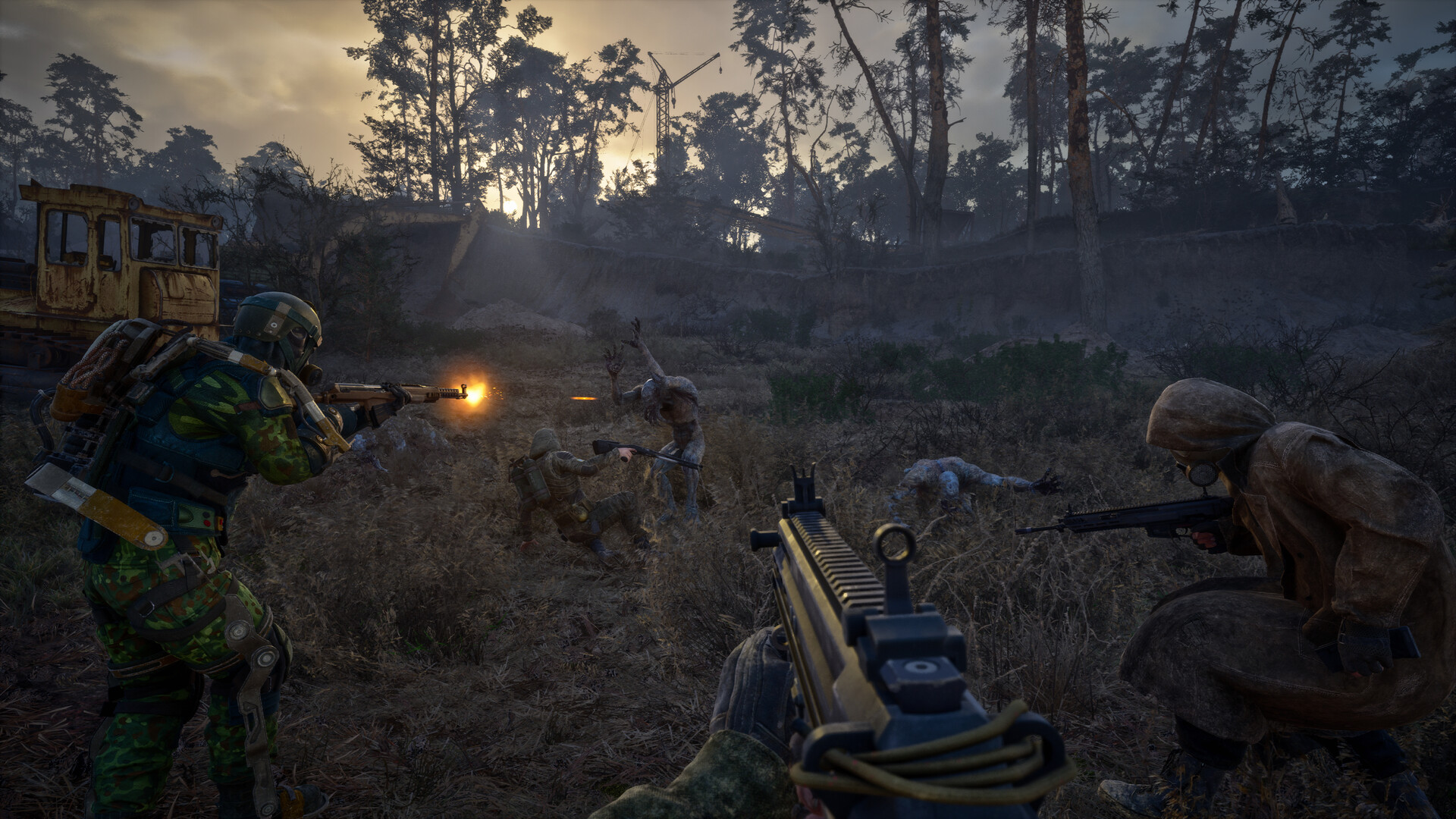
An expedition starts with a practical check of the inventory. Carried weight is limited, and the weight of items affects movement speed and stamina, so ammunition, medicine and recovered objects compete for space and mobility. The stalker can discard excess items, sell them through trade or leave them in a personal stash. The stash is available at hubs and shares its contents across those locations, making it possible to store equipment between trips rather than carrying every useful find at once. Food, drinks and medicine help address the Zone’s harsh conditions, while the HUD tracks health, stamina, radiation and effects such as hunger or bleeding. The quest log and map in the PDA let the player choose a task or mark an unexplored location before leaving safety. This preparation gives each trip an objective and a load limit; a cache, mission reward or trade can replenish resources once the stalker has used them.
Combat combines ammunition choice, cover and equipment condition. A shotgun can answer a close-range threat, while a scoped rifle offers an option when keeping distance is safer; the player must also conserve ammunition and can retreat rather than prolong a costly encounter. Weapons and armor wear down in battle and around anomalies. At a hub, a technician can repair broken equipment and install upgrades; some upgrades are available immediately, while others require a blueprint found in the Zone. Modifications can improve accuracy, reduce armor weight or increase radiation protection. That makes looting and exploration feed directly into preparation: the player may find equipment, seek a blueprint, earn money or simply bring a damaged weapon back for repair. A useful find can change a weapon or suit, but it still has to be maintained and carried. The fight itself therefore draws on choices made before the expedition and on the supplies left afterward.
Faction relationships make dialogue and violence matter beyond a single encounter. Each faction has its own goals and attitude toward Skif; completing members’ tasks, healing them or helping in battle can improve reputation, while killing their members damages it. Supporting one group can automatically turn another into an enemy, and individual characters can respond differently from their broader faction. Allies may help in battle, share resources or pass on information, while relationships can affect access to areas, traders, unique missions and safe travel. In the Zone, the player may encounter stalkers from different groups, military personnel and bandits; some are neutral or helpful, while others attack. Conversation can reveal dangers, locations, artifacts or another faction’s plans, and choices in dialogue can shift both plot and relationships. This system means a decision about whom to help can alter practical access as well as the story’s balance of power.
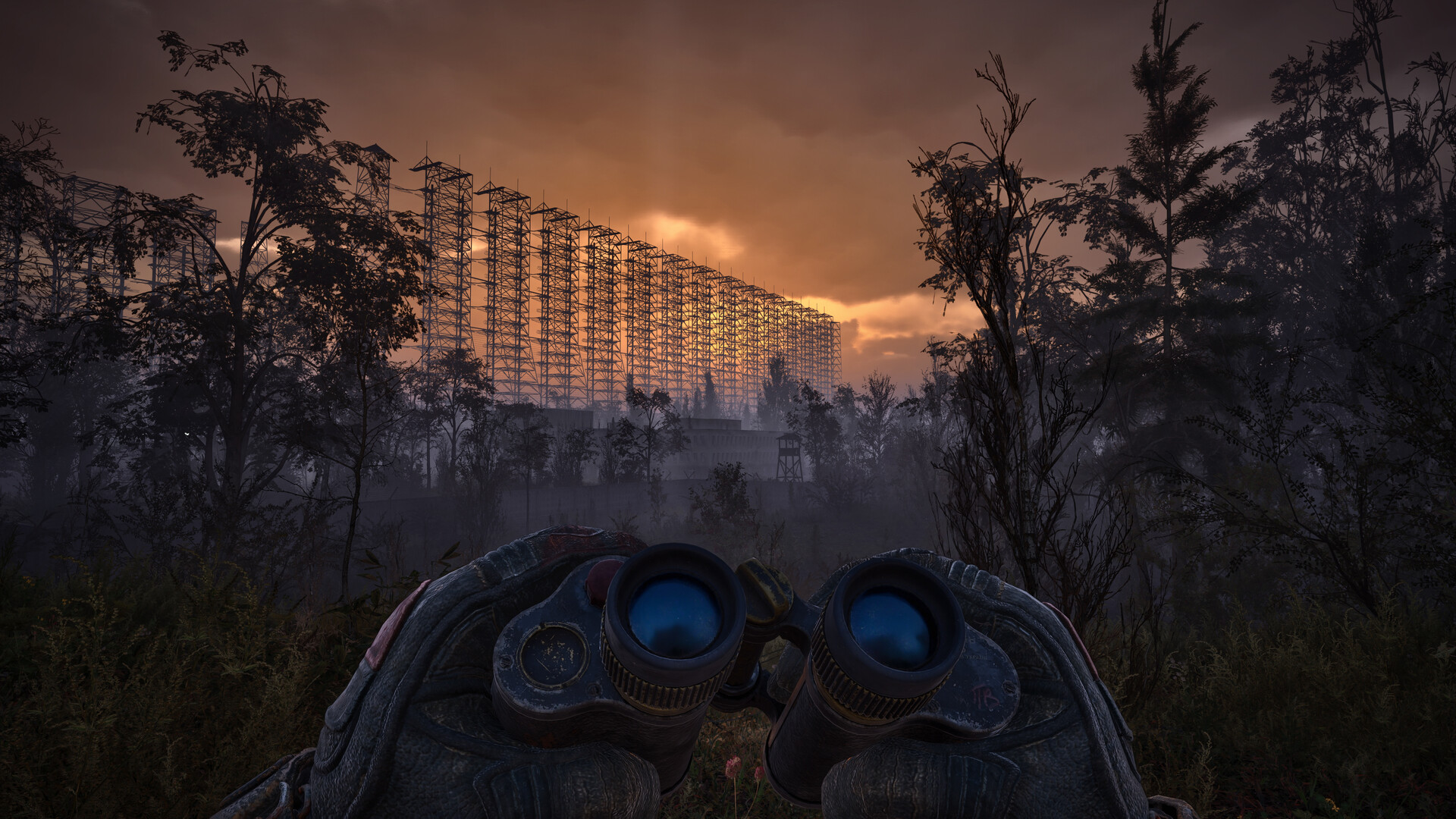
Hubs provide a distinct preparation and recovery loop between journeys. Zalissya is the first hub reached in the campaign, and hubs are places to trade ammunition and medicine, sell equipment, visit a doctor, repair or upgrade gear, sleep and use the shared stash. Residents can offer unique missions with rewards, reputation changes or effects on the wider situation; merchants and bartenders can also provide recurring jobs. A guide can take Skif along a paid safe route to a distant location, but an overloaded inventory or hostile faction reputation can prevent that trip. Hubs also contain shelters for emissions, lethal bursts that must be waited out in cover. The Zone is not rendered harmless inside these settlements: attacking a resident can make the inhabitants hostile. These services give the player a place to restore health, arrange equipment and choose the next task before returning to exposed roads, anomaly fields or contested territory.
- Developer
- GSC Game World
- Genre
- Action, Adventure, RPG (Steam listing); first-person survival shooter (GSC fact sheet and store copy)