
About Split Fiction
Two unpublished writers, Mio and Zoe, are trapped in a simulation built from their own stories. This two-player co-op adventure switches between science-fiction and fantasy worlds, asking partners to coordinate through changing abilities, platforming, stealth, puzzles and unexpected challenges as they try to escape together.
Split Fiction begins when Mio and Zoe, two unpublished writers, arrive at Rader Publishing Headquarters expecting the possibility of a publishing deal. The opportunity goes wrong, leaving them trapped inside a simulation shaped by their own stories. Their contrasting personalities and creative interests set up the partnership that carries the adventure: Mio writes science fiction, while Zoe writes fantasy, and they do not immediately get along. To escape, they have to move through these imagined worlds together and learn to rely on each other. The premise gives the shifting environments a direct connection to the characters, since the places and challenges emerge from the kinds of stories each writer creates. The goal is not simply to pass through a sequence of settings, but to survive a situation that forces two very different people to cooperate.
The game is designed as a split-screen experience for two players. Each partner controls one of the protagonists and must coordinate actions, timing and movement to overcome challenges. The shared view keeps both characters present at once, making cooperation part of the visual design as well as the objective. Some obstacles depend on synchronized effort or on recognizing what the other player can do, so communication helps the pair make progress. It is an action-adventure structure built around partnership rather than a solo campaign with optional assistance. The Friend’s Pass offers an online way for an owner to invite a co-op partner, under the service and account conditions stated by EA. On PC, the central experience remains two people moving through the story together, responding to problems as a team.
The alternating science-fiction and fantasy settings give the adventure a broad range of visual and mechanical changes. Mio’s fictional worlds include neon cyberpunk cities, futuristic weapon facilities and outer space. Zoe’s imagination leads toward troll-threatened towns, forests facing an ice age and endangered dragons. As the characters move through these settings, the game introduces different mechanics and abilities instead of asking players to repeat one action throughout. A sequence might emphasize platforming, another stealth or puzzle solving, and the overall rhythm can change as the pair enters a new story world. The contrast between genres is therefore practical as well as visual: each shift opens up a different way to move, react and work together.
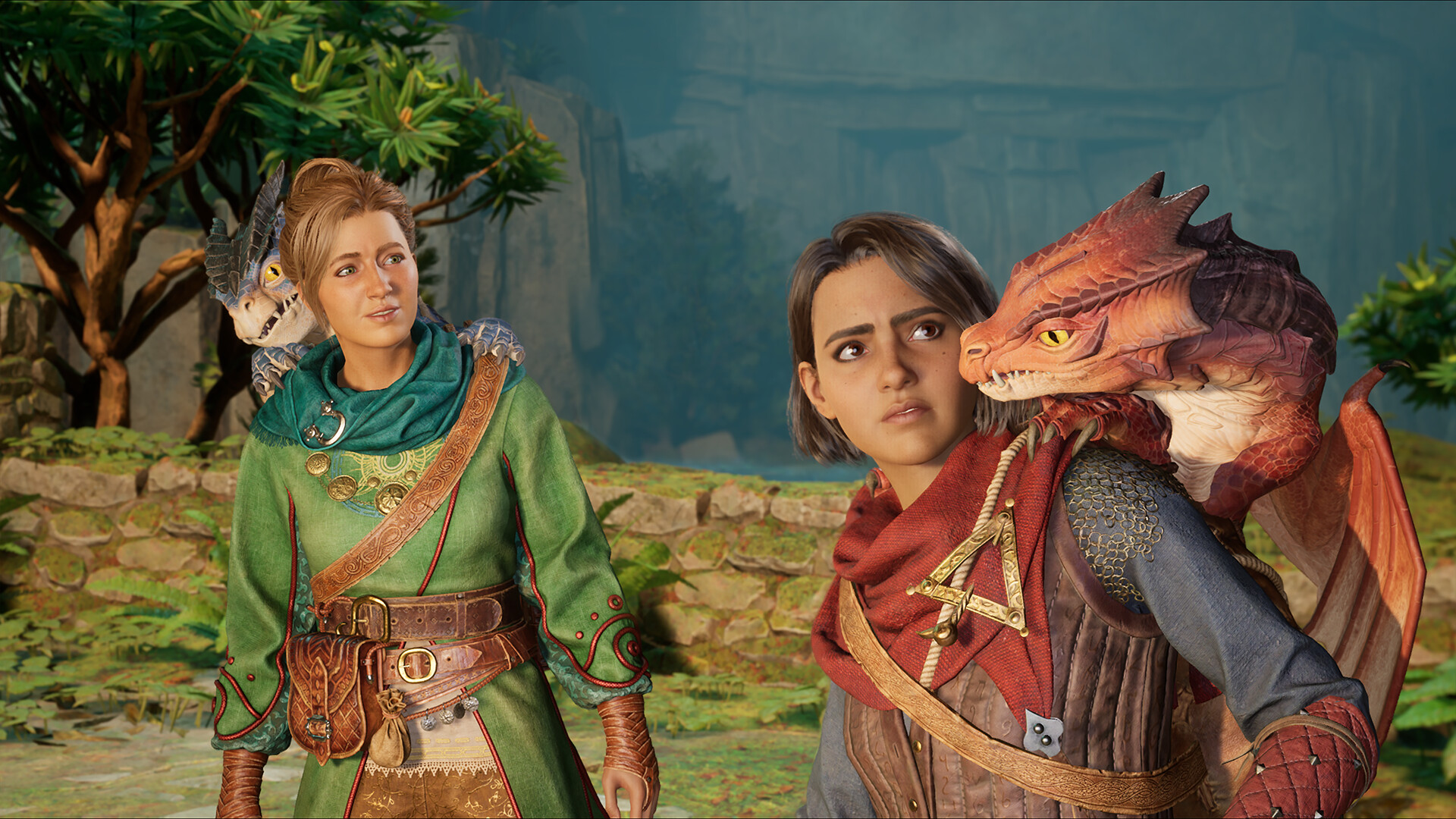
Mio’s science-fiction identity is reflected in the abilities she can use inside the simulations. EA describes her taking on roles such as a gravity-defying ninja with an energy sword, using an advanced exosuit to control drones, or wielding paired laser blasters in futuristic armor. Zoe’s fantasy settings give her other possibilities, including magical transformation, flight as a fairy, a mythical sword and a kite that carries her between floating islands. These are examples of how the two authors’ styles influence the gameplay rather than a fixed inventory that defines every level. New situations bring new tools, and players learn how each one fits the immediate challenge. The difference between Mio’s and Zoe’s worlds supplies variety while their shared objective keeps the pair moving in the same direction.
The adventure also uses deliberately odd situations to interrupt expectations. EA highlights challenges such as escaping a sun nearing supernova, entering a monkey’s dance battle, performing hoverboard tricks or facing an evil cat. Other sequences put the characters on gravity bikes or a sandshark. These examples suggest how far the game can move between kinds of play, from conventional platforming and combat to a more comic or surprising scenario. The variety is held together by the two protagonists and their need to cooperate, not by a single repeated setting. Players are encouraged to adapt as the level changes, learning its current abilities and timing instead of relying on one solution for every obstacle.
Mio and Zoe’s relationship develops alongside the challenges. Mio is reserved, decisive and pragmatic, while Zoe is outgoing and optimistic; each approaches writing and life from a different position. At first these differences create friction, but the simulations leave them dependent on one another. Their progression is tied to learning what the other can contribute, sharing responsibility and becoming more capable as a pair. This interpersonal thread gives the co-op structure a story purpose: coordination is not merely a control requirement but also the way the characters make it through their predicament. The worlds can be wild and constantly changing, yet the relationship provides a consistent point of reference as the writers adapt to their surroundings.
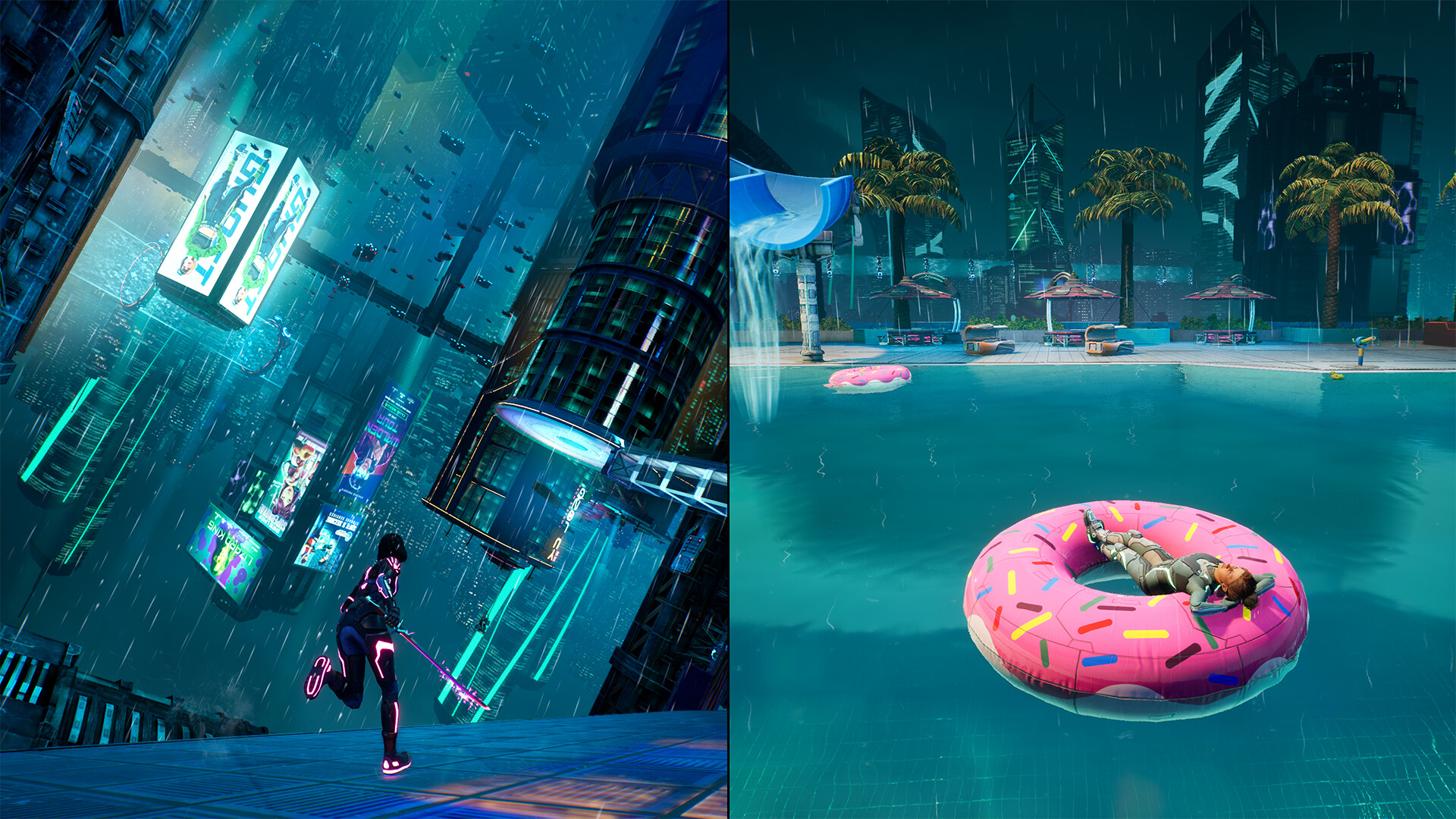
Optional Side Stories add a second kind of detour to the main journey. These encounters begin at unusual portals scattered through the levels and lead into worlds created from unfinished ideas Mio and Zoe wrote when they were younger. EA describes examples including a mountain climb among giants, riding sandfish across a desert, snowboarding under fire, becoming pigs, water-skiing while chasing enemies and a spacewalk that goes wrong. The episodes are optional and can take the pair far from the current science-fiction or fantasy setting, giving the co-op structure a chance to change again around a new premise. Once a Side Story is complete, the characters return through its portal to the main level where they entered. The episodes also connect their strange scenarios to forgotten ideas and parts of their past, adding personal context alongside the gameplay variety.
- Developer
- Hazelight Studios
- Genre
- Two-player co-op action-adventure