
About Tom Clancy's Splinter Cell: Pandora Tomorrow
Tom Clancy’s Splinter Cell: Pandora Tomorrow sends Sam Fisher on a global covert operation to stop a bio-terror threat led by Indonesian guerrilla leader Suhadi Sadono. The single-player campaign combines shadow-based infiltration, surveillance, gadgets and close-quarters decisions across locations including an embassy in East Timor and a train bound for Nice.
Pandora Tomorrow is a stealth-action campaign about stopping a biological attack before it can spread beyond the people and places already caught in the crisis. Sam Fisher works for Third Echelon, the NSA’s deniable intelligence unit, and follows the threat through operations in several countries. Indonesian guerrilla leader Suhadi Sadono and the DARAH DAN DOA militia are central to the conflict. The journey moves through high-security sites, including the American Embassy in East Timor and a train travelling toward Nice, France. Fisher’s objectives combine covert entry with gathering or protecting sensitive information, so the player follows the operation as it moves between political settings and immediate physical danger.
The people around Fisher give each stage an intelligence context. Colonel Irving Lambert coordinates Third Echelon’s field work and communicates with Sam through a covert link; Anna Grímsdóttir leads the team providing technical, cryptographic and data support. The OPSAT carries the current mission goals, notes and reconnaissance, while messages from headquarters arrive during play. Sadono is supported by members of his militia, and the campaign also introduces characters with their own intelligence or military connections, including Dahlia Tal, an Israeli Shin Bet operative, and Norman Soth, a CIA-trained mercenary. These named roles help define the shifting relationships around the operation without turning every encounter into a direct firefight.
The campaign treats visibility and sound as practical risks. Fisher’s stealth display responds to surrounding light, while movement speed affects how much noise he produces. Staying in shadow, crouching, moving carefully and taking cover against a wall help keep him out of sight; running or jumping can draw a guard even when he is visually concealed. Patrols may investigate, call for help or trigger alarms, and alarm misuse can endanger the operation. Mission goals and new notes appear in the OPSAT, giving the player a reason to revisit the information gathered while planning a route through occupied rooms, surveillance coverage and other defenses.
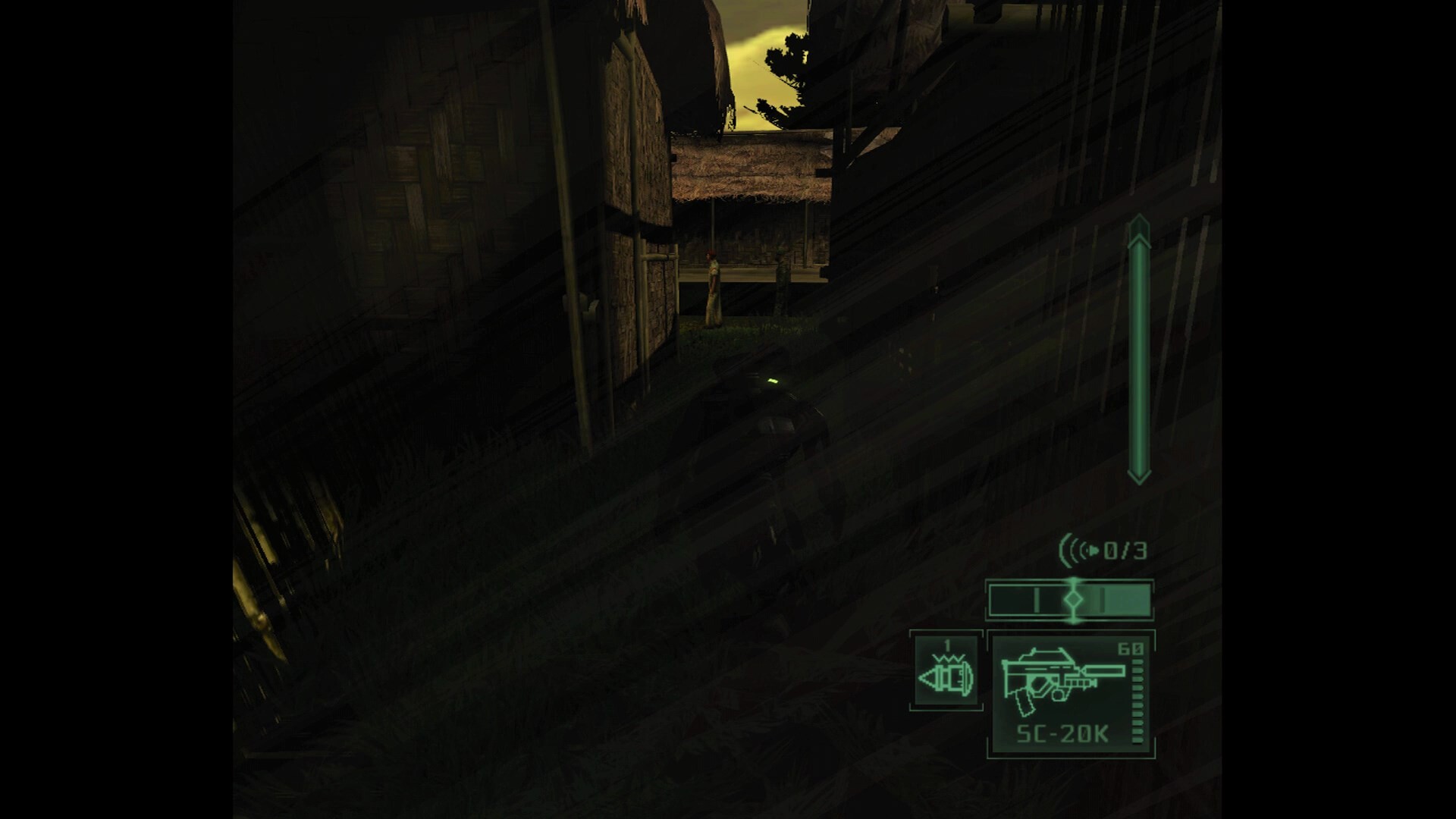
Fisher’s movement set supports approaches through vertical and narrow spaces. He can climb pipes, ladders and cables, traverse horizontal bars, shimmy along ledges, drop quietly, slide down a zip line or rappel along a wall. In tight corridors, a split jump lets him brace between opposite walls above a patrol; from that position he can wait, observe or use certain attacks. He can also hang from overhead structures and shoot from particular positions. At doorways and corners, a peek or the near-invisible SWAT turn allows him to check a passage before crossing it. The route through a mission therefore includes surfaces, ledges and openings that can keep Fisher away from a guard’s forward view.
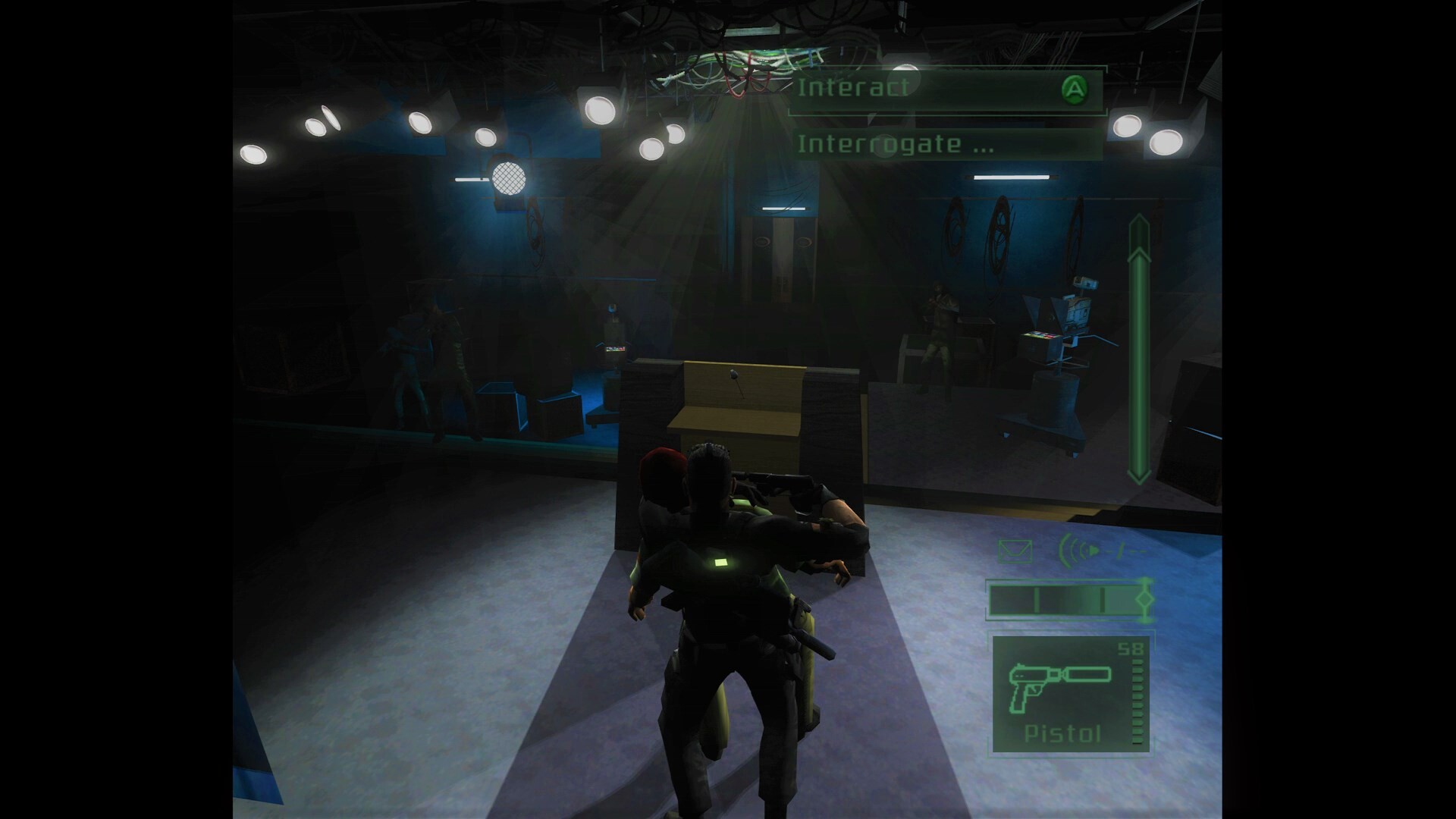
Close encounters offer several context-sensitive actions. Fisher can grab a nearby opponent, interrogate selected people for information, hold an enemy as a shield, or force someone to operate a device that Sam cannot use himself. He can carry and conceal bodies, with a quiet placement reducing the chance of discovery compared with dropping one in a hurry. A whistle can redirect a guard’s attention, creating an opening to move or approach from another direction. These options connect stealth to the people and objects in the environment: the player may need a conversation, a route through a guarded doorway or a momentary distraction, and each action takes place close enough for detection to remain a concern.
The equipment menu lets Fisher select tools for reconnaissance, access and non-lethal intervention. His SC-20K rifle supports a sniper view and a multipurpose launcher for selected devices. A sticky camera can pan and zoom, use enhanced vision and send its feed to the OPSAT; a distraction camera instead makes noise and can release gas when enemies come near. The laser microphone listens through vibrations on appropriate surfaces, the optic cable lets Sam inspect beneath a door, and a camera jammer disrupts a surveillance camera for a limited period before its charge must recover. Lock picks call for precise input to release pins, while a disposable pick offers a quicker way through a standard cylinder lock. Each tool addresses a particular obstacle, so choosing when to use it is part of managing limited opportunities during an infiltration.
Secure rooms combine mechanical, electronic and biometric protections, making reconnaissance part of the mission. A keypad needs a code, while an incorrect retinal scan triggers an alarm; cameras monitor movement, armored cameras resist damage, and motion detectors cover active zones. Automated turrets use heat and motion sensing, recognize friend-or-foe signals, and can be hacked. Laser beams can also trigger alarms, so a route that avoids guards may still cross a sensor’s field. Fisher can inspect a room with his vision modes and equipment, then decide whether to find authorized access, disrupt surveillance or bypass an exposed line. These defenses connect information gathering with physical access: a mission route depends on what the security system can detect as well as where guards stand. The 2025 Steam PC release is the original game with critical fixes, and multiplayer is unavailable.
- Developer
- Ubisoft
- Genre
- Action; stealth-action espionage