
About Tom Clancy's Splinter Cell Conviction
Sam Fisher has left Third Echelon after Sarah’s apparent death, but a lead in Malta draws him back into a personal investigation. As evidence points toward a wider threat against Washington, he relies on shadows, cover, improvised equipment and carefully prepared attacks while deciding whom he can trust among former colleagues and new allies.
Tom Clancy’s Splinter Cell: Conviction follows Sam Fisher after he has walked away from Third Echelon, the covert agency where he served as an elite operative. Years after the apparent death of his daughter Sarah and the loss of his former superior Irving Lambert, Sam is tracking the person he believes responsible. His search leads to Malta and to Andriy Kobin, a criminal intermediary whose business and past connect him to larger forces. Anna ‘Grim’ Grímsdóttir, once Sam’s handler, draws him into a new investigation as Third Echelon operates under different leadership. The personal search and the agency’s concerns converge, placing Sam between a past he cannot leave alone and a developing threat to the United States.
The campaign moves from Malta into Washington, D.C., tying a street-level pursuit to a conspiracy involving people with influence inside and outside government. Grim is an intelligence specialist with her own position in the new Third Echelon; director Tom Reed represents the agency’s changed command, while businessman Lucius Galliard and the private security company Black Arrow are linked to an operation aimed at the capital. President Patricia Caldwell becomes central to the danger surrounding the city. Sam’s old friend Victor Coste, now working in private security, provides a personal connection and practical support. These characters do not simply issue targets: their competing roles shape what Sam is investigating and why the information he uncovers matters. The story’s focus stays on Sam’s hunt, shifting loyalties and the immediate Washington crisis.
Conviction changes the stealth rhythm through Last Known Position. When enemies see Sam and he breaks their line of sight, an outline marks the place where they last spotted him. Guards concentrate on that location, suppressing it, throwing grenades or moving around to check whether he remains there. Sam can use their attention to relocate through cover and shadows, then choose a new route while they investigate. The marker persists until they have checked the position and begin searching the surrounding area, so it creates a temporary distraction rather than making Sam invisible or ending the alert. The player watches enemy sightlines, finds a way to leave the marked point and decides whether to stay hidden, move behind the search or attack from another angle.
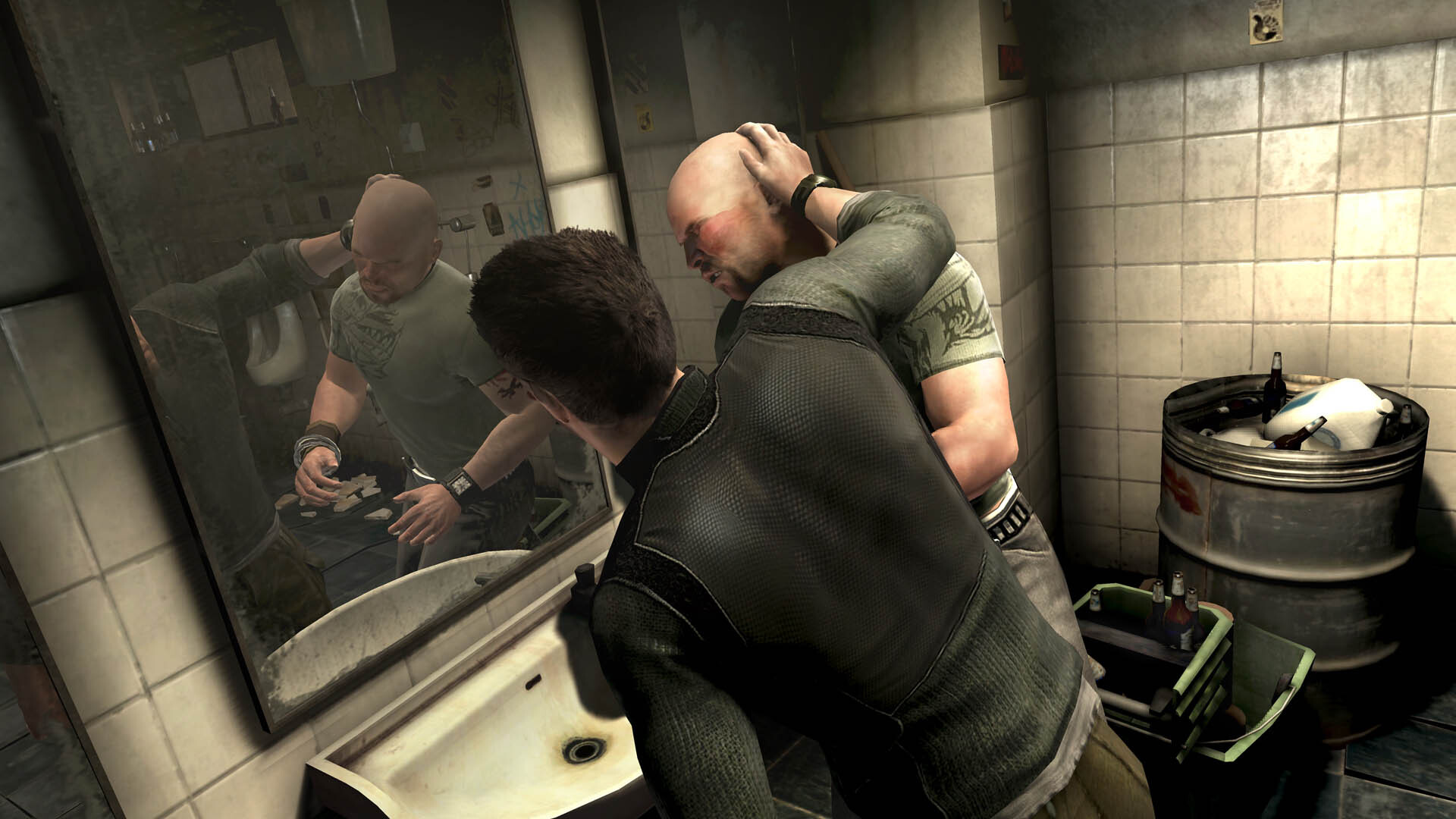
Mark and Execute turns a close takedown into a resource for a planned follow-up. The player can mark enemies, traps and explosives while surveying a room, but the ability to execute the marked targets is earned by performing a hand-to-hand takedown. A melee attack, a pull over a ledge or railing, a drop from above, or taking a human shield can grant the execution opportunity. Once available, it applies only to marked targets that remain within the equipped weapon’s range and line of sight; different weapons support different mark counts and ranges. This makes positioning and preparation part of the attack. The player may map a sequence before crossing a doorway, but must first create an opening through close combat, and blocked or distant marks cannot be resolved by the command.
The visual presentation communicates concealment as Sam moves between lit areas and shadows. When he is hidden from enemies, the image shifts toward black and white while he remains able to see the surrounding space; a flashlight, crossing directly in front of an enemy or firing and producing a muzzle flash can reveal him. Cover lets Sam move between positions with less exposure, and close-quarters moves support rapid changes in height or direction. The result is a loop of approaching a guarded group, using a wall or darkened edge to break sight, then choosing between slipping away or re-entering from a different position. If an enemy reacquires him, the last-seen outline gives the group a focal point and gives the player a short window to decide what to do next.
Sam’s equipment reflects his separation from the agency: some tools are found in the field, supplied by allies or taken from fallen enemies, and some are improvised. A mirror or fiber-optic Snake Cam lets him inspect beneath a door before entering, with the camera providing a clearer view and allowing targets to be marked through its image. Sonar goggles reveal people and explosives behind obstructions, helping distinguish armed targets from civilians. Sticky cameras can observe an area, create a distraction or be detonated remotely; EMP devices disrupt nearby lights and electronics, while flash and fragmentation grenades affect groups in different ways. These options support reconnaissance, diversion, escape and direct engagement, but their quantities and effects vary. Sam can also interrogate suspects, using a captive for information or moving the investigation forward through the people tied to it.
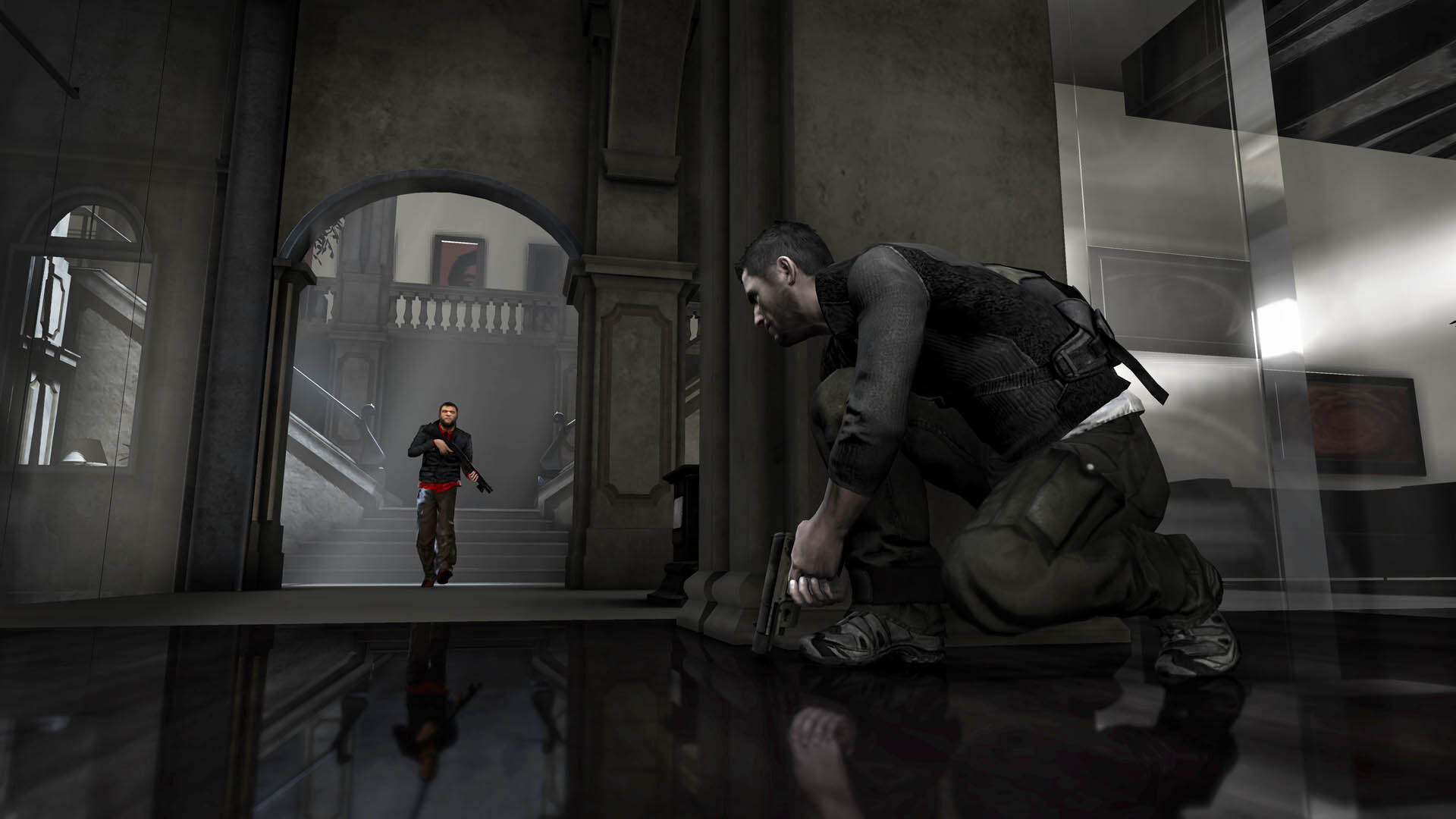
Individual encounters combine movement, equipment and information gathering rather than relying on a single approach. A player can inspect a room through a door, mark a few threats, cross to an isolated guard for the close takedown that unlocks an execution, and then decide whether to spend that opportunity on the marked group. Another route may use an EMP burst to cut nearby electronics and create darkness, or a distraction to draw attention away from an exit. In the campaign, those spaces serve the search for evidence and the effort to stop the threat against Washington; they are not simply arenas detached from Sam’s investigation. The online multiplayer and co-op features are currently unavailable, leaving the single-player campaign as the route through Sam’s investigation.
- Developer
- Ubisoft Montreal
- Genre
- Stealth action